Humility (1)

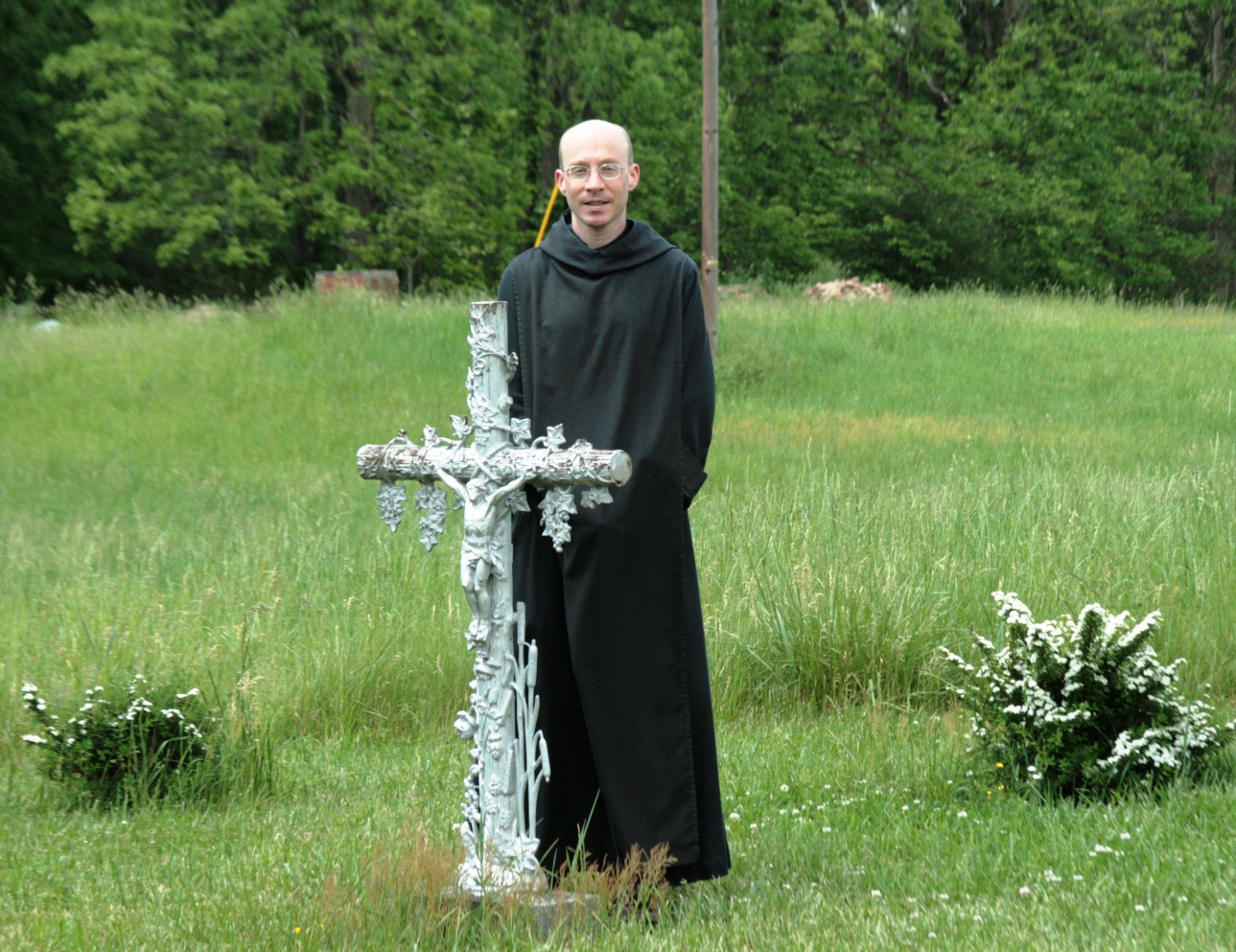
garden1Humility tends to evoke images of groveling before potentates, as when Anna was ordered to bow before the King of Siam. Such popular images project human images on God that have nothing to do with Jesus who was more interested in finding the lost sheep of Israel than having anybody bow down to him.

The first and most fundamental step of humility for St. Benedict is that we keep “the fear of God always before [our] eyes and never forget it.” That is, before humility is anything else, humility is living in the presence of God. This is indeed something very different from groveling in the dust. This step reminds us of our constant need for God and also of God’s sustained presence in our lives. It is precisely in our desires that our need for others shows itself. We often think of needing others to fulfill our desires but it is really more a case of needing others to desire at all as René Girard has demonstrated. (See Human See, human want) We tend to deny our need for the desires of others and to claim these desires for ourselves, which is an act of serious pride. Humility involves, then, accepting the interaction of our desires with the desires of others and accepting our mutual need of each other’s desires. But as this first step of humility teaches us, we most need to be in tune with our need for God’s Desire.

We tend to forget not only God’s presence but, even more seriously, God’s Desire when we are immersed in the desires of other people. Our involvement with the desires of other people tends to become rivalrous, which draws us further from God’s Desire. The more we are grounded in God’s Desire and never forget it, the more constructive we are apt to be in the way we act in terms of the desires of others. For example, we are freer to treat others with respect and courtesy when we don’t need to “win” any human encounters because we are grounded in God’s Desire that has nothing to do with winning but has everything to do with providing for others.

The inner attitude of living in the memory of God’s presence is balanced in the twelfth and final step of humility with the external deportment that corresponds with the former. Humility should be noticeable whether one is “at the Work of God, in the oratory, the monastery or the garden, on a journey or in the field, or anywhere else.” In other words, at all times and all places. Once again we have outer action and inner attitude reinforcing one another just as they should during worship. The last thing Benedict would want would be for someone to put on an act. When we let our actions flow out from right inner attitudes, then these actions are natural with no sense of putting on airs. The more one is mindful of living in God’s presence, the more natural the deportment of humility will be. Moreover, paying attention to this outward deportment does tend to have a humbling effect that strengthens the right inner attitude.

(More about Humility can be read in Andrew Marr’s book Tools for Peace)

The Power of the Ascended Lord

Human_headed_winged_bull_facingAscension Day is a feel-good celebration of Jesus seated at God’s “right hand in the heavenly places, far above all rule and authority and power and dominion, and above every name that is named, not only in this age but also in the age to come.” If Christ is reigning like that and we are reigning with Him and sharing in Christ’s power, then we too are over everybody else just as Jesus is over everybody else. Sounds like a good deal. Or is it? Let’s take a closer look at what this power of Christ is all about.

Getting a sense of how power and especially omnipotence applies to God is tricky. After all, we dream of being omnipotent and invulnerable so we assume that the Master of the Universe wishes the same thing. Not a good assumption.

René Girard noted that power is attributed to the primordial victims of collective violence. (See Violence and the Kingdom of God) That is, the victim was powerful enough to be the cause of the social meltdown and also powerful enough to be the solution to the violence. (The reality, of course, is that such victims were normal humans with no supernatural powers.) The Gospels reveal Jesus as a vulnerable human being who clearly did not cause the social crises of first-century Jerusalem and whose death brought about no solution to it. Whatever power Jesus has, it isn’t this power. The illusion of the power of the victim should make us suspicious about how we attribute power to God.

A second and more common image of power is the imperial structure. In the days of Isaiah and other prophets, Assyria was such an image. The statues and friezes of winged bulls are symbols of this kind of power. This is the kind of power the apostles seem to have been thinking of when they asked Jesus: “Lord, is this the time when you will restore the kingdom to Israel?” (Acts 1:6) Jesus’ ascension right after hearing this question was a firm No.

When Paul says that Jesus is far above all rule and authority and power and dominion, and above every name that is named, not only in this age but also in the age to come,” he is saying that Jesus is far above and beyond all cultures that rely on sacrificial violence and the Assyrian-Roman impositions of power. That is, the power of Christ is to bring us out from these cultural practices. But are we being brought out of the world to escape these cultural entanglements? Sorry if you were hoping for that.

crosswButterfliesPaul concludes this section of Ephesians with powerful irony: “God has put all things under [Jesus’] feet and has made him the head over all things for the church, which is his body, the fullness of him who fills all in all.” Paul is using the common image of military victim where the victor lays his foot on the head of the vanquished, making the loser his footstool. But under Jesus’ foot is not the head of the vanquished but Jesus’ own Body, the Church. This is the Body of the crucified one who was raised from the dead and returned as the forgiving victim. Jesus’ reigning in Heaven at the right hand of the Father is coterminous with Jesus living with us here on earth, sharing our vulnerability to the imperial structures of power who continue to act like the Assyrians and the Romans.

If we are the Body of the forgiving victim, then forgiveness, not rulership, is what reigning with Christ is all about. This power to forgive was the gift the risen Christ breathed into the disciples (Jn. 20:23)  In John, Jesus says that it is this “Spirit of truth” who abides in us. When we keep Jesus’ words, he and the Father and the Spirit will come and dwell within us to empower us with their love for one another and for us and for all those whose sins (including our own!) need forgiving.


Escape from the Denial of Death

cemetery1Richard Beck’s new book The Slavery of Death works with the powerful thesis of Ernest Becker which states that fear and denial of death fuels human aggression. I have read both of Becker’s books (Denial of Death and Escape from Evil) and I find Becker’s analysis of this phenomenon compelling. Moreover, much scientific testing has verified Becker’s theory. Beck outlines Becker’s demonstration this existential fear of death and its subsequent denial leads to striving for heroism. For Becker, heroism is a compulsive drive to succeed, to prove that one matters, and to gain recognition for one’s efforts. One might think that there is nothing wrong with any of this but this neurotic striving for “heroism” comes to the expense of other things in life such as family and friends. Moreover, the social settings for such striving tend to magnify aggressive behavior so that not only fearful individuals but the social groups as well persecute others to validate themselves.

Impressive as Becker’s insights are, they are very bleak and they don’t offer humanity any constructive way out the denial of death except, perhaps, a heavy dose of Stoicism. Most humans find this cold comfort at best and an impossible prescription at worst. Might as well join Jean-Paul Sartre in a life of existential despair.

Richard Beck brings Christian theology and spirituality to Becker’s insights which brings us into a whole new ball game. To begin with, he notes the importance the Eastern Orthodox Churches give to Death, rather than Sin being the prime enemy that Jesus must destroy. He adds depth to the slavery to “heroism” by comparing it to the “principalities and powers” of the world denounced by St. Paul. Beck then uses the social and anthropological thought of Walter Wink and William Stringfellow (who deserves to be much more remembered than he seems to be) to help us see the strength of social forces that pull us into a “heroic” mode. Much more important, Beck shows how an eccentric life can pull us out of this death anxiety so as to live a healthy, loving life. Beck is not talking about being somebody’s eccentric uncle; he is talking about living a life centered outside the self. He uses Arthur McGill as a resource for understanding how love and concern for others benefits the one doing the loving by pulling us out of ourselves. Jesus, of course, is the perfect example of eccentric living. Jesus was positioned fully out of himself out of concern for others and also his grounding in his heavenly Father. That is why, although he feared the painful death to come in Gethsemane, he had the courage to endure it. Lest one be overly daunted by the extent of Jesus’ self-sacrifice and that of people like Teresa of Calcutta, Beck also shows how important small sacrifices on a daily basis are for eccentric living. These are within reach of everybody. The “little way” of Thérèse of Lisieux is are stirring and practical example. For Thérèse, eccentric living can be as simple as pushing a wheelchair of an elderly sister who complains bitterly over every bump on the way. It is such eccentric living that leads to Jesus’s resurrected life which we are all invited to share.

Mimetic Blessing through Abraham (2): Abraham’s Offspring

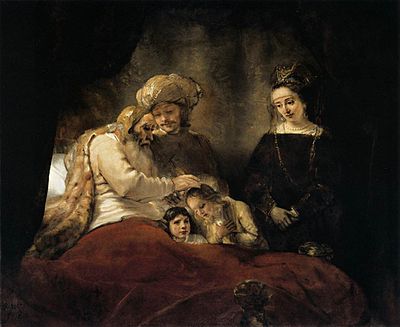
Jacob_Blessing_the_Children_of_Joseph_-_WGA19117[Continuation of Mimetic Blessing through Abraham (1): Cain and Abel

God promised Abraham that he would have as many descendants as the dust of the earth. (Gen. 13:16) I like the later image of the stars in the sky and the grains of sand on the seashore (Gen 22:17) but the earlier image ties in with the creation of humanity out of dust, thus making it clear that descendants of Abraham (like us) are part of God’s ongoing creation. That’s how expansive God’s blessing and being God’s blessing can be.

When Abraham and his nephew Lot found there was tension between their herdsmen, Abraham suggested that they separate and he gave Lot the choice of taking the land to the left or the land to the right. This is quite the opposite from what most of us do which is the first see what the other desires and then desire it for ourselves. Instead, Abraham renounces desiring what his nephew desires and goes in the other direction. (The better-looking land turned out to have its liabilities but that is another story.)

Unfortunately, Abraham does not renounce mimetic desire and rivalry when it comes to his sons Ishmael and Isaac. In spite of being called to be a blessing and promised as many descendants as the dust of the earth, Abraham fails to believe that both of his sons can inherit the blessing he has been given by God. Far from fighting each other, Ishmael and Isaac play well together but they fall victim to the rivalry between their mothers. (Women are equal participants in the mimetic rivalry game in Genesis.) Abraham casts Ishmael out so that his favorite son born of Sarah can inherit the blessing. God, however, makes it clear that there is a blessing for Ishmael, too, even if Abraham did not believe it.

Following his father’s example, Isaac assumes that only one of his two sons can receive his blessing and, like Abraham, he wants to give it to his favorite son. Rebekah’s involvement in this rivalry causes this Isaac’s scheme to misfire. This time, it is the son who receives (takes) the blessing who is exiled where Jacob spends many years in rivalry with his kinsman Laban. When Esau re-enters the story on Jacob’s return, we can see that Esau has done well for himself and has no need to envy his brother’s success. Apparently there was a lot more of a blessing left for Esau than Isaac thought.

Jacob stubbornly upholds the family tradition of disbelief in the scope of God’s blessing and singles out his favorite, Joseph, over/against his ten older brothers. This time the fratricidal strife has enough brothers to create a scenario of collective violence. In contrast to the primitive sacred, however, the unanimity is not complete. Both Reuben and Judah, separately, make plans to save Joseph but they both fail. If they had stood up to their brothers, the mimetic process would likely have been redirected in a peaceful direction. The upshot of the story is that Joseph ends up becoming a blessing to Egypt and to lands far beyond and he saves his own family through his foresight in collecting food during the years of plenty. (Joseph’s making the Egyptians buy back the food that had been taken from them does make Joseph less generous than his God.)

Before he dies, Jacob blesses the two sons of Joseph: Ephraim and Manasseh. He crosses his hands to indicate that Ephraim will be greater than his elder brother, but he gives both boys the same blessing. Finally, through excruciatingly painful experience, Jacob has learned that God has blessings for all of Abraham’s offspring.

Mimetic Blessing through Abraham (1): Cain and Abel

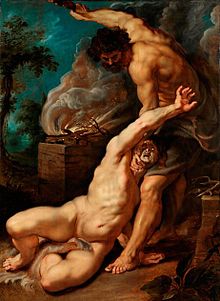
Cain_slaying_Abel,_1608-1609Fratricide is a running thread throughout Genesis. The rivalry portrayed in its stories do not involve romantic triangles as in novels and plays, but rather, the disputes are over blessings, the other running thread throughout Genesis.

In Creation God blesses humanity with all that God has created, but humanity rejects that blessing for the sake of one tree that then shrank to a barren landscape. To begin the process of re-gathering a scattered humanity after the Tower of Babel, God calls Abraham to leave his father’s house, i.e. the scattered, rivalrous civilization he was born in, and move to a land God will show him. When Abraham leaves the entanglements of mimetic rivalry behind, whole new vistas of possibilities suddenly present themselves.

God then tells Abraham:  “I will make of you a great nation, and I will bless you, and make your name great, so that you will be a blessing” and by him “all the families of the earth shall be blessed.” (Gen. 12: 1-3) We are so habituated to getting (or taking) blessings that we often fail to notice that God said Abraham would be a blessing and a blessing not just for him and his household but for all households. The intervening verse that God will curse those who curse Abraham is discordant. If God really is in the business of blessings, then God is not in the business of cursing. After all, Jesus did not curse those who cursed him and worse. However, we could say that when we curse someone who is a blessing, and through Abraham everybody is a blessing, then we are consumed by our own cursing.

We see all this already at play in the story of Cain and Abel who fight over a blessing and the supposed lack thereof. Genesis does not tell us why God accepted Abel’s sacrifice and not Cain’s. Girard’s theory of collective violence founding culture leads me to suggest that tilling the ground was a factor. There could have been mimetic rivalry among nomadic herders of sheep but tilling the ground like Cain was all the more conducive to rivalry over particular plots of land, such as Ahab’s coveting Naboth’s vineyard. The proliferation of vegetative dying and rising deities in mythology suggests that landed economy lead to mimetic crises and their resolution through collective violence. On the other hand, when we note the alleged zero sum blessings in the fratricidal strife that follows, maybe Cain jumped to the conclusion that when Abel was blessed, there could be no blessing for him.

What is decisive is that when Cain’s offering was rejected, or he thought it was, he embroiled himself with Abel, which was also to exile God. God called out to Cain, something God continues to do with violent humans to the end of time, but Cain would not let go of his preoccupation with his brother until he had killed him.

Afterwards, Abel’s blood cried from the ground. This is a marked contrast with the fratricidal myth of the founding of Rome where the blood of Remus was silent. Like Romulus, though, Cain was a founder of culture while Abel was the first prophet as defined by Jesus in Mt. 23:35, that is, a prophet is a victim. Abel’s blood seems to have cried for vengeance. The author of Hebrews, however, says that the blood of Jesus “speaks a better word than the blood of Abel.” More proof that God is in the business of blessing and not cursing.

Quixotic Reading

Don_Quijote_and_Sancho_PanzaIt is both interesting and significant that the mimetic desire revealed in two of the novels discussed by René Girard in Deceit, Desire & the Novel are derived, not from other people, but from characters in literature.

Don Quixote famously went mad with a desire to imitate Amadis of Gaul in the medieval romances of this knight errant, while Madame Bovary’s desires were fueled by the sentimental novels she read. The literature consumed by both characters gives them distorted visions of reality. Don Quixote mistakes windmills for evil giants and a barber’s basin for a knight’s helmet. Madame Bovary sees the lovers of her life through the lens of the romance novels and fails to see them as they really are until it is too late.

Of the two, Don Quixote is much more removed from “reality” than Madame Bovary. Yet, although the novels Madame Bovary has read seem to mirror “real life” and are thus “realistic,” it is she who seems to be even more confused about “reality” than Don Quixote, to the point of being smothered by fantasy so that what self she has disappears. C.S. Lewis offers us a key insight here when he says : “Children are not deceived by fairy tales; they are often and gravely confused by school stories. Adults are not deceived by science fiction; they can be deceived by the stories in the women’s magazines.” Lewis seems a bit sexist here but the underlying point is clear enough. “Realistic” stories present models and stir up desires that seem realistic but are traps that catch the unwary reader.

Curiously, Don Quixote’s fantasies have a contagion of their own. An unnamed man accuses Don Quixote of having a “talent for making anyone who has anything to do with you mad and senseless.” It is curious that Don Quixote is blamed for the insanity of others, as the other people are arguably making themselves insane by staying on Quixote’s case to the point of obsession. In the second part of the novel, a duke and duchess spend huge amounts of time and expense to mirror Don Quixote’s desires in theatrical fakery. They themselves seem to be caught up in Quixote’s madness as much as their victim.

In both cases, there is something of a collective violence around a victim. In the case of Don Quixote, his singularity provokes a spontaneous, improvised conspiracy to bring him to his senses. In the case of Madame Bovary, the social system of mimetic desire is fully developed to the extent that both Madame Bovary and her irresponsible husband and lovers all act like puppets of the ambient fantasy fueled by the novels and the culture industry.

Novelists such as Cervantes and Flaubert are faced with the enormous challenge of revealing the truth of mimetic desire in a medium that is normally used to reflect and fuel mimetic desire. After all, it is the latter tendency that makes huge profits for the producers of this and other media. In the second part of Don Quixote Cervantes does not disguise his indignation over copycat offshoots of his work and other ersatz imitators. Perhaps the main thrust of the second part was to mirror the misunderstandings of his readers in the Duke and the Duchess.

It isn’t enough to write novels revealing mimetic desire. Also needed are readers who can truly see what these novels reveal. If Cervantes was exasperated by the readers of his time, imagine his apoplexy over a musical featuring an inspirational song about following impossible dreams. For Cervantes was showing us in his novels that successfully imitating fictional characters is truly impossible. Don Quixote could not live Amadis of Gaul’s life any more than Emma Bovary could live the lives of heroines in the novels she read. They could only live their own lives, which they failed to do.

Werther is another fictional person who was widely imitated for a time. Heartsick and overwhelmed by his mimetic desire for a woman already promised to another man, Werther kills himself. The publication of Goethe’s novella was followed by an epidemic of suicides throughout Europe. This phenomenon is still called the Werther effect. Drowning in the mimetic desire of fictional characters can be deadly.

So how do we read in a way that is life giving? The short answer is to seek life where it can be found, where Don Quixote found it at the end, in repentance. I will give a slightly longer answer in my next blog post.

Human Weakness the Cornerstone

peter healing cripple_RembrandtThese days we take ramps and handicapped parking spaces for granted. However, such considerations for people with special needs are quite a flip-flop from what such people experienced in the early days of humanity. In the social crises at the dawn of humanity as envisioned by René Girard, when everybody was at everybody’s throat, the choice of the victim was usually arbitrary, almost like a lottery. It could be anyone. However, if any person in this melee of undifferentiation should stand out in any way, that person would be the most likely victim. The person who stood out might be the most talented; a scenario often repeated today. (See Ignominious Glory, Glorious Ignominy: A Doxology) Many mythological victim/deities were great musicians or poets. Another way a person might stand out is by being handicapped. René Girard points out that a predatory animal will spot the weakest member of a herd and go for that one and that the same holds true of a society in crisis. One need only think of the many lame victims such as Oedipus or deities like Odin with only one eye.

The flip-flop started as soon as the Church, inspired by Jesus’ healing ministry, had the resources to build facilities for the sick and disable. As far as I can tell, hospitals are a Christian invention. We are so used to infirmaries that we think nothing of Benedict’s provision for an infirmary in his Rule, but Benedict was an innovator in his time. The teaching and ministry of Jesus that involved reaching out to the weak, the people formerly rejected by society, had become the cornerstone of Benedict’s monastic vision that consideration should always be shown to the weak. Of course, Benedict meant far more than sick and handicapped people with this admonition, as Benedict well knew that we all experience weakness in many ways. I have discussed care of the sick and its ramifications at length in my book Tools for Peace.

Many years ago, when I was a seminarian taking CPE (Clinical Pastoral Education), one of the chaplains, who was legally blind, gave a talk on issues involving handicaps. He helped us greatly in sensitizing us to how people in his position felt with being helped either too much or not enough. He was also very honest about himself and he admitted that being handicapped did not necessarily make him any more sensitive to other handicapped people than anybody else. As an example, he told us of how he recoiled when introduced to a person with a withered arm.

To this day, even those of us who care for others experience this kind of recoil when we encounter others who are a bit different, especially if the difference is grotesque. But our treatment of alleged nerds and celebrities shows us that a difference in conspicuous talent raises the same sort of dread. If we notice ourselves in this respect, we can experience a kinship with our brothers and sisters who made sacrificial victims and then deities out of the likes of Odin.

Sacrificing the Aztecs

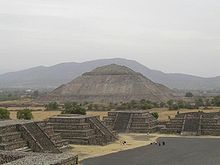
Teotihuacan9The sacrificial rites of the Aztecs at the time of their conquest give a rich example of the institutionalizing of sacrifice. The horrific quantity of children sacrificed to bring on rain with their tears, and the men whose hearts were cut out to keep the sun alive leads us to dismiss them as civilized human beings. But they were highly civilized. In the book Sacrifice and Modern thought, two stimulating articles help us understand Aztec sacrifice. Both Laura Rival and David Brown help us sympathize with the Aztecs as human beings. Rival points out that human sacrifice was modeled on the deities who threw themselves into the primordial fire to create the fifth sun and set it in motion. This myth points to a noble disposition behind the sacrifice. It is not hard, however, to see this as a typical myth that hides the collective violence that laid the foundations of their culture.

David Brown summarizes clearly the “flower wars” that were part of the sacrificial system. These wars had become as highly ritualized as the sacrifices performed on the top of the pyramids. The whole purpose of these wars was to capture sacrificial victims in fair fights. The initial chaos leading to the myths and sacrificial rites had led to a complex, highly restrained structure of warfare.

Brown quotes a moving statement by an Aztec leader who says that the Spaniards did not understand “how vital it is for us to give blood to the gods.” As selfless as the sacrifices were, and the Aztecs believed they were rewarded in the afterlife, they were convinced that if they failed to continue these sacrifices, the gods would become angry and turn away from them. Here we have it: as with so many other early cultures, the Aztecs were caught in a sacrificial system that allowed no escape. If the gods are subject to anger and capriciousness, one does not dare turn away from the only rites that had a chance of deflecting the divine wrath.

The structure and restraint of the Aztecs is a dramatic contrast to the chaotic overrunning of their country on the part of the Spanish Conquistadors. Cortes justified these measures out of repulsion at the sacrifices carried out by the conquered people, but in a cruel irony, the Spanish made a cruel holocaust of the sacrificers. A comparison with the lynching of blacks in the United States shows us the same chaotic mob violence. (See Selling Postcards of the Cross.) In The One by Whom Scandal Comes, René Girard contrasts the fundamental way Satan works in archaic cultures and in modern cultures where some awareness of the Gospel has occurred. Among the Aztecs, as with so many other peoples, Satan was the transcendent principal of order. But with Satan cast out of the sky during the ministry of the Hebrew prophet Jesus, Satan acts imminently within human cultures as a disrupter.

In my last post, I noted how killing twins became part of a package of maintaining a satanic social order. (See Twin Killings.) All twins can be thankful that this order has been dismantled. Likewise, we can be grateful that we don’t have pyramids where people’s hearts are torn out. We are free of the satanic order, but we are not free of the chaotic violence that has been unleashed on to the world unless we actively seek the freedom we gain from being grounded in the God of Love who has gathered all Aztec victims into the divine fire that fills us all with eternal life.

Twin Killings

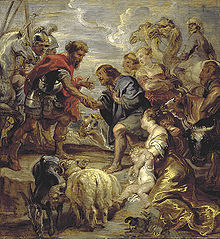
220px-Rubens_Reconciliation_of_Jacob_and_EsauIn baseball a twin killing is a double play: two outs on one batted ball. “Two for the price of one,” as the great Detroit Tigers great sportscaster Ernie Harwell called it. Double plays are a legitimate part of baseball. But there is another kind of twin killing that has been a part of humanity until close to the present day that is not legitimate: the killing of twins.

Why was one, and sometimes, both twins been killed in early societies? René Girard suggests that it was the fear of what he called “mimetic doubles,” two people united through conflict. After the social chaos was resolved by collective violence, societies created structures to prevent the repeat of the chaos as much as possible. Twins, especially identical twins, were too much of an image of the indifferentiation that lead to conflict. They could not be allowed to live. During the time of chaos, indifferentiation was precisely the problem as differences between people melted in the heat of conflict. It is obvious to us now that these babies were innocent victims of society’s fear of mimetic doubles, but in today’s society where social differences are dissolving, perhaps we should fear, not twin babies, but mimetic doubles.

The authors of Genesis had no illusions about the danger of mimetic doubles. Brothers paired off against each other are the driving force of the book, culminating in Joseph’s brothers ganging up on him. Jacob and Esau were twins. The conflict that kept them apart for many years finally resolved in an uneasy reconciliation as Esau turned out to be more forgiving for the wrongs done him than Jacob ever believed possible.

Lois Lowry’s chilling dystopia The Giver also has a twin killing. The society is shown to be peaceful but colorless. (Literally so, as we learn when the protagonist, Matthew, begins to see colors.) It becomes apparent that everything is designed to prevent conflict. There is no courtship or sex; medication stifles the latter and babies are grown in test tubes, implanted in adolescent girls, and distributed to couples, each of whom gets one boy and one girl. Not surprisingly, the cost of this “peaceful” society is high. When Matthew is apprenticed to the Giver, he learns that it is his job to keep track of everything that is happening via TV monitors but to do nothing unless asked, as the job is consultative only. A day or two before Matthew makes his escape, he watches his own father “release” one of two twin babies with a lethal injection, the normal way of releasing somebody. (The elderly are so released at a certain age after a celebration of their lives.)

Much else is shown to be wrong with this society but the killing of a twin shows clearly enough that preserving the peace by squelching mimetic doubles inevitably institutionalizes violence, even if, as in Lowry’s society, it is kept invisible. René Girard would argue that one of many effects of the Cross and Resurrection is that we don’t kill twins and we have the freedom to build God’s kingdom where we actualize the freedom shown by Esau to forgive and then later by Joseph to his brothers. It is no longer possible for social structures to contain the potential violence of mimetic doubles in conflict. It is possible, and in our times, necessary to renounce conflict, even if it means forgiving the theft of a blessing. This renunciation leads to its own blessings. After all, Esau had done pretty well for himself while Jacob was away.

The Cross as a Crisis of Faith

crucifix1Rachel Held Evans recounts her spiritual journey from fundamentalist Christianity to a Christian stance with many more nuances and much more depth in her book Evolving in Monkey Town, the town being Dayton, TN where the famous Scopes Trial, or Monkey Trial, took place. One event made a particularly deep impression on me as it showed how a growing instinct for the Paschal Mystery broadened her vision of a terrible news story she witnessed on TV.

The story was shown in 2001, just before the US invasion of Afghanistan, obviously for the purpose of justifying the invasion on the grounds of the Taliban’s callous treatment of women. (Never mind that if every country that has people who commit atrocities towards women deserve to be invaded, then every country in the world would deserve it!) The video showed a woman named Zarmina, dressed in a burqa, being dragged into a soccer stadium during halftime where she was executed before the capacity crowd. She had been charged with murdering her abusive husband, although a confession extracted after two days torture is rather suspect.

It is very important to note that Rachel’s reaction had nothing to do with criticizing Islam as a religion. Rachel’s problem had to do with Christianity. She had been taught all her life that only those who consciously accept Jesus as savior can be saved. But seeing a woman suffering such an atrocity on TV made it very hard for her to believe that a woman who had suffered so badly should have her suffering compounded by spending eternity in hellish torment because she had died a Moslem. That Zarmina had said her Moslem prayers in the face of what her co-religionists were doing to her speaks strongly for the power of Islam as a source of deep spirituality.

It became very hard for Rachel to believe that a loving god would predestine a woman like this to hell. When she thought about the Killing Fields of Cambodia, the gassing of Iraqi Kurds and the Jewish victims of the Holocaust, Anne Frank among them, it became harder than ever for Rachel to believe this of God who had sent his only begotten Son, not to condemn the world, but to save the world. She noted that in Sunday school, hell had been presented as a place for people like Hitler, but with no mention of his victims. Yet, all of Hitler’s victims who were Jewish were excluded from Heaven according to what she had been taught.

This event precipitated a crisis of faith that lasted several years. The irony is, this crisis was caused, not by a self-centered doubt about God, but by a deepening formation within her of the Paschal Mystery. If the risen and forgiving Jesus is the “living interpretive principle,” as James Alison says, then Jesus does not just interpret the scriptures, although obviously he does that, but Jesus interprets everything everywhere through the Paschal Mystery. So it is that all victims from Abel to the latest youth killed in urban gang warfare are brought into the Cross, and from there, raised to the life of the Resurrection. What Rachel had experienced as a crisis of faith was really a deepening of faith in the scope of the Paschal Mystery. So it is that Zarmina was surely gathered into deeper and greater life blossoming from the Moslem prayers she recited just before she died.