

Jesus’ suggestions that we cut off a hand or a foot or tear out an eye are so shocking that we are pulled away from the previous verse where Jesus mildly says that “whoever is not against us is for us” and that anyone who gives a cup of water will be rewarded. (Mk. 9: 41) It is worth noting that a great many sayings and parables of Jesus take us out of our comfort zones. This particular hard saying takes the cake, a rock hard bad tasting cake at that. The standard way for a preacher to wriggle out of these hard sayings is to say that they are “hebraisms,” that is to say, hyperboles to get our attention. Maybe so, but let’s allow these verses to get our attention and see where they take us.
We get some help from the broader context of these sayings. Earlier in Mark 9, read as last week’s Gospel, Jesus tells his disciples that he will be “betrayed into human hands” and killed. The disciples respond to this warning by fighting about who is the greatest. Jesus responds to this infighting by putting a child among the disciples and saying that whoever welcomes this child welcomes him and the one who sent him. (Mk. 9: 37)
In this context, we can see that the disciples’ complaint about the person who is not “one of us” casting out demons is a renewal of the competitiveness on the part of the disciples. Casting out demons is something Jesus has told the disciples to do and now this other person is doing it. What’s the problem? Maybe the problem is that the disciples had just failed to exorcize a demon as Jesus was coming down from the mountain and they are jealous. Jesus gently rebukes them for their competitiveness by saying that anyone who is not against him is for him. The disciples aren’t the only show in town. Then Jesus echoes his commendation of the child by saying that whoever offers anyone a cup of water will be rewarded. That is, thinking about the needs of others, especially the most vulnerable, and doing something about it, leaves no room for competition.
Then come the hard sayings. Jesus warns the disciples (and us) about putting stumbling blocks before these little ones: the child in the midst of the disciples, the one who should be given a cup of water. It is precisely the competitive behavior that scandalizes the little ones, leading them to copy the behavior modeled by those larger and more powerful than they. Children playing cowboys and Indians, as in my day, or with GI Joe or Ninja toys more recently, may be cute, but aren’t they mimicking their elders too closely for comfort? When children see their elders fighting over who is the greatest, is it any wonder they do the same? The notion that it is better to be hurled into the sea with a millstone around the neck than to scandalize the little ones should make one think. It is worth noting that throwing people off of cliffs was a popular means of sacrificing. Being willing to cut off a hand or leg or gouge out an eye rather than scandalize a little one is drastic, but it makes it urgent that we sacrifice our competitiveness rather than scandalize the vulnerable. Indeed, lacking a limb or an eye (remember Odin?) causes one to be a “random” victim of sacrifice. Moreover, dismemberment is also a common method of sacrifice. (Remember Prajapati?) Of course, it would be simpler and less drastic to offer a cup of water, but if competitiveness through what René Girard called “mimetic rivalry” is a powerful addiction, as Girard suggested, our hands and feet are too caught up in rivalry to make even so simple a gesture.
This brings us to hell where the worm never dies and the fire never quenched. (Mk. 9: 48) It would indeed be better to have one hand rather than two that burn in hell for all eternity. But that isn’t what Jesus is talking about here. The word he uses is “Gehenna,” which means something different. Some scholars think it was a large garbage dump outside Jerusalem whose flames never stopped smouldering. More to the point, Gehenna was the valley where Jeremiah claimed that children were sacrificed to the pagan deities. It does seem fitting that such a cursed place would be turned into a refuse heap. Gehenna, then, is where our rivalrous battles end: a place where the vulnerable are sacrificed to fuel our battles. Maybe Jesus’ words about cutting off limbs is hyperbole, a set of “hebraisms,” but they are warning us of the consequences of our rivalrous ways. One of the clearest symptoms of mimetic rivalry is the sharp divide between us and them, a divide the contending disciples tried to make between themselves and the other person who exorcized people.
Jesus concludes his teaching by referring to salt. Salt was added to sacrifices by both Jews and Romans, but as in the use of the image in Matthew and Luke, salt refers to an inner quality, perhaps a willingness to sacrifice self rather than others. This willingness to sacrifice self is of great value and losing it would be much worse than losing an arm or a leg. Jesus tells us that the greatest value of the inner salt is to “be at peace with one another.” (Mk. 9: 49) Being at peace allows for offering a cup of water to one who has need of it, and such giving creates more peace. Indeed, Jesus himself gave up much more than a hand or a foot; he gave up his life to deliver us from the Gehenna of our own making.
 The eighth chapter of Romans is among the most inspirational passages in all scripture. Paul assures us that “all things work together for good for those who love God, who are called according to his purpose” and that we will be “conformed to the image of his Son, in order that he might be the firstborn within a large family.” (Rom. 8: 28–29) Lest we think that only some people are predestined for God’s family, Paul asks: “If God is for us, who is against us?” (Rom. 8: 31) If Jesus is interceding for us, what more powerful persecutor is there to speak against us? Do we really want any personal being to veto the advocacy of Jesus? If we are truly stirred by these words, then we must stamp them deep into our hearts and allow them to govern how we view God and how we view other parts of scripture. For today, I suggest using these words to help us understand the parables in Matthew 13.
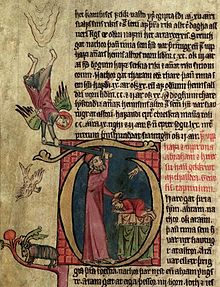 When the story of the near-sacrifice of Isaac was first told to me in Sunday school, the teacher prefaced the story by saying that in biblical times there were people who made sacrifices to “god” and some people even sacrificed their own children, but God decided to teach Abraham that he should not do that. The story was troubling but it was comforting to know that God did not want such an awful thing. Between that and being told around the same time the story about Jesus inviting the children to come to him did much to instill in me a trust in God as deeply loving from an early age. Since then, I’ve come across many learned scholars who think such an interpretation of the Isaac story is simplistic. Who’s right?
 John the Baptist is so closely associated with the beginning of Jesus’ ministry that it’s easy to see them as two of a kind. Both preached repentance. Both died the death of a martyr.
 When Jesus warns of wars and insurrections fought by nation against nation and kingdom against kingdom, he is painting an image of humanity divided by violent conflicts on a grand scale. These conflicts are coupled with catastrophic natural disasters such as earthquakes, plagues, and famines. .(Lk. 21: 9–11) Jesus then goes on to warn his followers of persecutions on an equally large scale involving kings and governors, clearly suggesting a strong connection between strife and persecution. In the late twentieth century, the French thinker René Girard speculated that humanity suffered the same dangerous conflicts at the dawn of civilization and it instinctively resolved the conflicts by persecuting a victim or small group of victims. These victims were blamed for both the violence and the earthquakes and the plagues and famines. Blaming the victims entailed falsifying the reality of what had happened. Persecution and lies are inseparable. It is not difficult to see that Jesus saw clearly the truth in his time that Girard was to articulate in ours.
 Easter is an occasion of great rejoicing with bells, boisterous singing, and feasting. But do we really know what we are celebrating? The Gospel reading, doesn’t exactly ring out with Christmas joy of angels filling the skies with songs of God’s glory. Instead, we get “two men in dazzling clothes” who tell the women who came to the grave to anoint Jesus’ body that Jesus was not there but had risen. They had come to the wrong place.
 The narratives of the call of Isaiah, Paul, and Simon Peter bring to mind my own experiences of God’s call. In my case, it wasn’t quite like being attacked by a Cherubim in church, getting knocked down on the Road to Damascus or being told to throw out the fishing nets one more time and being overwhelmed by the catch.
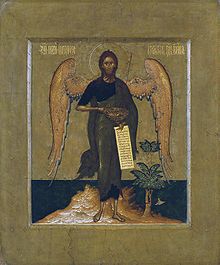 Although John burned with a conviction that God was going to do something new, he had only the models of past prophets to guide him in opening a way to the great new thing. He lived in the desert, wore a camel hair coat and ate wild locusts and honey in imitation of Elijah. Like the prophets of the past, he warned the brood of vipers of the wrath to come if people did not shape up and turn back to God. (Lk. 3: 7) Again like the prophets, he told soldiers not to oppress vulnerable people. Yet again like the prophets, he rebuked his ruler, Herod. And like so many of the prophets, he was put to death.
 The rich man who asked Jesus what he needed to do to inherit eternal life and then walked away grieving when Jesus told him to sell all that he owned (Mk. 10: 21) is a warning to all of us, rich or poor. Jesus’ added warning that it “is easier for a camel to go through the eye of a needle than for someone who is rich to enter the kingdom of God” only makes the warning all the more dire. Paul strengthens the warning further when he tells Timothy that “the love of money is a root of all kinds of evil,” (1 Tim. 6: 10) Bucking these warnings is our formation from earliest childhood that money is both good and necessary and more of it is always better than less.
 Imaginary Visions of True Peace