

There is something intriguing, if frightening, yet hopeful, about transitions. When change is in the air, we can hope it will be good. Dawn and dusk are poignant times of the day as we see a new beginning with the sunrise and, strangely, a new beginning with the sunset that signals another day coming. Midsummer’s Day is a day of transition as it is the longest day of the year before the days shorten. Surely, it is this symbolism that caused this day to be assigned to the transitional character St. John the Baptist.
Such a transitional figure lives on the margins of society. Like Elijah, like Isaiah, John lived in the wilderness. Like Isaiah, he was a voice crying in the wilderness. Like both prophets, he preached truth to power. Like Isaiah, he prophesied that God was about to do something stupendous, something unheard of. So what does John the Baptist teach us about what it is like to live on the margins?
When one lives on the margins, especially on the temporal axis, a time of transition, one does not really know what one is doing. The main thing John did, besides preach repentance, was baptize the people who came to see him. Did he know what baptism would come to mean for Christians? How could he? But the Jewish custom of the mikvah symbolizes new beginnings in obeying the Torah, and John knew that his preaching was about a new beginning.
By hindsight, John is seen by Christians as a forerunner of Jesus, the one who prepared the way for him. But did John know it at the time? The Gospel record is equivocal. When Jesus comes to John to be baptized, John demurs, sensing that this is one person who does not need to repent, and Jesus has to insist on John’s doing the baptism to fulfill all righteousness. (Mt. 3: 15) But later, after Jesus’ own ministry gets under way, John seems not to be sure if this is the one he paved the way for or not, and he sends some disciples to ask Jesus if he is the one to come, or if he should seek another. In response, Jesus heals several people, suggesting, without saying anything, that he might be the real deal. (Lk. 7: 19–21)
So, one thing we can do while living on the margins is find a way to reapply something in the tradition that points the way forward. Not everybody can be so inspired, but another thing we can all do is prepare the way for the Lord as did Elijah and Isaiah. This is a matter of emptying ourselves so that we give God the room to move in and do God’s work, whatever it should turn out to be. If we are to empty ourselves so as to prepare the way for God, we must make our own the words of John the Baptist: “He must increase, but I must decrease.” (Jn. 3: 30) It is always the one who is to come who is greater than the one for whom one preparing the way. If we try to be the greater one, we will prepare the way for nobody.
It is possible that John died without knowing if he had seen the one he was preparing the way for or not, but it seems likely he thought it possible that he had. In any case, he certainly did not foresee what Jesus would do to recreate the world. That wasn’t John’s job. His job was to prepare the way, to wait for the dawn from on high to break upon us, (Lk. 1: 78) and he did that by decreasing so that Jesus could increase.
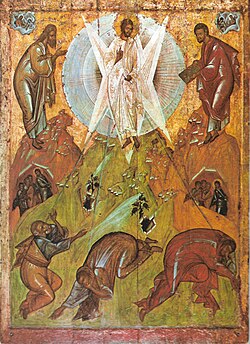
 When called by the prophet Elijah, (1 Kings 19: 19–21) Elisha asks to kiss his mother and father first. When he is rebuked for this demurral, he slaughters his oxen, breaks the yokes and burns them, and then follows Elijah. That is, he burns his bridges in making a clean break. Elisha makes this break, however, to join a brotherhood of prophets who have set up an alternate community to the violent and idolatrous kingdom of Ahab and Jezebel. Unfortunately, this community is also compromised by violence as Elijah calls fire down on his enemies (2 Kings 1: 10–12) and one of the prophets anoints Jehu to pull of a violent coup d’état. (2 Kings 9)
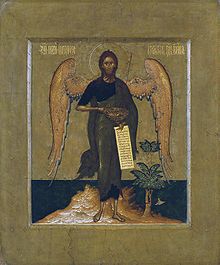 Although John burned with a conviction that God was going to do something new, he had only the models of past prophets to guide him in opening a way to the great new thing. He lived in the desert, wore a camel hair coat and ate wild locusts and honey in imitation of Elijah. Like the prophets of the past, he warned the brood of vipers of the wrath to come if people did not shape up and turn back to God. (Lk. 3: 7) Again like the prophets, he told soldiers not to oppress vulnerable people. Yet again like the prophets, he rebuked his ruler, Herod. And like so many of the prophets, he was put to death.
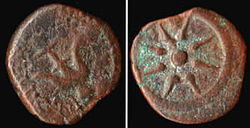 The widow who put “two small copper coins” in the temple treasury, all she had to live on, (Mk. 12: 42) has been held up by many preachers as a touching example of heart-warming generosity. Those of us who have come to notice the social and economic issues in the Gospels have seen some concerns that are rather chilling.
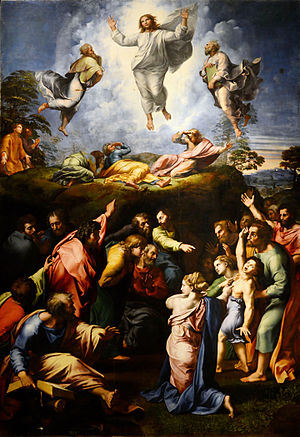 I was introduced to the Transfiguration of Our Lord when Raphael’s great painting of the event hit me between the eyes during my student travels in Rome. With the Feast of the Transfiguration coming during my church’s summer slump (and it wouldn’t have celebrated the feast anyway) I knew nothing about it. In many ways, I didn’t have to. The painting opened up a vision of a transfiguration of humanity beyond what I had thought possible. At the time, what faith I had wasn’t centered around any particular religious viewpoint but I was majoring in religion because I thought the subject dealt with the most important things in life. Seeing the painting was more of a religious awakening than I knew. I was, of course, impressed by the sublimity of the upper half of the canvas where Jesus is floating in the air with Moses and Elijah. But I was even more impressed by the inroads the transfigured light made into the lower half which is often interpreted as indicating sinful and benighted humanity. It has taken me years to see further into the significance of this chiaroscuro effect.
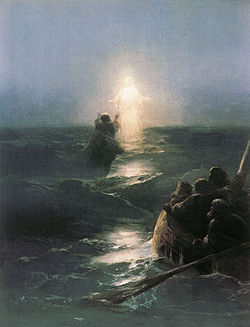 It is highly significant that Elijah did not find God in the wind, the earthquake, or the fire, but only in a “sound of sheer silence.” (1 Kg 19:12) It happens that Elijah had just run away from fire and storm when he heard this sound of silence. Since Elijah had just “won” the battle with the priests of Baal, one might have thought that God had spoken through wind and fire that time, but the result of “winning” that contest was needing to run for his life because Jezebel was out to get him. So it seems God had not spoken in the wind and fire on Mount Carmel after all. If we stop the story with the “sound of sheer silence,” we are edified, but when we read on to the words Elijah heard, we are seriously troubled. At least I am. Elijah is told to anoint Elisha to be his successor prophet. So far so good. But Elijah is also told to anoint Jehu son of Nimshi to be king of Israel. The narrative of Jehu’s cold-blooded coup d’état is chilling to say the least. (2 Kg. 9) More chilling are the words Elijah heard: “Whoever escapes from the sword of Hazael, Jehu shall kill; and whoever escapes from the sword of Jehu, Elisha shall kill.” (1 Kg. 19: 17) After the violent rivalry between Elijah and the priests of Baal, we get the crossfire of the violent rivalry between Hazael and the House of Ahab: more storm and fire. I have a hard time hearing this storm in the “sound of sheer silence.”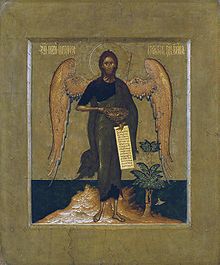
 Imaginary Visions of True Peace