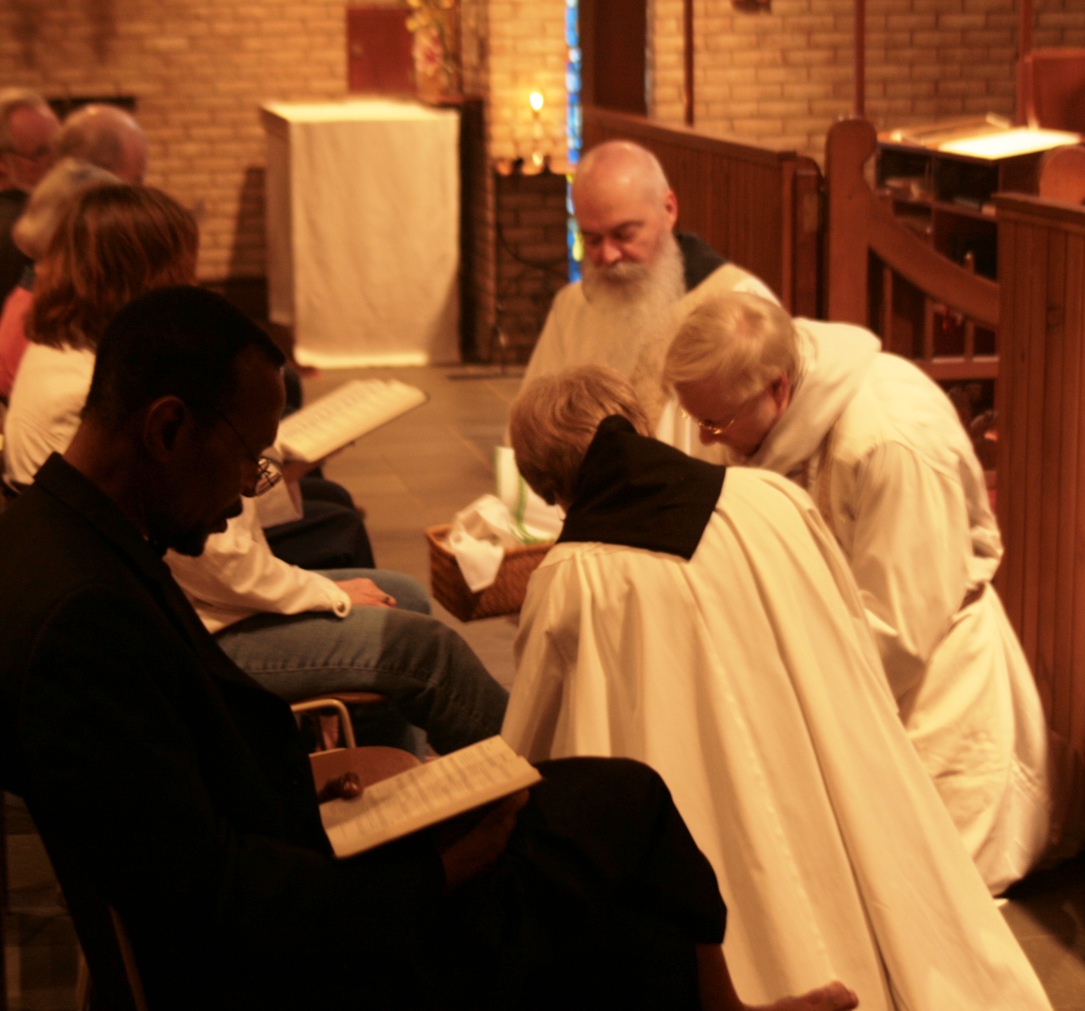
Forgiving the Unforgiving Servant

It is obvious that the Parable of the Unforgiving Servant is about forgiveness, but what it actually says about forgiveness can be a bit elusive. It seems to say that if you do not forgive the sins of others; your own sins will not be forgiven. Fair enough. The trouble is, forgiveness isn’t fair; it’s totally unfair. That’s the whole point of forgiveness. We often complain about unfairness if we are blamed for something we did not do, or if we think the punishment is out of proportion to the offense. But forgiveness is an opposite unfairness; we are not given the punishment we deserve. We don’t complain about the unfairness of it except for when it comes to other people who obviously deserve a harsh punishment for what they did to us,

Fairness and unfairness aside, this parable seems to pose the conundrum about the forgiving god being unforgiving. We could say it isn’t God but the Master in the parable who is unforgiving. There’s no question about the Master, but does the Master stand in for God? The concluding verse seems to suggest it: “This is how my heavenly Father will treat each of you unless you forgive your brother or sister from your heart.” (Mt. 18: 35) But how can we speak of God being forgiving if God does not always forgive? Of course, if we aren’t inclined ourselves to forgive the unforgiving servant, who are we to judge God for not forgiving him?

I find the Swiss theologian Raymund Schwager helpful here. In his book Jesus in the Drama of Salvation he develops a dramatic theology in five acts. The first act is the proclamation of , forgiveness, most powerfully expressed in the Sermon on the Mount. The second act is the refusal of the message of forgiveness on the part of Jesus’ hearers. This parable and many others that include acts of violence fall into this second act. That Peter asked if he had to forgive as much as seven times is an example of resisting the teaching on forgiveness. Schwager suggests that the weeping and gnashing of teeth that crops up in several parables refer to this refusal of Jesus’ message. Schwager emphasizes the point that Jesus is not just talking about small-scale relationships; Jesus is preaching a System of forgiveness. Society is to be made up of forgiveness rather than blame and retaliation. If God really is a forgiving God, then God forgives our lack of forgiveness, but God does not save us from the consequences of sticking to the old system of blame and retaliation. All this old system ever got us is weeping and gnashing of teeth. Gnashing of teeth is an apt image of blame and retaliation; Paul admonished his corespondents to stop devouring one another. (Gal. 5: 15) On a more positive note, in Romans, Paul gives a concrete illustration of what it means to live and die for the Lord: Do not judge our brothers and sisters or hold them in contempt because we all stand under God’s judgment seat. (Rom. 14: 8, 10)

If Jesus does indeed want us to develop a system of forgiveness as Paul clearly believes, then it only takes one unforgiving person to short circuit the system and knock over all the dominoes of forgiveness in quite a spectacular crash. The effect is much the same if someone commits what seems an unforgivable act. Even worse is an act that combines vengeance with lying accusations. The only way to keep the system from crashing in a situation like this is to remain open to God’s gift of forgiveness as a free gift for ourselves and for the offender in the midst of the crash. If Jesus is indeed enjoining a system of forgiveness, then he isn’t telling Peter, as an individual, to forgive offenses seventy-seven times or seven times seventy times; he is asking Peter, as he is asking us, to counter offenses and vengeance by starting a counter chain reaction of forgiveness. Easier said than done. We need to be focused on God and not the one who has hurt us and certainly not on our own hurt. The judgment seat we stand under is a judgment of forgiveness, but forgiveness does shed light on what needs forgiving in the very act of forgiveness. That can be a painful and a built-in punishment for what we have done or not done. Forgiveness may get us off God’s hook, but it doesn’t take us off the hook we’ve hung ourselves on. We are easily distracted by thoughts (sometimes legitimate ones) that the other is the one who needs a lot of forgiveness, but we must remain grounded God’s forgiveness of us and use that free gift to participate in God’s forgiveness of others. Only then can we rebuild the system of a forgiving society.

In Schwager’s drama, the third, fourth, and fifth acts are the crucifixion, the Resurrection, and the sending of the Holy Spirit. Indeed, far from punishing his unforgiving hearers, Jesus took on the wrath of their blame and retaliation on the Cross. And that is where accepting the gift of God’s forgiveness in the midst of blame and retaliation can take us as well. But what other way is there, really, to the resurrected life and the breath of the Holy Spirit which breathes God’s forgiveness of our sins?

The Voice of the Canaanite Woman

The opening verses of Isaiah 56 and the 11th chapter of Romans celebrate the incorporation of the Gentiles into the blessings bestowed on the Jewish people by God. Both of these passages make the integration sound as easy as pie but most other portions of scripture suggest that the matter is far from easy, so perhaps the pie is in the sky, well out of reach. The Jewish people had a lot of bad history with Gentile nations, both from being aggressors in the conquest of Canaan and from being oppressed by Egypt, Assyria and Babylon. In Romans, Paul struggles, not with Gentiles, but with his fellow Jews who have, for the most part, failed to accept Jesus as the Risen Lord. We know from this epistle as well as several others, that Paul also struggled with fellow Jews who did accept Jesus but had trouble accepting the Gentiles if they would not accept the Torah.

We can see this tension in the Gospel. Jesus treats the Canaanite woman harshly when she asks him desperately to heal her daughter of a demon. (Mt. 15: 21-28) It is possible, as many scholars suggest, that Jesus was testing the woman to provoke her to her strong act of faith. I’m inclined, however, to think that Jesus himself struggled with the request from an enemy people. Significantly, Matthew’s designation “Canaanite woman” is anachronistic; Mark is more contemporary by calling her a Syro-Phoenician woman. The Syro-Phoenicians tended to collaborate with the Roman rulers, so the bad blood is both current and historical. As a human person, Jesus would have been born in a social milieu where these tensions would have been absorbed from an early age.

Curiously, Jesus does seem to be a little more patient, or at least less impatient, than the disciples. While Jesus is silently letting the woman pester him, as if at some level he is willing to put up with her, the disciples are urging Jesus to send her away, Jesus finally says to the woman that he was sent only to the lost sheep of Israel. When the woman persists in crying out for help, Jesus shockingly tells her that it is not right to toss the children’s bread to the dogs. One might think this sort of insult would cause the woman to give up and turn away, but she persists with the retort: “Even the dogs eat the crumbs that fall from their master’s table.” This plea converted Jesus, convincing him that she had great faith and her faith had healed her child. How might these words have changed Jesus, assuming he needed to be changed in relation to the woman? The woman’s words are quite disarming in the way they absorb the insult without reprimanding Jesus–or do they in a way? As I continuously reflect on the dynamics of race relations in our country, one of the things I am beginning to notice is how black people have to be very careful about what they say to whites who have the power. I am beginning to see that those of us who are white don’t pick up on this sort of dynamic very well. We take our superiority so for granted we don’t see it and can’t hear it.

But Jesus did hear the undertone. As a Jew living in an Empire run by the Romans, Jesus would have known very well the fine art of speaking truth to power. Usually, he would have been in the same subordinate position in relation to a Syro-Phoenician. But this woman was desperately in need and had come to Jesus only to be trashed on account of her ethnicity. The role-reversal would have been startling to Jesus. Suddenly, he was being treated as the oppressor–which he was at the moment. Jesus, who had come to serve, not to be served by oppressed people, would suddenly have been awakened to the truth of his attitude to the Canaanite woman and to the rest of her people, He wastes no time in commending the woman’s faith and proclaiming the healing of the woman’s daughter.

There is much else in this narrative to suggest that Matthew places it in a process leading to the mercy of God to the Gentiles through Jesus. For example, this narrative takes place between the two feedings in the wilderness which are often taken to refer to feeding the lost sheep of Israel and then feeding the Gentiles. The “dogs” get quite a few crumbs from the table after all and so they receive the mercy the woman asked for.

But what is important about this story is that it leads us into our own struggles with racism and other ethnic prejudices. Many of us think we have done the job by denouncing prejudice and racism but we overlook the instinctive reactions we absorbed before we were conscious of what we were absorbing. Jesus heard the voice of the oppressed in the Canaanite woman that we often fail to hear. Just as Jesus, in his humanity, struggled with accepting the cup of his passion in Gethsemane, Jesus here struggled with his own teaching to love his enemy. Just before this incident with the Canaanite woman, Jesus has said that it is what comes out of a person that defiles, not what comes in. We might say that prejudice does defile us to a certain extent as it enters us, but it is when it comes out of us that it seriously defiles us. In the end, love and compassion rather than prejudice came out of Jesus.In his own conversion. Jesus gives us a powerful example of the need to be converted by hearing and seeing and then casting out the demons of prejudice that hold all of us in bondage.

On Sacrificing a Cup of Water

sacrifice of IsaacWhen the story of the near-sacrifice of Isaac was first told to me in Sunday school, the teacher prefaced the story by saying that in biblical times there were people who made sacrifices to “god” and some people even sacrificed their own children, but God decided to teach Abraham that he should not do that. The story was troubling but it was comforting to know that God did not want such an awful thing. Between that and being told around the same time the story about Jesus inviting the children to come to him did much to instill in me a trust in God as deeply loving from an early age. Since then, I’ve come across many learned scholars who think such an interpretation of the Isaac story is simplistic. Who’s right?
Christian exegetes in the early Christian centuries softened the story to some extent through a Christological interpretation where Isaac is an antitype of Christ, the Son who was willing to lay down his life. Such an understanding continued in folk tradition where the English Miracle plays dramatized the story of a pleading child wondering if he really was that naughty and then becoming reconciled to his fate.

Such an approach is still troubling but it makes some effort to draw back from the notion of an violent and arbitrary “god” who really would make such a command to Abraham. Unfortunately, later medieval and Reformation theologians shifted the emphasis back to Abraham and his anguished “obedience.” Such an emphasis falls deeply into the tragic pitfall of a sacrificial atonement. While even St. Anselm, who set in motion this theological tendency, still emphasized the Son’s love of humanity in laying down his life, Luther and Calvin emphasized the Father’s sacrifice of his Son with severe violence with the Father taking his anger over human sin out on his Son. Martin Luther, for example was very stern in saying that in no way was it legitimate for Abraham (or us) to question what God orders, no matter how unethical the command. In Fear and Trembling, Søren Kierkegaard’s pseudonymous author calls this kind of obedience “the teleological suspension of the ethical.” Many think Kierkegaard supported that position but in fact, this suspension of the ethical is not faith. Abraham is a “knight of faith” because he does not kill his son but receives him back from God. This treatise then is actually Kierkegaard’s first salvo in dismantling a sacrificial understanding of atonement such as Luther’s. The highly convoluted arguments of this book end up in roughly the same place as my Sunday School teacher.

The French thinker René Girard is very helpful in helping us deal with this troubling story. He theorizes that since the dawn of humanity, societies have dealt with systemic conflict through uniting against a victim who is blamed for the crisis. This initial act of mob violence, repeated time and again was institutionalized into rites of sacrifice. Children were frequently among the victims. The Maya, for example, thought that the children’s tears would bring much-needed rain. This social factor is a startling contrast to the narrative of Abraham where he and Isaac are alone save for a pair of servants. Girard would have us see Abraham’s dilemma in terms of his surrounding culture where everybody else was sacrificing their children so that it seemed the religious thing to do. For Girard, God breaks through the collective so that Abraham, as an individual hears God’s true desire, not as an individual genius, but as a human related both to God and to Isaac and the many offspring in faith that he would beget through Isaac. So Girard also agrees with my Sunday school teacher.

When Paul says: “Therefore, do not let sin exercise dominion in your mortal bodies, to make you obey their passions” (Rom 6: 12) we tend to understand these words as lone individuals each struggling against our sinful hangups. But for Paul, the dominion of sin is the human culture that perpetuates itself through collective murder and sacrifice. This is the Gospel story Paul preached: not a story about individuals who sin, but a society that swarms with violent passion in troubled times. Such as our own time. This is why the end of sin is death. Literally.

Before the movers and shakers and the crowd coalesced to put Jesus to death, Jesus told us that; “whoever gives even a cup of cold water to one of these little ones in the name of a disciple—truly I tell you, none of these will lose their reward.” (Mt. 10: 42) Simple. It doesn’t take a professor with several degrees to understand it. And yet, the “little ones,” not just children but vulnerable people in many inner cities, do not get a cup of water that is not dangerously contaminated. Flint, Michigan is everywhere. This is the power of sin’s dominion that holds society in thrall. Jesus is telling us, as God told Abraham, that we should not sacrifice our “little ones,” but we should nurture them. Like Abraham, we have to move out of the crowd that continues to sacrifice children and then regather with those who will bring drinkable water to those who need it. My Sunday school teacher got it right.

See also: Abraham out on Highway 61

For an extensive discussion on the story, including the quote from Martin Luther, see:

Girardian Reflections on the Lectionary, Proper 8, Year A

For an introduction to René Girard, see: Violence and the Kingdom of God

and Living Stones in the House of the Forgiving Victim


Gifts to the Universal King

crecheThe story of the Magi’s visit to the newborn Christ Child in Matthew is one of the archetypes of the Christmas season. Most popularly, the Magi are the archetypes of giving because of the gifts they brought to the Christ Child and they are often credited with being responsible for the exchanges of gifts customary during the Christmas season, even among people who otherwise have nothing to do with Christianity.

Theologically, the incident manifests the universality of the Christ Child. From the first, the child has received homage from representatives of other parts of the world beyond the Jewish culture into which he was born. The Magi were astrologers, but they had nothing to do with fortune cookie-type columns for daily newspapers; they studied the stars to probe the world’s mysteries. Since the sky was observable by all people, the study of the stars is an apt image for the universality of Christ. The star that the Magi followed is likely a reference to the prophecy of Balaam: “a star shall come out of Jacob, and a scepter shall rise out of Israel.: (Num. 24: 17) Here a mercenary pagan makes a favorable prophecy for Israel when he could have been richly awarded for doing the opposite. The gifts of gold and frankincense are often interpreted as fulfilling the prophecy of Isaiah: “All those from Sheba shall come. They shall bring gold and frankincense, and shall proclaim the praise of the Lord.” (Is 60: 6) The myrrh, not mentioned in Isaiah, would foreshadow Jesus’ passion and death.

The priestly authors of Numbers and the prophet called by many scholars “Third Isaiah” (Isaiah 56-66) are among the writers of the Hebrew Bible who pushed for an inclusive Israel that would welcome all people from all nations against those who would shut the gates and keep them shut. In her book on Numbers, Mary Douglas offers the interesting argument that the story of Balaam’s prophecy is a lampooning of the exclusionary policies of Ezra who ordered his fellow Israelites to put away all foreign wives and their children after the return from the Babylonian Exile. (Ezra 9–10) The allusion to the prophecies of Balaam and Isaiah would put Matthew firmly in the inclusionary camp. The affirmation of an inclusive Israel where Jews and Gentiles come together, is also affirmed by Paul as one of his most fundamental teachings. In Ephesians, he writes of God’s plan “for the fullness of time, to gather up all things in him, things in heaven and things on earth.” (Eph. 1: 10)

This preaching of universality is among the more attractive strands in biblical thought. However, as with most good and glorious things, there is a shadow that we must deal with. It is very easy for an inclusionary view to become imperialistic and intolerant to the point that everybody must conform to the one particular inclusionary embrace that I happen to accept. Everybody must be a Christian, actually, my kind of Christian. As a committed Christian, I believe my faith is true and universal and I would like for all people to share its blessings, but I accept that people of other faiths feel the same about theirs.

The generosity of giving seems to be the best way out of this impasse. In the Isaianic prophecy fulfilled by the Magi, people bring their gifts to God from all over the earth. These gifts represent many cultures, many faiths. Each of these traditions have gifts that we all can benefit from and receive with gratitude. If we offer our talents, our insights, our beliefs, and the revelations we have received as genuinely free gifts, then we do not want to smother what others have to offer us in return.

An interesting question remains. If Jesus was given these valuable gifts at the time of his birth, how come he was a homeless itinerant teacher with no place to lay his head? If indeed he had some gold and other precious gifts when he was young, we have to assume that he did what he asked the rich young man to do: he gave all of it away to the poor. Jesus still keeps on giving us all of himself. What about us?

Our Heavenly Father and Teacher

AndrewWashingFeet - CopyThe denunciations by prophets like Micah of the rulers “who abhor justice and pervert all equity” (Mic. 3:9) and Jesus’ denunciations of Pharisees in Matthew 23 tend to curl our mouths in a snide smile as we think about how much better we are than they. But while Jesus is still warming up for his fiery words to come, he slows down and says: “Call no one your father on earth, for you have one Father—the one in heaven. Nor are you to be called instructors, for you have one instructor, the Messiah.” (Mt. 23: 9–10) When Jesus goes on with words of woe for the scribes and Pharisees, we are apt to conveniently shove these words aside, but, I think we should linger over them a bit before enjoying the scolding of “other” people.

That the false prophets and wayward rulers, the Pharisees and the scribes are not worthy of being called “Father” or “Teacher” or Leader” is understandable. The broader implication of not calling other people “father” is that we are all brothers and sisters. That is, Jesus is leveling the field among humans so that all of our relationships are fraternal, including relationships with people we usually think are “higher” or “lower” than we are, such as the relationship between parents and children and leaders and their followers. That is, we are all equal but we have a tendency to try to be more equal than others. And that is where we have problems.

Jesus scoffs at those who want the best places in the synagogues and banquets and who want to be greeted with fawning respect in the marketplace. We scoff at them too since mocking the foibles of our leaders and putting them down is everybody’s favorite blood sport. Which is to say that it is not just false prophets and ruthless leaders and scribes and Pharisees who do these things. We all do them. We all try to be a little more equal than other people in little and big ways. It is this desire to be more equal than others that causes us to lay heavy burdens on the shoulders of others and not “lift a finger to move them.” After all, putting a weight on another makes the person stoop, lowering that person. So why do anything to help the lowered person rise up?

The lectionary spares us the rest of Jesus’ harsh words as he dissects the ways we interpret law and morality to our own advantage and the disadvantage of others. Jesus reaches his climax with the charge that we persecute the prophets and so that “all the righteous blood shed on earth, from the blood of righteous Abel to the blood of Zechariah son of Barachiah” will be on our heads. (Mt. 23: 35) Jesus is warning us that the pushing and shoving to get the best seats at the banquet lead to the violence perpetrated against the prophets sent by God.

Forgotten in all this rivalry is Jesus’ teaching: “The greatest among you will be your servant.” (Mt. 23: 11) This is quite the opposite of laying burdens on other people to make them bow down to us in public places. Jesus is also accepting the fact that some humans naturally take more responsibility for others and do act as leaders. Paul, for example, was called to preach the Good News of Jesus and naturally went on to help people organize their churches. But when preaching in Thessalonika, Paul took the burdens on himself and worked hard so as not to be a burden on others. And he dealt with the Thessalonians like “a father with his children” in trying to lead them in a way worthy of God’s kingdom and glory. (1 Thess. W: 11–12) That is, a leader has to make everyone else more important than oneself.

This is what Jesus did, even to dying on the cross. And this is why Jesus is our teacher and guide to his heavenly Abba.

Tending God’s Vineyard

Cemetary2I have discussed the Parable of the Evil Workers in the Vineyard in my book Moving and Resting in God’s Desire where I suggest that Jesus was warning his listeners of impending collective violence. I also have used this parable as Exhibit A for René Girard’s thesis that humans have a tendency to establish culture in the midst of social crisis through rounding on a victim who is killed or expelled. This time I want to take the parable in a different direction.

The cue for my changed direction is the end of the Parable of the Vineyard in Isaiah 5 on which Jesus’ parable is modeled. In both parables, the owner of the vineyard has taken great trouble to set up the vineyard for maximum productivity, but things still go awry. In Isaiah’s parable, there is not the cycle of violence described in Jesus’ parable, but the well-planted grapes grow wild. The owner (Yahweh) “expected justice, but saw bloodshed; righteousness, but heard a cry!” (Is. 5: 7) Isaiah goes on make it clear that the violence he is complaining about is about those “who join house to house, who add field to field, until there is room for no one but you, and you are left to live alone in the midst of the land!” (Is. 5: 8) We could update this verse by adding those who add company to company and conglomerate to conglomerate.

Bringing this background into Jesus’ parable prods us to understand this parable, too, as referring not only to collective violence such as that threatened against Jesus but the ongoing social violence of the religious and political leaders. Properly tending the vineyard of the Lord is about properly caring for all people in society, especially the poorest and most vulnerable. Jesus was seeing quite the opposite in his time and the Risen Christ continues to see this systemic injustice continuing unabated in our time.

The stone rejected by the builders that Psalm 118 says becomes the cornerstone is rightly taken as referring to the persecuted prophets and then to Jesus who, rejected by the builders of society, has in his Resurrection become the cornerstone of the Church. But when we take into account the concluding parable in Matthew 25, it becomes clear that what is done to “the least of the members” of God’s family is done to Jesus. That is, the weak, the vulnerable, and the poor are the stones rejected by the builders of society, the same builders who put stumbling blocks before those who try to better themselves. But in the eyes of Jesus, it is those rejected by the builders who are the true building blocks of God’s kingdom.

When Jesus asks his listeners what they think the owner of the vineyard will do, they say that the owner “will put those wretches to a miserable death, and lease the vineyard to other tenants who will give him the produce at the harvest time.” (Mt. 21: 41) So it is that those committing social oppression embody an unforgiving attitude. Today, we hear many of the rich and powerful demonize the poor and vulnerable for their situation, blaming the victims of their oppression.

Yet, as Raymund Schwager points out in Jesus in the Drama of Salvation, the risen Christ did not come with vengeance against the evil workers in the vineyard. Instead, the risen Christ came in peace with forgiveness. Those experiencing oppression are often scandalized by the notion of forgiveness, but we see in the unforgiving attitude of the Jewish leaders who are the oppressors that forgiveness is even more scandalizing for them. We often overlook how easy it is to hold unforgiving grudges against those people whom we have wronged in some way. The reason that we blame our victims is because accepting forgiveness from the risen Christ implies acceptance of our own wrong doing. No matter how gentle the Lamb of God is, forgiveness is still an accusation, and accepting forgiveness can only be done in a spirit of penitence. Looked at this way, the gift of forgiveness is not necessarily easy to accept. Yet overcome this difficulty we must if we are to avoid the cycle of violence that the Parable of the Evil Workers warns us against.

[For quotes and references to Moving and Resting in God’s Desire and Raymund Schwager’s Jesus in the Drama of Salvation, see Girardian Reflections on the Lectionary Proper 22A]

[For an introduction fo René Girard see Violence and the Kingdom of God]

Binding and Loosing and The Good Shepherd Revisited

WilliamGuestsChurch1I am not going to write much on this Sunday’s Gospel. I have already done that on my blog post Binding and Loosing. Instead, I am going to preach about the rest of Matthew 18 that did not make the lectionary. This context will shed light on Jesus’ words about binding and loosing which were read today.
I start with the Parable of the Good Shepherd who leaves the ninety-nine sheep and searches out the one lost sheep. We get this parable in the Year of Luke so it makes sense that we don’t get it this year. However, the contexts for this parable are very different in the two Gospels. In Luke, the parable is the first of a trilogy about God’s solicitude in searching out the lost, the other two being the Parable of the Lost Coin and the Parable of the Prodigal Son. In Matthew, the context is much more complicated and disturbing.

Directly preceding this nice pastoral parable in Matthew is Jesus’ admonition to cut off our hands and feet and pluck out our eyes if any of them cause us to stumble. (Mt. 18: 8) This sounds pretty unforgiving, but let’s look at the context of these frightening words. The chapter begins with the disciples asking Jesus: “Who is the greatest in the kingdom of heaven?” (Mt. 18: 1) This seems to be a polite way of fighting over who is the greatest, one of the disciples’ favorite pastimes. Jesus replies by placing a small child among the disciples and telling them to be like that child and to welcome the child. Not the answer the disciples were fishing for. When Jesus warns the disciples that it is better that a millstone be fastened around their necks and they be thrown into the sea rather than cause such a child to stumble, he is warning them of the seriousness of being such a stumbling block. The same applies to cutting off hands and feet. (Paul Neuchterlein develops the relevance of Stumbling blocks on his commentary on this Gospel in his Girardian Reflections on the Lectionary.)

What does this have to do with the Good Shepherd and binding and loosing? Quite a bit. When we, like the disciples, become preoccupied with who is the greatest in God’s kingdom, we are doing a lot of binding without loosing anybody. René Girard has taught us that the stumbling block, skandalon in Greek, is what rivals set before each other. That is, rivals become stumbling blocks to each other. As if that is not problem enough, the rivalry affects other people with the most vulnerable, such as the child Jesus placed before the disciples, bearing the brunt of the rivalry. The sheep that strayed has gotten lost in the shuffle. Which is to say that the lost sheep and the child placed before the disciples have been sacrificed. But what about the hands and feet Jesus would have us cut off? Isn’t that sacrificial? Yes, but with a difference. When we are engaged in rivalry and are placing a stumbling block before others, the rivalry seems as important, as self-defining, as essential to our being as our hands and feet. Jesus then suggests that it is better to enter “life” maimed or blind rather than be cast “into the eternal fire.” The thing is, it is rivalry that maims and blinds us. If we should sacrifice our rivalry, it feels like cutting off our hands and feet and plucking out our eyes. But if we do just that, we are free to walk and see. This freedom to walk and see enables us to see the little child and the lost sheep.

We are faced with the fundamental choice of sacrificing our rivalry or sacrificing other people. If we sacrifice others, we bind them and in so doing, we bind ourselves as well. So we have the power to bind or to loose. We can bind ourselves and others in rivalry, or we can loose others and ourselves by seeking the lost and welcoming the child Jesus places before us.

[For and Introduction to René Girard, see my article Violence and the Kingdom of God.]

On Hearing God’s Silence in the Storm

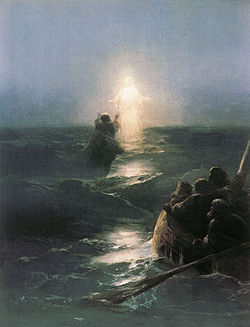
Jesus walking on waterIt is highly significant that Elijah did not find God in the wind, the earthquake, or the fire, but only in a “sound of sheer silence.” (1 Kg 19:12) It happens that Elijah had just run away from fire and storm when he heard this sound of silence. Since Elijah had just “won” the battle with the priests of Baal, one might have thought that God had spoken through wind and fire that time, but the result of “winning” that contest was needing to run for his life because Jezebel was out to get him. So it seems God had not spoken in the wind and fire on Mount Carmel after all. If we stop the story with the “sound of sheer silence,” we are edified, but when we read on to the words Elijah heard, we are seriously troubled. At least I am. Elijah is told to anoint Elisha to be his successor prophet. So far so good. But Elijah is also told to anoint Jehu son of Nimshi to be king of Israel. The narrative of Jehu’s cold-blooded coup d’état is chilling to say the least. (2 Kg. 9) More chilling are the words Elijah heard: “Whoever escapes from the sword of Hazael, Jehu shall kill; and whoever escapes from the sword of Jehu, Elisha shall kill.” (1 Kg. 19: 17) After the violent rivalry between Elijah and the priests of Baal, we get the crossfire of the violent rivalry between Hazael and the House of Ahab: more storm and fire. I have a hard time hearing this storm in the “sound of sheer silence.”
We have more storms in the story of Jesus’ disciples taking a boat across the lake. As almost always with Jesus, there were some human storms. Jesus had just learned of the ignominious death of John the Baptist as a result of a sophisticated mob violence at court. Afterwards, Jesus fed a mob of people who were hungry both for food and God’s Word. Matthew doesn’t mention this mob’s attempt to take Jesus by force to make him king but one can’t help but think that Jesus went off alone to pray because he needed to center himself again on his heavenly Abba after what had just happened. I’m inclined to see in the storm at sea not only a natural phenomena but an interpersonal phenomena as well. I wrote in my book Moving and Resting in God’s Desire: “The story of Peter walking on water — or trying to — also illustrates this aiming [to be centered on God]. (Mt. 14:28-33) The wind and the choppy waves represent our being overwhelmed by the mimetic movements that tend toward rage and persecution. When Peter looked at the waves instead of at Jesus, he started to sink. By himself, he would have sunk and drowned. By looking again at Jesus, Peter was pulled into the boat and the sea grew calm.”

[Tom and Laura Truby develop these thoughts with excellence in their sermon The Raging Storm of Our Own Making.”]

Both of these scripture readings make it dramatically clear that being truly focused on God and God’s peace beyond human understanding is very difficult. Elijah shows how it is very possible to hear the “sheer silence” and yet also “hear” the violence unfolding in his generation. That Elijah was persecuted by Jezebel, Ahab’s wife, makes it understandable that Elijah would hear, even in the “sheer silence,” his own anger and fear towards Ahab’s royal house. Likewise, the disciples in the boat on the stormy sea are so caught up both in the natural storm and the storm of their own disputatiousness that even Jesus himself appears as an object of horror rather than peace. We should take this as a warning of how our prayer in trying times can be distorted by our own anger and anxiety.

There is no simple solution I can offer for this difficulty we all face. In principle, it seems simple to say that we should turn to Jesus and stay turned to him. The problem is that this “simple” solution is difficult minute by minute, second by second. We look at the chaotic waves of the water and sink back into our fears, resentment, and rage. It is a huge help if we remain aware of this weakness and don’t mistake the storms inside ourselves for the word of God. When we fall into our rage, the storm continues, for Jesus calms the waters; he does not stir them up. It takes time and discipline to keep even enough focus on the “sheer silence” to help us see the rage we keep hearing for what it is. Imitating Peter by crying for mercy is essential as this is a cry of repentance of our violence that is the first step to living in the peace of Christ.

Jesus’ Yoke

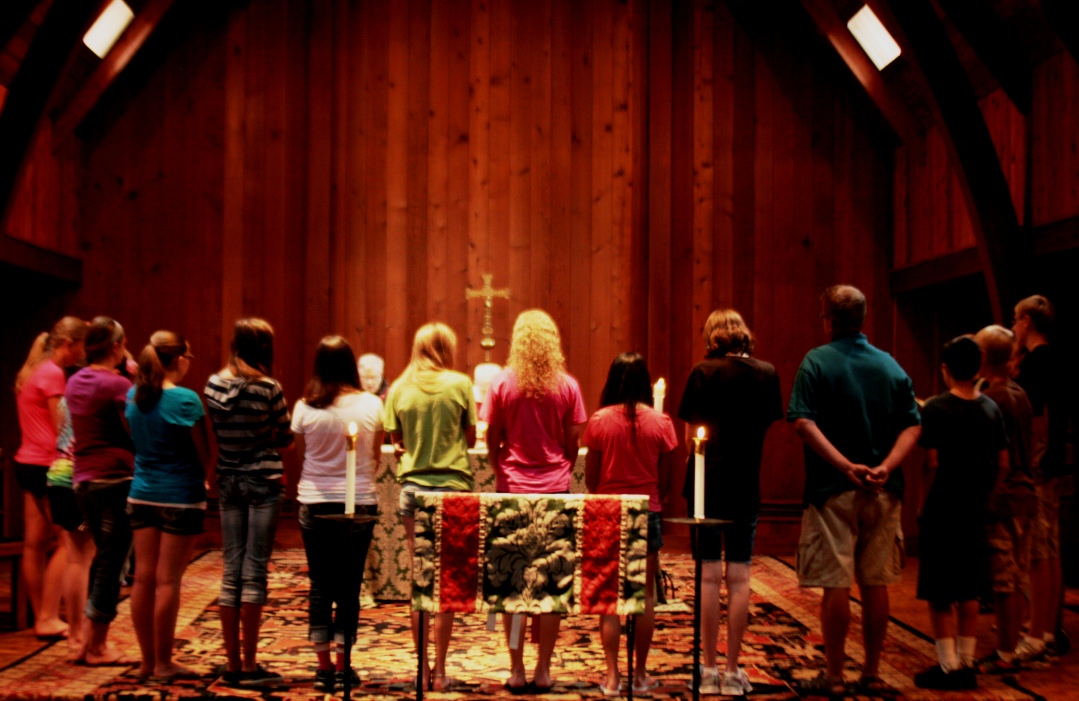
eucharist1Jesus’ invitation to come to him with our burdens so that he can give us rest and take his easy yoke upon ourselves sounds like an irresistible blessing. But the troubling words skipped by the lectionary suggest that Jesus’ offer is highly resistible. Here, he bemoans the rejection of Chorazin, Bethsaida and Capernaum. Given the horrifying hardness of heart shown in the story of Sodom and Gomorrah’s destruction, it boggles the mind that Jesus thought those people might have responded better than the people of Capernaum who witnessed Jesus’ first miracles of healing.

How can Jesus’ offer to free us of our burdens be so resistible? We get some hint of this in the powerful, if dense, passage in Romans 7 where Paul cries out against the burden of sin that makes him do what he does not want to do. Most of us think the problem is that the burden of sin renders us powerless. There is something to that, especially in the case of addictions. But the deeper problem is that we have great difficulty knowing what we really desire. The French thinker René Girard has helped us greatly towards an understanding of this problem with his insight into what he called “mimetic desire.” That is, although we tend to be addicted to the illusion that our desires originate from within ourselves, Girard suggests that our desires originate from without: i.e. from other people. That is, we copy the desires of other people. Since the same is true of other people, they are imitating our desires as much as we are imitating theirs. No wonder desires are so complicated. It is telling that Paul says: “I would not have known what it is to covet if the law had not said, ‘You shall not covet.’” (Rom. 7: 7) Covetousness is precisely the sin most driven by mimetic desire. This phenomenon can lead to a spiral of desire that reinforces each others’ desires in love. This is what Jesus us getting at in offering to relieve us of our burdens and take his yoke upon us. But usually, we imitate each other in a downward spiral of rivalry, anger, and vengeance. In this spiral, we become more and more convinced that our anger and rage are our own even as the rage and anger of others overtakes us like a flood. When this happens, we are yoked to our rivals and they to us. This is the yoke Jesus would relieve us of.

Girard argues that a society caught in a downward spiral either implodes into mutually assured destruction (MAD) or channels its common rage against a victim who is scapegoated. The latter is the story told in the four Gospels. However, it is not only the story of the Gospels; it is the story told numerous times in the Hebrew Bible starting with the dawn of humanity. The establishment of violence as the engine of society is what Jesus was getting at when he said, in another verse not included in the lectionary: “From the days of John the Baptist until now the kingdom of heaven has suffered violence and the violent take it by force.” (Mt. 11: 12)

Although we are prone to clinging to the illusion of our individuality, Girard has shown us that we are yoked to others through the matrix of our intertwining desires. Where we can take some responsibility for our lives is to choose how we wish to be yoked and to whom we will be yoked. In rabbinic literature, the yoke is used as an image for a Jewish student’s relationship with his or her rabbi. Jesus, as a rabbi, offers such a yoke. Being yoked to Jesus means being yoked to a Messiah who rides on a donkey in fulfillment of Zechariah’s prophecy. The Greek word translated as “gentle” is praus, the same word used in Matthew’s quote from Zechariah to describe Jesus’ entry into Jerusalem.

Jesus’ yoke may be easy but it is challenging. The temptation to give way to fear, anger, and vengeance, especially when that is all around us, is very strong, but the yoke of vengeful anger is very heavy and it entraps us in the power of sin within us that prevents us from doing what we really want to do. Escaping this trap can seem impossible. As Paul discovered, it is impossible without the grace of Christ who offers us his yoke in place of the yoke of sin. The harsh words against Capernaum and neighboring towns actually offer us hope. If Jesus could envision the possibility of Sodom and Gomorrah converting to Jesus’ yoke if they had seen the wonders done at Capernaum, although the people in these towns united to persecute Lot and his guests, surely Jesus can envision the same for our persecutory society. Can we cast the burdens of fear, anger, and vengeance on Jesus and accept the yoke he offers us, a yoke that burdens us with compassion and love?

[For an introduction to René Girard see Violence and the Kingdom of God.]