 Easter is an occasion of great rejoicing with bells, boisterous singing, and feasting. But do we really know what we are celebrating? The Gospel reading, doesn’t exactly ring out with Christmas joy of angels filling the skies with songs of God’s glory. Instead, we get “two men in dazzling clothes” who tell the women who came to the grave to anoint Jesus’ body that Jesus was not there but had risen. They had come to the wrong place.
A small group of confused women running off to stammer the news to the disciples isn’t exactly a celebration either. The disciples’s thinking the news is an “idle tale” may reflect a masculine condescending attitude towards women, but their reaction also shows how totally disorienting the news was. The Gospel reading ends with Peter running to the tomb to take a look for himself, seeing the empty linen clothes lying about, and then going home, “amazed at what had happened.” (Lk. 24: 12) Still no celebration; just a lot of unanswered questions. Luke continues his Resurrection narrative with two followers of Jesus walking to Emmaus with no indication of why they should be going there, implying that they are going the wrong way. Their conversation with a stranger on the way confirms their sense of confusion. Should we, too, be too disoriented to celebrate?
I think the key to understanding the problem lies in the words of the angelic beings: “Remember how he told you, while he was still in Galilee, that the Son of Man must be handed over to sinners, and be crucified, and on the third day rise again.” (Lk. 24: 6–7) The stranger who met up with the two disciples asked them rhetorically: “Was it not necessary that the Messiah should suffer these things and then enter into his glory?” (Lk. 24: 26) The word “must” is the key here. The Greek word dei is often translated “it is necessary.” In this case, for whom was it “necessary” that Jesus be handed over to sinners to be crucified and then rise on the third day? There is a tendency to think the death was necessary for God, but that suggests that God needed to have God’s own son die a painful death. Many people have a problem with that notion, I among them.
I find the French thinker René Girard helpful here. He interprets the available anthropological evidence as indicating a tendency of archaic societies to solve social tensions by a process that transforms competitive relationships throughout the society into a shared desire to focus on one person and then kill that person who is deemed responsible for the social tensions. The ensuing peace (for a time) is so strong that the victim is then worshiped as a deity. It is this social mechanism that convinces people that it is necessary for “god” that the victim be killed. Throughout this process, the truth of the victim is precisely what nobody knows, except possibly the victim.
This truth of the victim was gradually being revealed in the prophetic tradition of the Jewish people, most prominently in the verses about the “Suffering Servant” in Isaiah, whom the people accounted “stricken, struck down by God, and afflicted.” (Is. 53: 4) But then the people realized that they, not the victim, were the guilty ones. God had vindicated the “stricken one,” not the persecutors. It was these passages in Isaiah that most helped Jesus’ followers begin to make sense of what had happened to Jesus.
But on the day of Jesus’ Resurrection, the disciples had not thought to connect Jesus with the Suffering Servant. Jesus had told them many times that it was “necessary” that he be handed over to be crucified, but they could not understand. How could it be “necessary” that the man who they thought was going to restore Israel should be handed over to death? They assumed it was “necessary” that the guilty ones be handed over, not the innocent. Then, at Passover time, Jesus was deemed to be the guilty one who was causing the tumult by both religious and civil authorities, and so he was handed over. But the disciples had thought Jesus was innocent. Had they gotten their man wrong? Their fleeing when Jesus was arrested suggests they weren’t so sure.
The empty tomb was the first hint that Jesus’ death wasn’t business as usual. A tomb was supposed to have the corpse of the guilty one, but this one didn’t. The announcement of the angelic beings to the women was a stronger hint that Jesus was innocent after all. The women were told that it, although it was “necessary” that Jesus be handed over and killed, it was even more necessary that Jesus be raised from the dead. By raising Jesus from the dead, God showed Jesus’ followers that the “necessity” that Jesus die was a human necessity, a necessity of human factors, and that it was Jesus’ rising from the dead that was the true divine necessity. Only then could the disciples have their minds opened to understand the scriptures when the Risen Lord met with them himself. (Lk. 24: 45)
It is gloriously great news and a wondrous cause for rejoicing that we are freed from the human “necessity” to blame a victim who is put to death for the crimes of a society. That is, unless we feel too disoriented about not having scapegoats. Maybe that is why rejoicing in Jesus’ Resurrection is a much greater challenge than rejoicing in the birth of a child who is going to accomplish something great—what, we don’t know. Rejoicing in the necessity that Jesus be raised from the dead requires us to change our minds and hearts in radical ways to take in this news. Most challenging of all, we have to accept and then embody the forgiveness of the Risen Victim when storms of accusation remain the status quo even at this present day. Are we up to the challenge? Will we come to the party?
For an introduction to the thought of René Girard see Violence and the Kingdom of God and Living Stones in the House of the Forgiving Victim

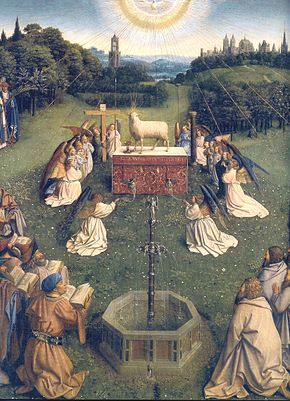 We usually understand a shepherd to be one who leads a flock of sheep and protects it from harm. But in Revelation, the author proclaims “the Lamb at the center of the throne” to be the shepherd of the multitude of worshipers from all nations. The worshipers are praising this Lamb whom they follow and the Lamb “will guide them to springs of the water of life.” (Rev. 7: 17) Their white robes have been made white in the blood of this Lamb because the Lamb has lead his followers through the ordeal. This is an odd sort of shepherd since normally it is the job of the shepherd to protect the flock from danger, not lead the flock into it.
 Probably nothing is more painful than betrayal. My own personal experiences of feeling betrayed are, so far, much smaller than what I know others have suffered, but even the smallest doses of betrayal are unspeakably painful. The pain of betrayal is a pounding discord in the Gospel narratives of Jesus’ Last Supper and Paul’s own short narrative of it. This discord is particularly prominent to the point of being unbearable in John’s Gospel where it overshadows Jesus’ loving act of washing the disciples’s feet. Right after leading into the story with these sublime words: “Having loved his own who were in the world, he loved them to the end,” (Jn. 13: 1) John says: “The devil had already put it into the heart of Judas son of Simon Iscariot to betray him.” (Jn. 13: 2) When Judas leaves the supper, John says “And it was night,” (Jn. 13: 30), meaning “night” in all of its most ominous meanings. Right after Judas’s departure, Jesus gives his disciples his great “new” commandment: “Love one another. Just as I have loved you, you also should love one another.” (Jn. 13: 34)
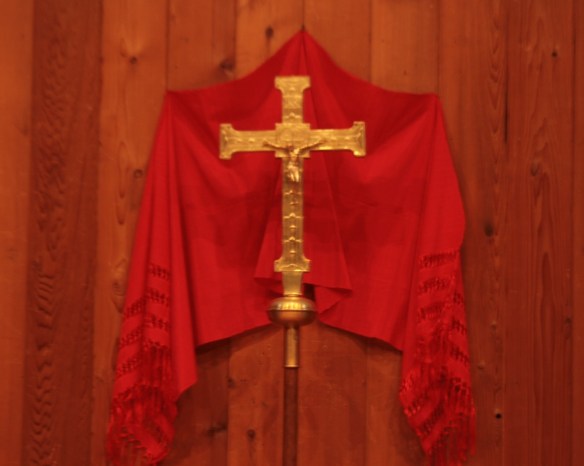 Right after dramatically recalling God’s deliverance of the Jews from the Red Sea, Isaiah proclaims that God is “about to do a new thing; now it springs forth, do you not perceive it?” (Is. 43: 19) By his time, the Red Sea deliverance was an old thing, something the Jews repeatedly recalled, especially at the celebration of Passover. But at the time of that deliverance, it was a new thing that had sprung forth. Delivering escaped slaves through turbulent waters just wasn’t in the play books of deities at the time. God had changed the play book and revealed the hitherto unknown truth that God is a God who delivers victims and outcasts from the rich and the powerful.
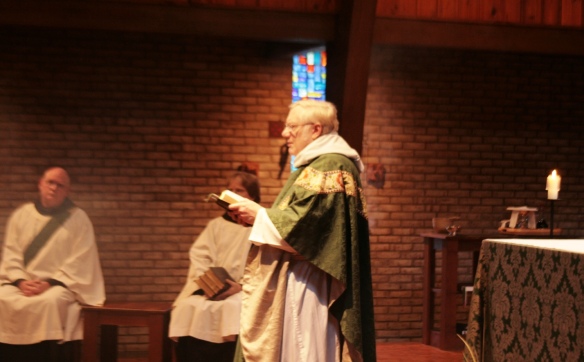 The narratives of the call of Isaiah, Paul, and Simon Peter bring to mind my own experiences of God’s call. In my case, it wasn’t quite like being attacked by a Cherubim in church, getting knocked down on the Road to Damascus or being told to throw out the fishing nets one more time and being overwhelmed by the catch.
 Luke stresses the contrast between John the Baptist and Jesus much more than the three other evangelists. Most strikingly, Luke does not specifically say that John himself baptized Jesus. Luke describes John’s ministry and then says Herod added to all his other crimes by putting John in prison. (Lk. 3: 19–20) Then Luke puts Jesus front and center by saying the he was baptized “when all the people were baptized.” (Lk. 3:21)
 The image of Mary holding her Child is arguably the defining image of the Christmas season. Its tenderness is comforting in a world where violence against the most vulnerable dominates the news. Vulnerability, such as that of a newborn baby tends to arouse either a gentle wish to nurture and protect, or it sets off an urge to take advantage of weakness in hard-hearted fashion as Herod did. We see both of these tendencies happening in the world about us and it is possible that we struggle between them within ourselves. If we let ourselves get caught up in the frantic conflicts occurring today, any weaknesses we see in our opponents become targets for increased aggression.
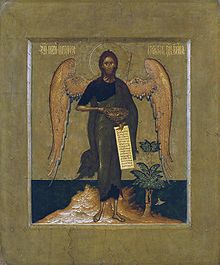 Although John burned with a conviction that God was going to do something new, he had only the models of past prophets to guide him in opening a way to the great new thing. He lived in the desert, wore a camel hair coat and ate wild locusts and honey in imitation of Elijah. Like the prophets of the past, he warned the brood of vipers of the wrath to come if people did not shape up and turn back to God. (Lk. 3: 7) Again like the prophets, he told soldiers not to oppress vulnerable people. Yet again like the prophets, he rebuked his ruler, Herod. And like so many of the prophets, he was put to death.
 Do not worry about anything, but in everything by prayer and supplication with thanksgiving let your requests be made known to God (Phil. 4:6) (All Bible quotes are from the NRSV)
 Jesus’ insistence that we deny ourselves and take up our crosses and follow him (Mk. 8: 34) jolts us into thinking about what our priorities in life should be. Without being so jolted, we tend to deny other people, take up our favorite pastimes and follow whoever takes our fancy. However, we encounter a serious problem if and when we do take Jesus’ words to heart. We tend to get muddled over what constitutes a “cross” and how we should carry it. Because of this muddle, there is the danger that the cross will be trivialized. Carrying our own crosses is not about being a good sport if we catch the flu.
 Imaginary Visions of True Peace