
 The temptations of Jesus in Matthew and Luke are stylized accounts of three temptations that may not have happened in so neat a fashion in real life, but are clearly meant to be comprehensive of the fundamental temptations that challenge all humans, Jesus included. Jesus’ responses to the three temptations, which would have been particularly strong during his forty days of solitude in the wilderness, are a guide to dealing with the same temptations in our own lives.
The first temptation, that Jesus should turn stones into bread, can stand for all sensual temptations. It is surely not a sin to satisfy one’s hunger but it is a sin to be focused on physical sustenance to the neglect of all else, to make god our belly. (Phil. 3: 19) The devil’s proposal puts bread front and center, which sparks the competitive tendencies of humans to seek more material goods for the sake of having more material goods than others. Jesus’ reply puts bread in a wider context, implying what Matthew spells out, that we not only need bread but “every word that comes from the mouth of God.” (Mt. 4:4) Within this broader context, bread is provided in the wilderness by God as it was to the Israelites in their desert journey after escaping from Egypt. When bread is a gift from God, then it should also be a gift between humans as well.
Lust for power is often thought to be the greatest human temptation, as Matthew suggests in his ordering of the temptations, but Luke makes it the second greatest temptation. We might think that the devil’s offering Jesus “all the kingdoms of the world” as being out of our league, but all of us tend to seek power in our own social settings. That is, we try to build up what sociologists call “social capital.” This is what Jesus was warning us about in the Gospel for Ash Wednesday when he told us not to fast or give alms “like the hypocrites” who compete for human admiration. (Matthew 6) In seeking social capital, we try to build our little kingdoms piece by piece. As with the first temptation, Jesus responds with the larger picture grounded in God by alluding to Deuteronomy 6: 13: “Worship the Lord your God, and serve only him.” That is, we should seek our social capital first with God rather than with humans. By worshiping and serving God, we will then serve other people rightly and thus gain social capital in less competitive ways.
The third temptation is the most subtle and the most dangerous. The first two temptations proposed substitutes for focusing primarily on God. The third temptation focuses on God. The devil quotes Psalm 91 to assure Jesus that if he threw himself from the pinnacle of the temple, Jesus’ heavenly Abba would surely save him, as promised in the psalm. But the focus on God is distorted in what amounts to an attempt to manipulate God, which would make God a competitor among human competitors. Catching this distortion, Jesus clarifies the right focus on God by saying that one should not put God to the test. The distortion of the third temptation is subtle because it is based on the profound truth that God cares for each of us and takes care of us. But to assume that we can do anything, no matter how heedless and reckless because God will take care of us is presumption, putting God to the test. If there is anything the prophets have taught us, it is that God allows us to live with the consequences of our choices. Otherwise, what meaning would free will have?
The imposition of ashes on Ash Wednesday is a reminder of our frailty as mortal creatures. The temptations of Christ, the same temptations we experience daily, remind us of our moral and spiritual frailty. If Jesus had to remain mindful of his heavenly Abba and guard against distortions in that relationship, we should do no less. Let us take comfort that, as the author of Hebrews said, precisely by being tempted in every way as we are, Jesus is the pioneer and perfecter of our faith. (Heb. 4: 15, 12: 2)
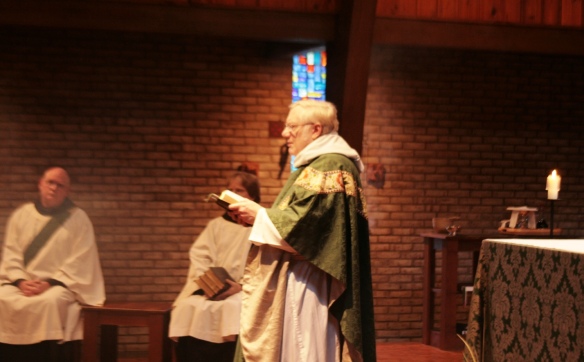 The narratives of the call of Isaiah, Paul, and Simon Peter bring to mind my own experiences of God’s call. In my case, it wasn’t quite like being attacked by a Cherubim in church, getting knocked down on the Road to Damascus or being told to throw out the fishing nets one more time and being overwhelmed by the catch.
 Luke stresses the contrast between John the Baptist and Jesus much more than the three other evangelists. Most strikingly, Luke does not specifically say that John himself baptized Jesus. Luke describes John’s ministry and then says Herod added to all his other crimes by putting John in prison. (Lk. 3: 19–20) Then Luke puts Jesus front and center by saying the he was baptized “when all the people were baptized.” (Lk. 3:21)
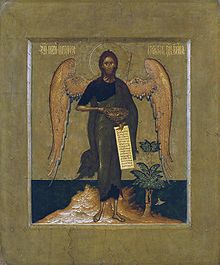 Although John burned with a conviction that God was going to do something new, he had only the models of past prophets to guide him in opening a way to the great new thing. He lived in the desert, wore a camel hair coat and ate wild locusts and honey in imitation of Elijah. Like the prophets of the past, he warned the brood of vipers of the wrath to come if people did not shape up and turn back to God. (Lk. 3: 7) Again like the prophets, he told soldiers not to oppress vulnerable people. Yet again like the prophets, he rebuked his ruler, Herod. And like so many of the prophets, he was put to death.
 I was introduced to the Transfiguration of Our Lord when Raphael’s great painting of the event hit me between the eyes during my student travels in Rome. With the Feast of the Transfiguration coming during my church’s summer slump (and it wouldn’t have celebrated the feast anyway) I knew nothing about it. In many ways, I didn’t have to. The painting opened up a vision of a transfiguration of humanity beyond what I had thought possible. At the time, what faith I had wasn’t centered around any particular religious viewpoint but I was majoring in religion because I thought the subject dealt with the most important things in life. Seeing the painting was more of a religious awakening than I knew. I was, of course, impressed by the sublimity of the upper half of the canvas where Jesus is floating in the air with Moses and Elijah. But I was even more impressed by the inroads the transfigured light made into the lower half which is often interpreted as indicating sinful and benighted humanity. It has taken me years to see further into the significance of this chiaroscuro effect.
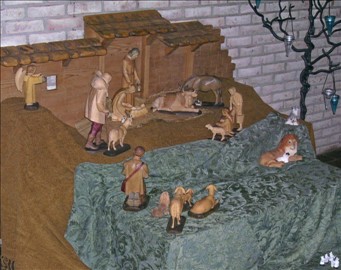 The celebration of the birth of Jesus is a time to put all political differences aside in glad agreement that this child is born. I wish! I have pointed out many times over the years when preaching on Luke’s nativity story that it puts political issues front and center, forcing us to confront our political realities if we are to confront the Gospel.
 When the angel Gabriel announced to Mary that she was to conceive and bear a son, the angel said that her son “will be great, and will be called the Son of the Most High, and the Lord God will give to him the throne of his ancestor David. He will reign over the house of Jacob forever, and of his kingdom there will be no end.” (Lk. 32–33) However, the prophet Nathan made this same promise to King David: “Your house and your kingdom shall be made sure forever before me; your throne shall be established forever.” (2 Sam. 7: 16) Likewise, Psalm 89 say that David’s “line shall continue forever, and his throne endure before me like the sun. It shall be established forever like the moon, an enduring witness in the skies.” (Ps. 89: 36–37)
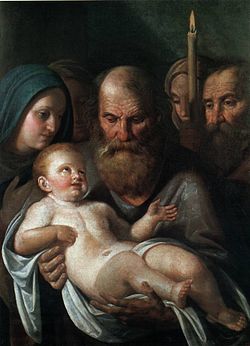 The Feast of the Presentation of Jesus in the Temple is a belated closure to the Christmas Season. Since the excitement of Christmas and New Year’s Day is long past, we may have assumed Christmas was over, but the Presentation of Jesus is the last of the Infancy Narratives. The Christmas Cycle began with Advent, the time of expectation of God’s coming to us. In Simeon and Anna, we come full circle with two more people who were waiting for the consolation and redemption of Israel. Anna had been waiting for 57 years, with nothing to show for it until that day.
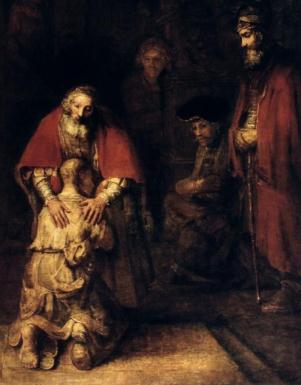 Kenneth Bailey’s book Jacob & the Prodigal overlaps with important sections of my own book
 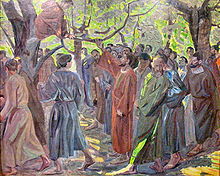 The French thinker René Girard has argued that since the dawn of humanity, we have tended to solve social tensions through persecuting a victim who absorbs these tensions and suffers for them. Girard has also argued that the Gospels unveil the truth of this scapegoating mechanism in their narratives of Jesus’ death and Resurrection where Jesus opens up new possibilities for humanity to gather through the forgiveness of the Risen Victim. It happens that the Gospels show Jesus unveiling these very same dynamics in his earthly ministry. I analyzed our such stories in my book
  Imaginary Visions of True Peace