
 Like every culture, the Jews had to face fundamental decisions as to how open or closed they would be to others. The default mechanism tends to be flight or fight. In discussing remaining social groups living close to the level of what he calls “traditional” societies, Jared Diamond observed this phenomenon. A stranger wandering into the territory of a different tribe had better come up with a common ancestor or the encounter could prove fatal.
The type of encounters with other nations has an effect on such decisions. In the case of the Jews, most encounters were bad. Slavery in Egypt was followed by both cultural and military threats from the Canaanites who tempted the Jews to forsake the God who had delivered them from Egypt. Encounters with the Assyrians and Babylonians were catastrophic. But then the Persians destroyed the Babylonian Empire and invited the Jews to return to their homeland and revive their cultural and religious traditions. It is surely no accident that the return from Babylonian exile and resettlement back in their homeland coincided with the first expressions of openness to other cultures on the part of the Jews such as we have when Isaiah proclaims: “Nations shall come to your light, and kings to the brightness of your dawn.” (Is. 60:3) With Isaiah, we have the breakthrough insight that the God who brought them out of Egypt and then delivered them from Babylon was the God for all people and not just them. Although Adam Smith took the title of his famous book The Wealth of Nations from Isaiah 60:5: “the wealth of the nations shall come to you,” the prophet encourages a much more profound exchange than that of capital: an exchange of the riches of the Jews’ religious tradition for the riches other nations can bring to that same tradition. Unfortunately, retrenchment followed, climaxed by the expulsion of all foreign wives at about the time of the building of the second temple.
At the time of Jesus’ birth, the relationship between the Jews and the Gentiles, the other nations, was complex and tense. Their religious traditions were mostly tolerated but at times menaced by the Romans. Although some individual Gentiles became God-fearers, practicers of Jewish piety such as the Centurion who built the synagogue at Capernaum, (Lk. 7: 4-5) there were few friendly relations between Jews and Gentiles. And yet in the face of this tension, Matthew sees in the visit of the Magi to the infant Jesus a fulfillment of Isaiah’s prophecy of the exchange of wealth between the two peoples.
It was for St. Paul to return the gifts to the Magi. After his dramatic conversion, he was called to preach the Good News of Jesus, a Jew, to the Gentiles. To the surprise of many Jews who followed Jesus, “the Gentiles have become fellow heirs, members of the same body, and sharers in the promise in Christ Jesus through the gospel.” (Eph. 3: 6) That is, Jesus dissolved the fundamental division between Jew and Gentile when he was crucified by a collaboration between the two peoples who had suddenly come together for that brief moment. But when Jesus was raised from the dead as the forgiving victim, he bridged the gap between nations with one comprehensive act of forgiveness.
Ever since Paul’s commission, the Church has been tempted to retrench herself as the Jews did after building the second temple. This is to fall back into the default hostility to the stranger that Jared Diamond saw as part of “traditional” humanity. What the feast of Epiphany celebrates is the generosity of God who shares God’s riches with all so that all people can share this same richness with all others, not least with strangers who can then soon cease to be strangers.
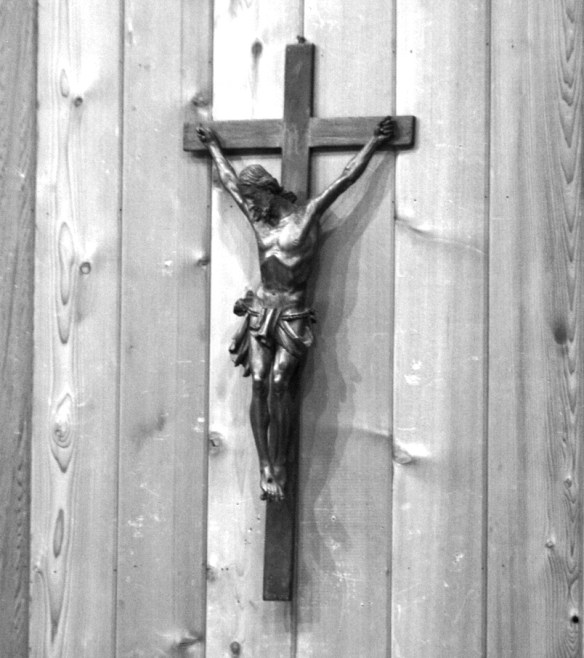 A thief is not usually thought of as a good type of person and a thief in the night is worse. And yet Jesus characterizes himself as a thief when he says: “if the owner of the house had known in what part of the night the thief was coming, he would have stayed awake and would not have let his house be broken into.” (Mt. 24: 43) The expression that God will come like “a thief in the night” also comes up in 1 Thessalonians 5:2 and 2 Peter 3:10. Since Jesus commends the dishonest steward who defrauds the master who is firing him and the unjust judge who gives the widow a fair hearing just to stop her from pestering him, it seems that Jesus has a soft spot in his heart for rogues. Maybe he was a bit of a trickster rogue himself.
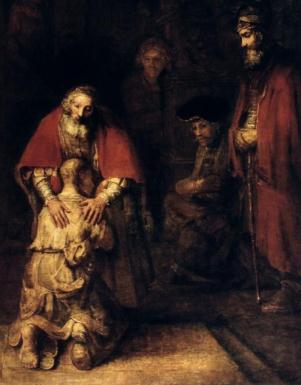 Kenneth Bailey’s book Jacob & the Prodigal overlaps with important sections of my own book
  The French thinker René Girard has argued that since the dawn of humanity, we have tended to solve social tensions through persecuting a victim who absorbs these tensions and suffers for them. Girard has also argued that the Gospels unveil the truth of this scapegoating mechanism in their narratives of Jesus’ death and Resurrection where Jesus opens up new possibilities for humanity to gather through the forgiveness of the Risen Victim. It happens that the Gospels show Jesus unveiling these very same dynamics in his earthly ministry. I analyzed our such stories in my book
  The disciples’ demand (not a request) that Jesus increase their faith, (Lk. 17: 5) with a hint of desperation that such a demand entails, seems to come out of nowhere when it begins the Gospel reading. So let us look at the preceding paragraph for some context.
 There is only one simple qualification for being a disciple of Jesus: give up everything. That’s one whale of a qualification. So hard is this qualification that earnest Christians have thought of many ways to soften Jesus’ words without washing all meaning and challenge out of them. My New Testament professor at Nashotah House, O.C. Edwards, suggested that this qualification means we have to give up everything that comes between us and God. That is, if parents, children, spouses, friends, or fellow members of a community help us draw closer to God, we don’t have to give them up. The same would go for material possessions. Even Benedictine monks have to use things in this world in order to live so we can’t give up having anything at all. The trick is to use things in such a way that the work and recreation we do with them draws us closer to God rather than farther away.
 Back when I was a seminarian at Nashotah House, a student from the South transferred there in the middle of the academic year. Not surprisingly, given Nashotah’s Anglo-Catholic tradition, several students ganged up on him and tried to convert him to an ardent devotion to Our Lady. This student’s response was: “I thought Mary was just a little Jewish girl.”
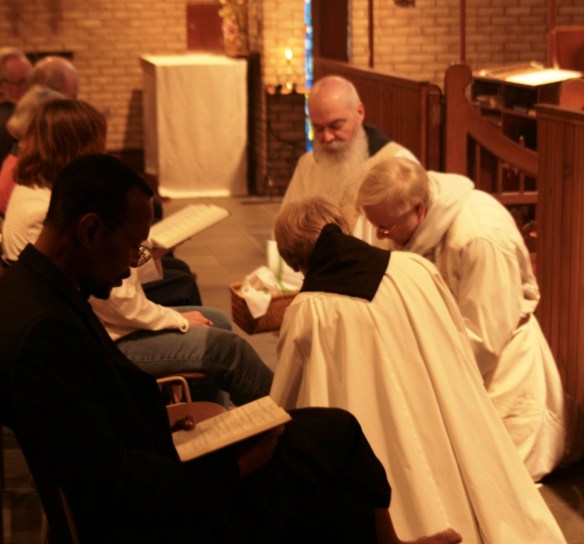 The first verses of today’s Gospel (Lk. 12: 32–34) pick up from where we left off last week. That reading ended with Jesus’ little parable about the rich fool who tore down his barns to build bigger barns (Lk. 12: 12–21) only to find that his life was being demanded of him. This reading begins with Jesus’ soothing admonition to “sell our possessions and give alms” and “make purses for yourselves that do not wear out, an unfailing treasure in heaven, where no thief comes near and no moth destroys.” (Lk. 12: 32-33) This is quite a contrast to two brothers fighting over an inheritance or a rich person gloating over fabulous amounts of wealth. Lest we think Jesus is asking us to make ourselves miserable, Jesus assures us that it is our heavenly Abba’s pleasure to give us a treasure that is the kingdom. If this treasure, the kingdom, is the Abba’s pleasure, then it is our pleasure as well.
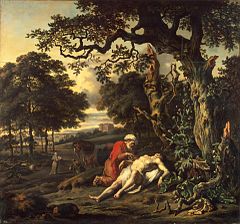 Many of us instinctively think that knowing is something we have in our heads, something we can recite, like a catechism. This is the sort of knowing that the lawyer demonstrates when he recites, correctly, the two great commandments when Jesus encourages him to answer his own question as to what he must do to inherit eternal life. (Lk. 10: 27) But then the lawyer shows a certain ignorance, a missing piece. He doesn’t know who or what his neighbor is. Jesus answers this question by telling a story that pinpoints exactly the missing piece in the lawyer’s cognition.
