 Jesus’ healing of the woman who had been crippled for eighteen years (Lk. 13: 13–17) is one of many healing miracles where the Evangelist emphasizes its occurrence on the Sabbath. These healings were provocative to the Jewish leaders because they interpreted the Sabbath law to preclude any kind of work. Jesus clearly intended to challenge that interpretation but there is a deeper teaching about the Sabbath that he wants us to learn.
We see hints of this deeper teaching in these stirring words from Isaiah about the Sabbath:
If you refrain from trampling the Sabbath,
from pursuing your own interests on my holy day;
if you call the Sabbath a delight
and the holy day of the Lord honorable;
if you honor it, not going your own ways,
serving your own interests, or pursuing your own affairs;
then you shall take delight in the Lord,
and I will make you ride upon the heights of the earth;
I will feed you with the heritage of your ancestor Jacob,
for the mouth of the Lord has spoken. (Is. 58: 13–14)
For the prophet, one dishonors the Sabbath by grimly pursuing one’s own interests instead of delighting in the Lord. In healing the crippled woman, Jesus was not pursuing his own interests, but that of another. More important, the healing caused much delight in the Lord on the part of the people who witnessed it except for the Leader of the Synagogue. A bit earlier, before speaking specifically of the Sabbath, Isaiah expressed God’s commendation of those who offer food to the hungry and “satisfy the needs of the afflicted.” ( Is. 58: 10) Jesus obviously thought that satisfying the need of an afflicted woman is a way of honoring the Sabbath.
Psalm 95 refers to God’s “Rest” to mean both entry into the Promised Land and the Sabbath Rest as God’s intended end for humanity. The rebellion of the Israelites in the desert threatens to prevent the Israelites from entering God’s “Rest” on both levels. (Ps. 95: 11) The author of Hebrews picks up this theme in its eschatological dimension, noting that Joshua had not led the Israelites into the ultimate Rest when we cease from [our] labors as God did from his.” (Heb. 4: 10)
The author of Hebrews returns to this eschatological theme at the end of the letter when he contrasts the frightening dark cloud of Mount Sinai that the Israelites came to with our coming to “Mount Zion and to the city of the living God, the heavenly Jerusalem, and to innumerable angels in festal gathering, and to the assembly of the firstborn who are enrolled in heaven, and to God the judge of all, and to the spirits of the righteous made perfect, and to Jesus, the mediator of a new covenant, and to the sprinkled blood that speaks a better word than the blood of Abel.” (Heb. 12: 22–24) Once again, we have corporate rejoicing. More important, we have the “better word” of Jesus, the Forgiving Victim in contrast to Abel’s blood that inspired vengeance from which God had to shield the murderer.
The Psalmist’s warning that those who murmur against God and Moses will not enter into God’s Rest and the author of Hebrews’s use of the same threatening tone for those who refuse the warning from Heaven sound vindictive but the “better word than Abel” suggests otherwise. I think we do better to realize that God’s Sabbath Rest isn’t so restful as long as we grumble like the Leader of the Synagogue. Nobody was casting him out of God’s Sabbath Rest; he just wasn’t having any part of it.
Inspired by Jesus’ resurrection on the first day of the week, most Christians celebrate the Sabbath on that day when we celebrate the Paschal Mystery of Christ at the altar. Since the Resurrection points to the ultimate meaning of the Sabbath, I would think it is not too much to see this healing by Jesus as one of many foretastes of the Resurrection, an encouragement to celebrate new life from the bondage of illness and injury and social oppression. The healing of just one person seems a small thing compared to the heavenly crowd in Hebrews but the whole crowd rejoiced in the healing, indicating that healing one person entailed healing the whole community. This group rejoicing suggests that the Sabbath Rest is hardly a boring, static existence but a dynamic rejoicing in the interests and healing of others which leaves no room for murmuring and rejecting God’s blessings. We should be too busy rejoicing for that.
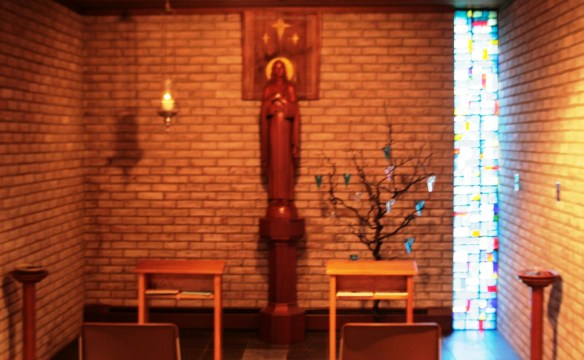 In most churches, the Blessed Virgin Mary is either given very high honor, sometimes exuberantly so, or she is cast out of mind except at Christmas where she might be allowed in a manger scene.
 When Jesus’ disciples asked their master how they should pray, he taught them a prayer that has us learn by doing. We are taken aback by Luke’s shorter version of this prayer (Lk. 11: 2–4) since the liturgical use of Matthew’s version with an added doxology causes us to think it is the only form it has. We will find, however, that this shorter version has the main elements of the longer one.
 When called by the prophet Elijah, (1 Kings 19: 19–21) Elisha asks to kiss his mother and father first. When he is rebuked for this demurral, he slaughters his oxen, breaks the yokes and burns them, and then follows Elijah. That is, he burns his bridges in making a clean break. Elisha makes this break, however, to join a brotherhood of prophets who have set up an alternate community to the violent and idolatrous kingdom of Ahab and Jezebel. Unfortunately, this community is also compromised by violence as Elijah calls fire down on his enemies (2 Kings 1: 10–12) and one of the prophets anoints Jehu to pull of a violent coup d’état. (2 Kings 9)
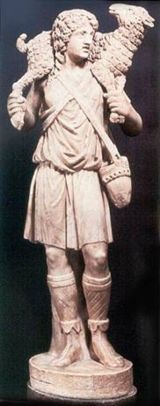 The Feast of Saints Peter and Paul celebrates the pastoral ministry of the Church initiated by two different personalities with some differences of opinion. Celebrating two formative pastors already points to pastoral ministry as one of relationships. Then there is the whole matter of shepherds, as we often call pastors, in relationship with their flocks.
 The last wishes of a dying person are traditionally considered sacred and binding on that person’s survivors. Although it is the seven recorded words on the cross that are considered the last words of Jesus, the prayer uttered by Jesus in John 17 constitute the last words of Jesus before he was handed over to be crucified. He prays that we disciples “may all be one. As you, Father, are in me and I am in you, may they also be in us, so that the world may believe that you have sent me.” (Jn. 17: 21) These words have been systematically disobeyed by those of us who are Jesus’ followers from that day until now.
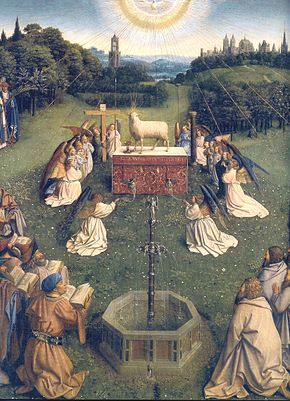 We usually understand a shepherd to be one who leads a flock of sheep and protects it from harm. But in Revelation, the author proclaims “the Lamb at the center of the throne” to be the shepherd of the multitude of worshipers from all nations. The worshipers are praising this Lamb whom they follow and the Lamb “will guide them to springs of the water of life.” (Rev. 7: 17) Their white robes have been made white in the blood of this Lamb because the Lamb has lead his followers through the ordeal. This is an odd sort of shepherd since normally it is the job of the shepherd to protect the flock from danger, not lead the flock into it.
 Easter is an occasion of great rejoicing with bells, boisterous singing, and feasting. But do we really know what we are celebrating? The Gospel reading, doesn’t exactly ring out with Christmas joy of angels filling the skies with songs of God’s glory. Instead, we get “two men in dazzling clothes” who tell the women who came to the grave to anoint Jesus’ body that Jesus was not there but had risen. They had come to the wrong place.
 Probably nothing is more painful than betrayal. My own personal experiences of feeling betrayed are, so far, much smaller than what I know others have suffered, but even the smallest doses of betrayal are unspeakably painful. The pain of betrayal is a pounding discord in the Gospel narratives of Jesus’ Last Supper and Paul’s own short narrative of it. This discord is particularly prominent to the point of being unbearable in John’s Gospel where it overshadows Jesus’ loving act of washing the disciples’s feet. Right after leading into the story with these sublime words: “Having loved his own who were in the world, he loved them to the end,” (Jn. 13: 1) John says: “The devil had already put it into the heart of Judas son of Simon Iscariot to betray him.” (Jn. 13: 2) When Judas leaves the supper, John says “And it was night,” (Jn. 13: 30), meaning “night” in all of its most ominous meanings. Right after Judas’s departure, Jesus gives his disciples his great “new” commandment: “Love one another. Just as I have loved you, you also should love one another.” (Jn. 13: 34)
 Right after dramatically recalling God’s deliverance of the Jews from the Red Sea, Isaiah proclaims that God is “about to do a new thing; now it springs forth, do you not perceive it?” (Is. 43: 19) By his time, the Red Sea deliverance was an old thing, something the Jews repeatedly recalled, especially at the celebration of Passover. But at the time of that deliverance, it was a new thing that had sprung forth. Delivering escaped slaves through turbulent waters just wasn’t in the play books of deities at the time. God had changed the play book and revealed the hitherto unknown truth that God is a God who delivers victims and outcasts from the rich and the powerful.
 Imaginary Visions of True Peace