Eating the Being of Jesus

AndrewWashingFeet - CopyThe Holy Eucharist has been accused of being a cannibalistic rite. René Girard would accept the accusation. In a snippet from an unpublished interview, he suggests that the Eucharist recapitulates the entire history of sacrifice and its violence and that history includes cannibalism. When I took a college course on African and Oceanic religions, one of the essay questions I was confronted with on the final exam was to discuss a few anthropological eyewitness accounts of cannibalistic practice. This was the first time I had encountered anything like it. What struck me about the accounts was how these people were intentionally absorbing, through ingestion, the being of the person, sometimes in mockery but more often in respect. (My take on these documents was affirmed by my professor with a top grade.) This is also Girard’s take. He ties this data into his analysis of the dynamics of mimetic rivalry where a rival moves beyond envying the possessions of another to envying the very being of the other. Interestingly, Jesus himself seems to agree with Girard and the anthropologists on this matter. In John 6, he uses strong language when he tells us that we must eat his body and drink his blood, words that suggest cannibalism and seem to have been interpreted as such by his grossed out hearers who, for the most part, went away so as not to hear anything more about it.

Cannibalistic language is often used figuratively in human speech and that is true of Holy Scripture as well. The psalmist affirms God’s deliverance from people who assail and devour his or her flesh (Psalm 27:2). St. Paul warns the Galatians that if they “bite and devour another,” they should take care that they “are not consumed by one another” (Gal. 5: 15). These examples refer to situations of serious mimetic rivalry and even if the psalmist’s enemies and the people of Galatia are “civilized” enough to rescind from literal cannibalism, they are indulging in the essence of that practice.

In what I have called the First Supper, Jesus reverses the cannibalism of devouring another person by freely offering himself, body and blood, in the bread and wine so that we may receive the being of Jesus as a free gift rather than as the spoils of a violent victory. This implies that his death on the cross is a Gift he gives to humanity and is not booty taken away from him against his will as is the booty taken by a conqueror.

What kind of personal being are we receiving when we receive the being of Jesus? In the early human centuries, people were absorbing the bravery and fighting skills of a worthy enemy who was defeated. With Jesus, what we get is something very different. This something very different is demonstrated in Jesus’ act of washing the feet of his disciples as a sign that we should serve one another in all ways. The personal being we receive in the Eucharist is one who, far from wishing to devour another person figuratively, would wish to build up another person in actuality. When we receive the being of Jesus, we receive personal courage beyond imagining, but it is not the courage of one who fights and wins battles against violent foes, but the courage of one brave enough to serve others, even to death on the cross.

God So Loved the World

NicodemusRight after Jesus had turned over the tables of the money changers in the temple and driven out the sacrificial animals, Nicodemus, a member of the Sanhedrin approaches Jesus by night. In the strange dialog that follows, we see Jesus reaching out to a member of the establishment that he has just challenged, but we also see this same establishment figure stammering as he tries to understand Jesus and fails. This is a time for stammering as it is a time of transition. Jesus has just ended the sacrificial age with his actions in the temple. The question is: What is the new age going to be?

Nicodemus is confounded when Jesus tells him that he cannot see the kingdom of God without being “born anew,” born “from above” by water and the Spirit. The water and the Spirit both suggest baptism. The Greek word baptizmo means to be overwhelmed and just as Jesus was overwhelmed by both water and Spirit in the river Jordan in the account in the synoptic Gospels. Jesus wishes for Nicodemus and all of us to be overwhelmed by both. In this dialogue, however, Nicodemus is overwhelmed with puzzlement and perhaps, so are we. Jesus then compounds Nicodemus’ puzzlement (and ours!) by suddenly shifting to Moses raising the bronze serpent in the wilderness, a mysterious event recorded in Numbers. The bronze serpent was raised during a social crisis driven by a plague. (Both the disease and the violence against Moses were contagious.) The phrase “lifted up” refers to Jesus being raised on the cross and then being raised from the dead. The bronze serpent, then, becomes an image of Jesus being raised on the cross to draw all people out of the society overwhelmed by violence into a new society as free of violence as Jesus is himself. It seems that being born “from above” entails being born from the raised up cross, which is the entry into a new way of living, what John calls “eternal life” several times in his Gospel. After all, St. Paul said that “we were buried therefore with him [Jesus] by baptism into death, so that as Christ was raised from the dead by the glory of the Father, we too might walk in newness of life” (Rom. 6:4).

This is the context of the famous words that follow in John’s Gospel: “For God so loved the world that he gave his only Son, that whoever believes in him should not perish but have eternal life.” (Jn. 3:17) These words echo, in a different key, the acclamation of the voice from heaven after the sky opened up declaring that Jesus is God’s beloved son in whom God is well pleased. Baptism, then, initiates us into this love of the heavenly father. If God so loves the world, then God is not bringing a winnowing fork or a rod of iron as John the Baptist expected, but is bringing only himself, wounds from the cross and all, to lift all of us out of the world’s overwhelming violence to overwhelm us with his love.

John goes on to assure us that God did not send the Son into the world “to condemn the world, but that in order that the world might be saved through him” (Jn. 3:18) These two verses should be strong enough to prevent us from thinking that the solemn verses that follow concerning condemnation take back even a smidgeon of the proclamation of God’s love. The judgment is not God’s judgment but the self-judgment of those who “loved darkness rather than light.” If God’s very Being is light and we don’t like it, what else can God do but keep on being the light until, hopefully, we learn to like it and then love it and so turn away from the darkness in our hearts and turn to the cross that gives us a new birth from above?

Treasures in Clay Jars: Veiled Missions

GregoryIcon1When Paul says that “we do not proclaim ourselves; we proclaim Jesus Christ as Lord and ourselves as your slaves for Jesus’ sake,” (1 Cor. 4: 5) he is forcefully rooting his identity not in himself but in Christ. We are easily prone to the illusion that we each have a self that belongs to me and is mine to do whatever I please with it.

This illusion of an individualistic self is the veil “that has blinded the minds of the unbelievers who are perishing.” It is the “god of this world” who has cast this veil. The veil is what René Girard identified as the persecutory mechanism that has marred humanity since the dawn of civilization. It was precisely this system that was exposed in the Gospels’ narratives of Jesus’ death and Resurrection. When Paul says that the Gospel is veiled to those who are perishing, he does not mean that God is casting people into hell; he means that as long as the Gospel is veiled, we perish in our own violence without even realizing it. When we are not rooted in Christ so as to proclaim Christ rather than ourselves, we are caught in the winds of human desires that carry us in all directions, all of them prone to collective violence. Moreover, we fall into cunning and falsification of God’s word and the shameful things we hide. These reflections seem to continue Paul’s discussion in the previous chapter of this epistle of the veil that covers the faces of Jews when they read the Torah, but by universalizing the veiling, Paul moves the unkind words about his own people. Universalizing the veil has the great advantage of showing that neither Jew nor Gentile has the thicker veil; all of us have it when we fall into systemic scapegoating violence.

Paul appeals to creation as providing the light that takes away the veil and gives us a glimpse of the world as it is meant to be. “For it is the God who said ‘Let light shine out of darkness’ who has shone in our hearts to give the light of the glory of God in the face of Jesus Christ our Lord” (2 Cor. 4: 6). It is the fall into systemic violence that has obscured this glory. It is inspiring that this glory of the created world shows us the face of Christ, a hint that Jesus planned to enter into Creation to enjoy the world with us and didn’t come up with the plan to be incarnate just to make repairs when things went wrong.

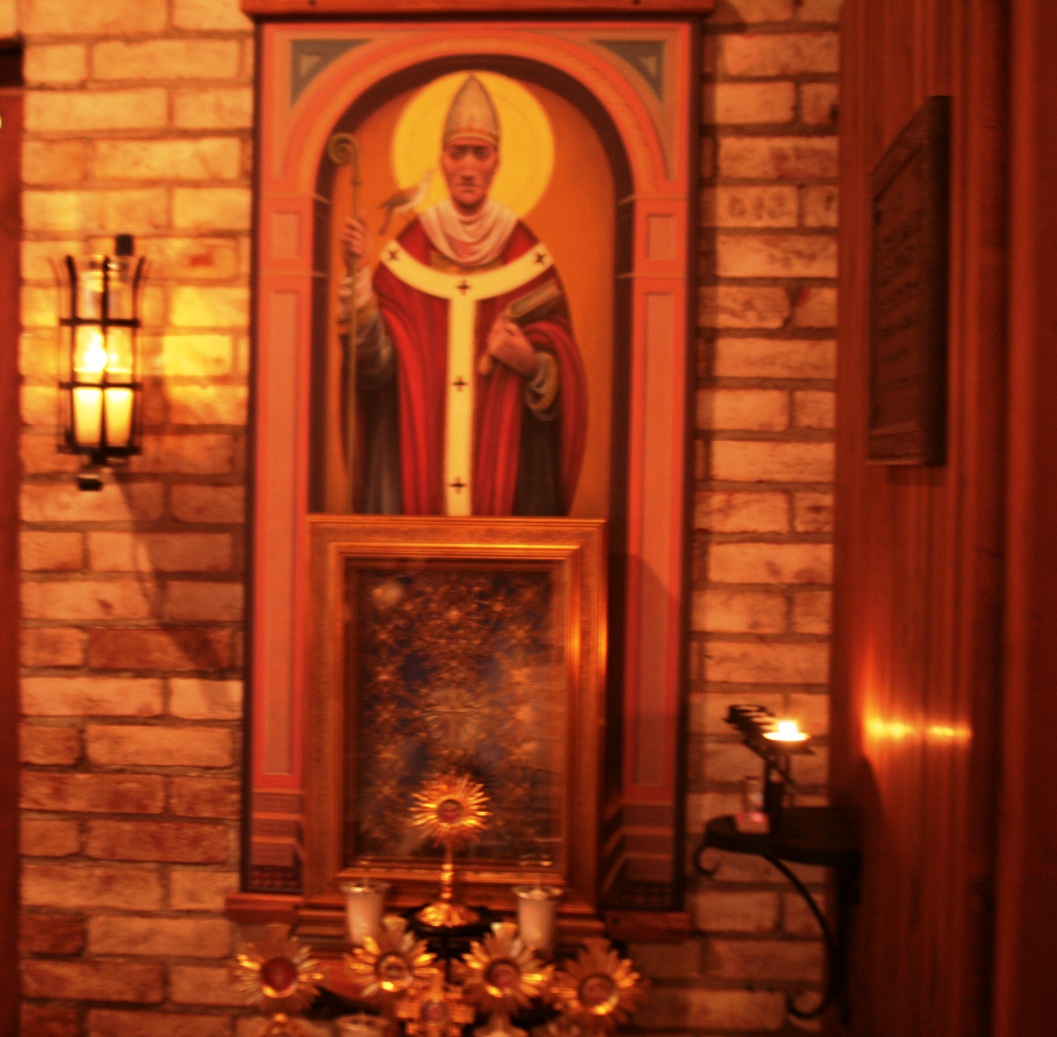
It is perhaps this vision of creation unveiled that inspired Pope Gregory to discern what elements of the English culture could be converted rather than rejecting them wholesale. He advised Augustine of Canterbury to convert the temples rather than destroy them. Of course, just as we have to practice discernment as to what must and can be converted and subverted in another’s culture, we have to practice the same discernment with the veils placed over our own faces by our own culture. The famous story of how Gregory, before he became pope, was inspired to promulgate an English mission is a case in point. Upon seeing some fair youths in the slave market in Rome, Gregory asked who they were. On being told that they were Angles, Gregory, in uttering one of the most famous of puns, said that instead, they should become angels. If anything embodies the persecutory mechanism, it is slavery. Chesterton suggested that Gregory could (or should) have meant: “not slaves, but souls.” The veil lifted enough for Gregory to see the youths as humans in need of salvation and, as pope, he sent a mission to do just that, but the veil did not lift enough for Gregory to agitate for the abolition of slavery, much as he was willing to be a slave himself for the sake of those in need of his pastoral care. That job was left to an energetic descendent of the people converted by Gregory: William Wilberforce.

Preaching in the face of such veils, not least our own, is a daunting task and it is no wonder Paul urges us not to lose heart in the process. It is enough to make us feel like clay and Paul tells us that feeling like clay is exactly the way we should feel when faced with the task of preaching the Gospel. When we realize that we are made of clay, as Genesis 2:7 teaches us, we appreciate what a great gift are the treasures inside the clay jars that are us, a gift from God so that we can “commend ourselves to the conscience of everyone in the sight of God” (2 Cor. 4:2).

Abolishing Sacrifice to Establish Mercy

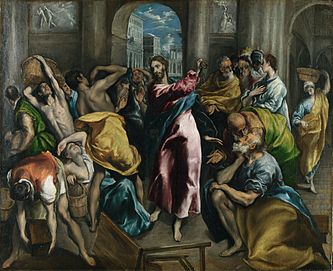
Jesus_cleansing_templeThe story of Jesus knocking over the tables in the temple and driving out the animals shakes us up but then we wonder what we should be all shook up about. Jesus’ act can be seen as the climax of repeated protests of the Hebrew prophets against the sacrificial cult in the temple. Jeremiah mocked his listeners who jabbered: “This is the temple of the Lord! The temple of the Lord! The temple of the Lord!”  (Jer. 7:4). Then there is God’s mocking question from Psalm 50 and repeated elsewhere: “Do you think I eat the meat of bulls and drink the blood of goats?” Amos proclaims God’s hatred of festivals. Most telling are the words of Hosea that Jesus quoted: “I desire steadfast love and not sacrifice, the knowledge of God rather than burnt offerings” (Hosea 6:6.) There is much debate as to whether the prophets wanted the abolition of the sacrificial cult or a reformation that would bring it in line with moral values. In driving out not only the money changers but also the animals about to be sacrificed, I think Jesus is doing a bit of guerrilla theater to prophecy the end of the temple cult, a prophecy fulfilled in 70 A.D. when the combined violence of militant Jew and the imperialistic Romans resulted in its destruction.

When asked to explain his actions, Jesus said: “Destroy this temple and in three days I will raise it up” (John 2:19) This literalist interpretation is promptly debunked by the evangelist when he says that Jesus was “speaking of the temple of his body” (John 2: 21). So much for biblical literalism. The implication that Jesus is replacing the temple with his risen body is a strong indication that he intended to abolish the sacrificial cult. What was wrong with the sacrificial cult? The quote from Psalm 69 “zeal for your house will consume me” shows us the problem if we note the context. Psalm 69 begins with “Save me O God for the waters have risen up to my neck.” The psalmist tells God that he is suffering the same reproach people level against God: “the insults of those who insult you have fallen on me.” This psalm is referred to as one of the “passion psalms” and has been interpreted as a prophecy of Christ. However, I don’t think the psalmist was gazing into a crystal ball and seeing Christ’s Passion; I think the psalmist was complaining about collective violence that was happening to him at the time. The number of persecution psalms and the fate of many prophets, suggests that the Gospels are revealing the human tendency to solve social conflicts by uniting against a victim which is precisely the outcome Jesus predicts when he explains his actions at the temple. T

he prophets consistently denounced the sacrifices made on the “high places,” pagan sacrifices to deities like Moloch who even required the sacrifice of their children. The sacrifice in the temple was more humane in that it was restricted to animals, but the practice derived from the notion that “god” was angry and would be appeased only by sacrifices. The prophets’ denunciations of the temple cult were consistently coupled with denunciations of social violence and injustice where the poor were sold for a pair of sandals as Amos complained. Although it is argued that the prophets thought the temple sacrifices were acceptable, maybe even laudable, if accompanied with righteous actions in the social sphere, but they seem to have a sneaky suspicion that the practice of sacrifice tends to encourage social injustice. The temple setup was, after all, a terrible financial burden on the poor. (I think Jesus was not edified but outraged over the widow who gave the last two coins she had to live on.) The logic of sacrifice was that some living being was always dispensable precisely as the victims of collective violence at the times of social crises were dispensable and their deaths “necessary.” Caiaphas stated the sacrificial logic baldly when he said that it was better “to have one man die for the people than to have the whole nation destroyed” (John 11:50) In modern times this sacrificial logic is expressed by the regretful term “collateral damage.” These considerations suggest that the prophets were convinced that something was fundamentally wrong with sacrificial rites.

Jesus, on the other hand, has a totally different, opposite logic; a logic that Paul says is foolishness to the rest of the world. In John 6, Jesus says that everybody the Father gives him will come to him and nobody who comes to him will be driven away. The parable of the lost sheep makes the same point that it is not the will of our Father in Heaven that even one of his “little ones” should be lost. Jesus believed this so strongly that he would accept death on the cross to make the point and, more important, return as the forgiving victim to gather all who will come to him so that none of us should be lost. The pagan deities wanted sacrifices made to them. The prophets kept trying to get it across to everybody that God pours out sacrificial love to all of us through creation and redemption and that God wants the mercy God gives us in return, not sacrifices .  Caiaphas was willing to sacrifice Jesus and anyone else who put a spoke in the wheel of the sacrificial logic. Jesus was willing to sacrifice himself rather than sacrifice any of us. That is why we do not slaughter bulls on this altar but pass around the bread and wine through which Jesus gives His very self to each one of us.

Renouncing Self-Centered Renunciation

CrossofashesWith Ash Wednesday we begin a season of self-denial featuring prayer and fasting. We also renounce other pleasures to help us curb our desires a bit more than we do the rest of the year.

The asceticism of self-denial, especially that of fasting gives us an important of the interaction between mimetic realism. There is a paradoxical effect of self-denial that we can fall victim to if we are not careful. It is possible for self-denial to focus us upon ourselves in an unhealthy way. It is I who am fasting. I am giving up pleasures I normally indulge in. If we become so fixated on ourselves, we are puffing ourselves up rather than denying ourselves. Isaiah shows how such self-centered fasting leads to quarreling and fighting and striking others with their fists. (Isaiah 58:4) If self-denial has made us so grouchy that we have to make up for what we are giving up by giving ourselves the alternate pleasure of striking out at other people and putting them down, then it is grouchiness and lashing out at others that we must fast from.
Likewise, Jesus warns us against putting on long faces so that others will admire our fasting or blowing trumpets to call attention to our almsgiving (Mt. 6: 1-2). Once again, our self-denial is being compensated for by self-indulgence in other ways. When the admiration of others is filling our egos, then we need to fast from seeking such admiration. We may well find that this renunciation is harder than renouncing food and other pleasures. As we deepen renunciation, we become aware of deeper levels of our desires that need to be turned into a more positive direction.

Given this pitfall, I suggest that we emphasize the needs of other people and renounce ourselves by thinking of them rather than about ourselves. Isaiah suggests that a better fast would be to let the oppressed go free and loosen every yoke. (Is. 58: 6). Jesus echoes Isaiah’s sentiments at the beginning of his teaching ministry by proclaiming a Year of Jubilee that would free all people of their imprisonment to debt so as to give all a new start in life. (Luke 4: 16-20 Instead of puffing ourselves up, we should build up other people. Perhaps we will find this to be a greater renunciation that cutting back on our eating habits. In any case, renunciations of food and other pleasures will help us grow spiritually only if they are the basis for reaching out to other people. When we really think of others, we have less room in our hearts to think about ourselves.


Above the Circle of the Earth

treespath1The Babylonian exile was traumatic for the Jews. Those who were taken to Babylon had to live in an alien environment quite contrary to everything they believed in. But an interesting thing happened during this exile. The sages and prophets who were living in exile came to close quarters with the mythology and sacrificial religion of their captors. When the Jews had come close to the Canaanite religion earlier in their history, the clash had taught them a few things about what the God they worshipped was all about. When the prophets saw the sacrifices of children to Moloch, they knew that this was not the kind of sacrifice Israel’s God wished and they protested these sacrifices with all their might. In Babylon, they came up against a mythology of a violent creation that took place with the dismemberment of Tiamat who, of course, was the deemed the cause of all the problems among the deities and who had to be punished. Moreover, the reason for creating the world was to make servants who would serve the gods. The sages and prophets learned from this mythology that this was not what their God was about. The God who had delivered them from the Red Sea was freeing slaves; not making them. This God had created a people by delivering them from violence and from a violent culture. They were hoping their God would do it again, and God did just that when the Persians defeated Babylon and allowed the Jews to return to their home.

The Creation narrative that begins the book of Genesis can easily be read as a refutation of Babylonian mythology. Far from creation emerging from violence, creation emerges from the Word of God which allows creation to be. The prophet we call Second Isaiah also proclaims Israel’s God to be far different, fully Other, than Marduk and his pantheon. “With whom then will you compare me, or who is my equal?” asks Israel’s God in a question so rhetorical that it stops all human mouths (Is. 40: 25.) The violence in Babylonian mythology mirrors the violence of Babylonian culture and other human cultures as both deities and humans live in the same system of retributive violence. But Israel’s God “sits above the circle of the earth” (Is. 40:22.) That is, God is outside the system. From God’s vantage point, we are all like little grasshoppers. This God is the creator “of the ends of the earth.” Not only that, but God “gives power to the faint, and strengthens the powerless” (Is. 40: 29.) Far from creating servants, God serves the creatures God has made and God serves most especially the powerless, like a rabble of slaves in Egypt and an exiled people in Babylon. Grasshoppers may be small in size but they are great in God’s care.

This vision of God as one who serves is embodied in Jesus as presented by Mark. Coming from outside the human system of violence, Jesus exorcises those who are possessed by their violent culture. Jesus serves Peter’s mother-in-law by healing her of a fever, thus allowing her to imitate Jesus by serving him, the disciples, and her family. Meanwhile, Jesus goes on to serve the many people who come to be healed of sickness and violence. Now God has come from “high above the circle of the earth” to serve us grasshoppers size.

Both Isaiah and Mark are showing us that creation is not a one-shot deal. Creation is a continuous process. God renews the strength of those who wait on God so that we can “mount up with wings like eagles.” Jesus uses the same creative power to heal sicknesses and drive away the violence that possesses us.

The question then is: Will we allow Jesus to bring us out of the exile into which violent human culture has captured us so that we can return to the world God created from the beginning—outside the System—or will we prefer to stay in exile?

Church as Family

HolyFamilybyGutierrezAnother set of images of the Church is drawn from family. As with other images, only more so here, there are strengths and weaknesses. Most important, they bring to remembrance our families of origin. If our family experiences are, on balance, good, then the images reinforce that, but if the experiences are seriously bad, then the images become stumbling blocks. These can be at least as hard to overcome as the stumbling blocks parents and/or siblings have put before us, especially in our earliest years. If the latter is the case, we need to remember that healing was a major ministry on the part of Jesus and healing familial brokenness continues to be part of that.

The Fatherhood of God is an important familial image in Christian spirituality as the Lord’s Prayer reminds us every time we say it. But it is important to remember that God is addressed as “Father” (better yet: Papa) by Jesus before God is addressed that way by us. Jesus is alerting us to the paternal care given all of us by God, but God’s paternity comes to us through Jesus. At the Annunciation, the Heavenly Father, who already has begotten the Son from all Eternity, begets the human child in Mary’s womb. As a conscious human, Jesus experienced the love of his Heavenly Father most strongly when he was baptized in the Jordan by John. The voice from Heaven said: “You are my Son, the Beloved; with you I am well pleased.” This pre-emptive love of the child is fatherhood at its best. It is like the happy parent who is overjoyed with the birth of a child simply because the child is. It is this pre-emptive Love that is the Foundation of the Church, the rock on which the Church is built.

The image of Mother, Jesus’ earthly mother, has often been used as an image for the Church. As a particular flesh-and-blood mother she is Mother Church without being an abstraction. That she would nourish the baby Jesus from her own body makes her a perfect image of nurturing. When confronted with the mysteries surrounding Jesus’ birth, she pondered them in her heart. Little else is told us about her from Scripture but she stood by Jesus at the cross, making her the archetype of many more grieving mothers whose sons have been treated the way her son was. The nurturing we receive from our mothers has a lot to do with having a basic sense of security that helps us resist rivalrous mimetic desire as we grow up. Failures in early nurturing create basic insecurities that are difficult to overcome. The Church as a whole is called to delight in every child and to nurture every child during maturation.

Important as these paternal and maternal relationships are, they belong to Jesus first and to the rest of us secondarily. That is to say, Jesus relates to us as our brother and we are all Jesus’ brothers and sisters. Considering the history of sibling rivalry in scripture, this is of immense significance. Jesus is the keeper of his brother that Abel never had and he is Cain’s keeper as well. In her book Intimate Domain, Martha Reineke discusses the tension and fundamental choice a child is faced with when a sibling is born: whether to compete or to welcome the sibling as “more of me” rather than less. There is no competing with Jesus over mama or papa so we might as well be civil brothers and sisters with him and with each other in the bargain.

There is a curious story in the Gospels that hint of possible tensions even in the Holy Family. Jesus is told that his mother and brothers and sisters are outside wanting to speak to him. Jesus points to the people who are listening to him and says that they are his mother and brothers and sisters. This indicates that even during his lifetime, Jesus is building a kinship network based not on bloodlines but on obedience to God’s Desire. There are people from broken families who find family through the Church. (Here I mean Church in the broadest sense! Where this nurturing takes place, there is Church, when it doesn’t, there is no church.) Building deep kinship ties through Jesus happens when we allow Jesus to bring us into the arms of his Mother and the Presence of the Heavenly Father who is so well-pleased with us that our hearts melt and we really want to be pleasing to our brothers and sisters.

Liturgical Animals (2)

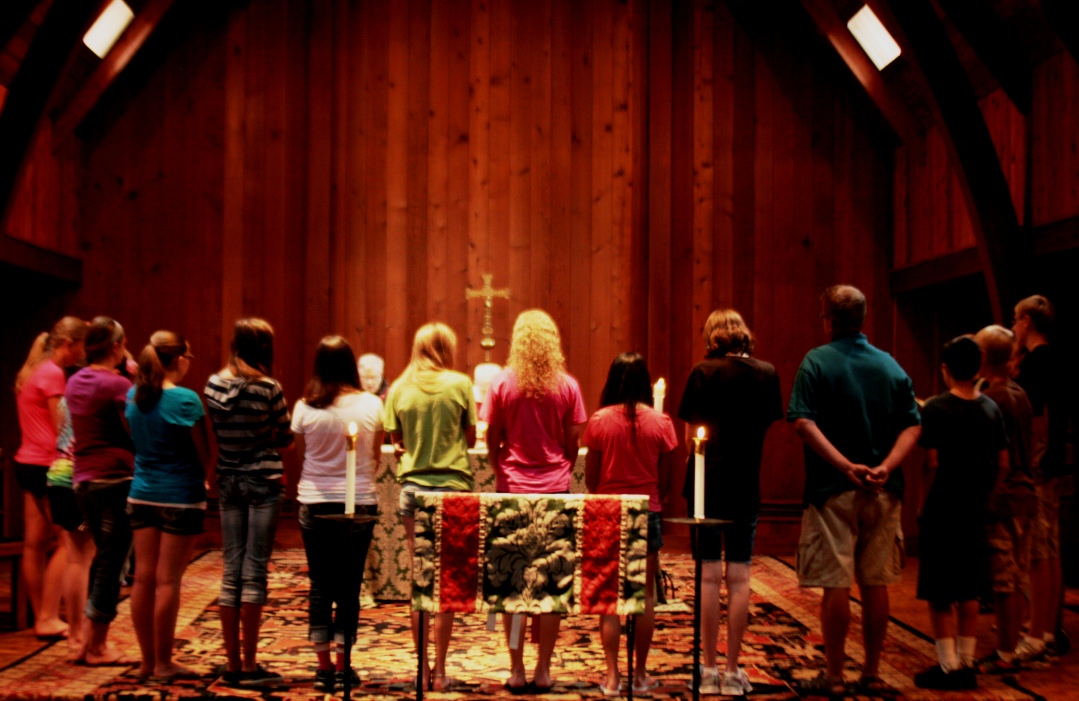
eucharist1In his first letter to the Corinthians, St. Paul brings us to the heart of Christian worship that Jesus inspired at what we call his Last Supper. His followers were doing what he told them to do: Do this in memory of me. While both the myths and rituals obscured the sacrificial stories on which they were based, the Eucharist clearly tells the story on which it is based:  the betrayal of Jesus, his subsequent crucifixion, and his rising from the dead.  This earliest account of the Eucharist, predating all of the Gospels, enshrines the Words of Institution that are repeated in celebrations of the Eucharist two thousand years later. The Eucharist teaches us through its story but it also teaches us at a deeper, more substantial level through actually feeding us with the Word of God so tangibly that we chew on it and swallow it. Celebrating the Eucharist places our desires into Jesus’ Desire for us to gather with him and the other Persons of the Trinity.

The meal is probably the oldest of rituals performed by liturgical animals. Eating is the first activity that immerses us into mimetic desire as we imitate the desires of our caregivers to desire food and, by the time we are old enough to be conscious of what we are eating, to desire certain foods because those around us desire them. However, as much as meals have to do with providing necessary bodily nourishment, they are always more than that. An intrinsic part of learning to eat is learning how to eat in the company of others. It may be culturally arbitrary whether we use eating utensils and plates or large leaves and fingers, but in every culture I have ever heard of, there is always a way of eating that is learned. The shared desire for food extends to a shared desire for the way of eating it. By rooting liturgy in a meal, the Eucharist roots worship in the sensuous act of eating; of tasting food and drink on our tongues.

In this same letter, Paul brings up the manner of table manners in regards to the Eucharist. He berates the richer members of the congregation for their insensitive treatment of those who are more economically challenged. To flaunt their superior food in front of those who cannot afford it without offering them anything was a serious violation of everything the Eucharist stands for. This desire shared by one group in the congregation to demonstrate their superiority over others, to put them in their places, breaks the unity the feast is supposed to create and strengthen. Paul makes it clear that there is much more to worship than saying or singing words together while celebrating a sacrifice. If people are not treated well, worship is diminished if not rendered nonexistent.

John’s version of the feeding in the wilderness brings all of these themes together. The event is explicitly brought into the context of Yahweh’s feeding the Jews in the wilderness after their escape from Egypt. Raymond Brown pointed out that rabbinic teaching interpreted the manna as symbolizing the Torah, thus uniting food and teaching, something the Eucharist also does. While Matthew and Mark recount two feedings in the wilderness, one for the Jews and one for the Gentiles, John has one story of feeding for all people. Jesus’ blessing of the bread and fishes has ritual overtones although the feeding is taking place in the open air, away from temples, synagogues and churches. The social unity that Paul enjoins is embodied in John’s vision where it gains a deep universality. Unfortunately, the people then unite in trying to make Jesus king, which destroys the social vision as surely as the Corinthians did.

The Eucharist teaches us that we don’t outgrow our earliest lessons: table manners. Without them, we don’t grow up.

Liturgical Animals (1)

monksinChoir1The reality of mimetic desire guarantees that we will engage in liturgical activity. What kind of liturgical activity and for what end leads to many possibilities. However, since we instinctively react to the desires and intentions of others, we also instinctively move and sing with each other and act together. Since we are mimetic animals, we are also liturgical animals. Much liturgy takes place in churches and temples but liturgy can be done anywhere at any time and it is indeed done all over the place. René Girard’s theory of scapegoating violence places the origins of ritual and liturgy in the spontaneous mob violence against a victim that “solves” a massive social crisis. At first thought, one would think there is nothing liturgical about collective violence; it just happens. But actually collective violence is a very predictable phenomenon that consistently works in a certain way once it gets started. We all know that once the persecutory ball gets rolling it is almost impossible to stop until blood has been spilled. The relatively few instances where the persecutory wave is stopped short of bloodshed also follow a predictable pattern. In essence, the mimetic contagion of a mob has to be redirected into another direction, one less destructive. This is what Jesus did when the Jewish elders were gathered around the woman caught in adultery. This is what Christians do to this day when celebrating the Holy Eucharist. Although I think it likely that sacrificial rituals have their origins in collective violence as Girard suggests, I think that ritual in itself is rooted more deeply in human nature. Since we humans are imitative creatures, we would instinctively coordinate our bodily movements with those of others. This sort of mirroring is instinctive to mothers especially in their interactions with their babies. It is this coordination of movement that would unify a family and then a clan and then a tribe. These coordinated movements would naturally turn into communal dancing and singing. Such coordinated action would naturally move into reenactments of primal collective violence once that occurred, but there is nothing in this instinct for coordinated movement that requires that it move in that direction. This is to say that collective violence and its continuations in sacrifice and institutionalized violence are not of the essence of humanity. There is nothing necessary about it; it’s just something that happens most of the time. What is necessary in the sense of being of the essence of humanity is coordinated movement. Our built-in mimetic desire guarantees that it will happen. There are practical reasons for this trait, among them coordinating movements during hunting expeditions, the way soldiers do military drills to facilitate coordination in battle, and the way football teams synchronize their actions, not to speak of the rituals performed by their fans. Singing together over common work such as gathering fruits and preparing meals might not be as necessary for success as the coordinated movement of hunting parties, but perhaps are as necessary at another level. Maybe nobody dies of boredom but we often feel that we can, and maybe we do in the sense that lack of interest in life isn’t conducive to living a long life. It is singing and dancing together and moving together in other ways that would have given our earliest ancestors an interest in living and it is these activities that spark our interest in life today. Many people today may think they are dismissive of liturgy because they think of stuffy church services or masonic rituals. But the ways we greet people, especially when introducing people to strangers or meeting them, are little rituals that we take so much for granted that we don’t think of them as rituals. When I was young, many people who never darkened the door of a church linked arms in the streets and sang the hymn “We Shall Overcome.” All this is to say that humans are liturgical animals. Gathering with others always has some liturgical overtones in the sense of repeating actions we are used to doing together. Drinking parties tend to follow the same patterns for those groups in the habit of gathering for that purpose. Given this human trait to gather through ritual, it is inevitable that any who wish to gather with others in memory of Jesus would gather liturgically. Liturgy is discussed at length in my book Tools for Peace.

Proceed to Liturgical Animals (2)

Christian Community (5)

guestsNarthex1Unfortunately, I can’t discuss Church without saying something about institutions called churches. I also can’t overlook the unfortunate fact that although the word “church” has six letters in it, for some it is a four-letter word.

A common distinction is made between the visible Church and the invisible Church. The former is made up of people who wear clerical collars and vestments and those who sit or stand or kneel in pews and sing hymns or songs of praise. The latter is made up of those who actually have their hearts and minds conformed to Christ regardless of whether or not they place their bodies in buildings with a cross on it. In such a distinction, the invisible Church is the real Church, although people invested in the visible church (sorry about the pun!) hope that at least some of them are in the real, invisible Church as well. Of course, this invisible church isn’t really invisible. It is perfectly visible to God and it is visible to all people who have eyes to see. In my earlier posts on the subject of Church, I have suggested that the essence of Church is to be aligned with the forgiving love of Christ that brings us to the place of the victim in opposition to the principalities and powers that feast on victims. Acting out the role of Church in this way is quite visible, just as visible the people who sing hymns and preach in buildings that we call churches. Again, we hope there is at least some overlap between the two, but we all know that the two hardly coincide.

The Church is, then, visible in acts of worship and in charitable acts such as ministering to the poor. The disconnect between these two visibilities is a cause of dismay and downright confusion. Some people who are devoted to both might find that the people they worship with and the people they work with in ministry are very different. This problem becomes particularly acute when a “church” openly allies itself with Empire. To this day, there is concern that when the Roman Empire theoretically converted to Christianity, Christianity was actually converted to the Empire. The establishment of what was called “Christendom” tended to institutionalize the violent tactics of Empire. The Inquisition was a particularly notorious example of this. In more recent history, the Nazi government of Germany ordered the Evangelical (Lutheran) Church to expel all members of Jewish descent from leadership positions. Complying with this demand was a betrayal of their own members and of Christ. The Confessing Church which seceded in protest was a remnant of the Body of Christ.

The disunity and discord among Christians is a further cause of scandal to many. That there should be many ecclesiastical bodies with long or sometimes short traditions is not a problem to me. People are different and cultures are different. It is sad, however, that most churches, were founded in protest against the ecclesiastical body they left. Many of the long-standing debates have been resolved and many ecclesiastical bodies work together charitably in matters such as world relief. Many of the divisions, however, smack of emulating the disciples who argued about who is the greatest and/or the slogans in 1 Corinthians: “I am of Apollos!” “I am of Cephas!” Many of the theological debates in the early Christian centuries over the Trinity and the Natures of Christ could have been carried on with less rancor if church leaders had not been so afraid that God would eternally torture anyone who didn’t get the formulas just right. Getting the theology right just isn’t enough when we get the Love of God wrong.

The scandal of Church for so many of us tempts us to chuck it all and try to go it alone. If Girard’s theory of mimetic desire is true, that is simply not possible. We are affected by the desires and intentions of others whether we like it or not. If we set ourselves over against everybody else in defiance, that very defiance makes us totally dependent on the people we are defying. After all, if we aren’t defying people, we aren’t doing much in the way of defying. The deeper problem is that when we make ourselves that dependent on other people, we are easily sucked into the power of persecutory mechanisms when they occur. A lone individual can’t hold out against such a thing.

So there is need to connect with others. This is a point I illustrate in some of the stories I’ve written, most particularly in Merendael’s Gift. The protagonist can’t stand up to social pressures of the kids he hangs out with until he allies himself with other children who band together to befriend this strange visitor from another planet. This group becomes an analogy for the Church as the Body of Christ. In real life, we have to be alert to the people who are sincerely and humbly entering the place of the Victim. (I say “humbly” because some people pridefully use “victimhood” to manipulate others.) We can only hope that some of these people actually are in a church in the ecclesiastical sense.

Girard’s theory of mimetic desire and the rivalry and sacrificial violence it can lead to suggests that they greatest division among Christians is along the lines of a theology and practice that is sacrificial on the one hand and one that is grounded in Jesus the Forgiving Victim on the other. Girard’s theory shows us how easily followers of Jesus’ Kingdom could easily slide back into remnants of the primitive sacred. The Body of Christ looks like the Body of Christ when it is embodied by people who stand up to the persecutory mechanism whenever it occurs. Unfortunately, any of us can easily fall into embodying instead the Satan who is the Accuser. That is to say, this schism between sacrificial and forgiving members can split right down the middle our own selves. This is why we need to strengthen ourselves with the practices of Church such as worship and interior prayer and mutual encouragement.