
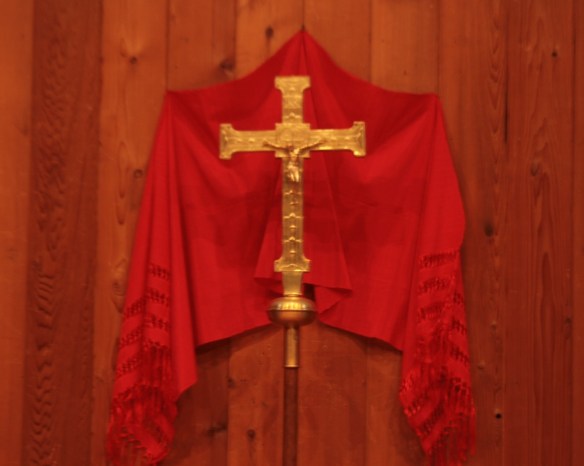
 Lent is the season when we think of making sacrifices, usually small ones, like giving up a pleasure or two. This Lent, we have been called upon to make many large sacrifices because of the COVID-19 virus. The social distancing needed to slow the spread of the disease entails giving up many very good things that we take for granted. I can’t even go out and get a haircut when I need one. The disappointments through canceled events are many. For me, it’s a concert I was looking forward to and, more disappointing, a speaking engagement where I was going to present a paper I had worked on for many hours. I’m sure many others have had greater disappointments than that. It must be hard, for example for children not to be able to play freely with their friends and to be separated from grandparents. One of the greatest renunciations for committed Christians is, ironically, Church. Usually, going to Church is something one increases during Lent, but the social distancing called for right now has worshipers staying home and making do with online services. I would think this would make worship a self-emptying process as the familiar sacred space and the people one is usually with would not be there except on a computer screen.
We do not necessarily choose to give up these things. When concerts are cancelled, for example, one doesn’t have the option of going. Bishops around the country ordered the cancellation of in-person services before most state governors had issued executive orders. The only choice is to be a reasonably good sport about it. Or not. We may grieve the things we lose during this time, but we can take comfort in the assurance that these renunciations are saving lives, maybe even one’s own. Thinking of others in this way lightens the load that comes of focusing on our own losses. Greater than the sacrifices of social distancing are the sacrifices of those who are risking their health and possibly their lives to serve others during this time. Medical workers top the list. True, these people entered these professions expecting to make sacrifices for others, even if not in so intense a fashion. But people stocking shelves in grocery stores or working elsewhere in the food chain are also risking themselves and these are not jobs one normally expects to be so risky. Then there are those who lay down their lives. One example I’ve heard of is a priest in Bergamo. His parishioners had bought a lung ventilator for him, but he gave it to a younger man who was dying. Not even his body was recovered in the midst of the mass burials.
In such times of stress, there are some who opportunistically seek to profit instead. The selling of needed medical equipment for many times their wealth is a tragic example of this. There is also talk about sacrificing human lives to save the economy, a notion that makes The Economy loom like a deity requiring sacrifices. I don’t mean to minimize the economic impact of the COVID-19 virus and the need for careful balancing of economic peril with that of the disease. I am calling for a deep concern for the lives of all people. In all this, there is the fundamental choice of whether we will make sacrifices of ourselves as needed or will prefer to sacrifice other people. This is a fundamental choice we face all the time, but the current crisis adds urgency to it.
The Great Sacrifice of Jesus who died on the cross makes it quite clear that God is in the business of self-sacrifice and is certainly not a deity that requires sacrifices of others. And yet, as our model, self-sacrifice is what is asked of us because of what Jesus did for us and continues to for us all the time. During this season, we are reminded of those who made a sacrifice of Jesus, oblivious of the sacrifice Jesus was making for us and even for them, if they could accept it. The love that motivates Jesus is awesome, beyond our comprehension. If we even begin to tap in to this love, we come to see for ourselves that it is the way, not to glory, but the way of glory.

 At the end of Epiphany, we celebrate the Transfiguration of Our Lord to prepare for Lent. The vision of the glorified Christ is supposed to cheer us up for the grim days of penance and the grimmer days of following Jesus through his Passion. The Transfiguration also prepares us for Easter as it gives us a foretaste of the glorified body of the risen Lord.
 When we dip our fingers in a holy water stoup as a reminder of our baptism, how much do we really remember? Do we stop to think that the water is as explosive as the bread we receive at the Eucharist?
 The story of the Magi’s visit to the newborn Christ Child in Matthew is one of the archetypes of the Christmas season. Most popularly, the Magi are the archetypes of giving because of the gifts they brought to the Christ Child and they are often credited with being responsible for the exchanges of gifts customary during the Christmas season, even among people who otherwise have nothing to do with Christianity.
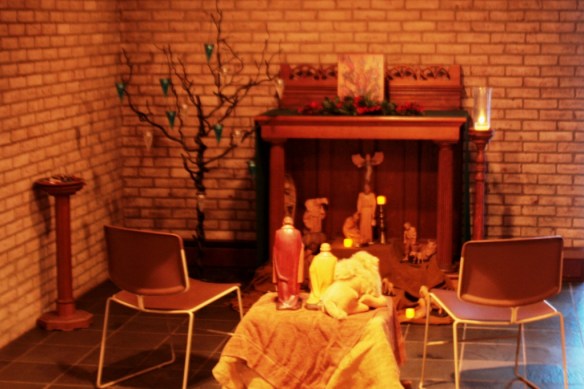 God is a mystery. That almost goes without saying since anything we can comprehend can’t be God. Humanity is also a mystery. One of the few things we truly know about ourselves is that we don’t know ourselves or our natures very well. When we celebrate the birth of Jesus, the time God entered humanity, we have the mystery of mysteries to the zillionth power.
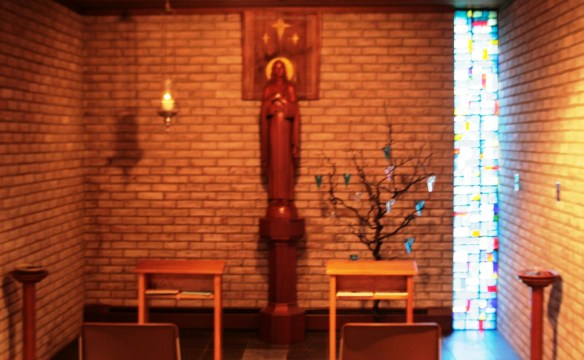 In most churches, the Blessed Virgin Mary is either given very high honor, sometimes exuberantly so, or she is cast out of mind except at Christmas where she might be allowed in a manger scene.
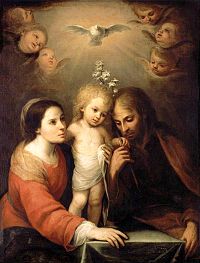 When Jesus’ disciples asked their master how they should pray, he taught them a prayer that has us learn by doing. We are taken aback by Luke’s shorter version of this prayer (Lk. 11: 2–4) since the liturgical use of Matthew’s version with an added doxology causes us to think it is the only form it has. We will find, however, that this shorter version has the main elements of the longer one.
 When called by the prophet Elijah, (1 Kings 19: 19–21) Elisha asks to kiss his mother and father first. When he is rebuked for this demurral, he slaughters his oxen, breaks the yokes and burns them, and then follows Elijah. That is, he burns his bridges in making a clean break. Elisha makes this break, however, to join a brotherhood of prophets who have set up an alternate community to the violent and idolatrous kingdom of Ahab and Jezebel. Unfortunately, this community is also compromised by violence as Elijah calls fire down on his enemies (2 Kings 1: 10–12) and one of the prophets anoints Jehu to pull of a violent coup d’état. (2 Kings 9)
 Imaginary Visions of True Peace