

The passage from Isaiah known as the Song of the Suffering Servant (Is. 53: 4–12) takes us to a foreign country where we have difficulty finding our way and understanding the language. The itinerary is too long and complicated to attempt a thorough tour, but the overall ambience is one of crushing suffering. The Servant is “struck down,” “wounded,” and “afflicted.” But not just struck down and wounded and afflicted as, say, a person dying of cancer might be, but somebody “wounded for our transgressions.” Perhaps one could say that there are a few familiar sights that remind us of normal life. We know that people sometimes suffer for the wrong-doing of others, and perhaps we feel we have ourselves suffered on account of others, but we don’t normally encounter the suffering inflicted on a person in so concentrated a form. But what is particularly foreign and strange is that the afflicted one “did not open his mouth,” but rather was “like a lamb led to the slaughter.” (Is. 53: 7) Some people can be resigned and dignified when suffering, but it is difficult not to protest when one is so seriously wronged. And this isn’t just somebody being blamed for what somebody else did. This is somebody stricken for the transgressions of a whole people. And yet, “he had done no violence, and there was no deceit in his mouth.” Such willingness to suffer for the wrongs of others without protest is more than most of us can comprehend. The whole notion that such a thing could happen so intensively is as easy to comprehend as a totally unintelligible language. But there is another strangeness as well. The speaker, one we could call our guide, expresses remorse for the suffering of this innocent person. Our guide admits to being guilty of the sort of transgression that resulted in the suffering. Moreover, the guide admits to guilt over allowing the suffering and thinking the suffering was justified, was God’s will. This guide now sees the suffering as “a perversion of justice.” (Is. 53: 8) Sometimes we feel guilt over small matters such as putting ourselves before others and not stepping up in times of need. But such a fundamental move of repentance is rare in so serious a matter. Again, the language is virtually unintelligible.
But just as a foreign land can take on some familiarity for a frequent visitor, so visiting the foreign land of this text can take on the beginnings of familiarity the more we visit it. If we follow the Church calendar, we have at least a yearly visit. And now, outside of the usual time, we have another visit to the text we normally come across on Good Friday. If we gain the beginnings of familiarity, we can begin to ask ourselves if we have, in our own ways, added to the sufferings of this innocent servant, and whether or not we should repent of the burdens we have laid on other people. Perhaps we can begin to learn the language of this land and take the language to heart.
The Epistle to the Hebrews is not the same land as that of the Suffering Servant. It is not as drawn out and intense in the suffering as in Isaiah, but the language is a close variant of that of the Suffering Servant. First, we have a normal high priest who offers sacrifices for sins on behalf of the people. (Heb. 5: 1) It looks like a routine job, though one requiring penance on the part of the priest who sins like all of the other people. (Heb. 5: 2–3) But then suddenly, we have a High Priest who does not make an offering of a lamb led to the slaughter, but makes an offering of himself. This Priest is the lamb led to the slaughter, as was the Suffering Servant. Like the Suffering Servant, this Priest did not protest, but he did make his self-offering with “loud cries and tears to the one who was able to save him from death.” (Heb. 5: 7) Again, we see a radical self-giving that is hard to understand, but the more we visit this land and learn the dialect, the more our hearts move in this direction, leading us to trust the One who heard the cries of the Priest who offered himself.
In Mark’s Gospel, we find ourselves in a much more familiar world where it is much easier to understand the language and customs. Two followers of a charismatic religious leader ask their leader if they can be given the best places at the right and left hands of the leader. (Mk. 10: 35–37) Not surprisingly, the other followers are incensed at this initiative, presumably because these are the places they would rather have for themselves. This kind of jockeying for position is much more like normal life than like visiting a foreign land. The odd thing, though, is that the charismatic leader in question, Jesus, isn’t in their territory at all. Perhaps his body is there with them, but his mind is thoroughly ensconced in the Land of the Suffering Servant, a land where he speaks the language fluently. It is the world of his followers and of ourselves that is unintelligible to him. In fact, when Jesus does speak, he speaks in the language of the Suffering Servant, a foreign tongue to the disciples and to us. Fortunately, Jesus’ teaching is relatively simple, like using a primer for beginners. In this regard, this Gospel fits in well during ordinary time, when we are following Jesus and his disciples and learning for ourselves how to be disciples. Rather than talking about bearing the burdens of other peoples’ transgressions, Jesus simply tells us that the leader must be a servant of all. (Mk. 10: 43) This is the first baby step for learning the language of the Suffering Servant. One can go from there to the more advanced matters of the Suffering Servant’s world, which is Jesus’ world.
We are here presented with two worlds, two universes, even. Perhaps some of us have one foot in both worlds. Since the two worlds don’t mix very well, this would make us be what James, In his epistle, called “double minded.” (James 1: 8) The world of the Suffering Servant, is, however, what Paul called the “mind of Christ.” (1 Cor. 2: 16) The question is whether we will occasionally visit the world of the Suffering Servant as uncomprehending tourists, or make frequent visits and become fluent in the language where the words penetrate the heart. If we become attentive to serving others, there isn’t time to ask for the best places because we are entering the only place that matters.
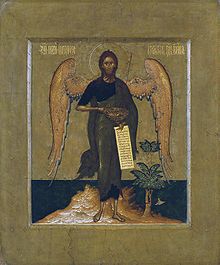 Although John burned with a conviction that God was going to do something new, he had only the models of past prophets to guide him in opening a way to the great new thing. He lived in the desert, wore a camel hair coat and ate wild locusts and honey in imitation of Elijah. Like the prophets of the past, he warned the brood of vipers of the wrath to come if people did not shape up and turn back to God. (Lk. 3: 7) Again like the prophets, he told soldiers not to oppress vulnerable people. Yet again like the prophets, he rebuked his ruler, Herod. And like so many of the prophets, he was put to death.
 Jesus’ insistence that we deny ourselves and take up our crosses and follow him (Mk. 8: 34) jolts us into thinking about what our priorities in life should be. Without being so jolted, we tend to deny other people, take up our favorite pastimes and follow whoever takes our fancy. However, we encounter a serious problem if and when we do take Jesus’ words to heart. We tend to get muddled over what constitutes a “cross” and how we should carry it. Because of this muddle, there is the danger that the cross will be trivialized. Carrying our own crosses is not about being a good sport if we catch the flu.
 Imaginary Visions of True Peace