
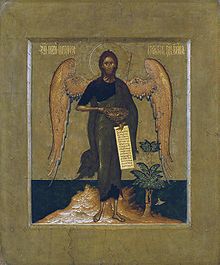
 After centuries without a prophet, a wave of expectation flooded Judea and Galilee. A man dressed the way Elijah was dressed rode this wave and pushed it along with his boisterous preaching. “Repent, for the Kingdom of Heaven is near.” What sort of kingdom did he expect? The call to repent tells us only that we must turn from the direction we are going and move into a different direction. Question the ways we live and look for a different direction.
Two astounding prophecies by Isaiah offer us intriguing, inspiring, but puzzling hints about what the Kingdom might be when he urged us to turn “swords into plowshares” and “spears into pruning hooks” so that we “study war no more” as the spiritual says and that “the wolf shall live with the lamb.” So, now we have all of creation at peace? Not quite. Isaiah tells us that the “shoot from the stump of Jesse” will “smite the earth with the rod of his mouth, and with the breath of his lips he shall slay the wicked.” Apparently taming lions and tigers and bears is easier than taming predatory humans. In calling the Pharisees and Sadducees, “that brood of vipers,” and asking who told them to flee the “wrath to come” while an ax was “laid at the trees” and his successor would have “a winnowing fork in his hand” suggests that they were not as tamable as predatory animals. The predatory lenders of today seem just as untamable. However, surely the kingdom of Heaven was not wrath of this sort, even if John, like the prophets before him, thought such wrath might clear the way for Heaven’s Kingdom.
As soon as he is baptized by John, Jesus cries out precisely the same words: “Repent, for the Kingdom of Heaven is near.” By saying these same words, is he perhaps telling us that John the Baptist, of whom there is none greater born of woman, hasn’t quite set the right direction either. His baptism has taken him on a very different track: the Paschal Mystery. That may seem a bit anachronistic, but from the preaching the Sermon on the Mount on, Jesus takes the direction of absorbing violence rather than inflicting it. Not only does the Kingdom not consist of threshing out the bad guys with a winnowing fork and burning them, but such threshing doesn’t even pave the way to the kingdom. If anything, this violence only blocks the way for everybody as, in our righteous indignation against predatory lenders and their ilk, the axes and fires for burning chaff multiply. One might argue that Jesus himself had some choice words for the Sadducees and Pharisees. However, Jesus called them whitewashed tombs filled with people’s man’s bones. Jesus wasn’t chopping off their heads or burning them up; he was warning them about how dead they were. If Jesus isn’t a thunder deity carrying a battle axe, whose axe is laid to the tree?
In his lectionary commentary, Paul Nuechterlein provocatively suggests that the axe is wielded by us. It isn’t God but we who are chopping down trees all over the world. That is indeed what happened on Mount Calvary. Moreover, according to Isaiah, it is from the stump that new life emerged. So, whose wrath should we flee? Ours. What should we run to? How about the chopped stump from which the new Tree of Life is growing?

 Imaginary Visions of True Peace