
St. Benedict: a Personal Sketch

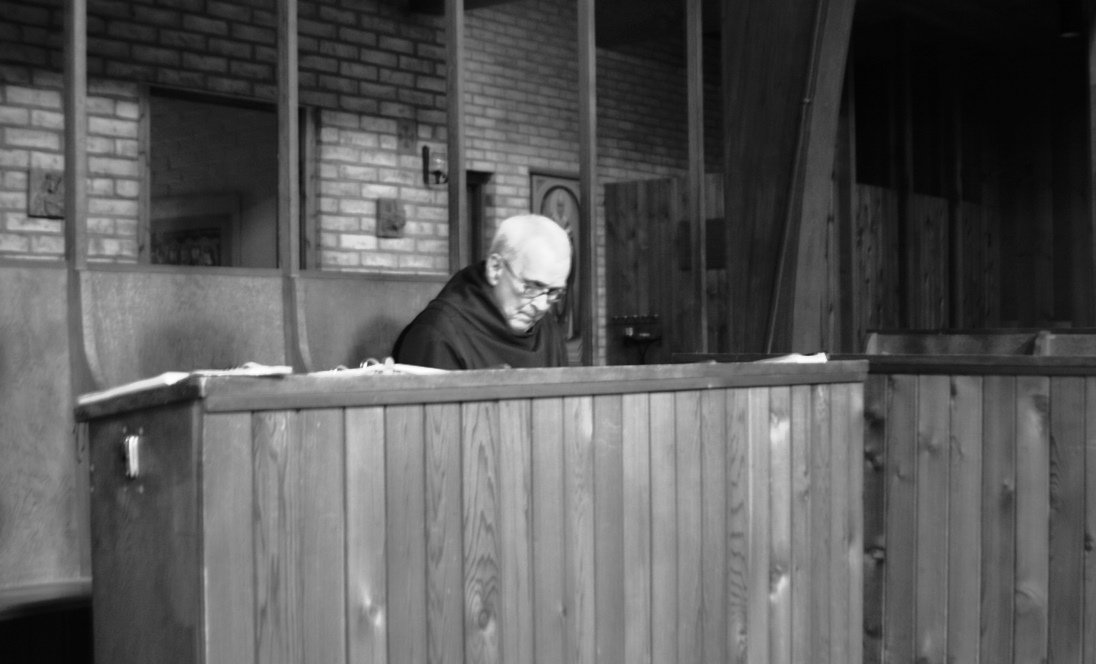
BenedictChurchStatue1In his Dialogues, Pope Gregory I said that Benedict could not “otherwise teach than he himself lived.” Taking Gregory at his word, I will celebrate our holy father Benedict by drawing out of the Rule what we can glean about the kind of man he was.

The way Benedict carefully outlined the way the Divine Office should be done, listing what psalms should be done when, shows an ordered man who appreciated discipline and having everything and everyone in place. We see the same care in the way Benedict outlined the daily schedule for a balanced life. However, Benedict showed flexibility when he said that one can rearrange the office psalms if that should be deemed expedient. Although he wanted his monastics to be on time for the office, he cut some slack by allowing them to come before the Venite (Psalm 95) is recited, for which reason it should be said as slowly as possible. Although Benedict disapproved of boisterous laughter, he had a dry wit.

Benedict was anxious about infractions of the Rule such as hording unauthorized possessions. He cut out loopholes by compulsively listing everything he could think of that a monastic might try to keep on the sly, understanding the favorite monastic evasion: “There’s nothing in the Rule against it.” The way he went on about disciplining a dean, a priest, or the prior of the monastery who got puffed up suggests that Benedict had deep fears about what power and responsibility could do to a person. The fearful admonitions to the abbot to remember how accountable he is to God for the misdeeds of his monastics suggests that he was anxious over his own weaknesses and potential for misusing power. For all his exasperation for delinquent monastics, the convoluted nature of his chapters on punishment show the problem to be one for agonizing rather than self-righteous smugness. Punishments should not be vindictive but remedial, ending in reconciliation to the community if at all possible. In quoting the parable of the Good Shepherd who leaves the ninety-nine sheep to after the stray he showed a deep solicitude for those who had fallen out of line.

Benedict had a flexible sense of fairness, believing that the abbot should treat each monastic appropriately, cajoling one, and scolding another, depending on the personality. In general, he really cared about the individuality of each person. He made a point of listening to what each member of the community had to say at a meeting, even the youngest person. He also wanted his monastics to share frankly their heavy burdens and ask for relief even if, under some circumstances, that might not be possible.

In general, Benedict had compassion and concern for the weaknesses of other people, surely out of an awareness of his own weaknesses. The weaknesses of the sick were of special care for Benedict and it was important to him that they were properly looked after. He felt the same way about guests who were also vulnerable, especially those who were poor. His concern that jobs be done competently was closely tied to his concern for the care of others, especially the weak. His worries over the abuse of power were motivated at least in part by the need to protect the vulnerable from the fallout of power plays in the monastery.

Late in life, Benedict’s compassionate concern for weaknesses deepened. In the second chapter on the abbot at the end of the Rule, surely a later addition, he quotes Isaiah’s words that the bruised reed should not be crushed and Jacob’s words that he shouldn’t drive his flocks too hard in one day. He warns against rubbing the vessel too hard so that it breaks. While in his younger years Benedict seems to have wanted to be feared at least a little, in the later chapter, Benedict greatly prefers to be loved rather than feared.

In following the first step of humility—to be constantly mindful of living in God’s presence–Benedict lived a recollected life. In this recollection, he sought God’s presence in everything and everybody: the guests, the sick, the tools of the monastery. He believed that both tools and people should be treated as if they were the sacred vessels of the altar. In this practice, Benedict sought to arrive at that perfect love of God which casts out fear with his “heart overflowing with the inexpressible delight of love.”

Difficulties in Forgiving: Joseph and his Brothers

Joseph_and_His_Brethren_Welcomed_by_PharaohThe story of Jacob’s return to Esau illustrates the difficulty of believing in, let alone accepting forgiveness. (See Difficulties of Forgiveness (1): Jacob and Esau) The story of Joseph and his brothers takes us primarily through the difficulties of forgiving.

As a youth, Joseph is a victim of collective violence. As is often the case with such victims, Joseph has been singled out both for adulation (by his father) and opprobrium (by his brothers). In contrast to the origin of collective violence as envisioned by René Girard there are a couple of cracks in the unanimity to kill the victim. Both Reuben and Judah differ and try to save Joseph but their plans are foiled. If either had had the courage to stand up to the other brothers, each would have had an instant ally and together they would likely have turned the tide and saved Joseph from his near-death in the pit.

Joseph’s serene words that it was God, not his brothers, who had sent him to Egypt and that although they had meant him harm, God had used it for good, taken by themselves, suggest an easy forgiveness on the part of Joseph, but the story is—well—another story.

While Esau welcomed Jacob back with open arms in spite of the harm Jacob had done him, Joseph does no such thing. Like Esau, Joseph has done very well in spite of his brothers’ intent to hurt him, in fact he benefitted in the end from what they had done to him, but Joseph holds back and remembers his youthful dream where his brothers bowed to him. Joseph goes on to play an elaborate series of mind games that amount to torture. It is possible that Joseph’s harsh way of speaking to his brothers was an act, the beginning of an educative process, but I can’t help but feel that the anger was very real and at least a little raw. As a test to see if they can treat the youngest, Benjamin, better than they treated him, it was hardly necessary to lock Simeon in prison for a year and threaten his own family with starvation if they didn’t obey all of the demands that could make little sense to them. Joseph’s father Jacob also suffers because of this treatment, which may also be intentional. In my pastoral experience, I have found that one who was a favored child carries a heavy burden from this favoritism rather than finding it a blessing. Sadly, while Jacob never showed any repentance for the way he treated Esau, Joseph’s brothers have such a guilty conscience that they think that their suffering at the hands of Egypt’s steward is a just punishment for what they had done to Joseph.

As things turn out, it is Judah, not Joseph, who triggers Joseph’s forgiveness by offering himself as a slave to spare Benjamin that fate. Since Judah had wanted to save Joseph in the first place, he is not a reconstructed persecutor but a man showing a compassionate heart for a younger brother that he has always had. The difference is that while Judah was cowardly before, he is brave this time around and his bravery is awarded. Joseph is won over and he forgives his brothers, but not until he has worked through tons of anger on his own part. It was his intention to put his brothers to the test, but in a sense he himself was put to the test by Judah. Fortunately, Joseph had the grace to give up his control of the situation which he had lost anyway and cry on the necks of his brothers.

Following carefully in our own hearts Joseph’s steps to forgiveness: his anger, his pride, his manipulations, and but also his crucial willingness to accept help from a brother when he needed it, can be a way for us to track our own difficulties of forgiving the hurts we have received in life and move through them to an awareness that although certain people intended us harm, God has used these harmful actions for good.

For more on the difficulties of forgiveness see A Miserable Gospel.

The Difficulties of Forgiveness (1): Jacob and Esau

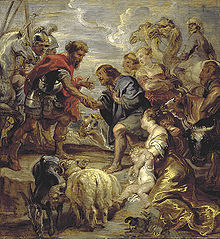
220px-Rubens_Reconciliation_of_Jacob_and_EsauWe are commanded to forgive by the teaching of Jesus and Jesus taught us to pray that we forgive those who wrong us as we forgive them for their wrongs against us. The petition in the Our Father for forgiveness suggests that accepting forgiveness can be at least as difficult as forgiving. Remaining oblivious to this latter difficulty reflects our prior difficulty in forgiving and I suspect it makes it all the harder for us to forgive. The two stories that conclude the book of Genesis help us move through our own difficulties by following through the difficulties experienced by Jacob and his son Joseph. We all know how difficult it is to forgive. We tend to overlook how difficult it can be to accept forgiveness.

The story of Jacob and Esau is a telling illustration of the difficulty in believing in forgiveness, let alone accepting it. Jacob had patently wronged his brother Esau in stealing Esau’s blessing and Jacob fled for his life with a guilty conscience. Years later, after similar wrangling with Laban, Jacob returns with his wives, his children and his flocks which had all grown too plentiful for Laban’s taste. Jacob has every reason to fear what will happen when he meets up again with Esau. Hearing that Esau is coming with four hundred men was not reassuring. The nighttime struggle with a dark figure seems to project Jacob’s combatant personality. Still the shifty coward he’s always been, Jacob puts the wives and children he cares about least in the most vulnerable positions in the front so that he can escape with his favored sons if need be.

What happens is an amazing surprise. Esau embraces Jacob with no reservations and not the slightest sign of resentment. No matter how many times one reads or hears the story, it is hard to believe. Jacob doesn’t believe it. Repentance and forgiveness aren’t really Jacob’s things. Jacob’s words: “truly to see your face is like seeing the face of God” are among the most profound words in the entire Bible for the ultimate revelation is Divine Mercy in a human face. But, as I said, Jacob can’t believe it even after this warm greeting. Jacob turns down the invitation to travel with Esau, using the excuse that he can’t drive his flocks too hard in one day. (Benedict quoted this verse in his Rule to illustrate the need for the abbot not to drive his monastics too hard!) Jacob, still shifty and cowardly, manages to avoid ever meeting up again with his brother for the rest of his life. Think of the years of friendship and companionship they missed out on!

The story is complicated by the later history of Edom, the people descended from Esau which reach a climax in Paul’s quoting, In Romans, Malachi 1:3: “Yet I have loved Jacob, but hated Esau.” In spite of Esau’s forgiveness narrated in Genesis, Edom has not been forgiven by Israel for its siding with their enemies in several wars. That Edom never recovered from the Assyrian invasion seemed to confirm that. The unflattering portrayal of Esau as a stupid, hairy oaf who sells his birthright for a pot of soup is perhaps another way of expressing Israel’s grudge against Edom. And yet this stupid hairy oaf suffered a terrible wrong from his unrepentant brother, moved on and built up his own flocks rather than spending his life in resentment, and forgave his brother. The story of these two brothers is often presented, including by Paul, to illustrate the mystery of God’s election. Jacob is the one chosen to carry on the Covenant, but the rejected brother, Esau, is the one much more in the place of Christ both in his rejection and in his forgiveness. Can repentance and forgiveness be strong enough in our lives for us to believe forgiveness when we see it?

See also Mimetic Blessing through Abraham (2)

A Peaceable Hope

KatrinaCrossAbraham1The strongest tension in the New Testament is that between the teachings of non-retribution and forgiveness on the one hand and eschatological retribution threatened for those who fail to follow the way of forgiveness and non-retribution on the other. The first problem is that it sets up a double standard between God and humans. We should be meek and mild but God will throw the bad guys into unquenchable fire where there will be wailing and gnashing of teeth. The second problem is that Jesus’ accepting death on the cross turns out not to be the ultimate revelation of God that Christianity usually teaches; violent retribution at the end of time is the last word. The third problem is that if violent retribution on the part of God is the last word, the hard practice of non-retribution doesn’t seem to be worth it.

David Neville’s fine book A Peaceable Hope is an indispensable examination of precisely these issues. He sees the divide primarily between some parables and some retributive sayings in Matthew and pretty much the rest of the New Testament. The tension, then, is strongest in Matthew since it includes the Sermon on the Mount and a stress on Jesus being the silent lamb led to the slaughter but also has many threats against those who do not live by these standards. So lopsided a division suggests that the weight of the New Testament as a whole comes down firmly on the concept of God as totally without violence. Neville draws the tension in Matthew and contrasts this Gospel with the three other canonical Gospels, all of which are strongly peaceable in its eschatological teaching to various degrees with John being the strongest on peace themes. The reception history of Revelation has often taken the book to teach retributive violence by God but Neville builds a strong case that the slaughtered lamb is the guiding image for the book as a whole.

Neville doesn’t try to speculate why Matthew would have as vindictive an eschatology as he does. We can make some educated guesses based on our own experiences with rejection and injury. If we can’t or won’t strike back, we like to think somebody bigger than we and our adversaries will come and tear them to pieces on our behalf. There are alternate ways of understanding these violent passages in the New Testament, among them the suggestion that they use firm imagery to show the consequences of rejecting Christ and Christ’s way. Raymund Schwager, for example thinks along these lines in Jesus in the Dram of Salvation. In such a reading, God is not actively acting out revenge on those who reject him; they are suffering the alienation and violence by which they have lived.

Neville’s careful and thoughtful exploration of this difficult issue is valuable for anybody who wants a firm biblical basis for believing in and teaching a God of peace.

Accepting the Cross

crossRedVeil1Jesus’ words that “whoeverdoes not take up the cross and follow me is not worthy of me” (Mt. 10:37) are disturbing on two counts. We don’t like the idea of taking up the cross and we don’t like the idea of being rejected by God for not doing it.

It is worth pausing to note the question of whether or not Jesus could have said these words since they seem to read Jesus’ future back into this point in his life. As with the predictions of his suffering and death on the cross, I think it highly plausible that Jesus knew what was going to happen to him if he continued to teach and minster as he did if most people, especially those in power, persisted in rejecting his teaching and ministry. After all, Jesus had the example of Jeremiah and the other prophets to warn him. He did not need a crystal ball nor did he need to tap into his divine omniscience to foresee his destiny.

When Jesus said that “a disciple is not above the teacher,” he implied that we should expect the same results of imitating Jesus that Jesus himself had. This is a hard choice, one that entails renouncing worldly power and embracing the helplessness of the victim, but the alternative is to side with the oppressors either by actively joining them or silently allowing them to oppress others without challenging them.

The harsh words in Matthew suggest that God will definitively reject any of us who ever fall beneath this standard but the way Jesus treated Peter who failed miserably in this regard, not to speak of Paul who actively persecuted Jesus’ followers, suggests quite the opposite. There is a strong element of self-selection and self-judgment in rejecting the way of the cross. It is as when we speak badly of somebody or deny somebody, it tells a whole lot more about us than it does about the one we are speaking badly about. As the examples of Peter and Paul make clear, such states are not necessarily permanent unless we persevere in our rejection. It is simply the case that Jesus has a certain way of living that eschews violence and power in favor of weakness and the place of the victim. If we do not accept this way of Jesus, then we are simply not on Jesus’ way. Blaming Jesus for rejecting those who deny him is like blaming Jesus for the division his teaching and life brings about when such division is not Jesus’ intent but human decisions. (See Human Swords, God’s Peace.)

Jesus knows how hard it is to choose the way of the cross from his own experience and his sensitivity to any who might follow him. This is why he reassures us by saying that every sparrow that falls to the ground is known by the Father and that every hair on our heads is counted. Maybe the notion of sparrows falling to the ground is not so comforting but Jesus, in saying that we humans are worth more than sparrows, is assuring us that even when we fall to the ground, we are counted. This is what Jesus is getting at when he says that by trying to save our lives by denying the cross, we lose our lives and that by losing our lives we gain them when God catches us, just as Jesus catches every sparrow that falls to the ground. It is out of love for us that Jesus embraces the cross and it is our love for Jesus that leads us to do the same. Maybe we are worth more than sparrows, but sparrows are worth an awful lot as well.

Humility (2)

KatrinaCrossAbraham1[See Humility (1)[

The middle steps of Humility in Benedict’s Rule, the heart of his chapter, take us to the depths of the Paschal Mystery. They involve obedience “under difficult, unfavorable, or even unjust conditions” where  we “quietly embrace suffering,” being “content with the lowest and most menial treatment” and admitting in our hearts that we are “inferior to all and of less value.”

This looks a lot more like groveling before the King of Siam then does holding fast to the memory of God’s presence, but obeying under unjust conditions is what Jesus did during his earthly life, most of all during his last days. This step isn’t about bowing imperious rulers; it is about bowing to everybody, including those we consider the most despicable of human beings. Jesus did it. What about us? When we are being ill-treated, we console ourselves with the thought that at least we are better than those who mistreat us. But that is not what Jesus did. Jesus treated even Pontius Pilate and Caiaphas with respect, although the guards of the high priest didn’t see it that way.

This consideration adds a deeper perspective to the first step of humility that involves being ever mindful of being in God’s presence. There is a bit of a Big Brother is watching us about God’s perpetual mindfulness of everything we do and think, but the very God whose presence we should always remember is the God who accepted the meanest treatment at the hands of human beings like us. Doesn’t sound like Big Brother’s style of watching to me.

We are not easily content with “the lowest and most menial treatment.” We have a tendency to think that the world owes us the good things in life. If and when we don’t get them, we become highly resentful to everybody we hold responsible for what we don’t get. If and when we do get some of the good things in life, we think we only got what was coming to us. Of course, most of us find ourselves having to take the bad along with the good and we are resentful only most of the time. This is the case even if mathematically we get good things more often than not. Bad things always make stronger impressions on us. In short, we are the ones who act like the King of Siam, not God. When we stop expecting the world to give us nothing but the good things in life and become more concerned with those who don’t, and often they don’t have good things because of our inordinate greed, then we become more grateful for what we actually have. Gratitude has a lot to do with humility.

In these middle steps of humility, hard as they are to embrace, we come to grips with the incomprehensible love God has for us. Christ didn’t take time to dwell on how much more righteous he was than those who taunted him and nailed him on the cross. Jesus was too busy thinking about bringing even these people into his kingdom to have room in his heart for anything else.

So it is that at the bottom of humility, we find divine love. Benedict hints at the presence of God’s love that we experience within us when we let go of our pride when he says that, by following these steps, we “arrive at that perfect love of God which casts out fear.” At this level of humility, there is no dread of God because we have dropped our projections on God and have become free within the depths of God’s Desire.

I discuss the chapter on Humility in the Rule of Benedict at length in my book Tools for Peace.

Humility (1)

garden1Humility tends to evoke images of groveling before potentates, as when Anna was ordered to bow before the King of Siam. Such popular images project human images on God that have nothing to do with Jesus who was more interested in finding the lost sheep of Israel than having anybody bow down to him.

The first and most fundamental step of humility for St. Benedict is that we keep “the fear of God always before [our] eyes and never forget it.” That is, before humility is anything else, humility is living in the presence of God. This is indeed something very different from groveling in the dust. This step reminds us of our constant need for God and also of God’s sustained presence in our lives. It is precisely in our desires that our need for others shows itself. We often think of needing others to fulfill our desires but it is really more a case of needing others to desire at all as René Girard has demonstrated. (See Human See, human want) We tend to deny our need for the desires of others and to claim these desires for ourselves, which is an act of serious pride. Humility involves, then, accepting the interaction of our desires with the desires of others and accepting our mutual need of each other’s desires. But as this first step of humility teaches us, we most need to be in tune with our need for God’s Desire.

We tend to forget not only God’s presence but, even more seriously, God’s Desire when we are immersed in the desires of other people. Our involvement with the desires of other people tends to become rivalrous, which draws us further from God’s Desire. The more we are grounded in God’s Desire and never forget it, the more constructive we are apt to be in the way we act in terms of the desires of others. For example, we are freer to treat others with respect and courtesy when we don’t need to “win” any human encounters because we are grounded in God’s Desire that has nothing to do with winning but has everything to do with providing for others.

The inner attitude of living in the memory of God’s presence is balanced in the twelfth and final step of humility with the external deportment that corresponds with the former. Humility should be noticeable whether one is “at the Work of God, in the oratory, the monastery or the garden, on a journey or in the field, or anywhere else.” In other words, at all times and all places. Once again we have outer action and inner attitude reinforcing one another just as they should during worship. The last thing Benedict would want would be for someone to put on an act. When we let our actions flow out from right inner attitudes, then these actions are natural with no sense of putting on airs. The more one is mindful of living in God’s presence, the more natural the deportment of humility will be. Moreover, paying attention to this outward deportment does tend to have a humbling effect that strengthens the right inner attitude.

(More about Humility can be read in Andrew Marr’s book Tools for Peace)

The Power of the Ascended Lord

Human_headed_winged_bull_facingAscension Day is a feel-good celebration of Jesus seated at God’s “right hand in the heavenly places, far above all rule and authority and power and dominion, and above every name that is named, not only in this age but also in the age to come.” If Christ is reigning like that and we are reigning with Him and sharing in Christ’s power, then we too are over everybody else just as Jesus is over everybody else. Sounds like a good deal. Or is it? Let’s take a closer look at what this power of Christ is all about.

Getting a sense of how power and especially omnipotence applies to God is tricky. After all, we dream of being omnipotent and invulnerable so we assume that the Master of the Universe wishes the same thing. Not a good assumption.

René Girard noted that power is attributed to the primordial victims of collective violence. (See Violence and the Kingdom of God) That is, the victim was powerful enough to be the cause of the social meltdown and also powerful enough to be the solution to the violence. (The reality, of course, is that such victims were normal humans with no supernatural powers.) The Gospels reveal Jesus as a vulnerable human being who clearly did not cause the social crises of first-century Jerusalem and whose death brought about no solution to it. Whatever power Jesus has, it isn’t this power. The illusion of the power of the victim should make us suspicious about how we attribute power to God.

A second and more common image of power is the imperial structure. In the days of Isaiah and other prophets, Assyria was such an image. The statues and friezes of winged bulls are symbols of this kind of power. This is the kind of power the apostles seem to have been thinking of when they asked Jesus: “Lord, is this the time when you will restore the kingdom to Israel?” (Acts 1:6) Jesus’ ascension right after hearing this question was a firm No.

When Paul says that Jesus is far above all rule and authority and power and dominion, and above every name that is named, not only in this age but also in the age to come,” he is saying that Jesus is far above and beyond all cultures that rely on sacrificial violence and the Assyrian-Roman impositions of power. That is, the power of Christ is to bring us out from these cultural practices. But are we being brought out of the world to escape these cultural entanglements? Sorry if you were hoping for that.

crosswButterfliesPaul concludes this section of Ephesians with powerful irony: “God has put all things under [Jesus’] feet and has made him the head over all things for the church, which is his body, the fullness of him who fills all in all.” Paul is using the common image of military victim where the victor lays his foot on the head of the vanquished, making the loser his footstool. But under Jesus’ foot is not the head of the vanquished but Jesus’ own Body, the Church. This is the Body of the crucified one who was raised from the dead and returned as the forgiving victim. Jesus’ reigning in Heaven at the right hand of the Father is coterminous with Jesus living with us here on earth, sharing our vulnerability to the imperial structures of power who continue to act like the Assyrians and the Romans.

If we are the Body of the forgiving victim, then forgiveness, not rulership, is what reigning with Christ is all about. This power to forgive was the gift the risen Christ breathed into the disciples (Jn. 20:23)  In John, Jesus says that it is this “Spirit of truth” who abides in us. When we keep Jesus’ words, he and the Father and the Spirit will come and dwell within us to empower us with their love for one another and for us and for all those whose sins (including our own!) need forgiving.


Freud’s Illusion and the Paschal Mystery

Cemetary2In December 1927, the New York Times announced that Freud had doomed religion with his book The Future of an Illusion. In The Authenticity of Faith: the Varieties and Illusions of Religious Experience, psychologist and professing Christian Richard Beck evaluates this claim. Beck points out that Freud did not debunk religion by refuting the classical proofs of God’s existence but by arguing that religion was ego-centric wishful thinking that we must outgrow. We could respond by suggesting that atheism is wishful thinking; a wish not to be accountable to God. There is that but there is much value in taking Freud’s critique seriously to see if it holds up to Christianity as it is actually lived which is what Beck does.

Beck turns to Ernest Becker to evaluate Freud’s thesis. Becker (the focus of Beck’s book Slavery to Death) argued that denial of death was a prime motivation in human behavior, leading us to seek “heroic” acts levels to stave off the reality of death, an example of what Freud called sublimation. (See Escape from the Denial of Death)  It happens that there have been many scientific studies of Becker’s thesis by his followers and they tend to show that the more one is reminded of mortality, the more rigidly one defends one’s worldview and denigrates others. This applies to any worldview, not just Christianity.

Beck then brings in the Psalms of lamentation (a large chunk of the Psalter) and the spiritual darkness that Mother Teresa admitted to as counter-indications that wishful thinking is the only dynamic in Christianity. Beck could just as easily have brought in St. John of the Cross who wrote about “the dark night of the soul.” Beck then turns to William James who pre-dated Freud in his scientific study of religious experience that was published in The Varieties of Religious Experience. James distinguished between “healthy-minded” believers and “sick souls.” The terms are misleading in that “healthy-mindedness” is superficial and leads to denial of life’s difficulties and so is not really that healthy. Meanwhile, “sick souls” wrestle with cognitive dissonance and inner darkness in a way that makes them more resilient and authentic in the long run. The Psalmist of lament, Mother Teresa and St. John of the Cross would be “sick souls.” Beck notes that the charges Freud and Becker make about wishful believers applies well to what James called the “healthy-minded” but not at all to the “sick souls.” Dietrich Bonhoeffer’s famous distinction between “cheap grace” and “costly grace” seems to fit James’ distinction quite well.

Since there had been no scientific investigations of James’ categories, Beck has filled this gap with his own field work. First, participants were given a questionnaire to give ratings as to how “healthy-minded” or “sick-souled” they were and then they were given a task such as to evaluate an essay by a Christian and one by a Buddhist. Not surprisingly, the “healthy-minded” respondents denigrated the Buddhist while the “sick souls” were much more tolerant in their attitudes. The same result came with tests on comfort with the Incarnation (such as whether one admits Jesus might have had diarrhea) or evaluating two works of art, one imaging healthy-mindedness, the other more focused on life’s pain. In each case, there was strong confirmation of James’ distinction of different believers.

It is worth mentioning René Girard’s theory of the origin of religion in collective violence in this context. Girard does not think that early humans wished for pie in the sky and then made up a religion to get it. Rather, they responded to social crises by killing or expelling a victim. The camaraderie that resulted from this act and the institutionalization of sacrifice was the payoff. (See Two Ways of Gathering) In fact, belief in a heavenly afterlife is quite a latecomer in world religion. The social solidarity of collective violence can easily be achieved these days without a deity. Freud himself made a dogma of his ideas and expelled all dissenters. In Girard’s thinking, it is the Gospel accounts of Jesus’ suffering and death that expose sacred violence for what it is. Girard’s thought adds weight to the correlation between being “healthy-minded” and prone to expelling those who differ. Beck does not say anything about the Paschal Mystery, but the cross at the center of Christianity should be enough to suggest that Christianity has its own built-in critique of wish-fulfillment in Freud’s sense or “healthy-minded” religion in James’ sense. One need only read the Epistles of Paul to see this self-critique at the origins of Christianity. I think Beck would agree since he sees a much deeper love among the “sick souls” than among the “healthy-minded” and he notes that in 1 Corinthians Paul says that love is the greatest virtue of all.

Beck’s exploration of Freud and James is of great importance for coming to grips with a theological anthropology and pointing in the direction of authentic faith and genuine spirituality.

Vainglory – Enslavement to the Admiration of Others

garden1Although pride is usually posited as the opposite of humility, the early eastern monastics distinguished vainglory from pride. (Some translations use “boasting” or conceit.”) It is not always easy to see the distinction between the two but vainglory tends to be seeking glory from humans while pride is more directly related to our relationship with God; thinking, or acting as if we don’t need God. In terms of mimetic theory, vainglory is seeking to stir up the desire of other people for our own actions. Vainglory is acting like the hypocrites who make a public display of almsgiving “that they may be praised by others” (Mt. 6:2) or of their fasting for the same reason. Jesus says they have “received their reward,” which presumably is to be praised by other people. John Cassian says that vainglory “has many styles, forms, and “variations” as it can strike at everything we do since every action or even every inaction can be motivated by vainglory. (John Cassian, Monastic Institutes, p. 163)

This is a tough one because it is difficult not to want to be admired. Moreover, although it is vainglorious to want people to acclaim books we write or our other accomplishments, there is no sense and no edification in writing badly or doing bad work. When Benedict says that readers in church or at table should read well enough to edify the hearers, or that the guest quarters should be well prepared for visitors, he makes it clear that we should try to do every task assigned to us well, whether it is writing a book or vacuuming the hallway.

Some of the desert monastics were ruthless with themselves in their attempts to stifle vainglory. This was difficult because they were admired by many people who heard about their lifestyles. When a group of admirers came to see Abba Moses, they asked a monastic where he could be found. The monk told them to go away because Abba Moses was a fool and not worth seeing. They turned away, only to find out from some other monastics that it was Abba Moses himself who had driven them away. Some people take this reverse strategy to the extreme by assuming that if “men revile us and persecute us and utter all kinds of evil against us falsely on Jesus’ account than we are blessed. Maybe, but in a talk I heard Gil Bailie give, he said that we aren’t blessed if people revile us for being a clod. The problem is that we are still preoccupied with the opinions of others.

Jesus gives us a clue when he follows his admonition not to trumpet our almsgiving and other good deeds by adding: “do not let your left hand know what your right hand is doing, so that your alms may be in secret” (Mt. 6:3-4). In his commentary on the Sermon on the Mount in Cost of Discipleship Dietrich Bonhoeffer notes the tension with the admonition: “Let your light so shine before others, that they may see your good works and give glory to your father who is in heaven” (Mt. 5:17) Bonhoeffer suggests that the trick is to hide our good works from ourselves. To do this, we must hide any admiration we get from them as well.

As John Cassian has pointed out, we can be haunted by vainglory when we write a book or vacuum the hallway or do anything else. The best we can do is concentrate not on ourselves or the admiration of others but upon the work itself. As an act of charity, we should try to write a good book that is helpful to others and vacuum the hallway to make the house nicer for those who live there. Benedict has the table reader pray the verse “Lord open my lips” before reading for the week to drive away pride (RB 38:3). Again he wants to reader to concentrate on reading well and not on how well one is reading. Perhaps the best advice Benedict has to offer is: “Do not aspire to be called holy before you really are, but first be holy that you may more truly be called so” (RB 4: 62).