
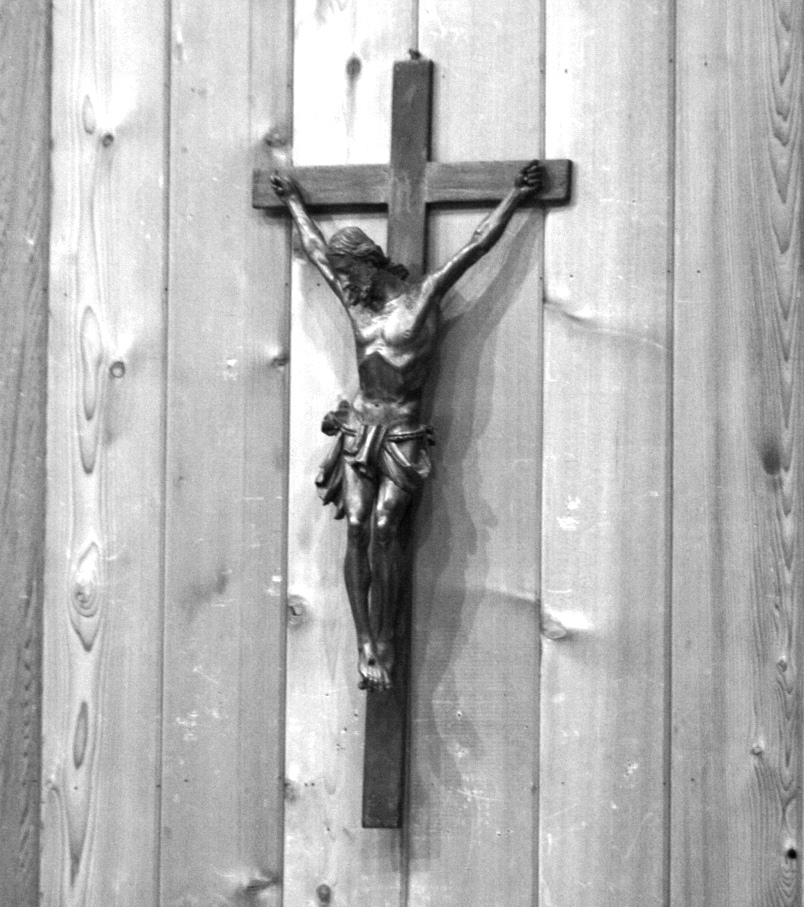
Singing the part of the crowd in St. Mark’s Passion on Palm Sunday as Jesus was mocked for saving others while he could not save himself really made me think about what I was singing. If Jesus could destroy the temple and rebuild it in three days, then getting himself off the cross would be a cinch. And surely if Jesus was the Messiah, he could free himself of his predicament with no trouble. Such mockery hurts when one is reminded of one’s powerlessness. It hurts even more if Jesus did have the power but chose not to use it. Did Jesus have that power?
The Gospel of Mark starts out with Jesus casting out demons and curing serious illnesses right and left by exercising an authoritative power over both. At the climax of his ministry, Jesus feeds the crowds of four thousand and five thousand. Such exercises of power would suggest that Jesus did indeed have the power to bring himself down from the cross. If that is true, why did Jesus not do it? Let’s take another look at Jesus’ power.
Starting at roughly the midpoint of his Gospel, Mark switches from describing acts of authoritative power to stressing Jesus’ weakness. What kind of weakness? Not a weakness in healing or delivering or feeding, but a weakness in getting the crowds or even (or especially!) his disciples to understand what he was really about. Perhaps the acts of power were contributing to the misunderstanding. Right after Peter declared Jesus to be the Christ, Jesus explained that being the Christ meant being handed over to the chief priests and the scribes to be killed. Being the Christ meant denial of self and taking up one’s cross. This is a far cry from giving demons the boot. Jesus repeats his expectation of being handed over and killed two more times and the misunderstanding only gets worse. The disciples fight over who is the greatest and bargain for the best seats when Jesus comes into his glory. After a triumphal entry into Jerusalem, Jesus does not perform more healings and exorcisms of the type he did in Galilee. Rather, Jesus seems to be trying a more fundamental exorcism of violence through parables such as that of the evil workers in the vineyard. Far from being exorcized, the Pharisees and chief priests only strengthen their resolve to commit the violence of killing Jesus.
It isn’t long before Jesus is hanging on the cross, dying. Do those mocking him really think Jesus has the power to shrug himself off the cross and use his power to send some lightning bolts against them to teach them a lesson? That is the sort of thing a real “god” would do, isn’t it? If the mockers really thought Jesus had this power, they probably would not have been quite so bold in mocking him. They see Jesus as weak, even crying out in anguish over being forsaken, so obviously Jesus is not the Messiah, not the Son of God or anything of the sort. If anybody is mighty and powerful, it’s God. But Mark’s Gospel has shown that acts of power do not bring on the kingship of God. What about weakness, weakness even unto death on a cross? Will Jesus’ death in weakness bring anything about?



 It is significant that Jesus had wandered over to Caesarea Philippi, deep in imperial territory, before asking his disciples who they thought he was. After they repeated a few rumors going round, Jesus asked who they thought he was. Simon Peter piped up: “You are the Messiah, the Son of the living God.” (Mt. 16: 16) Jesus’ commendation showed that Peter had caught on to something important: it was not Caesar, whose neighborhood they were hanging out in, but Jesus, who was the real, true Lord. But what kind of Lord was Jesus?
 In celebrating Mary, we celebrate the mystery that a human woman is the Mother of God. This is an explosive phrase. Nestorius is famous for his rejection of it and many other people have had trouble with it since. Why would God be willing, even want to have a human mother? Does this make Mary a goddess? Not at all. It is Mary’s humanity that makes the phrase a paradox, and it is Mary’s humanity that makes her a model to be imitated. Let us look briefly at the few glimpses of the human called Mary that the Bible offers us.
 The eighth chapter of Romans is among the most inspirational passages in all scripture. Paul assures us that “all things work together for good for those who love God, who are called according to his purpose” and that we will be “conformed to the image of his Son, in order that he might be the firstborn within a large family.” (Rom. 8: 28–29) Lest we think that only some people are predestined for God’s family, Paul asks: “If God is for us, who is against us?” (Rom. 8: 31) If Jesus is interceding for us, what more powerful persecutor is there to speak against us? Do we really want any personal being to veto the advocacy of Jesus? If we are truly stirred by these words, then we must stamp them deep into our hearts and allow them to govern how we view God and how we view other parts of scripture. For today, I suggest using these words to help us understand the parables in Matthew 13.
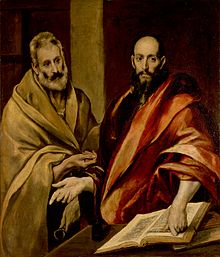 Much has been said about the conflicts between Saints Peter and Paul. I have
  Imaginary Visions of True Peace