
Meet Some Desert Monastics

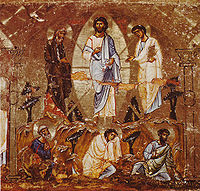
220px-St_Macarius_the_Great_with_CherubI have just posted an article called “The Desert Monastics ad Hidden Models.” Some of the stories in the article are stories I have already shared on this blog, but other stories are new to this blog. These are old stories so maybe some of you know them. If you don’t know them, you will be glad when you do. This paper was composed for the meeting of the Colloquium on Violence & Religion (COV&R) meeting at Cedar Falls, IA July 10-14.

On Being Interdependent on Independence Day

fireworksIndependence Day in the US is a day for fireworks and parade and speeches. It can be a field day for jingoism but it can also be a day of collective self-examination of how we might make our country better and not worse.

Reflecting on the concept of mimetic desire, the human tendency to imitate not just the actions of other people but the desires of other people, can help us greatly in getting a sense of direction on how we might make our country better rather than worse. With the way anything in social media can go viral, we need to be conscious about how the media are infecting our desires in ways we can easily not see. Media gone viral constantly blows up into scapegoating of victims that make everybody else feel “better” about themselves, a process that makes our country worse instead of better. It is worth noting that Alexander Hamilton favored a strong executive branch for our government vested in one person because that made it easier for everybody else to know whom to blame if anything went wrong.

In our global age, we are all of also members of an economic body. Adam Smith wrote about its emergence in The Wealth of Nations, published in the same year the Declaration of Independence was signed. This system, vast as Leviathan, is fueled by mimetic desire that is way out of control. I don’t buy the notion that this system somehow works out for good even though most people in the system act out of self-interest. The system has its own life and self-interest that we can see clearly enough grinds huge numbers of people into destitution unimaginable for those of us living in our own bubble. Since the US is such a leading participant in this system, it is tempting to equate the two, but they are not the same and can easily work at cross-purposes. The effort to become aware of how our own desires are being formed and manipulated by this system is much stronger than with the system of the political body.

Standing alone against such vast social systems is hopeless, but we don’t have to do that. In the simple story about the Emperor’s new clothes, one child cried out that the Emperor had no clothes and suddenly the mimetic perception of the kingdom shifted and he was not alone. Saying what we see and what we desire connects us to the desires of others. We will not be alone.

Most important, those of us who are Christians are members of another body, the Body of Christ. (Other faith traditions form bodies with the same kind of power.) The mimetic processes of the political and economic systems easily confuse us into thinking that this Body is equivalent to one or both of the others, but it is not. Acting out of self-interest in the faith that everything will work out fine falls infinitely short of the Gospel and the Messiah who sacrificed himself for us. This Body can also be exasperating when those in it fail to strengthen us when we need it, but it is still the Body where we can join up with those who had gathered around the woman caught in adultery and join the mimetic social process started by the eldest and walk away because we know we are not without sin. Where do we end up if we take this walk? The arms of Jesus who enfolds us in His Desire.

PETER AND PAUL: The Church’s Quest for Mimetic Unity

Sts_Peter_and_PaulThe presence of two strong personalities roughly the same sphere of influence is a perfect recipe for mimetic rivalry that can tear the social fabric apart until it is resolved either through implosion or collective violence against a victim. There is evidence that precisely these sorts of tensions played out between Saints Peter and Paul but there is also evidence of attempts at reconciliation between the two and further reconciliation on their behalf in the early Church to provide a very different model for the relationship between two strong outstanding personalities.

In the Acts of the Apostles Luke seems to have taken great pains to balance the impact of the missionary work of these two apostles under the guidance of the Holy Spirit. That Peter drops out of the narrative half way through the book and the seemingly abrupt ending with Paul awaiting trial in Rome diminishes the importance of even these great saints and emphasizes their subordination to the Holy Spirit. At the momentous Council of Jerusalem where the two apostles meet, at the heart of the book, the situation is ripe for conflict, but Luke presents the Council as an amicable solution to their conflict. Luke heightens the reconciliation by having Peter speak up Paul him in with words that sound a lot like a speech Paul could have made himself. That is, Peter imitates Paul to support his position at a time when he could have become a mimetic double in conflict with him. Peter’s earlier struggle over the appropriateness of preaching to of the Gentiles resolved by his vision of a sheet coming down from Heaven with both clean and unclean animals on it sets up this reconciliation. James plays the role of the mediator who states the amicable solution that allocates a separate sphere for Jews and Gentiles so that the two groups need not compete but are given space to follow the guidance of the Spirit. Paul’s letter to the Galatians tells a different story full of tension. Although Peter and gave Paul received “the right hand of fellowship” in Jerusalem, he later found it necessary oppose Peter “to his face” for rejecting table fellowship with Gentiles. Perhaps Peter had suffered a relapse of his own tendency to be swayed by the wrong mimetic crowd, such as happened to him in the courtyard of the high priest when he was surrounded by fellow Jews were against that fellowship. We never learned if this quarrel was ever healed between them in this life before it was healed posthumously in the hagiography and liturgy of the Church but there are hints that it probably was.

In writing to the Corinthians, Paul took pains to quell rivalry that had triangulated him with Peter by taking them severely to task for using such slogans as: “I am for Paul,” “I am for Cephas.” Far from fanning the flames of conflict, Paul distances himself from it in no uncertain terms and renounces any possible gain he might get from the “Paul” Party in Corinth. Although Peter is not believed to be the author of the Second Epistle bearing his name, it is significant that he refers to “our brother Paul, who is so dear to us.” At the very least, these words attest to the Church’s corporate effort to maintain a peaceful relationship between the two apostles. Peter says that Paul wrote “with the wisdom that is his special gift,” but then he cautions his readers that some points in Paul’s letters are hard to understand and are “easily distorted by uneducated and unbalanced people.” Tension and reconciliation between the two great apostles are themselves held in close tension here. A generation later, St. Clement of Rome writes the Corinthians to rage over an “abominable and unholy schism” in the community fueled by jealousy and envy. As a counter-example, Clement describes the deaths of Peter and Paul, stressing the harmony between the two great apostles. A century or so later, St. Ireneaus called the Church of Rome “the greatest and most ancient Church, founded by the two glorious apostles, Peter and Paul.” Archaeological investigations along the Appian Way have unearthed rooms with inscriptions honoring both saints together and a bronze medal dating from the first half of the second century pictures the heads of the two saints on the same side of the medal.

The Golden Legend, a 13th century compilation of saints’ lives by Jacob of Voragine is not the book one goes to for the most accurate history of the early church or anything else, but it is one of the best books for studying the way saints have been presented as models to the faithful. In his entry on Paul, Jacob explicitly curbs the alleged rivalry with St. Peter when he says: “We find that at different times Paul is portrayed as Peter’s inferior, as greater than Peter or as Peter’s equal, but the fact is that he was inferior in dignity, greater in preaching, and equal in holiness.” Jacob seals this unity by affirming the early Church’s legend that they were martyred under Nero on the same day. Before they were parted for their executions, Jacob records that Peter and Paul exchanged benedictions of each other.

This reconciliation between these two apostles is effected by their sharing the same feast day on June 29 when the other apostles get a day each for themselves. The Magnificat antiphon for First Vespers of this feast says: “Peter and Paul were at one in their love of the Lord: neither in life nor death were they divided.” The second half of this text comes from David’s lament for Saul and Jonathan (2 Sam. 1:23), so that a verse referring to the protracted mimetic struggle between David and Saul is applied to another problematic relationship to heal whatever division there may have been in real life and offer the Church a model of mimetic amity.

Contemplative Prayer as a Pearl of Great Price

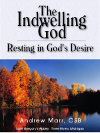
indwellingcover_tnBecoming conscious of mimetic desire, our inborn and pre-conscious tendency to copy the desires of other people (See Human See, Human Want) poses a large challenge to our daily living. When we bring in the tendency to fall into rivalry with other people and how that can lead to collective violence (see Two Ways of Gathering) then we need tools to live with this challenge.

I wrote Tools for Peace to suggest ways that the spiritual practices from the monastic tradition and the Rule of St. Benedict in particular can help us with this challenge. Contemplative Prayer, although important in monastic practice, has a small place in the Rule of St. Benedict and so there is not a detailed discussion of the practice in this book, although I have a few comments about it.

Many years ago, I wrote a pamphlet called “The Indwelling God” to introduce the practice of contemplative prayer and give practical suggestions for initiating and sustaining this practice. Last year, I wrote an article for our Abbey Letter called “Resting in God’s Desire” which discusses contemplative prayer specifically in connection to mimetic desire. The Divine Office is indeed the heart of Benedictine spirituality, but praying in silence, just being before and with God, allowing God to contemplate us, as Saint Gertrude and other writers have suggested, is a pearl of great price, a pearl worth some of our valuable time and worthy of much room in our hearts.

This pamphlet has been available in hard copy and is still available in that form, but I have just had a eBook made of it to make it available in that form since many readers are using that medium. I have coupled the pamphlet with the essay “Resting in God’s Desire” as they make good companion pieces.

“The Indwelling God” with its companion article can be purchased on the abbey’s website at http://www.saintgregorysthreerivers.org/digitalpubs.html   A hard copy version which has only “The Indwelling God” is available at http://www.saintgregorysthreerivers.org/orderpage.html

May we all give of ourselves to receive this pearl of great price.

Recovering Racists

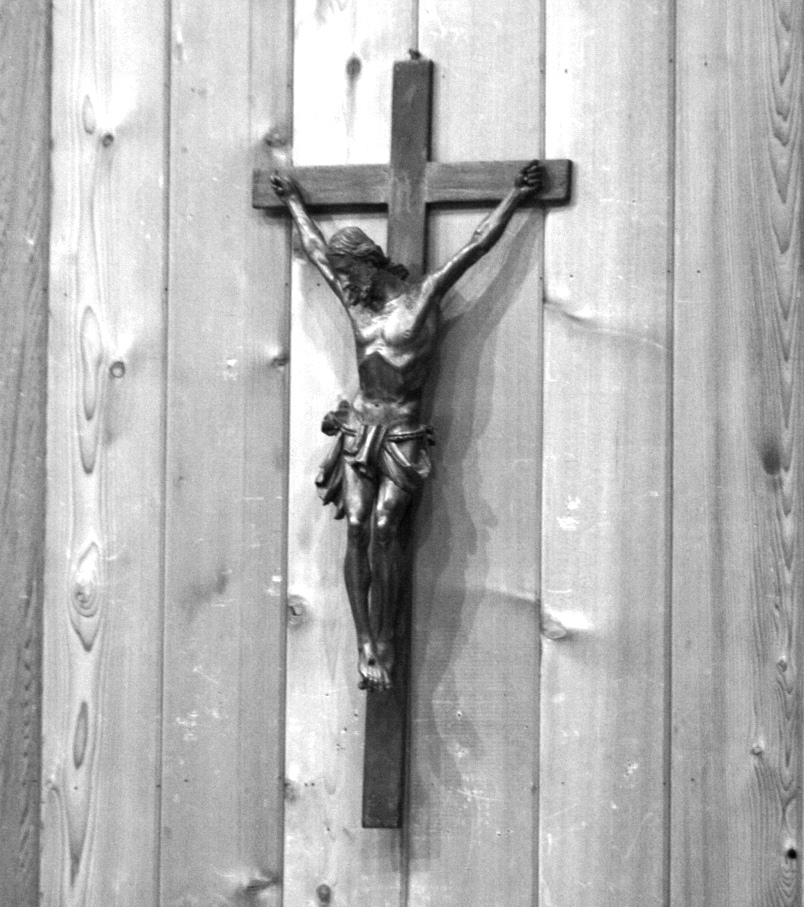
crucifix1I have just returned from the 2013 Theology & Pace conference held in Chapel Hill, NC on “Lynching, Scapegoating and Actual Innocence.” The subject is difficult to work with but becoming aware of what we have done in our own country is a necessary step to finding ways to preventing the same kind of thing happening again. Two factors were particularly important to making the workshop a positive experience. One: a sense that we were exploring the issue as a group and coming to terms with it as a supportive group. Two: the forgiving tone of the speakers. Julia Robinson, who read a paper specifically on the history of lynching and the violent atonement theology that supports it, delivered her presentation in a gentle but firm voice, embodying forgiveness not only in word but from the depths of her being. Such an approach is modeled on the Gospel where Christ the victim forgives us so that we can begin to see our sin clearly and turn from it.

Paul Nuechterlein, the one speaker who was white, confessed to being a racist. This might sound strange, coming from a man who is active in race relations, but it echoed the same admission of a biology professor I had in college many years ago. As it happens, I have never heard a person who actually did show a racist attitude make this admission. It is sobering, but important, that it is not until we repent that we begin to see what we are repenting of and enter into recovery.

The most important thing about repenting and recovering is that we take personal responsibility for ourselves. We cannot take responsibility for the attitudes of others whom we consider racist. I remember telling a person what I had learned about the effect of racial discrimination on a daily basis and that person countered by telling me about a company run by black people who won’t hire whites. I cannot take responsibility for that company but that does not absolve me of taking responsibility for myself.

In entering into recovery from racism and sustaining that recovery, I need to become aware of small things where my own blindness emerges. An example of this blindness on my part came in an earlier entry on this blog post called “Selling Postcards of the Cross” where I wrote about James Cone’s book The Cross and the Lynching Tree. I used the phrase ‘”Cone shows us this truth in spades.” (I have now edited that sentence.) Of course, using this phrase about any writer who is not black would be the complement I intended it to be. I suppose one could say that some people are too sensitive about these things, but I have come to the conclusion that the important thing for me is to be more aware and sensitive and let other people take care of their own sensitivities.

Taking personal responsibility for being a recovering racist can only be done by increasing our awareness of the interaction of our own desires with those of others. Insofar as racism continues to be a strong element in our society, racist desires continue to seep into us at a pre-conscious level. On a more hopeful note, the desires of others to overcome racism also sink into us at this same pre-conscious level. By watching our thoughts, we can become more aware of what desires we are importing and seek to affirm the desires that seek to overcome prejudice, the desire to feel superior to some people, and complacency with misuse of power that keep some people down. Most of all, we must support one another.

See also: Knowing the Wild Things Between Us

The Infinite Round Dance

churchDistanceBlossoms - Copy

Imagine an endless round dance of three persons dancing in and out of each other, dancing with a Desire they share infinitely with each other with such intense love that the three dancers are one, yet so strong is their love for each other that they desire that there also be three. The persons are not personas, as in fake faces of actors or hypocrites, neither are they rugged individualists believing in every person for oneself. These persons are pure relationship through their shared Desire of love.

This round dance could have gone on forever with nobody the wiser except for one amazing thing: the love of these three persons was so ecstatic, so explosive, that it overflowed into a world of galaxies and stars and planets and flowers and giraffes and humans with teeming brains filled with desire, all with the intent of making countless beings much the wiser for the infinite round dance.

The overflowing love of the infinite round dance required that all desires to dance be free so that humans could look at a tree and desire that tree’s fruit before receiving the fruit as a gift from the infinite dancers. When the desire flowing through humans turned into rivalry with the infinite dancers and with each other, suddenly countless trees disappeared in the conflagration, leaving only centered the few trees that drew the humans ‘desires.

As humans fought over their crossed desires and gathered only to share a desire to kill or expel a victim blamed for the violence overcoming them, the infinite dancers continued to dance through the human desires, inspiring desires to share the trees and fruits and poems and songs in tune with the Desire of the infinite dancers.  The infinite dancers poured their Desire into humans who proclaimed the Desire to others, even when they were stoned or ridiculed or cut off from the land of the living.

So strong was the Desire of the infinite dancers that with the fire and love of the other two persons, one person entered into humanity and became vulnerable to all the shared rivalrous desires that spread like a plague among humans. The Son, conceived in a human womb by the Holy Spirit, gave up his spirit when the humans he came to save chose to kill him. The Son received the spirit back as he was raised from the dead, and then forever after sends that spirit into the desires of all humans.

And so the endless round dance continues with the overflowing love of dancers’ shared Desire that all humans be ecstatically the wiser for the dance.


The Holy Spirit’s Fiery Desire

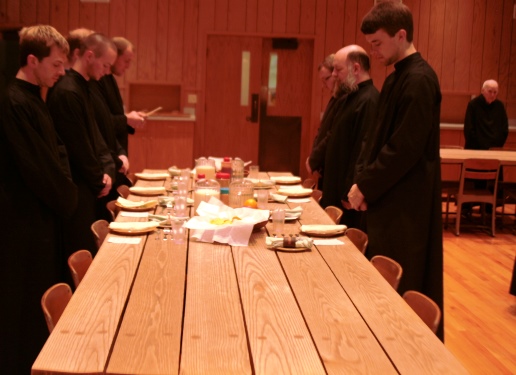
outsideSupper1What is the Holy Spirit? Wrong question.  The Holy Spirit is the third Person of the Trinity, not an ït.” Our difficulty in thinking of the Holy Spirit as a person is a symptom of our cultural problem of really seeing other persons as persons.

“Many terms and images are given for the Holy Spirit: a roaring wind, tongues of fire, breath, gift, counselor, consoler, teacher, guide, and the bond of love, to list a few. Some of the terms are personal, some not. This only adds to the confusion unless we get beneath the impersonal images to realize that breath requires a breather, a person’s temperament can be fiery, and a bond of love can’t really love unless that bond is a person who actually loves. Teaching and guiding, though done with personal agency, can be mechanical if they are only conveying information and or getting us from one place to another.

The Holy Spirit adds to our difficulty simply by being so shy. Jesus shows us the Father, the Holy Spirit shows us Jesus. Who shows us the Holy Spirit? Look behind you and the Holy Spirit is still behind you. Look deeply in yourself and the Holy Spirit is deeper yet. If we want to know the Holy Spirit, we have to be as shy, as hidden as this Person. Most of us think it important to be more assertive than that.

Perhaps the Holy Spirit is hidden in much the same way as mimetic desire is hidden. (See Human See, Human Want.) Our imitation of other peoples ‘desires occurs below our conscious awareness. The Holy Spirit does the same. Is there a connection between the two? As our teacher and guide, the Holy Spirit conveys the Desire of God.  More than that, the Holy Spirit is the Desire of God. What is this Desire of God? The image of a fiery wind burning all of God’s people without consuming us gives us a hint of God’s fundamental Desire: that we all may be one as the Father and the Son are one. (There is the Holy Spirit hiding again! The Spirit is just as much one with the Father and the Son as the other two Persons of the Trinity.)

Let us try thinking of the Holy Spirit as the Gatherer with fiery arms of Love. Mimetic desire unites us with other people whether we like it or not, or will it or not. Mimetic desire deepens our lives when we share desires in mutually enriching ways, but when mimetic desire falls into conflict, it unites us to that person in the bad sense of being stuck together.  The Holy Spirit weaves through the swirl of other peoples’ desire with God’s Desire, teaching us and guiding us with fiery love how to fill all these desires between us with tongues of fire that deepen our communion with others beyond what words can say.

Jesus’ Escape to the Kingdom

crosswButterfliesThe Ascension is among the most puzzling festivals in the church calendar. The contradictory accounts of the event are a puzzle but one thing the accounts by Luke and John’s Gospel share is to connect Jesus’ departure with his sending the Holy Spirit. Jesus said the Holy Spirit would come to lead them into the truth. What truth did the disciples need that they hadn’t learned already from their teacher? Did Jesus have to leave before the disciples could hear the Holy Spirit?

During his ministry, Jesus warned his disciples three times that “he would be rejected by the elders, the chief priests, and the scribes, and be killed, and after three days rise again.” These warnings came precisely at the times the disciples thought that a Maccabean-like revolution against the Romans was just around the corner: when Peter proclaimed Jesus to be the Messiah, right after the Transfiguration, and when James and John asked if they will sit at Jesus’ right and left in his kingdom.

After his Resurrection, Jesus tried again to get across to the disciples what his kingdom was really all about. When Clopas glumly said that he and his companion had hoped that Jesus “was the one who was to redeem Israel,” Jesus, not yet recognized by them, rebuked them for their slowness of heart in believing what “the prophets have declared.” Then he “interpreted to them all the things about himself in all the scriptures.” Later, Jesus appeared to the twelve and explained that everything written about him in “the law of Moses, the prophets, and the psalms must be fulfilled. “Since the phrase “the Law and the Prophets” was used to refer to the whole Hebrew Bible, the special mention of the psalms is significant. The psalms include many laments over persecution from the standpoint of the victim. Jesus went on to say that when the scriptures say that the Messiah was “to suffer and to rise from the dead on the third day,” it means that “repentance and forgiveness of sins is to be proclaimed” in Jesus’ name to all nations, beginning from Jerusalem. Proclaiming repentance and forgiveness is a very different proposition from starting a revolt to restore the kingdom to Israel.

When, in spite of hearing this teaching for forty days, the disciples asked their Risen Lord: “Is this the time when you are going to restore the kingdom to Israel?” Jesus must have banged his head against the nearest tree and cried out: “I’m out of here!” This repeated question may have convinced Jesus that the disciples were never going to stop asking him to restore kingdom of Israel as long as he was walking on the earth with them. Maybe Jesus was planning all along to leave after forty days; maybe he planned to stick around indefinitely but this question was the last straw.

Jesus’s Ascension put paid to any notion of his leading a second Maccabean-type revolution. The disciples were left with no choice but to try doing what Jesus told them to do when he breathed on them and said: “Receive the Holy Spirit. If you forgive the sins of any, they are forgiven them; if you retain the sins of any, they are retained.” Jesus’ kingdom is to preach repentance and forgiveness to the whole world until everybody has repented, been forgiven, and has forgiven everybody.

Cleaning Up Our Unclean Acts

eucharist1Peter was surprised when he had a vision of a sheet carrying all the animals listed in the Law as unclean accompanied by a voice telling him that God had made them clean. Peter was even more surprised when he was told to go to the house of an unclean Gentile named Cornelius and preach the Gospel to him. That is, God had made all humans clean.

We all have a hard time living without the comfort of knowing that some people, some things, are unclean. This fear that sustains us is the fear of what is Other. All we have to do is get to know “unclean” strangers and we will be happy and no longer afraid.

René Girard, however, would give us pause. Girard is often invoked when there is need to scold people for creating “out” groups to make them feel good about their “in” groups. Actually, Girard alerts us to our problems within our “in” groups. Prior to our fear of the Other is our fear of what is the same. Rivalry and the violence rivalry lead to does not originate in battles with strangers but with those closest to us. In Genesis, almost all of the strife is between brothers.

Girard suggests that this fratricidal strife tends either to the death of a brother or a reconciliation through killing somebody else. At the dawn of humanity, a tribe first struggled with rivalry within its own ranks and either imploded through its violence or came together through killing one of its members, who then was designated at Other, the monster who caused the commotion. Then the tribe held itself together on an ongoing basis by warring on other tribes who were designated as Other. In this regard we are not one wit wiser than the most “primitive” of people. A fundamental practice of statecraft today is to deal with rivalry and tensions within a nation by designating an enemy that the whole nation must fight.

Anthropologists such as Mary Douglas have demonstrated the human tendency to divide foods between those deemed clean and those considered unclean. Eating is the central activity of a community. We eat with those who are closest to us. However, as noted above, we also fight most with these same people who are closest to us. By dividing the food we eat between clean and unclean, we create a barrier between us and other people, between us as the “in” group and those in the “out” group. That is, we relieve our communal tensions by banding against those who eat “unclean” foods.

Here we come to the importance of Jesus’ admonition to his disciples, while at table, that they (we) love one another. Some scripture scholars have poured cold water on idealistic readers by saying that John was concerned only with love within the community. But Jesus’ saying that others will know we are Jesus’ disciples by our love makes it clear that this loves does extend beyond the immediate community. These reflections on “clean” and “unclean” further suggest that fostering non-rivalrous love within the community allows the community to reach out to others. This love will make everything and everybody clean and bring us all to one great table in the Heavenly Banquet.

Knowing the Wild Things Between Us

buddingTree1Just about all of us talk about the subconscious as if it were familiar territory. By definition, the subconscious, assuming there really is such a thing, is precisely what we are not familiar with, what we don’t know about ourselves.

Pop psychologists, and real psychologists for that matter, along with those of us committed to the spiritual journey, think that it is better to know more about ourselves rather than less. Exploring the unknown may be an exciting challenge at times but it is also threatening. Much talk about the subconscious that has floated around since Freud took up his pen gives the impression that the subconscious is full of horrible monsters and some of them are us. In the simple story Where the Wild Things Are Maurice Sendak shows us what great friends the inner monsters can be if we get to know them.

René Girard has given us a whole new dimension to explore in the subconscious by suggesting that it is primarily mimetic desire that we find there. (See Human See, Human Want) Mimetic desire, the desire of others that has infiltrated us since birth, gets under our skin and deep into our hearts. Hence the importance of the desires we surround small children with to absorb. What keeps mimetic desire in our subconscious is our defiant pig-headed conviction that our desires belong to each of us alone and to nobody else. The stronger this sort of conviction, the more likely the desire is entangled in serious rivalry with somebody else; maybe a lot of somebodies. Somehow, we feel threatened at the idea that our desires are intertwined with the desires of everybody else and we push them away, only to have them manipulate us at very deep levels.

The “wild things” within may not be so much are own personal monsters but the monsters that grow out of the mimetic desires between us. The monster isn’t me, it’s us. These wild things can also be the source of great opportunities for personal and spiritual growth if we get to know them. The web of mimetic desire is not, in the hands of God, elaborate chains to imprison us but links to connect us. That is, mimetic desire is the gravitational field among persons pulls us into relationship with each other. The more we are aware of this field, the more freedom we have to live in it with friendship and sharing instead of hate and rivalry.

Self-examination is a time-honored practice for spiritual growth in all religious traditions. Unfortunately, when this practice is centered on the self, it inevitably creates some distortion because it keeps mimetic desire in the subconscious. It isn’t so much our selves that need examination as it is our relationships. The individual self can look just fine right when relationships are destroying the web of our interrelated desires.

Girard tends to examine mimetic desire in the present tense, and there is always much going on with our interrelated desires in every moment. However, as Per Grande pointed out in his fine book Mimesis and Desire, we go through life interacting with the desires of others in our past just as much, if not more, than those in the present. So it is that we have to increase our conscious awareness of our past as well as the present.

So much attention has been paid to monstrous wild things in the human subconscious that we don’t realize that deeper in the subconscious that any wild desires flaring up between us and other people both in rivalry and ecstatic love and friendship is God’s desire. No matter how entangled our mimetic desires with other people, God holds all of the links in unconditional love, all the while calling each of us to open our outer and inner eyes to see how wild divine love is.