Binding and Loosing

AndrewPreaching1How many of us listen to Jesus’ words about correcting fellow members of the church and think they are about punishing people and casting them out? (Mt. 18:15-20) Checking ourselves for such reactions is a good way of taking note how instinctive punishing and excluding are to us and how less instinctive is forgiving and including and welcoming others. It is precisely this instinct to punish that makes it difficult to have ears to hear what Jesus is saying and hear what the Spirit is saying to the churches.

If we take a step back and ask ourselves what our instinctive reaction to being wronged is, we find that the first instinct is to seek revenge. If somebody hits you, hit him back. Simple. But Jesus tells us to go to the person and tell that person what they have done to us. This action puts a serious break on the revenge mechanism and moves in the opposite direction. After all, going to the person peacefully and honestly is the first step towards reconciliation, which is the last thing a person bent on revenge wants. If speaking one to one does not resolve the matter, then the circle widens to two or three and then the whole assembly. What is easily overlooked in this process as described here is that it presupposes that each of us is expected to take responsibility for the community and for each other. This is why we should warn a person who is acting destructively, but it is also why we should be open for others to approach each of us to correct us. Of course, anyone who has ever corrected another person knows that this can result in learning about our own shortcomings. One of our favorite slogans at St. Gregory’s Abbey is” “You do it too.”

Treating an unrepentant person like “a Gentile and a tax collector” sounds straightforward enough. We kick the person out and that is that. But that is not that. For one thing, this is not an act of vengeance, or at least it’s not supposed to be. It is an act of distancing, an act that, when used rightly, shows that the reproved person has distanced him or herself from the community. It is realistic in that some people make themselves impossible and a peaceful parting is necessary. But that is far from the end of that matter. Matthew himself was a tax collector. How was he treated? Jesus called him to follow him and be a disciple. We need to keep in mind the context. Immediately preceding this list of instructions for dealing with a delinquent person is the Parable of the Lost Sheep. All this suggests that the way to treat a Gentile or a tax collector is to try to bring them into the Christian community, which entails forgiveness.

Forgiveness? But we are told that those we loose on earth are loosed in heaven and those who are bound on earth are bound in Heaven. Sounds like we have the power to bind other people for all eternity and God’s hands are tied for as long as we want them to be. How much power is that? But not so fast. Why is it that we so easily assume we are being allowed to bind on earth when we are being encouraged to loose on earth? We need to note what follows immediately after this verse: Peter’s question about how many times he must forgive an offender and Jesus’ parable of the unforgiving debtor. If we have to forgive others as God forgives us, and that without limit, as Jesus’ saying we have to forgive seventy-seven times means, then we are indeed being encouraged to loose on earth and are being warned that if we do not loose on earth, we are bound to our resentment for what others have done to us (or we think they have done to us) and we will be so bound even in Heaven since God’s hands are indeed tied for as long as we refuse to let God untie us.

See also: The Sin against the Holy Spirit

The Process of Forgiveness (1): Owning the Hurt

purpleFlower1When I suggest that forgiveness is a process, the implication is that there are several steps to the process and we take them one at a time. It isn’t as simple as that. There are steps that can be articulated to give us a sense of direction for the process, but they are all so closely interrelated that it is more like disentangling a tangle of yarn than a matter of climbing steps on a ladder or a staircase. The image of the tangled yarn, something that often feels more like a tangled rope around our necks, suggests that the process has a lot to do with loosening something that is tight, which is precisely what the Greek word aphesis, a word often translated as forgiveness, is about. Letting go that which has tied us up simply takes time.

Desmond and Mpho Tutu have written a valuable book called The Book of Forgiving that helps us understand the process of forgiveness. In my own reflections I don’t come up with precisely the same list, but it comes close and the four-step process in Tutu’s book gives us something to work with.

The first two steps listed by the Tutus are: 1) Telling the Story and 2) Naming the Hurt. These two steps are so closely related that they feel like one step to me, albeit a more complex step. I am inclined to call this first step: own the hurt. This step seems simple but it can be difficult emotionally because it means facing the pain and that is—well, very painful. It is, however, pain that is necessary for healing just as an infection has to be opened before it can be healed. Community is important as one almost always needs at least one sympathetic listener and often there is need for many more than that. The importance of telling the story is that when another has invaded us by injuring us, we are suffering on the terms of the perpetrator. The first step of suffering on our own terms is to tell the story, to face the truth of what has happened to us. We cannot forgive what we have not seen and faced for ourselves. As long as the truth of injury is repressed, it holds us in its grip. Over the years I have listened to people tell their stories, some of them about childhood sexual abuse. This listening makes it clear that the very act of telling the story changes the story from what it was before. Something moves within us when we tell our stories.

The many psalms of lament model for us this step of owning the hurt by telling the story. There is a communal element to these psalms as they seem to have had cultic use in Israel, and in fact are sometimes collective laments, and they have a long history of use in public worship in Christianity. These verses from Psalm 31 are one sample among many that could be picked out from the Psalter:

I am the scorn of all my adversaries,
a horror[c] to my neighbors,
an object of dread to my acquaintances;
those who see me in the street flee from me.
                      I have passed out of mind like one who is dead;
I have become like a broken vessel.
                   For I hear the whispering of many—
terror all around!—
as they scheme together against me,
as they plot to take my life. (Ps, 31: 11-13)

The Truth and Reconciliation Commission in South Africa that Bishop Tutu chaired is, to date, the most powerful instant of a communal telling of stories. Everybody who wished was allowed to tell the truth of the injuries they had received during Apartheid. Perpetrators were also invited to tell their stories and were granted amnesty for doing so. Telling the story also makes it clear that much more is at stake that the forgiveness by the victim. Those in South Africa who listened to the testimonials, from the bishop himself to those watching on their TVs, were challenged to forgive what had happened.

There is a danger in telling the story. Doing so does not automatically begin a healing process. It can do quite the opposite. Asking God to blot our abusers from the land of the living (Ps. 69:28) once we have told the story of waters rising up to our necks (Ps. 69:1) hardly moves us in the direction of forgiveness. Telling the story of victimization and listening to it can enrage us and lead us to seek revenge. Worship in Holy Week involves telling the story of Jesus’ sufferings that culminated on the cross. What these observances should do is deepen our compassion for the victim, leading to compassion for all victims. Instead, Jews learned over the centuries that it was dangerous to be walking about during Holy Week if there were Christians around.

This is why I include “own the hurt” as an integral part of this first step. It isn’t enough to tell the story; it is necessary to tell the story in a listening way. That is, we must listen to ourselves when we tell the story. The importance of at least one more person listening is that a good listener can help the teller listen more deeply to him or herself. The mimetic desire to hear the story between two or more people increases the listening that is happening. Since the abuse we have experienced is inscribed in our bodies, we need this deep listening to reach our guts so that the muscles tightened over what has happened can loosen. The act of loosening happens in our bodies before it happens in our heads and we can’t put our hearts into forgiving until our guts have done it. I have listened to enough people to have learned that there is a strong and clear distinction between those who listen to what they are saying and those who don’t. Those who listen well to themselves move towards healing. Those who do not listen to themselves remain stuck with their pain, trapped with no exit until they do learn to listen.

Such deep listening is owning the hurt. Owning the hurt does not make it hurt less and it certainly does not solve any problems, but it is the first step toward healing and forgiveness. Owning the hurt is the beginning of letting go, which is the second step. This shows us how closely related the steps are. We will look at this second step in the next post of this series.

Proceed to The Process of Forgiving (2)

The Sin Against the Holy Spirit

???????????????????????????????????????????The Parable of the Unforgiving Servant takes us to the heart of the question of forgiveness in Matthew’s Gospel. A dialogue between Jesus and Peter sets the stage and gives us a sense of direction for interpreting the parable. When Peter asks if he should forgive someone who offends him seven times, he seems to think he is putting a high ceiling on the matter. Forgiving somebody seven times seems an awful lot but Jesus breaks his bubble by saying that he has to forgive an offender seventy-seven times, or seventy times seven, in some manuscripts. Taking the higher number, one might think that counting up to 491 offenses legitimizes taking revenge after the magic number is passed, but that obviously misses the point. Jesus’ reply is an allusion to Lamech’s savage song where he boasts that if Cain is avenged seven times, then he is avenged seventy-seven times. The working of revenge cycles indicates that the revenge is infinite. Jesus’ counters the infinite revenge cycle by making forgiveness just as infinite.

Then Jesus launches into the parable of the unforgiving debtor. After being forgiven outright a large sum of money owed to the master, the forgiven servant refuses to forgive a much smaller sum by a fellow servant. Having just been forgiven a large debt, the servant hardly has the excuse of being desperate for money. The point of the parable is clear enough: if you don’t forgive, you won’t be forgiven. But there is a small hitch here. The “forgiving” master suddenly becomes unforgiving. The forgiving Father in Heaven is not forgiving either, at least for this offense. Not forgiving is the unforgivable sin.

Elsewhere in Matthew, Jesus says that every sin and blasphemy can be forgiven with the exception of “blasphemy against the Holy Spirit” which is the one thing that cannot be forgiven (Mt. 12:31). It seems odd that God’s hands should ever be tied in any circumstances in forgiving anybody for anything, so what gives? Saying that unforgiving people cannot be forgiven suggests that withholding forgiveness would be the sin of the Holy Spirit. In Jesus’ final discourse, he promises that when he leaves, he will send the Advocate to guide them in all truth. An Advocate is a lawyer for the defense. So the Advocate Jesus sends is the defender of all who are accused. The Advocate “will prove the world wrong about sin and righteousness and judgment” (Jn. 16:8). Of course, the world runs by the fuel of accusation and revenge. If we bring Jesus’ words about the Advocate to his words in Matthew, it appears that sinning against the Holy Spirit by not forgiving others cuts us off from our Advocate who would plead our case.

In the parable, the unforgiving servant is handed over to be tortured until he has paid his entire debt. The servant had been invited to a new way of living based on forgiveness and rejected it. Living without forgiveness, which is tantamount to living by vengeance, is torture. It isn’t God who is unforgiving; it is the servant. If refusing the way of forgiveness is the sin against the Holy Spirit, then we do not need to worry about what thing we might do wrong that brings us to eternal damnation. Forgiveness is a process and so is vengeance. Clinging to vengeance in the face of God’s forgiveness tortures us with our vengeance for as long as we are imprisoned in it. All the while, the Advocate continues to defend us, hoping that we will allow the Advocate to prove us wrong about sin and righteousness and judgment. Ultimately, Jesus and the Heavenly Father forgive us our unforgiveness in the hope that we will accept this free gift. Likewise, St. Paul says that Christ is at the right hand of God interceding for us (Rom 8:34). Just ahead of the parable, Jesus has told the Parable of the Lost Sheep for whose sake the shepherd left the ninety-nine to seek out the lost. Surely God searches out each one of who tortured by vengeasnce. Then, immediately before this the Parable of the Unforgiving Servant, Jesus has instructed his disciples about seeking reconciliation and treating delinquent members like Gentiles and tax collectors. Judging by the parable that follows that we have examined, the way to treat Gentiles and tax collectors and all other people is to forgive them. Truly accepting this free gift of forgiveness entails passing this free gift on to others. We are all thrown into the same world together. The question is whether we will be tied up in vengeance or bound by forgiveness.

Banished Messiah

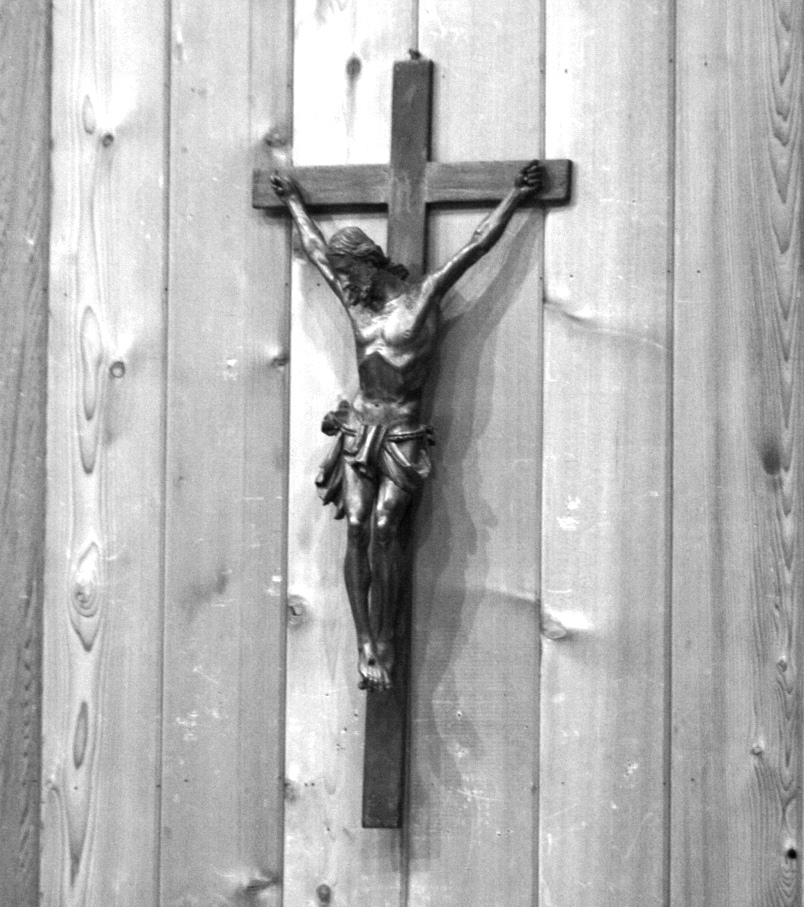
crucifix1Banished Messiah: Violence and Nonviolence in Matthew’s Story of Jesus by Robert R. Beck is an intriguing and stimulating take on Matthew’s Gospel. He structures the book on the structure of the Banished –Prince-Returns-to-Claim-his-Throne story motif. He outlines this motif in animated movies such as The Lion King to make the outline clear before proceeding to Matthew with ongoing comparisons with other classics such as The Odyssey and Hamlet.

The first stage of the story motif is usurpation which Herod has done very well, although ultimately the usurper is the Roman Empire. The royal claim made through the genealogy strikes me as being as anti-imperial as Luke’s song of the angels the night Christ was born. The exiled prince then grows up in obscurity.

The second stage is the imposter. Beck discusses the ambiguous situation of an exiled prince. As with the case of Odysseus, validating the real McCoy from a Pretender is not easy. In this section Beck discusses the struggles with the Pharisees from a post-colonial perspective. The strife between them has to do with how to resist the Empire. The Pharisees tried to broaden recent techniques—making the whole people a priesthood following ritual purity. Jesus went back deeper in the Jewish tradition for the renewal. More important, the Pharisees were complicit with the Empire, as their having coins with Caesar inscribed demonstrated. Jesus’ resistance to the Empire was total, even to the point of not carrying any money issued by the Empire.

The third stage is the Mentor. John the Baptist fulfills this role. Beck discusses the tensions the mentor’s role often has. John the Baptist does seem to have oriented Jesus to his mission and he baptized him, but Jesus broke with John over the question of violence and judgment, preferring healing to divine vengeance. Athena urges Odysseus to kill the suitors and the ghost of Hamlet’s father complains that he is in a sort of purgatory until his death is avenged—a rather screwy view of Purgatory as Shakespeare surely realized.

The final stage is the return and reckoning. Normally this takes place in two stages: cleansing and revenge. Here is where Matthew breaks off from the story motif, defying our expectations. (Think of how many meek and mild literature professors berate Hamlet for not getting the job done!) The entry into Jerusalem is the return. In Matthew, Jesus immediately goes to the temple and cleanses it. This is a non-violent, symbolic act. In a real cleansing, a lot of blood would have been flowing. Instead of revenge, we get the arrest of Jesus who tells Peter to put the sword away and gives himself up to the soldiers although he could have called on ten thousand legions of angels.

Beck brings in Girard at the end but he misreads him on the crucial point, saying that Jesus was a helpless victim while Girard argues for Jesus’ intentionality here as does Beck. It is Jesus’ renunciation of revenge, breaking the revenge story motif that reveals the truth of God. The commission to the disciples at the end of the Gospel is anti-imperial, a commission to create an entirely new style of human community than the power-structure of Empire.

The Five Kinds of Prayer (5): Adoration

abyssAdoration is the one form of prayer where are not concerned with ourselves but with God alone.  When we praise another person just for being that person, we are expressing an appreciation that transcends any tangible benefits we may have received or ever will receive from the one we are praising.  Likewise, the highest praise we can offer God is to praise God just for being God.  Praise is an ecstatic liberation from all self-preoccupation.
Praise is an ecstatic rocketing into God’s Desire; mimetic Desire at its most glorious. Nothing could be further from mimetic rivalry than praise. Praise has nothing to do with wanting what other people want except for wanting God for Godself. As thanksgiving moves towards praise, praise continues what thanksgiving started: it removes mimetic rivalry, all competition with everybody. Once thanksgiving is plunged into praise, gratitude and joy blend into one. Praise is the great unifier that brings all of us together
Since adoration is so totally centered on God, there is very little we can do on our own to praise God.  Praise is not a commodity we can pull out of our inner selves at will.  We can only open ourselves up to a flow of praise that comes from without but penetrates deeply within us and flows back out of us to God.  Praise is a gift from God; it is the water welling up within us unto Eternal Life.
Praise may be as exciting as blaring trumpets or as silent as the still small voice the prophet Elijah heard.  In fact, we praise God most deeply in silence.  When we are silently directing our attention to the God, we can gently lay our preoccupations to one side and simply enjoy God’s presence.  In silence, we come to appreciate more deeply the Person God is. Since praise transcends words and dissolves them, praise takes us far beyond rational thought. In doing this, praise is moving into contemplation where we rest in God for the sake of resting in God with no thought about what God will get out of it, let alone what we will get out of it.
Just as the praise of lovers for each other turns into babbling, baby talk, so does praise of God as we is shouted out in Psalm 148:

Praise the Lord!
Praise the Lord from the heavens;
praise him in the heights!
Praise him, all his angels;
praise him, all his host!

Next thing we know, all of creation gets into the act of praising the Creator:

Praise him, sun and moon;
praise him, all you shining stars!
Praise him, you highest heavens,
and you waters above the heavens!

The mountains and hills and stormy winds and sea monsters all join in. When all of creation, including earthly rulers, are praising God, any covetous desires for anything vanishes.
Most important, praise is the light of God on earth.  In Heaven God is praised continuously, so when we offer praise, we are anticipating life in Heaven.  Praise is not an escape from earthly life but an enrichment of it. Praise gives us the strength to face life with the conviction that God will bring all creation into God’s eternal glory.  No matter how much we fear the ways we can destroy God’s world, the praise we allow to flow through our hearts and our bodies remains a light that no darkness can overcome.

This series begins with The Five Kinds of Prayer (1): Petitionary Prayer

The Five Kinds of Prayer (4): Thanksgiving

yellowTulips1Thanksgiving differs from petition and intercession in that we focus on what we have and how grateful we are that we have it. Actually, thanksgiving should accompany all of our petitionary and intercessory prayer because we should be thankful in the act of asking. Usually, we prefer to wait until a request has been granted before thanking the donor. Here, however, when we pray with thanksgiving, we thank the donor in advance. This does not mean asking God for something with confidence that the request will be granted in precisely the way we asked for it. Thanksgiving is gratitude for whatever is given us in whatever way it is given. In short, gratitude is an ongoing attitude that permeates our requests.

When Jesus tells us not to worry about what we are to wear or what we will eat, Jesus says that “it is the Gentiles who strive for all these things; and indeed your heavenly Father knows that you need all these things.” (Mt. 6:32) The key word here is “strive.” It is one thing to need certain things and quite another to strive for them. Striving, of course, implies mimetic rivalry; wanting things because other people want them or you think want them. Striving after goods is the quickest way to lose any sense of thanksgiving. If mimetic rivalry destroys gratitude, then gratitude quells mimetic rivalry.

Gratitude entails receiving what we receive as a free gift rather than something we have earned. In his speech before the Israelites entered the Promised Land, Moses warned them: “When you have eaten your fill and have built fine houses and live in them, and when your herds and flocks have multiplied, and your silver and gold is multiplied, and all that you have is multiplied, then do not exalt yourself, forgetting the Lord your God, who brought you out of the land of Egypt, out of the house of slavery.” (Deut. 8:12-14) We exalt ourselves by thinking that: “My power and the might of my own hand have gotten me this wealth.” (Deut. 8:17). When we think that we have earned what we have received, then we feel no gratitude for it. If we had what he have coming to us, there is nobody to thank for it but ourselves. We don’t write a thank you note to our employer for paying us our salary. Likewise, if we feel that God owes us what God gives us as the just payment for the prayers or for acts of service, then we don’t thank God for it. On the contrary, if “the wheat and barley, of vines and fig trees and pomegranates, olive trees and honey” fall short of our standards, we complain to God about them. It is important, then, to realize that a covenant between God and humanity it is not a contract where God gives us a pre-established “salary” for what we do for God. Rather, a covenant sets in motion a circle of giving. We give free gifts to God and God gives free gifts to us.

Jesus’ counsel that we not worry about tomorrow, for tomorrow will bring worries of its own,” (Mt. 6: 34) is vital to an attitude of thanksgiving. When we are thankful, we focus on what we already have rather than on what we do not have. More important, when we are thankful, we are content with what we have. When we strive for what we do not have, we are focused on what we lack and so we do not even think about what we have already, let alone give thanks for it. This attitude is also important in our human relationships as well. When we are thankful for what the people in our lives do for us and for what they mean to us, we are content with them as they are, even if there is room for them to grow in virtue and holiness. Striving to change another person easily becomes a contest against that person where change for the better becomes a “victory.” Being content with the other person as that person is can lead to complacency, but it is also a condition with great potential for encouraging a person to change.

Contentment with what we have does not deny the intrinsic value of those goods we desire but do not have already. It only means that we can be patient about what we do not have because we appreciate the intrinsic value of what we have already. This is the key to letting our requests known to God” with thanksgiving (Phil. 4:6). This does not mean that we pray with thankful hearts because we assume we are going to get what we want when we want it. Rather, this is a matter of praying out of contentment in the present where “today’s trouble is enough for today.”

Jesus gives us the true focus for gratitude when he goes on to admonish us to “strive first for the kingdom of God and his righteousness, and all these things will be given to you as well.” (Mt. 6:33) Note that the word “strive” is used again here to show us that striving in itself is not necessarily a bad thing. What matters is the object of our striving. If we strive for God’s kingdom, then we do not strive for “all these things” like the “Gentiles.” Striving for God’s kingdom, of course, entails striving to provide the needs and wants of other people, i.e. being “doers of the word” rather than hearers only (James 1:22). When we strive for God’s kingdom, it becomes immediately apparent that our efforts cannot earn the good we are striving for. Our efforts fall far short and we can only receive God’s kingdom as a gift. When we know that we cannot earn the kingdom, then we don’t require other people to earn it either. We become free of worry over whether or not the widows and orphans are worthy of the aid we give them Likewise, we become free from the need to grumble like the workers in the vineyard who didn’t like it when the master was generous with his money to other people (Mt. 20:15). This freedom from worry encourages us to become more open-handed and open-hearted towards other people in their needs. The more we open our hands and hearts to others, the more we receive to be thankful for.

This series begins with The Five Kinds of Prayer (1): Petitionary Prayer

Continue on to The Five Kinds of Prayer (5) Adoration

An Enemy Woman as Teacher

peacePole1The Gospel of Matthew begins with a genealogy of Jesus that includes three Gentile women and the story of three Gentile Magi coming to pay homage to the Christ Child. The Gospel concludes with Jesus commissioning the twelve disciples “to make disciples of all nations.” How did the life and teaching of this Jewish man Jesus of Nazareth lead to this framing of the Gospel? The enigmatic story of Jesus and the Canaanite woman gives us a clue.

Two things about the story are perplexing: 1) Jesus’ harsh words to a person in need, and 2) Jesus losing a verbal exchange with another and apparently changing his point of view because of that exchange. We are troubled by these points because we usually assume that the divinity of the human Jesus requires that he was sinless and omniscient. I would argue that being fully human means that Jesus was not omniscient but had to learn life skills and develop his understanding of life just like any other human. The ludicrousness of the notion that Jesus knew everything about carpentry as an infant and Joseph couldn’t teach him anything should convince of that. Since sin is not essential to human nature, Jesus could have been sinless and still been fully human, but being fully human would mean that he was born participating in the mimetic matrix of his culture with both its salutary elements and its unsalutary ones. This story helps us explore how Jesus came to terms with a problematic aspect of his cultural inheritance.

Calling the woman a Canaanite was an anachronism that recalled Israel’s historical relationship with this people in much the same way that calling a contemporary Danish woman a Viking would invoke ten centuries of history for us. Jesus would have grown up absorbing his people’s tradition that the Canaanites were the worst of enemies. They were enemies to be exterminated by the likes of Joshua and they were periodic oppressors in the period of the Judges. Worst of all, Canaanites were dangerous because they tempted the Israelites to forsake their God in favor of the idols and sacrificial practices they embraced. In the time of Jesus, the woman was a Syro-Phoenician, as Mark designates her, which is to say she was a member of the oppressing class of the Roman Empire which made victims of the Jews. Starting from early childhood, he would have taken in this adversarial relationship before he knew what had possessed him. With this cultural inheritance, it is understandable, if not commendable, that Jesus would speak to a Canaanite (Syro-Phoenician woman who came to her for help the way he did. Many commentators try to get out of this difficulty by suggesting that Jesus was just testing the woman. That is possible but I would like to follow up the ramifications of accepting the plain sense of this story.

The Canaanite woman’s retort is justly famous for its cleverness and humility, qualities that make her words subversive. Jesus seems as amazed by her faith as he is by the faith of the Centurion who asked him to heal his servant. That the woman asked for the deliverance of a daughter possessed by a demon may have aroused Jesus’ sympathy. The Gadarene Demoniac had shown Jesus how a dysfunctional culture can possess a person and need to be exorcized. That this woman wanted her daughter delivered of the “demon” possessing her own culture would alert Jesus of the need to eject the Canaanite “demon” that had possessed his own culture. This understanding of the story has Jesus modeling the ability and willingness to overcome an ancestral enmity by listening deeply to the reality of a person in need so that she ceases to be an enemy. We desperately need to learn to follow this kind of example offered by Jesus today.

Jesus’ subsequent feeding of four thousand people in Gentile territory suggests that Jesus had learned to give the “crumbs from their master’s table,” using the twelve baskets left over from the feeding of the five thousand in Israelite territory. In a stimulating article called The Canaanite Conquest of Jesus, Grant LeMarquand suggests that Jesus’ delivering the Canaanite daughter of the demon and then feeding her people in the wilderness is a transmogrification of the conquest of Canaan by Jesus’ namesake. Jesus “lost” his exchange with the woman but gained a multitude of people to welcome into His Kingdom.

The Five Kinds of Prayer (3): Penance

sideAltarsIcons1Much of what is written about penitential prayer is centered on personal, individual sin. However, our tendency to desire according to the desires of others suggests that a more interdividual model is needed in our approach to penance. To begin with, sin is never personal in an individual way. Our own participation in sinfulness is intertwined with the sinfulness of others. As with petitionary and intercessory prayer, penitential prayer, confessions of our sins to God, is an important way of becoming aware of our own desires in their interactions with others and what we are doing with them. The old list of seven capital sins from traditional Catholic teaching is a handy structure for a brief look at how to confess these sins in the light of our participation in mimetic desire.

Lust and Gluttony are the sins most grounded in the physiological structure of each person. There is a physical craving involved with these sins, but our physical urges in these areas are pulled by the advertising media and cultural factors where we want a particular kind of sexual mate or food or drink because they are presented as more desirable than various alternatives. In my first post on Respect, I noted the rivalry that surrounds what often passes for love in human relationships. Gluttony is not subject to rivalry in the same way but some people seem to make a point of consuming more than others as a way feel that they are “winners” in the game of life.

Both lust and gluttony are subject to bodily addictions that are easily exacerbated by mimetic rivalry. The exasperation of people who live with addicted persons often amounts to a contest of wills. This is perhaps where the term enabler is most applicable. That is, the enabler adds to the tension caused by the addictive behavior so that the addict feels that he or she “loses” by giving up the addiction and being healed. In fact, many enablers fail to cope with healed addicts. Family systems thought illustrates the systemic elements of addictive behavior and it reaches for the jugular of the social system, not the individual who is addicted.

Envy and avarice are the most mimetic of the capital sins. Envy, of course, is pure mimetic desire, wanting what somebody else has and usually preferring to destroy what the other has if the envious one cannot get it. Avarice is envy in advance, or peremptory envy. An avaricious person wants what others want and tries to get it before anybody else can. Such a one, for that matter, often tries to anticipate what others will want, make that thing desirable, and then grab before anybody else can.

Sloth is a sin that can be committed with little or no reference to anybody else except that the failure to perform deeds others need or would appreciate affects them. The Latin word is accidie and it means a lot more than laziness, although it includes it. Accidie is primarily a lack of seeking the good; staying in the dumps rather than make an effort for the good, especially for the things of God. One way we are afflicted by sloth is by not noting how the desires of others are affecting us. When we do that, the default is that we just float along on others’ desires without taking any responsibility for our lives.

Anger is the opposite of sloth insofar as it is energetic while sloth is lethargic. While Sloth is uncritically floating with the social mimetic process, whatever it is, anger is an equally uncritical participation in mimetic movement but one that is overcome by the contagion of the crowd’s collective anger. Anger, of course, is the fuel for mimetic rivalry and most particularly for the desire for revenge. The more revenge is fueled by anger, the less examination as to the appropriateness of revenge. We tend to think of anger as personal because we feel it physiologically in our bodies but anger is always relational, even if it is in relationship with oneself. Because of the involvement of body chemistry in anger, it poses the danger of falling into a substance addiction.

Pride and his cousin vainglory have already been examined at length in the posts on humility. In examining ourselves in confessionary prayer we need to be especially alert to pride that begins with tempting us to claim our anger, our possessiveness, our lust as our own, something to fight for as much as the people and things we think we want. In all mimetic rivalry, there is a strong dose of pride.

Above all, we need to remember in our hearts the Gospel’s revelation of the truth of sacred collective violence. As the culture of lynching in the US reminds us, collective violence can easily slip into a cultural matter—the way we have always done it—therefore an eternal “truth” when the real truth is that it is the old lie of the devil who has been a liar and a murderer from the beginning.

The sacrament of confession is well-known as a therapeutic exercise, one that lifts a heavy burden from us. Even for those who do not believe in penance as a sacrament find it important to confess their sins to another to get them off one’s chest.

The mimetic dimension of our sinfulness also impresses upon us the necessity of turning to the Other who is outside the system of the mimetic process that constitutes the principalities and powers to gain an alternative to them. The story of Peter walking on water—or trying to—illustrates this turning. The wind and the choppy waves represent our being overwhelmed by the mimetic movements that tend toward rage and persecution. When Peter looked at the waves instead of at Jesus, he started to sink. By himself, he would have sunk and drowned. By looking again at Jesus, he was pulled into the boat and taken safely to shore.

Continue to part 4: Thanksgiving

The Five Kinds of Prayer (2): Intercession

FrJudeInChoir - Copy

Intercessory prayer is asking God to give something to another person rather than to oneself. In this respect it seems much more generous than petitionary prayer and often it is. But not necessarily. Our resonance with each other’s desires makes it difficult to know where our personal desires end and where another’s desires begin. There is inevitably some overlap and the considerations we made for petitionary prayer hold for intercessory prayer as well. Actually, the problem can be more insidious when praying for others than with praying for ourselves.

The biggest pitfall in intercessory prayer is praying to God to meet our needs in relationship to that person rather than to that person’s needs. That is, we project our desires, our needs, on the other and pray for that. More seriously, there is a chance of there being a hidden rivalry in intercessory prayer where we pray against somebody in a self-serving manner. The most common way to clothe concern for others in this way is to pray judgmentally, which is to put ourselves in the “superior” position. This soon falls into the prayer of the Pharisee who thanked God for being better than that publican. Years ago, at a prayer meeting I attended, one man prayed to God to cure his brother of his “dirty, stinking habits.” I’m sure that if the man’s brother being prayed for (or against) really had one or more destructive habits, God would want that person to be cured. The thing is, God would be much more gracious in entering that person’s deepest self and offering strength to that person.

When we pray for others, we are, as when we pray for ourselves, entering into God’s Desire, only now we have expanded the field to include other people in their need besides ourselves and our own needs. Praying for ourselves opens us to the deep love God has for each of us. Praying for others opens us up to the deep love God has for other people. There is no room for judgmentalism in prayer since prayer is about humbling ourselves before God and before others.

At its best, intercessory prayer is a powerful participation in the desires of other people in a constructive way. Better still, it is a participation in God’s Desire for others as well as for ourselves. We share what is best in ourselves with the other for the good of the other and for the sake of the other. When we pray for others in this way and they pray for us in this same way, we create an expanding web of prayer that reaches out to everybody. This is what our built-in mimetic desire is for.

Continue to part 3: Penance

The Five Kinds of Prayer 1: Petitionary Prayer

FrJudeInChoir - CopySimply put: prayer is the meeting of our desires with God’s Desire.  Although God meets us with an infinitely simple Desire, we are not simple. That is why more than one approach to God is necessary for us.  There are five fundamental ways of prayer which Church tradition teaches, ways that give us a deeper immersion of our desires into God’s Desire. My professor of ascetical theology, Donald Parsons said that just as we need a balanced diet in our eating habits, we need a balanced diet of prayer. The five kinds of prayer give us this balanced diet.

I. Petition.

Petitionary prayer is about asking God to give us something for ourselves.  This is often considered the lowest form of prayer because it is considered selfish. Why should I want anything for me, myself and I? Well, God wants to give gifts to those of us who knock for the door to be opened. For that matter, God wants to give us gifts even when we don’t knock at all.

The thing is, we are filled with what James Alison calls our “smelly” desires whether we like it or not because we are made that way by God. Since we have these desires, we have to do something with them. Renouncing them is one of the things we can do, but we aren’t renouncing anything if we don’t know what we are renouncing.

The importance of petitionary prayer is that we bring our desires to God. In so doing, we increase our awareness of what these desires are, those that are smelly, those that smell like roses, and those that really stink. We may not like having our stinkier desires but we all have them and if we don’t become aware of them, they will rule our lives without our knowing it.  Of course, bringing our desires to God is tricky because we don’t always know what we want. What we think we want does not always turn out to be what we really wanted as all of us have found out many times when we did get what we wanted.

Knowing our desires is further complicated by mimetic desire, our tendency to desire through the desires of others. As we notice how our desires are entwined with those of others, we also become more aware of their rivalrous elements. For example, if we pray for our favorite baseball team to win the championship, we quickly realize that God is not going to play favorites and the best and/or luckiest team is going to win. That is, God’s Desire is not for one team or the other win but for everybody to enjoy the game no matter who wins and who loses. If we can’t enjoy a game when we lose, that’s our problem. The same applies to more serious issues in life such as personal relationships, especially those of a romantic nature. As we bring petitionary prayers of this sort to God, we find at the base of God’s Desire a will toward freedom. This is the freedom for the baseball to bounce the way it chooses and the freedom for people to react to us as they choose. It is often said that God answers a prayer with “No” and that can be the case, but not necessarily. Since God gives the rest of the world the same freedom God gives us, not everything is going to pan out the way God’s Desire might have it. The bombs dropping all over the world in spite of all our prayers that they cease are clear evidence of that.

Avoiding petitionary prayer for fear of being greedy may prove a greater danger than asking for the wrong things.  It could mean we give less import­ance to our­selves than God does.  If we think we are beyond caring about what we get in life, it is all the more important to search our hearts.  Chances are we are hoping for many things, but are denying these very hopes and then congratulating ourselves on our detachment.  More serious, we may be depending on ourselves for getting things in life, and not depending on God.

If we bring our desires to God in prayer, and let God sort them out, we gain some freedom from these desires.  God gives us a handle to make freer choices as to what we really want and how they can more constructively interact with the desires of others.  We might start out asking for a DVD Player and end up asking for help with a deeper need. That is, God educates us in learning to live with our desires when we bring ourselves close to God’s Desire in prayer. Far from being self-centered, petitionary prayer brings us out of the closed world of our natural desires and the even more tightly closed world of our rivalrous desires into the open Desires of God.

Continue to The Five Kinds of Prayer (2): Intercession