

When Jesus washed the feet of his disciples, he stressed the importance of what he was doing. Likewise, when he passed the bread and the wine, he stressed the importance of what he was doing. Both acts were to be remembered and done in memory of Jesus. And both are to this day, although the footwashing is not anywhere near as common as the eating and drinking of the bread and wine.
What is it about the footwashing that has put it into a very low second place? Logistics may have something to do with it but a look at its meaning, the sign that Jesus is giving us, probably has a lot more to do with our not even talking about it all that much. In the Greco-Roman world, it was slaves who washed the feet of their masters and their masters’ guests. That Jesus would do the work of a slave must have been shocking at the time and still is, if we consider the implication that imitating Jesus’ act is not confined to literally washing the feet of others but entails acting as a slave to others. Fundamentally, being a slave means to be in the hands of another person. If we are supposed to put ourselves into the hands of others like this, what does this say about trying to enslave another human being? Jesus himself was about to put himself into the hands of others with the result that he would be crucified. If the disciples still remembered the anointing of the feet of Jesus by Mary of Bethany six days ago, that too would have added to their discomfort. This discomfort extends to the parallel versions of this story
The woman ( or women) in the Gospel stories poured out her very substance (the expense of the perfume or oil) in devotion to Jesus. Likewise, Jesus poured out his very self to his disciples in washing their feet just as he was about to pour out his life for all people to put an end to the violence that includes the enslaving of other people. In those Gospel stories, the women were commended as examples of discipleship. If Jesus thought these women were such good examples, it makes sense that Jesus was humble enough to learn from them and do for his disciples what the women had done for him. There is no indication in any variant of the story that the disciples were reconciled to what the women had done. Did Peter take umbrage at Jesus for washing his feet because he associated it with the women as much as he associated it with slavery?
With the bread and wine, Jesus again poured himself into the two elements just as he poured out his life on the cross. So it is that the footwashing and the Eucharist both mean the same thing. We have put up with the Eucharist more than the footwashing because we have been able to sidestep this meaning by arguing about the metaphysics of Jesus’ presence. But the real presence of Jesus is his pouring himself into the hands of others and through them, the hands of his heavenly Abba. Paul knew this very well but we also conveniently forget that the context of his recalling the Last Supper is to upbraid the Corinthians for violating its meaning through denigrating the weaker and poorer members of the assembly.
Jesus rebuked Peter for refusing to have his feet washed, warning him that he would have no share in him. (Jn. 13: 8) This warning converts Peter so powerfully that he goes overboard and asks to be washed all over. He has allowed Jesus to be a slave to him so that he could be a slave to Jesus and all people. This conversion did not prevent him from denying Jesus three times but it allowed him to hear the cock crow and then to affirm his love to the Resurrected Jesus three times. This is what both the footwashing and the Eucharist are all about.
 It is significant that Jesus had wandered over to Caesarea Philippi, deep in imperial territory, before asking his disciples who they thought he was. After they repeated a few rumors going round, Jesus asked who they thought he was. Simon Peter piped up: “You are the Messiah, the Son of the living God.” (Mt. 16: 16) Jesus’ commendation showed that Peter had caught on to something important: it was not Caesar, whose neighborhood they were hanging out in, but Jesus, who was the real, true Lord. But what kind of Lord was Jesus?
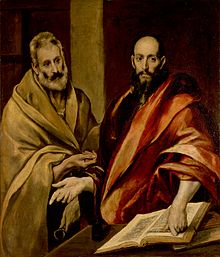 Much has been said about the conflicts between Saints Peter and Paul. I have
  The Feast of Saints Peter and Paul celebrates the pastoral ministry of the Church initiated by two different personalities with some differences of opinion. Celebrating two formative pastors already points to pastoral ministry as one of relationships. Then there is the whole matter of shepherds, as we often call pastors, in relationship with their flocks.
 Easter is an occasion of great rejoicing with bells, boisterous singing, and feasting. But do we really know what we are celebrating? The Gospel reading, doesn’t exactly ring out with Christmas joy of angels filling the skies with songs of God’s glory. Instead, we get “two men in dazzling clothes” who tell the women who came to the grave to anoint Jesus’ body that Jesus was not there but had risen. They had come to the wrong place.
 The narratives of the call of Isaiah, Paul, and Simon Peter bring to mind my own experiences of God’s call. In my case, it wasn’t quite like being attacked by a Cherubim in church, getting knocked down on the Road to Damascus or being told to throw out the fishing nets one more time and being overwhelmed by the catch.
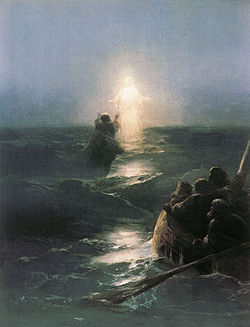 It is highly significant that Elijah did not find God in the wind, the earthquake, or the fire, but only in a “sound of sheer silence.” (1 Kg 19:12) It happens that Elijah had just run away from fire and storm when he heard this sound of silence. Since Elijah had just “won” the battle with the priests of Baal, one might have thought that God had spoken through wind and fire that time, but the result of “winning” that contest was needing to run for his life because Jezebel was out to get him. So it seems God had not spoken in the wind and fire on Mount Carmel after all. If we stop the story with the “sound of sheer silence,” we are edified, but when we read on to the words Elijah heard, we are seriously troubled. At least I am. Elijah is told to anoint Elisha to be his successor prophet. So far so good. But Elijah is also told to anoint Jehu son of Nimshi to be king of Israel. The narrative of Jehu’s cold-blooded coup d’état is chilling to say the least. (2 Kg. 9) More chilling are the words Elijah heard: “Whoever escapes from the sword of Hazael, Jehu shall kill; and whoever escapes from the sword of Jehu, Elisha shall kill.” (1 Kg. 19: 17) After the violent rivalry between Elijah and the priests of Baal, we get the crossfire of the violent rivalry between Hazael and the House of Ahab: more storm and fire. I have a hard time hearing this storm in the “sound of sheer silence.”
 Imaginary Visions of True Peace