The Holy Spirit’s Fiery Desire

outsideSupper1What is the Holy Spirit? Wrong question.  The Holy Spirit is the third Person of the Trinity, not an ït.” Our difficulty in thinking of the Holy Spirit as a person is a symptom of our cultural problem of really seeing other persons as persons.

“Many terms and images are given for the Holy Spirit: a roaring wind, tongues of fire, breath, gift, counselor, consoler, teacher, guide, and the bond of love, to list a few. Some of the terms are personal, some not. This only adds to the confusion unless we get beneath the impersonal images to realize that breath requires a breather, a person’s temperament can be fiery, and a bond of love can’t really love unless that bond is a person who actually loves. Teaching and guiding, though done with personal agency, can be mechanical if they are only conveying information and or getting us from one place to another.

The Holy Spirit adds to our difficulty simply by being so shy. Jesus shows us the Father, the Holy Spirit shows us Jesus. Who shows us the Holy Spirit? Look behind you and the Holy Spirit is still behind you. Look deeply in yourself and the Holy Spirit is deeper yet. If we want to know the Holy Spirit, we have to be as shy, as hidden as this Person. Most of us think it important to be more assertive than that.

Perhaps the Holy Spirit is hidden in much the same way as mimetic desire is hidden. (See Human See, Human Want.) Our imitation of other peoples ‘desires occurs below our conscious awareness. The Holy Spirit does the same. Is there a connection between the two? As our teacher and guide, the Holy Spirit conveys the Desire of God.  More than that, the Holy Spirit is the Desire of God. What is this Desire of God? The image of a fiery wind burning all of God’s people without consuming us gives us a hint of God’s fundamental Desire: that we all may be one as the Father and the Son are one. (There is the Holy Spirit hiding again! The Spirit is just as much one with the Father and the Son as the other two Persons of the Trinity.)

Let us try thinking of the Holy Spirit as the Gatherer with fiery arms of Love. Mimetic desire unites us with other people whether we like it or not, or will it or not. Mimetic desire deepens our lives when we share desires in mutually enriching ways, but when mimetic desire falls into conflict, it unites us to that person in the bad sense of being stuck together.  The Holy Spirit weaves through the swirl of other peoples’ desire with God’s Desire, teaching us and guiding us with fiery love how to fill all these desires between us with tongues of fire that deepen our communion with others beyond what words can say.

Jesus’ Escape to the Kingdom

crosswButterfliesThe Ascension is among the most puzzling festivals in the church calendar. The contradictory accounts of the event are a puzzle but one thing the accounts by Luke and John’s Gospel share is to connect Jesus’ departure with his sending the Holy Spirit. Jesus said the Holy Spirit would come to lead them into the truth. What truth did the disciples need that they hadn’t learned already from their teacher? Did Jesus have to leave before the disciples could hear the Holy Spirit?

During his ministry, Jesus warned his disciples three times that “he would be rejected by the elders, the chief priests, and the scribes, and be killed, and after three days rise again.” These warnings came precisely at the times the disciples thought that a Maccabean-like revolution against the Romans was just around the corner: when Peter proclaimed Jesus to be the Messiah, right after the Transfiguration, and when James and John asked if they will sit at Jesus’ right and left in his kingdom.

After his Resurrection, Jesus tried again to get across to the disciples what his kingdom was really all about. When Clopas glumly said that he and his companion had hoped that Jesus “was the one who was to redeem Israel,” Jesus, not yet recognized by them, rebuked them for their slowness of heart in believing what “the prophets have declared.” Then he “interpreted to them all the things about himself in all the scriptures.” Later, Jesus appeared to the twelve and explained that everything written about him in “the law of Moses, the prophets, and the psalms must be fulfilled. “Since the phrase “the Law and the Prophets” was used to refer to the whole Hebrew Bible, the special mention of the psalms is significant. The psalms include many laments over persecution from the standpoint of the victim. Jesus went on to say that when the scriptures say that the Messiah was “to suffer and to rise from the dead on the third day,” it means that “repentance and forgiveness of sins is to be proclaimed” in Jesus’ name to all nations, beginning from Jerusalem. Proclaiming repentance and forgiveness is a very different proposition from starting a revolt to restore the kingdom to Israel.

When, in spite of hearing this teaching for forty days, the disciples asked their Risen Lord: “Is this the time when you are going to restore the kingdom to Israel?” Jesus must have banged his head against the nearest tree and cried out: “I’m out of here!” This repeated question may have convinced Jesus that the disciples were never going to stop asking him to restore kingdom of Israel as long as he was walking on the earth with them. Maybe Jesus was planning all along to leave after forty days; maybe he planned to stick around indefinitely but this question was the last straw.

Jesus’s Ascension put paid to any notion of his leading a second Maccabean-type revolution. The disciples were left with no choice but to try doing what Jesus told them to do when he breathed on them and said: “Receive the Holy Spirit. If you forgive the sins of any, they are forgiven them; if you retain the sins of any, they are retained.” Jesus’ kingdom is to preach repentance and forgiveness to the whole world until everybody has repented, been forgiven, and has forgiven everybody.

Hospitality Initiative

WilliamGuestsChurch1On May 3-4 I will be attending the Hospitality Initiative hosted at Oakland University in Oakland, MI. The convener is Charles Mabee, a scholar who works with the thought of René Girard. This is a multi-faith gathering where papers from a wide variety of spiritual traditions will be represented by the presentation of papers. I will be presenting a brief paper called “Mimetic Hospitality: Guests and Community in the Rule of St. Benedict.” Some of the content overlaps with my blog post Cleaning up our Unclean Acts which introduces some of the thoughts I develop in this paper. You can read my paper here.

Knowing the Wild Things Between Us

buddingTree1Just about all of us talk about the subconscious as if it were familiar territory. By definition, the subconscious, assuming there really is such a thing, is precisely what we are not familiar with, what we don’t know about ourselves.

Pop psychologists, and real psychologists for that matter, along with those of us committed to the spiritual journey, think that it is better to know more about ourselves rather than less. Exploring the unknown may be an exciting challenge at times but it is also threatening. Much talk about the subconscious that has floated around since Freud took up his pen gives the impression that the subconscious is full of horrible monsters and some of them are us. In the simple story Where the Wild Things Are Maurice Sendak shows us what great friends the inner monsters can be if we get to know them.

René Girard has given us a whole new dimension to explore in the subconscious by suggesting that it is primarily mimetic desire that we find there. (See Human See, Human Want) Mimetic desire, the desire of others that has infiltrated us since birth, gets under our skin and deep into our hearts. Hence the importance of the desires we surround small children with to absorb. What keeps mimetic desire in our subconscious is our defiant pig-headed conviction that our desires belong to each of us alone and to nobody else. The stronger this sort of conviction, the more likely the desire is entangled in serious rivalry with somebody else; maybe a lot of somebodies. Somehow, we feel threatened at the idea that our desires are intertwined with the desires of everybody else and we push them away, only to have them manipulate us at very deep levels.

The “wild things” within may not be so much are own personal monsters but the monsters that grow out of the mimetic desires between us. The monster isn’t me, it’s us. These wild things can also be the source of great opportunities for personal and spiritual growth if we get to know them. The web of mimetic desire is not, in the hands of God, elaborate chains to imprison us but links to connect us. That is, mimetic desire is the gravitational field among persons pulls us into relationship with each other. The more we are aware of this field, the more freedom we have to live in it with friendship and sharing instead of hate and rivalry.

Self-examination is a time-honored practice for spiritual growth in all religious traditions. Unfortunately, when this practice is centered on the self, it inevitably creates some distortion because it keeps mimetic desire in the subconscious. It isn’t so much our selves that need examination as it is our relationships. The individual self can look just fine right when relationships are destroying the web of our interrelated desires.

Girard tends to examine mimetic desire in the present tense, and there is always much going on with our interrelated desires in every moment. However, as Per Grande pointed out in his fine book Mimesis and Desire, we go through life interacting with the desires of others in our past just as much, if not more, than those in the present. So it is that we have to increase our conscious awareness of our past as well as the present.

So much attention has been paid to monstrous wild things in the human subconscious that we don’t realize that deeper in the subconscious that any wild desires flaring up between us and other people both in rivalry and ecstatic love and friendship is God’s desire. No matter how entangled our mimetic desires with other people, God holds all of the links in unconditional love, all the while calling each of us to open our outer and inner eyes to see how wild divine love is.

How Are We Saved?

yellowTulips1The New Testament and two thousand years of Christian preaching has consistently proclaimed that the death and resurrection of Jesus Christ has opened the way of salvation for all humanity. Precisely how this mysterious, earthshaking event has done that   has raised more questions than answers. It is understandable that the focus would tend to be on the death of Jesus since the event is so dramatic and creates intense emotional effects in Jesus’ followers. However, understandings of the atonement of Jesus through this route have raised long-standing problems that cry out for a fresh approach. The growing realization that the killing of Jesus was just plain wrong on the part of many Christians, and not just those influenced by the thought of René Girard,  opens a way for a re-thinking of atonement theology that can support a deep spirituality grounded in God’s unconditional love for all people. As article I wrote for the Abbey Letter Saved By the Life of Jesus contributes to this re-thinking that actually reclaims the Gospel for us. It is included in the collection of articles in Come Let Us Adore. You can read it here.

Beyond Oblivion

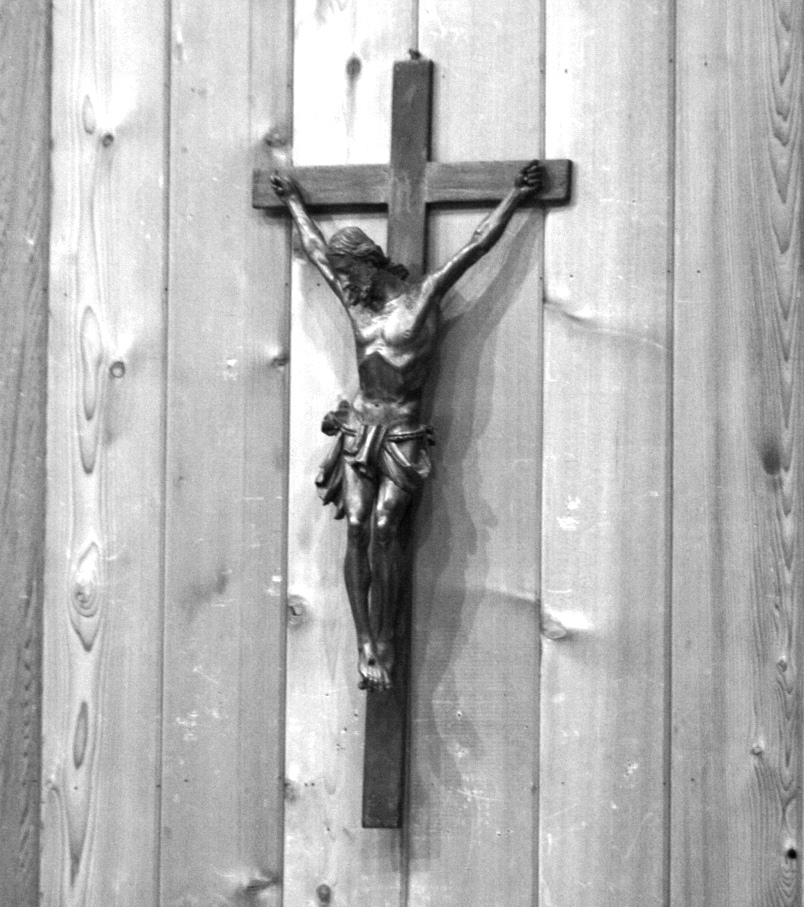
crucifix1Anthony Horowitz’s five volume series called variously The Power of Five or The Gatekeepers is a far deeper and interesting read than his many volumes about a teen spy doing impossible stunts without benefit of superpowers. The cosmology is roughly is one where there is apparently no religious reality, such as a creator and/or redeemer god, but there are powerful beings who wish only to destroy and they wish to destroy our world. They are, however, dependent on humans evil enough to help them, such as members of a witch’s coven, embittered apostate monks, and rapacious financial magnates. Meanwhile, in a vaguely defined transcendent “dream” world there are beings or some beneficent force that sends five young saviors to our planet and works out a plan for defeating the “old ones” definitively.  It turns out that these five teens have counterparts (alternate selves?) who lived ten thousand years earlier and each is interchangeable with his or her counterpart in the event of the death of one of them. Such a substitution allowed for a victory in the past. I am going to focus on the ending of the series in the final book Oblivion which is a powerful read, even as it raises some serious questions.  I hereby issue a SPOILER ALERT for those who prefer to read the book before reading my comments. By the beginning of the last book, the “old ones” have broken through and destroyed the world. The five teens have to stop and reverse the destruction. At the end, Matt Freeman, the leader of the group, reads his life story in a library in the dream world which tells him the plan, horrifying as it is. What it boils down to is putting himself into the hands of the enemies in their fortress in Antarctica so they can exact their revenge on him by torturing him for several millennia, all the while depending on a journalist who has befriended him from the beginning to sneak him and kill him swiftly. Matt’s death brings in Matt’s counterpart while another boy, who had betrayed the cause, gives his life to open a time warp to bring the group together to defeat the “old ones” for good. Although Christianity is not shown to have any reality in the series, a Christian can certainly see a Christ-like act of renunciation in the self-sacrificing death of Matt and for the betrayer as well. There is a sense of providence, if not divine, in the plan. By hindsight, it is the only plan that could have worked. The “old ones” were so blinded by a lust for revenge that they left themselves open to being defeated by teens with dedication they can never understand. It is a powerful illustration of how love, not power, is the only way to defeat such evil. The ending is disturbing in that the surviving teens celebrate and return to the dream world while the ones who made sacrifices are just plain gone, unless the dead boys live in their counterparts in some way. Of course, if the world really is a world where such acts of renunciation give only the satisfaction of making this act of sacrifice, than that is the best one can do. Emmanuel Kant based his ethics on this level of disinterestedness where one sought no reward for doing the right thing. There is something noble about this, but if the God of Abraham, Isaac, and Jacob is the loving God embodied by Jesus, than there is a far greater good and glory that sustains such a disinterested sacrifice.

Rising to the Life of Christ

crosswButterfliesWhen St. Paul says in Romans that we are baptized into Jesus’ death, what kind of death are we baptized into? An aged person drifting off while asleep? A ritual death with no consequences? No, we are baptized into the death of Jesus. This particular death, the one we are baptized into, is a judicial death resulting from collective violence. This is the shameful death of an alleged insurrectionist at the hands of an Empire. This death was caused by the meltdown of rivalry in the society of first century Jerusalem, exacerbated by the betrayal and cowardice of Jesus’ closest followers.

Once we know what death we are baptized into, we know what life we are raised to. In his risen life, Jesus showed no resentment or vengeance to those who had gathered to put him to death or had dispersed out of cowardice.  Moreover, Jesus was not entangled in any of the rivalrous feuds that are a way of life for most humans. Imagine living without all the entanglements and resentments swirling around and inside of us. Hard to do, isn’t it? That is how radically different the risen life is from the life we live now.

If our “old self” is crucified with Jesus, then we have, like Jesus, died in the place of the victim. That means we have died to our tendency to fuel resentments and resolve these resentments through gathering against the victim, as Paul himself repented of having held the clothes of the men who stoned Stephen and openly approving of what they did.

None of this means that repenting of personal sins and faults doesn’t matter and that becoming free of them is part of the resurrected life. However, Christian teaching has a strong tendency to stress personal renewal to such an extent that horrifyingly sick participation in collective persecution goes unnoticed. That hundreds of thousands of Christians could lynch thousands of black people shows us now, now that the lynching era is over, how easily this sort of group contagion can take over in what is often called an “enlightened” and “civilized” era.

Rather than congratulating ourselves on giving up lynching after roughly a hundred years of the sport, I suggest we take careful note of the growing polarization in our country over social and religious issues. Honest disagreement is not a problem; it’s a good thing, something that keeps us honest. But polarization tends to be conflict for the sake of conflict so that conflict feeds itself and it feeds each one of us. Never mind that polarized conflict is as nourishing to humans as sawdust and glue. What is really dangerous about this polarization is that it easily collapses into collective violence as a way of resolving the tensions.

If we wish to be serious about living the risen life with Christ, we must be baptized by the love and forgiveness of the risen Christ and allow him to gently but firmly remove all the resentments we feed on so as to feed on body and blood of the Lamb of God who reaches out to everybody with vulnerable love.

Can you imagine such a thing? Can you be overwhelmed by such a thing in baptism?

A Risen Life Full of Forgiveness and Love

crosswButterfliesHere is my favorite thought experiment: Imagine that everybody around you ganged up on you, leveled incredible accusations against you, and rained savage blows on your body. Your friends either joined in the persecution or slunk away, too afraid to defend you. Your attackers pressed on until they had put you to a most painful death. Imagine further that, miraculously, you found yourself alive three days later. Having already died, you could hardly die again. You have become invincible. What would you do to the people who had mistreated you? How would you approach your cowardly friends?

Perhaps this thought experiment can give us an inkling of how amazing it is that, when this very miracle happened to Jesus, he did not retaliate, but instead, invited everybody to a big whooping party that will never end. After rising from the dead, Jesus continued to do what he was doing before he was killed: gather God’s people in peace by peaceful means only. That is, after his Resurrection, Jesus practiced what he preached in the Sermon on the Mount: return evil with good, hatred with love. The fullness of Jesus ‘forgiving love can be as earth-shattering as an earthquake or as gentle as stepping through a wall.

If Jesus were dead and there was a body in the tomb for the women to anoint, chances are that Jesus’ disciples would either have remained in hiding or they would have reacted to the violent act of the crucifixion with violence. But in Luke the young men in white asked the women: “Why seek the living among the dead?” That is, God did not will the death of Jesus, God willed life for Jesus because that is what God wills for each one of us. As long as we stop at Jesus’ death, we also stop at the grief and anger and that leads to violence. If we move on to the life of Jesus, than there isn’t the same room for grief and anger because Jesus is alive and wants us to be alive in Him.

In short order, Peter passes on the same absence of revenge of Jesus’ persecutors and fullness of forgiving love for them when he tells the people in Jerusalem precisely what they had done, sticking to the bare facts and not adding irrelevant insults the way we usually do in such situations. When Peter’s listeners were “cut to the heart” and asked: “What should we do?” Peter extended the invitation that he and the disciples had received from the Risen Lord: “Repent and be baptized every one of you in the name of Jesus Christ so that your sins may be forgiven; and you will receive the gift of the Holy Spirit.” This is a far cry from the response we get from most followers of a slain leader. Peter had heard the cock crow, repented and accepted Christ’s forgiveness and love. Peter was a weak human being like the rest of us. If Peter is like us, we can be like him.

See also Two Ways of Gathering and Violence and the Kingdom of God.

What Humans Willed: the Passion Story

crucifix1At the abbey where I live, I preach at the Maundy Thursday liturgy and the Easter Vigil. I do not preach on Palm Sunday and Good Friday, the two liturgies where we chant the Passion. The Passion is long enough without added sermons and the Passion speaks for itself. That is, it speaks for itself as long as we don’t add things it does not say that undermine what the Passion does say.

To belabor what should be the obvious, the Passion Story tells us what human beings chose to do. Jesus chose to drive the money changers from the temple and teach the people there. The Jewish authorities chose to plot to have Jesus arrested and handed over to the Roman authorities. Judas chose to betray Jesus, thus facilitating the arrest and handing over. Pilate, to varying degrees in the four Gospels, vacillated but in the end chose to sentence Jesus to crucifixion. Meanwhile, the people who had cheered Jesus upon entering Jerusalem ended up crying for his crucifixion. The Roman centurions nailed Jesus to the cross where he died. The Passion narratives say nothing to suggest that anything that was done to Jesus, from the arrest to harassment and flogging to nailing him to the cross was in any way the will of God.

In all this, God does not do anything. Why do I bother to make a big point of this? The reason is that many Christians have suggested that God positively willed the sacrifice of Jesus for some cosmic purpose, usually because God was upset with wayward humans and was somehow incapable of forgiving humans unless somebody took the punishment for human sin. If Jesus, innocent of sin, should take the punishment, well and good. Well, not well and good. What kind of god demands punishment and doesn’t care who gets punished as long as somebody does? The Passion Story never says anything of the kind.

If God did not will Jesus’ violent death, what did God will? What was God’s plan? Jesus understood the heavenly Father’s plan to be that he Jesus knew that if he defeated Caiaphas and Pontius Pilate with force would only keep the world forever embroiled in retaliatory violence. The only way to avoid that was to gather people peacefully no matter the outcome, even if it meant death.

But Death, much as it was the plan of humans, was not God’s plan as a group of women found out early in the morning on the first day of the week.

See also Two Ways of Gathering


The First Supper

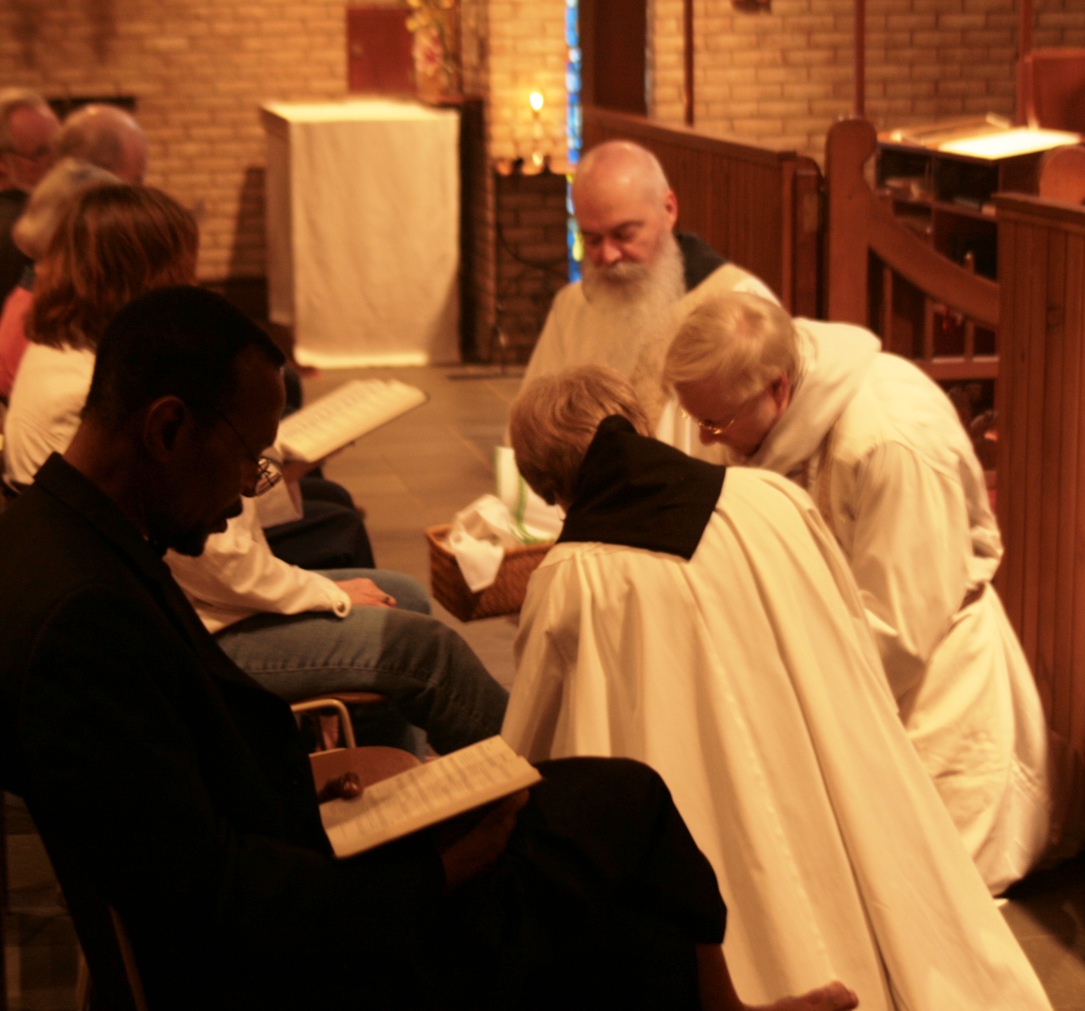
AndrewWashingFeet - CopyBy the time Jesus gathered with his disciples for what is called “the last supper,” not only had the social tensions in Jerusalem reached a point where all parties agreed that Jesus must be put to death, but the tensions among Jesus’ disciples had formed against him as well. The disciples’ fighting over who was the greatest, their incomprehension of his predictions that he would be put to death and their collective disapproval of the woman who anointed Jesus with oil all led to this point. In their current collective frame of mind and heart, there was a real possibility that all of them would either join the crowd in crying for crucifixion, or would band together after his death as a tightknit rebellious group united by resentment over the death of their leader, thus thwarting the Kingdom of God that Jesus came to proclaim. Jesus had one last chance to do something that would keep his life and intentions alive for his disciples. He did two things.

The first thing Jesus did was wash the feet of his disciples. The act was so simple that anybody could do it, even a child. If the disciples follow this simple command, they will not have time to harbor resentment over their master’s death and plot vengeance for the deed. Instead, this simple act that embodies love and concern for others will cause that love and concern to grow within their hearts and drive out resentment and a desire for revenge. If more and more people imitate each other in imitating Jesus in this action, then the entire social order of the day will crumble around the communal life that emerges through this simple action.

The second thing Jesus did was tell them to eat bread that was his body and drink wine that was his blood in remembrance of him. Jesus was not just telling the disciples that he was about to die for them. That would be comprehensible, if unsettling. Rather, Jesus was telling them that his very life was being given to them. Jesus was not giving himself as a corpse in the hope that the world might become a better place if enough people felt bad about killing him. Jesus was giving himself as a living being. Only when Jesus disciples broke bread and passed the cup of wine in memory of Jesus would they begin to realize the extent to which the living Jesus was giving them his life, life that he possessed in abundance in spite of the fact that he had been nailed to a cross and left to hang there until dead.

This is why Jesus was hosting the first supper of a new beginning for us all.

For comments on Passover see Eucharist (1)