Selling Postcards of the Cross

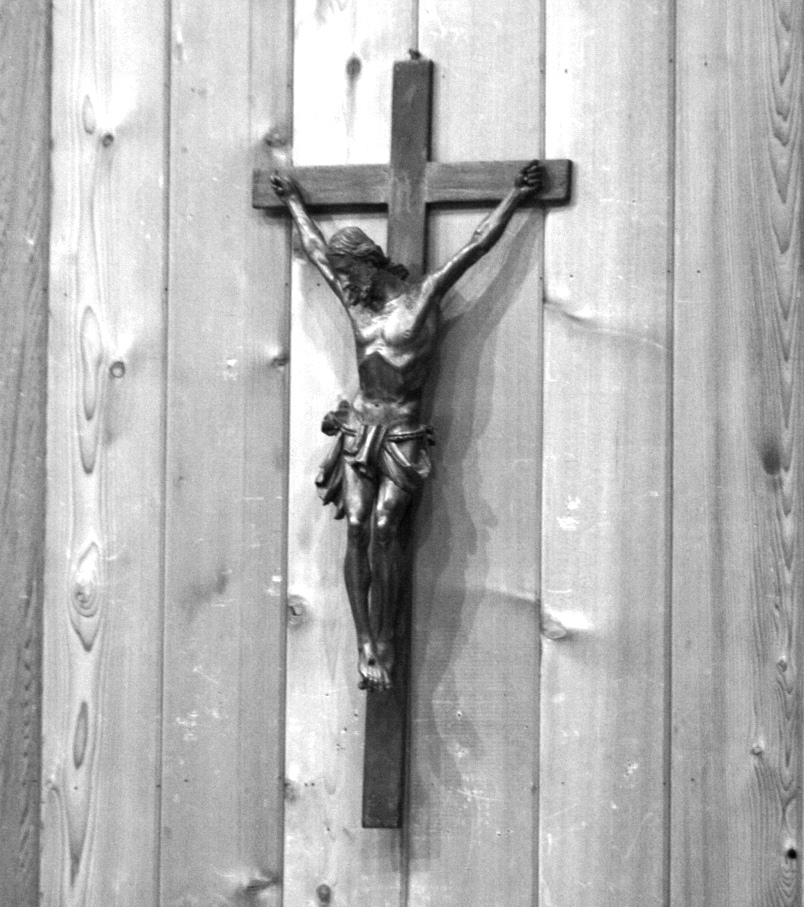
crucifix1“They’re selling postcards of the hanging
They’re painting the passports brown.”

White boys like me mostly didn’t know what Bob Dylan was singing about when “Desolation Row” first came out on “Highway 61 Revisited.” James Cone’s book The Cross and the Lynching Tree tells us it was about lynching. Lynching was a public spectacle where people took pictures and made postcards out of them.

Cone goes on to argue that the lynching tree was a series of grisly re-enactments of the crucifixion of Jesus. He also demonstrates on how very difficult it has been and still is for Americans to see this truth. Reinhold Niebuhr, arguably the greatest American theologian was, in spite of his social concerns, blind to this reality. Even black people have had trouble seeing this connection, though Cone shows how some black women, especially Ida B. Wells articulated it powerfully. He contrasts Niebuhr and all white liberals with Martin Luther King, Jr. who put his life on the line.

The dynamics of lynching as analyzed by Cone provide powerful confirmation of the theory of collective violence of René Girard. (See my article Violence and the Kingdom of God.) Girard argues that perpetrators instinctively fail to see what they are going. Cone shows us this truth in a powerful manner.

Dylan goes on to sing that “the circus is in town” and then catalogs Western Civilization turned topsy-turvy, suggesting that lynching does this, thanks to the “blind commissioner.”

Cone is right about whites’ blindness to this truth, but Dylan did write “The Ballad of Emmett Tell” in 1963, telling the story in stark terms, though without any Christian reference except to complains that the human race has fallen “down so god-awful low.” Then there is Mark Twain who wrote “The United States of Lyncherdom,” calling lynching for what it was and clearly discussing the human mimesis just as Girard was to do half a century later.

Cone’s book is written calmly, even gently. There is no mincing of words, yet the words are somehow full of forgiveness. The forgiveness in Cone’s words, the forgiveness proclaimed by Jesus, should be enough to undermine our trust in ourselves and our ability to see what we are doing. We must repent not only of lynching, but of our collective hatred of enemies today.

A Risen Life Full of Forgiveness and Love

crosswButterfliesHere is my favorite thought experiment: Imagine that everybody around you ganged up on you, leveled incredible accusations against you, and rained savage blows on your body. Your friends either joined in the persecution or slunk away, too afraid to defend you. Your attackers pressed on until they had put you to a most painful death. Imagine further that, miraculously, you found yourself alive three days later. Having already died, you could hardly die again. You have become invincible. What would you do to the people who had mistreated you? How would you approach your cowardly friends?

Perhaps this thought experiment can give us an inkling of how amazing it is that, when this very miracle happened to Jesus, he did not retaliate, but instead, invited everybody to a big whooping party that will never end. After rising from the dead, Jesus continued to do what he was doing before he was killed: gather God’s people in peace by peaceful means only. That is, after his Resurrection, Jesus practiced what he preached in the Sermon on the Mount: return evil with good, hatred with love. The fullness of Jesus ‘forgiving love can be as earth-shattering as an earthquake or as gentle as stepping through a wall.

If Jesus were dead and there was a body in the tomb for the women to anoint, chances are that Jesus’ disciples would either have remained in hiding or they would have reacted to the violent act of the crucifixion with violence. But in Luke the young men in white asked the women: “Why seek the living among the dead?” That is, God did not will the death of Jesus, God willed life for Jesus because that is what God wills for each one of us. As long as we stop at Jesus’ death, we also stop at the grief and anger and that leads to violence. If we move on to the life of Jesus, than there isn’t the same room for grief and anger because Jesus is alive and wants us to be alive in Him.

In short order, Peter passes on the same absence of revenge of Jesus’ persecutors and fullness of forgiving love for them when he tells the people in Jerusalem precisely what they had done, sticking to the bare facts and not adding irrelevant insults the way we usually do in such situations. When Peter’s listeners were “cut to the heart” and asked: “What should we do?” Peter extended the invitation that he and the disciples had received from the Risen Lord: “Repent and be baptized every one of you in the name of Jesus Christ so that your sins may be forgiven; and you will receive the gift of the Holy Spirit.” This is a far cry from the response we get from most followers of a slain leader. Peter had heard the cock crow, repented and accepted Christ’s forgiveness and love. Peter was a weak human being like the rest of us. If Peter is like us, we can be like him.

See also Two Ways of Gathering and Violence and the Kingdom of God.

What Humans Willed: the Passion Story

crucifix1At the abbey where I live, I preach at the Maundy Thursday liturgy and the Easter Vigil. I do not preach on Palm Sunday and Good Friday, the two liturgies where we chant the Passion. The Passion is long enough without added sermons and the Passion speaks for itself. That is, it speaks for itself as long as we don’t add things it does not say that undermine what the Passion does say.

To belabor what should be the obvious, the Passion Story tells us what human beings chose to do. Jesus chose to drive the money changers from the temple and teach the people there. The Jewish authorities chose to plot to have Jesus arrested and handed over to the Roman authorities. Judas chose to betray Jesus, thus facilitating the arrest and handing over. Pilate, to varying degrees in the four Gospels, vacillated but in the end chose to sentence Jesus to crucifixion. Meanwhile, the people who had cheered Jesus upon entering Jerusalem ended up crying for his crucifixion. The Roman centurions nailed Jesus to the cross where he died. The Passion narratives say nothing to suggest that anything that was done to Jesus, from the arrest to harassment and flogging to nailing him to the cross was in any way the will of God.

In all this, God does not do anything. Why do I bother to make a big point of this? The reason is that many Christians have suggested that God positively willed the sacrifice of Jesus for some cosmic purpose, usually because God was upset with wayward humans and was somehow incapable of forgiving humans unless somebody took the punishment for human sin. If Jesus, innocent of sin, should take the punishment, well and good. Well, not well and good. What kind of god demands punishment and doesn’t care who gets punished as long as somebody does? The Passion Story never says anything of the kind.

If God did not will Jesus’ violent death, what did God will? What was God’s plan? Jesus understood the heavenly Father’s plan to be that he Jesus knew that if he defeated Caiaphas and Pontius Pilate with force would only keep the world forever embroiled in retaliatory violence. The only way to avoid that was to gather people peacefully no matter the outcome, even if it meant death.

But Death, much as it was the plan of humans, was not God’s plan as a group of women found out early in the morning on the first day of the week.

See also Two Ways of Gathering


The First Supper

AndrewWashingFeet - CopyBy the time Jesus gathered with his disciples for what is called “the last supper,” not only had the social tensions in Jerusalem reached a point where all parties agreed that Jesus must be put to death, but the tensions among Jesus’ disciples had formed against him as well. The disciples’ fighting over who was the greatest, their incomprehension of his predictions that he would be put to death and their collective disapproval of the woman who anointed Jesus with oil all led to this point. In their current collective frame of mind and heart, there was a real possibility that all of them would either join the crowd in crying for crucifixion, or would band together after his death as a tightknit rebellious group united by resentment over the death of their leader, thus thwarting the Kingdom of God that Jesus came to proclaim. Jesus had one last chance to do something that would keep his life and intentions alive for his disciples. He did two things.

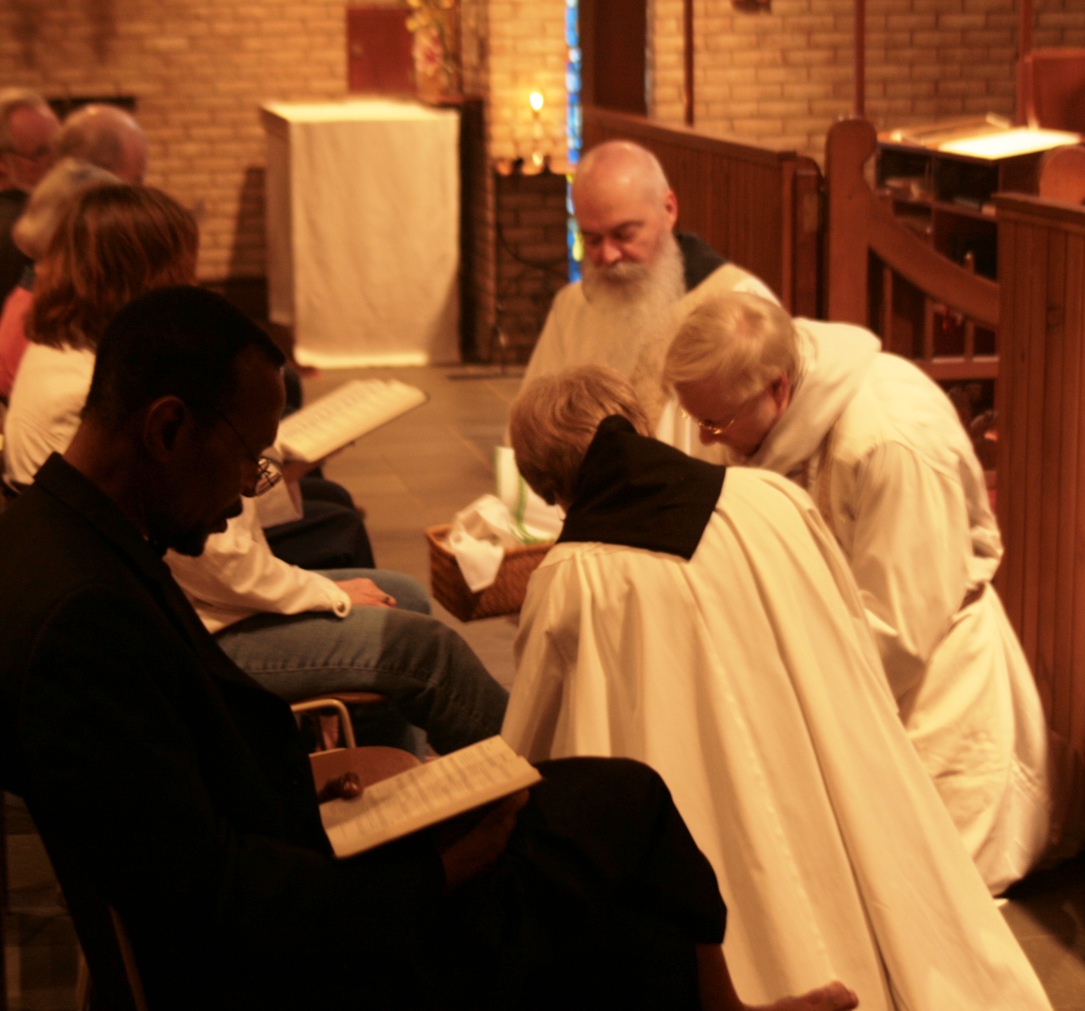
The first thing Jesus did was wash the feet of his disciples. The act was so simple that anybody could do it, even a child. If the disciples follow this simple command, they will not have time to harbor resentment over their master’s death and plot vengeance for the deed. Instead, this simple act that embodies love and concern for others will cause that love and concern to grow within their hearts and drive out resentment and a desire for revenge. If more and more people imitate each other in imitating Jesus in this action, then the entire social order of the day will crumble around the communal life that emerges through this simple action.

The second thing Jesus did was tell them to eat bread that was his body and drink wine that was his blood in remembrance of him. Jesus was not just telling the disciples that he was about to die for them. That would be comprehensible, if unsettling. Rather, Jesus was telling them that his very life was being given to them. Jesus was not giving himself as a corpse in the hope that the world might become a better place if enough people felt bad about killing him. Jesus was giving himself as a living being. Only when Jesus disciples broke bread and passed the cup of wine in memory of Jesus would they begin to realize the extent to which the living Jesus was giving them his life, life that he possessed in abundance in spite of the fact that he had been nailed to a cross and left to hang there until dead.

This is why Jesus was hosting the first supper of a new beginning for us all.

For comments on Passover see Eucharist (1) 

Crying out with Palm Branches in our Hands

AndrewPalmSunday1Jesus entered Jerusalem to the acclaim of crowds strewing branches before him and proclaiming him the king. A few days later, the same crowd gathered before Pilate to cry out for Jesus’ crucifixion. What happened?

Before answering this question, it is helpful to recall another crowd that went out into the desert to see John the Baptist. “What did you come out to see?” John asked them. “A reed blowing in the wind?” John suspects that people have come out in droves because people were coming out in droves. That is, it was the “in” thing to do. Fast forward a few months and we have a crowd at Herod’s palace supporting Salome’s request for John’s head on a dish. What did they come to see?

The post Ignominious Glory—Glorious Ignominy: a Doxology goes a long way in explaining this phenomenon. One can’t help but suspect that people are crying out because everybody else is crying out, no matter what the outcry is about. Advertising usually does not advertise the product but its alleged popularity. Political campaigns do the same thing. What would happen if people stopped to listen to what people were actually saying instead of crying out what they think everybody else is crying out?

It so happens that the Gospels do precisely this. The suggestion that the Gospels are Passion narratives with long introductions gives short shrift to what the Gospels are about. What these “long introductions” do is tell us at great length what Jesus actually said and what he taught. They also tell us what Jesus did before he was nailed to the cross, i.e. he healed people and cast out demons and he unilaterally forgave sins. These “long introductions” also tell us why the power brokers in Judea and Jerusalem wanted Jesus dead. By reading these “long introductions” to the Passion narrative, we are drawn away from crying out what everybody else is crying out and waving signs that only proclaim what the current fashion is believed to be. Instead, we are drawn into a very different social mimetic process, a process that builds up mutual respect between people, seeing people as they really are and as they really can become when they receive the unilateral forgiveness that Jesus gives them, a social process of not retaliating for wrongs done, a socially mimetic process of forgiving debts, of sharing what we can, of offering healing to others.

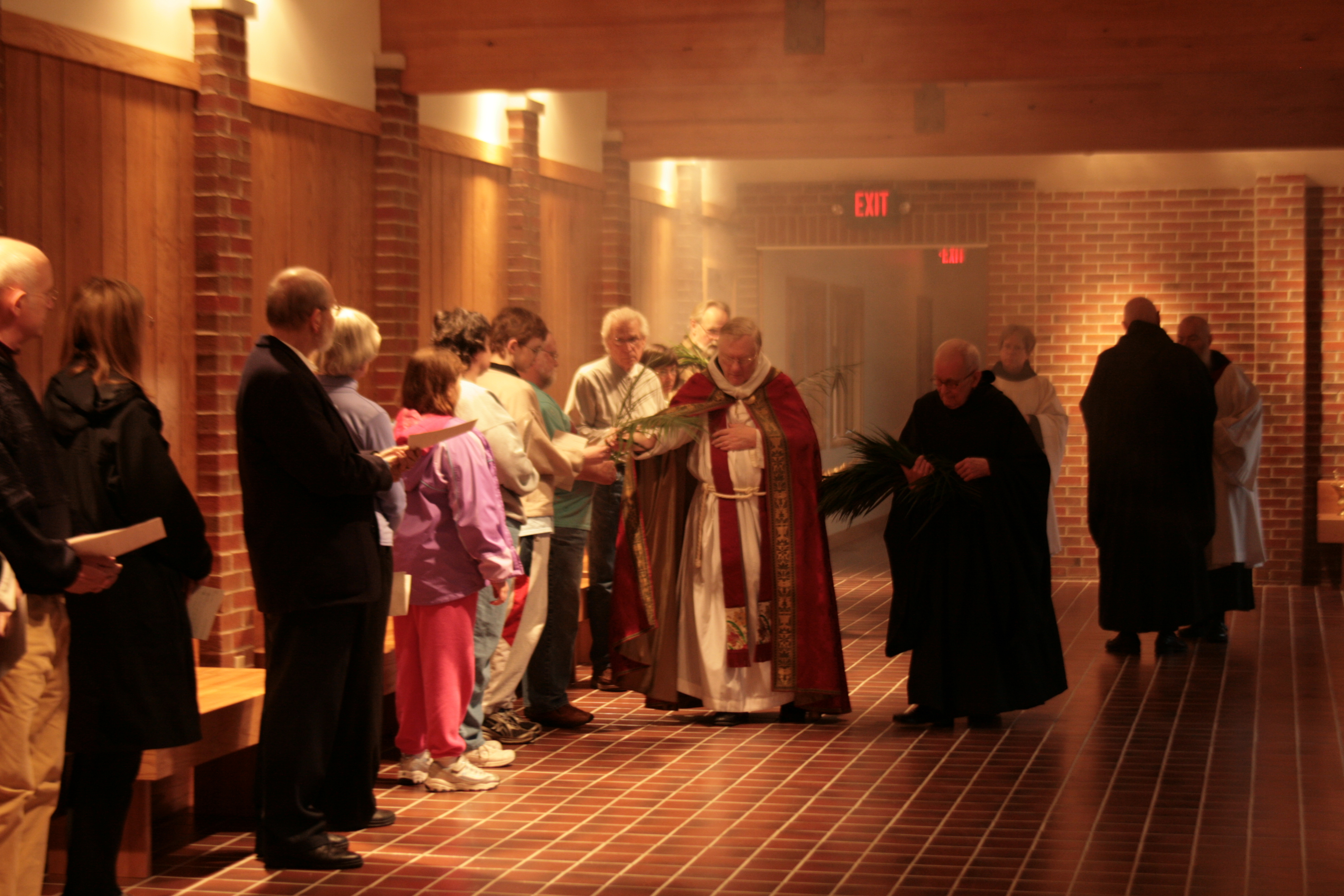
It is instructive that the Palm Sunday liturgy begins with everybody playing the part of the crowd welcoming Jesus with palms and then, a bit later, we hold these palms while acting the part of the crowd in crying out for Jesus’ death during the reading or chanting of the Passion. What we need to do afterward is return to the “long introductions” to see what the fuss was about and hopefully, hear the cock crow as did Peter.

I develop these ideas in my book Tools for Peace.

“Stupid” Galatians, Stupid Us

peacePole1Galatians Re-imagined by Brigitte Kahl gives us a major and salutary paradigm shift in our understanding of Paul’s Epistle to the Galatians.

1)      Kahl explores the extent (considerable) that the Celtic tribes, known collectively as Galatians were archetypal designated enemies of the Roman Empire, i.e. representative of lawlessness vis-à-vis Roman lawfulness. (Never mind how violent Roman law was.) The many sculptures of dying Gauls attest to Roman dominance of their designated enemies.

2)      The Pergamum frieze (likely what St. John the Divine called “the seat of Satan”) depicting the defeat of the “giants” by the Olympian deities is analyzed as an embodiment of Greek & Roman dominance of demonized enemies, i.e. the Galatians. Kahl also gives a chilling analysis of the sacrificial nature of gladiatorial games and how social mimetic tensions were channeled into these games.

3)      After several genocidal conquests, the Galatians in Asia Minor were “tamed” & integrated (uneasily) into the Roman power structure where they do to other enemies of the Empire what the Empire had done to them.

4)      Kahl then analyzes the uneasy status of the Jews in the Empire, allowing them to avoid direct participation in the Emperor’s cult in exchange for Jewish support of the Roman power structure.

5)      This provides the background to the bitter debate over circumcision in the epistle. For Paul, Jews and Gentiles are only fully reconciled in Christ if the two remain distinct while united, i.e. Jews are circumcised and Gentiles are not. To the Roman power structure, the notion of an uncircumcised person not participating in the imperial cult was an abomination, a confusion of categories. For those Jews who had accommodated themselves to the Roman Empire, this was a source of anxiety as it could jeopardize their fragile standing with the Empire, which proved to be the case.

6)      If Kahl is right, then Paul was not battling a Judaizing tendency but rather was battling an accommodation to the imperial structures, thus allowing the Roman Empire to define the relationships between Jews and Gentiles on their terms. This is why Paul is so insistent that the relationship between the two must be on Christ’s terms. The “stupid” Galatians were not in danger of backsliding into Jewishness but into the tyranny of the Empire, a danger we all face when tempted to allow contemporary imperial structures organize our outlook instead of Christ. Allowing the Empire to define our relationships assures that they will be violent because violence is the essence of Empire. (Divide and conquer.) Caring for one another in the reconciliation of Christ threatens imperial violence.

This list hardly does justice to the thorough research of this book. I strongly recommend it for its fresh and vital understanding of this important epistle of Paul, one that gives us a deep vision of the new humanity in Christ Paul was longing for.

The Prodigal Father and His Sons

???????????????????????????????????????????

The famous parable traditionally known as the Parable of the Prodigal Son (Lk. 15:11–32) is the quintessential illustration of pre-emptory forgiveness, one that closes the case on Jesus’ teaching on vengeance and forgiveness. This parable is better called “The Parable of the Prodigal Father and His Two Sons.” The opening of the parable draws a triangle: “There was a man who had two sons.” We expect tension out of a triangle, and we get it right off the bat when the younger son asks for his share of the property. The father accedes to his son’s request (demand?) and the younger son goes off with the proceeds. The elder son stays at home with his share of the property, at least geographically. What kind of father would be so foolish? Why would a young man leave a father who would give him whatever he wanted? Was it to get away from his brother? The stories about paired brothers in Genesis predispose us to suspect that the two brothers are mirror images of each other.

The parable goes on to say that the younger son “squandered his property.” Literally, he “scattered his substance.” That is, the younger son, while trying to forge an individual selfhood separate from his father and brother, completely loses himself in dissolute living. Geographical distance has not freed him from continuing to be a mirror image of his older brother. Then comes a famine and the social crisis that comes with it. Chances are that the scarcity was magnified by created scarcity. In such a social crisis, there must be a victim. A foreigner is particularly vulnerable to being a victim in such a crisis. The younger son fit the bill perfectly. He was deserted by everybody, in spite of all the money he spent on his women and carousing friends. Nobody was willing to take him in. He ended up as a servant who feeds the pigs (an unclean animal for Jews) and “no one gave him anything.” In this desperate situation, the younger son recalled how well-fed his father’s servants were, and he “came to himself.” Perhaps it was embarrassment that made him want to return as a servant, but perhaps he also didn’t want to re-enter the triangle with his father and brother.

The father’s ecstatic reception of the lost son and subsequent celebration blows apart the family triangle, leaving no room for mimetic strife. In contrast to the mimetic process that organizes society around a dispensable victim, the indispensable victim who is no longer lost has been found. The elder son, however, wanted to preserve the old triangle. His sour attitude suggests that he still needs to have his younger brother live irresponsibly. The elder brother’s universe would collapse if his younger brother began to play a responsible role in family affairs. No wonder the younger son ran away from a brother like that!

When the older brother keeps his distance, the father runs out to him with the same solicitude he showed the returning younger son. The elder son’s disingenuous accusation of not being allowed to celebrate is shown up for what it is. Apparently, the elder son never thought to celebrate with his friends until his father threw a party for that son of his. What the elder son has done is put himself into competition with his younger brother, when there is no need for competition. This sort of mimetic rivalry creates a stumbling block in the way of forgiveness. It remains to be seen whether or not the younger brother will forgive the elder for his unforgiving attitude.

We are likely to judge the younger brother for his callous irresponsibility and the elder brother for his amazing insensitivity. But if we do that, we find ourselves ensnared in the mimetic struggle between the two brothers, comparing them and taking sides until our own capacity for love is obscured and our capacity for celebration fizzles. The Prodigal Father does neither. He does not upbraid the younger son for leaving; neither does he upbraid his elder son for being such an insufferable prig. He only invites both of them to the party. Most of us have a hard time even wanting to be a father like that!

The parable ends with this challenge of forgiveness and unconditional love: Do we rise to the challenge of the Prodigal Father and renounce our irresponsibility and self-righteousness?

Gathering to Give Life to Victims

eucharist1Since the dawn of humanity, humans have gathered most quickly and powerfully around a victim. (See Two Ways of Gathering and Violence and the Kingdom of God.) Just think of how quickly we gravitate around whoever is currently seen to be to blame for whatever is going wrong in the world today. This gathering, however, is always at the expense of at least one person or group of people. A similar and yet very different gathering around a victim occurred when the eleven disciples saw the risen Jesus in Galilee and “worshiped him.” (Mt. 28:17) The huge, even infinite difference in this gathering is that the victim is alive and is gathering people around victims, “the least of those who are members of [his] family.” (Mt. 25:40) Ever since, Christians have gathered in worship around Jesus and his fellow victims, primarily in the Divine Office and the Eucharist.

The Divine Office is structured prayer that is uses the Psalter and other biblical canticles as the primary vehicle of prayer. Much can be said of the psalms but the thing that jumps out at anyone who prays them with any frequency is the many outcries of victims. “They surrounded me like bees; they blazed like a fire of thorns; in the name of the Lord I cut them off!  I was pushed hard, so that I was falling, but the Lord helped me.” (Ps. 118: 11-13) Verses such as these raise the question of whether we gather “like bees” around another person, or if we are entering the circle of bees in solidarity with the victim. Being a victim tempts us to anger, bitterness and violence. “Cutting off” our assailants in “the name of the Lord” is the reflex reaction, but is the opposite of what Jesus himself did in the same position. These rough verses help us renew our awareness of our own violent reactions to being victimized, even (especially!) petty matters such as being slighted by another. If we focus on Jesus when we are in the place of the victim, we find that the Lord has made the rejected stone the “chief cornerstone” that is “marvelous in our eyes.”

In the Eucharist, we gather around an altar which has been transformed into a table where, instead of laying out a sacrificial victim for slaughter, we place a piece of bread and a cup of wine to share among those present. We do this in memory of Jesus’ Last Supper, suffering, death, and Resurrection. The Greek word anamnesis does not mean a mere memory but to make present. That is, we enter the place of the victim with Jesus when we gather around the table. In so gathering, we feed on Jesus’ forgiveness of us for our own victimization are our challenged by this forgiveness to give this same life to others, both in terms of physical needs and emotional and spiritual sustenance. (See Miserable Gospel)

In his Rule, St. Benedict says that prayer should be made with “utmost humility and sincere devotion.” Entering the place of the victim with Jesus leads to both humility and devotion, attitudes that allow us to follow Benedict’s admonition that we sing the psalms (and also break bread in the Eucharist) “in such a way that our minds are in harmony with our voices.” (I develop these thoughts on the Divine Office in Tools for Peace)

The Prophet Between the Fox and the Hen

turkeys1We often think of a prophet as a person who speaks the word of God such as Elijah and Isaiah do, but Jesus gives us a deeper definition of what a prophet at the climax of his diatribe against the scribes and Pharisees in Mathew: “so that upon you may come all the righteous blood shed on earth, from the blood of righteous Abel to the blood of Zechariah son of Barachiah, whom  you murdered between the sanctuary and the altar.” (Mt. 23:35) Here, the prophet is one who says not a word but speaks the Word of God nonetheless in the sense that Abel’s blood cries from the ground.

This diatribe is often cited as a proof that Jesus, at least at times, was violent. It is worth noting, however, that Jesus didn’t shoot an automatic rifle at anybody; he spoke truth to presumptive power with a two-edged sword for a tongue. More importantly, these harsh words are followed by Jesus’ wish that he could gather his “children together as a hen gathers her brood under her wings.” Here we see very clearly the Two Ways of Gathering outlined in my blog post of that title.

In Luke, the lament over Jerusalem is put in a different, but similar, context. Warned by some Pharisees that Herod wants to kill him, Jesus calls him “that fox.” (Lk. 13:32) In preaching on this Lukan text, Prior Aelred here at St. Gregory’s, drew out the comparison of the fox and the hen. In the face of a threatening fox, Aelred suggested that Jesus might have been a better protector by being a tougher animal, such as the Lion of Judah. But no, Jesus assumed the role of a vulnerable hen gathering her chicks. Aelred went on to extoll Vicki Soto and her colleagues at Sandy Hook who covered as many of their small pupils with their bodies as they could to protect them, a contemporary embodiment of Christ the vulnerable, protective hen.

A fox scatters, while a hen gathers. What if Jesus had chosen to be a lion to deal with that fox Herod? It occurs to me that a lion would scatter all foxes who might threaten the chicks. Sort of like a superhero crushing the bad guys so that good guys like us can get on with our lives. Aelred noted that Jesus the Hen is not a popular image in Christian lore as is the Lion of Judah. The problem is, if Jesus the Hen gathers, then not only is Jesus the Hen trying to gather the scribes and Pharisees,  but Herod and his court as well, thus robbing us of more favorite enemies.

How my Story “The Rainbow Butterfly” Came to Be

creatures coverThe writing of my story “The Rainbow Butterfly” has a complicated history. My first inspiration came from a short story by Nathaniel Hawthorne called “The Artist of the Beautiful.” In it, a craftsman creates a very delicate and beautiful butterfly that has a numinous quality. In Hawthorne’s grim imagination, this fragile work falls victim to insensitive people.

In my imagination, this image got hooked into an idea of a story about a town at war with another town to the extent that the war defined the town’s life at every level.  An underground group, devoted to finding an alternative to war, was engaged in a project of constructing a rainbow butterfly that would take on a transcendent life of its own. The project succeeded and the rainbow received a mixed reception depending on the dispositions of each person.

A few years later, at the time of the civil wars in the Balkan Peninsula, I got the idea of writing a story about a city in the state of civil war where occupation of the city was roughly divided between each side. The children too young for combat (starting at age twelve) spent their time getting a piecemeal education with the result they learned of a possible to stop the war, but one requiring self-sacrifice. (I used the Welsh legend of the black cauldron that turns dead bodies into zombies until a live person jumps into the cauldron voluntarily which breaks the cauldron. As you can guess, it was a pretty dark story.

Over time, I continued to feel there was a lot to like in both stories but at the same time some fundamental problems that kept either of them from working. After puzzling about this for some time, I got an inspiration to take elements of each story and create a whole new story using the same themes about war. The result was “The Rainbow Butterfly.” Basically, it combines the inter-city civil war scenario with that of an underground resistance group seeking peace. This time, there was no attempt to create the rainbow butterfly; finding a cup that had the butterfly’s life in it was enough.

I created a whole new character as the protagonist who tells the story, twelve-year-old Darren Forty-Third. His vocabulary is limited because linguistic skills are limited to the pragmatics of perpetual war. That already tells the reader a lot about what a culture is like when it is so totally focused on war.

Want to see how Darren and his friends and the Rainbow Butterfly fare? Read the story in Creatures We Dream of Knowing.