
On Being a Mustard Shrub

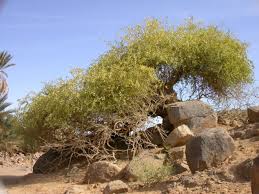
The Parable of the Mustard Seed is one of the most famous parables of Jesus, one that gives us hope that a small beginning can have an impressive ending, or so we think. This notion of an impressive ending comes from the versions of this parable in Matthew and Luke. ((Mt. 13: 31–32; Lk. 13: 18–19) There, the mustard seed grows into a tree, although Matthew does call it a shrub that turns into a tree. Mark, most likely the earliest version, and closest to Jesus, simply says that the mustard seed grows into the “greatest of all shrubs.” (Mk. 4: 3-32) A shrub, even a sizeable one, doesn’t seem so impressive, especially when we realize that mustard shrubs were considered intrusive weeds in Jesus’ time. What is Jesus getting at? We can get a lot of help by looking at some contexts for the parable.

This parable seems almost certainly to be inspired by a similar parable in Ezekiel: “This is what the Sovereign Lord says: I myself will take a shoot from the very top of a cedar and plant it; I will break off a tender sprig from its topmost shoots and plant it on a high and lofty mountain. On the mountain heights of Israel I will plant it; it will produce branches and bear fruit and become a splendid cedar. Birds of every kind will nest in it; they will find shelter in the shade of its branches. (Ezek. 17: 22-23) With the prophet, we have Yahweh taking something small, a twig, and making something great and impressive out of it: a tree on a mountaintop that shelters birds. So it is easy to see why later versions of Jesus’ parable would move in this direction. But in Mark, the seed is smaller and less impressive than a twig, and the mustard shrub is much less impressive than the splendid cedar. Moreover, cedars are cultivated for their wood; mustard shrubs are weeds. A triumphalist vision in Ezekiel has been downsized quite a bit by Jesus. So again, what is Jesus getting at?

In Mark, the Parable of the Mustard Seed is immediately preceded by The Parable of the Growing Seed where, after seed is scattered on the ground, “the earth produces of itself, first the stalk, then the head, then the full grain in the head.” (Mk. 4: 26-29) In this parable, the growth seems natural, something that happens by itself. We sense the mystery of God’s creation that brings plants into being and makes them grow. The mustard shrub also grows naturally, but it is an intrusion that is planted intentionally, perhaps an image of the intrusiveness of God’s kingdom. And yet the mustard shrub is also an image of welcoming, a place for birds to build their nests, an image of inclusiveness from what we might call an outcast plant.

The two parables of plant growth are preceded by a more elaborate parable with much the same imagery: the Parable of the Sower. Although analogies of natural growth are there, the emphasis is on failure. Most of the seeds fall on rocky soil or among thorns or on the roadside and bear no fruit. This parable coincides with the disciples’ first signs of failure; they do not understand the parable. As the Gospel progresses, the failures of the disciples increase, culminating in the desertion at Gethsemane, Peter’s denials, and then the women running from the empty tomb, saying nothing to nobody. The seed falling on paths, rocky ground, or thorns looks like the disciples. We don’t even have a mustard shrub; we only have scattered seeds that don’t grow at all.

But God can create out of nothing. God did this in the beginning, and God does it again after Jesus’ Resurrection. (Note that the first word of Mark’s Gospel is arche, beginning.) And St. Paul says that, in Christ, “the new creation has come.” (2 Cor. 5: 17) In Jesus’ parables, what little seed did fall on good soil yielded thirty, sixty or a hundredfold. The mustard shrub was just enough for the birds of the air to come and make their nests. How did even this much come from such massive failure? We have a hint at the New Creation when, in the face of the disciples’ failures to accept his coming death, Jesus tells his disciples that they will be handed over to councils and beaten in synagogues and will stand before governors and kings because him. (Mk. 13: 9) This prophecy leaps out of the frame of the Gospel narrative to the witness of the apostles recorded in Acts. The Parable of the Mustard Seed leaps even further out of the frame. In the face of our human failure, there will still be an intrusive, unimpressive kingdom that most people don’t want, a kingdom like a shrub which opens its branches to God’s people to further, with Paul, Christ’s ministry of reconciliation. (2 Cor. 5: 18)

See also Sowing Parables in our Hearts

On Being the Pearl of Great Price

The story of Solomon’s encounter with the Lord upon assuming the throne is edifying and inspiring. As the Lord noted, Solomon could have asked for wealth or long life or the death of his enemies but he only wished for a “discerning heart.” One could say that, in this story, at this particular time in Solomon’s life, Solomon was willing to put all his marbles in a quest for wisdom so as to be a just ruler. There follows the powerful story of the two harlots and the two babies (one dead) where Solomon makes a decision out of his “discerning heart.” Other material about Solomon is less edifying. Perhaps one reason he did not wish for the death of his enemies was because he had already killed his brothers who had competed for the throne. Solomon accumulated great wealth later on and became less wise, not least because he married hundreds of women who turned his heart to deities that weren’t capable of giving a discerning heart to anybody. Solomon did build the temple and at the dedication he made a stirring speech full of reverence for the Lord, but unfortunately, he used slave labor to build it. These things tended to go with the territory of Israel becoming a monarchy like the other nations as the prophet Samuel had warned. This story challenges us to decide if we wish to have a “discerning heart” above all other things and, most important, if we are willing to persevere in this wish and not pursue things like wealth and death of enemies which will make the heart less discerning.

The parables of the Treasure in the Field and the Pearl of Great Price present us with the same challenge with greater intensity. They both make clear that the Kingdom of God costs us everything, just as the Rich Young Man was asked to give everything and follow Jesus. What is the Kingdom of God that is so precious as to be worth everything? Surely it has a lot to do with having the “discerning heart” that the young Solomon asked for. It takes a discerning heart to know when a treasure or a pearl really is worth everything, leaving no remainder. Having a discerning heart sounds a lot like having the purity of heart that Jesus says makes one blessed, along with being meek and lowly and willing to mourn and thirst for righteousness as preached in the Sermon on the Mount. Purity of heart requires an uncluttered life that is not filled with the conflicting desires Solomon indulged in as he grew older. Purity of heart is especially important and powerful if and when persecutions come, another blessing, a harder one to accept. Indeed, right after Jesus delivers these parables, Jesus is rejected by the people of his home town. These two parables seem to teach much the same thing but there is a difference. In one, the kingdom of God is like the treasure that is found. In the other, it isn’t the pearl itself that is like the kingdom of God; it’s the merchant who buys the pearl. The two parables progress from desiring to have the kingdom of God to actually being the kingdom. By buying the pearl that costs everything, the merchant becomes the kingdom so that this person, who obviously can’t be a merchant anymore, embodies a discerning heart and the teaching of the Beatitudes.

The parables of the Mustard Seed and the Loaf of Bread that becomes leavened all through suggest an inexorable growth of the Kingdom of God, both in society and within each human heart. If everybody is destined for salvation, than this is true even if it takes a very long time to happen. The wish for a discerning heart to make us pure of heart is the tiny seed and the smidgeon of leaven that starts the process. As Benedict teaches at the end of his chapter on humility, what used to take an effort eventually becomes something of a second nature. However, Paul’s reversal of the image, that a little leaven creates a loaf of malice and wickedness, warns us that the process can work in the wrong direction, as it did for Solomon. The kingdom does not happen automatically; one has to make a fundamental choice in life.

In Romans 8, Paul teaches roughly the same thing when he says that nature, in its groaning and yearning, is on the way to the kingdom so that “in all things God works for the good of those who love him, who have been called according to his purpose.” (Rom 8: 28) This doesn’t mean that God has a plan that involves God’s planting weeds in the garden; it is an enemy who did that as we learned last week and putting God’s son on the cross is something the enemy did. But, given the weeds planted by the enemy, persecutions and all, God inexorably transforms this garden as God transforms the mustard seed and the loaf of bread. Perhaps God does not want the weeds pulled prematurely because God is transforming the weeds to plants. On top of that, the mustard plant itself is actually a weed that threatens to take over the garden. Is Jesus, then, a weed planted to transform the garden? He sure was treated like a weed and weeded out. More important, Paul says that God did not spare God’s own son but gave that son along with all other things besides. The kingdom of God may cost each of us everything, but the kingdom also costs God everything and God gives us everything God has got. If God really is for us, God is for all of us, not just some of us. If God works everything for good in the midst of trials and rejections, God works everything for the good of everybody, not just some of us. Maybe, just maybe, all the fish pulled out of the sea to be sorted by the angels will turn out to be keepers. Surely God hopes so.

See also Sowing Parables in our Hearts

Sowing Parables in our Hearts

mustardTreeThe eighth chapter of Romans is among the most inspirational passages in all scripture. Paul assures us that “all things work together for good for those who love God, who are called according to his purpose” and that we will be “conformed to the image of his Son, in order that he might be the firstborn within a large family.” (Rom. 8: 28–29) Lest we think that only some people are predestined for God’s family, Paul asks: “If God is for us, who is against us?” (Rom. 8: 31) If Jesus is interceding for us, what more powerful persecutor is there to speak against us? Do we really want any personal being to veto the advocacy of Jesus? If we are truly stirred by these words, then we must stamp them deep into our hearts and allow them to govern how we view God and how we view other parts of scripture. For today, I suggest using these words to help us understand the parables in Matthew 13.

There is a tendency to interpret these parables separately, treating each as a little gem of wisdom in itself. Each parable is indeed a gem but I think we do well to see how these parables interact with each other. Perhaps we’ll get one great big gem with many facets.

Most of the parables present images of sowing seeds and cultivating plants, a similarity that begs for comparisons. The Parable of the Sower, the Parable of Weeds among the Wheat and the Parable of the Fishnet all deal with sorting the good from the bad. One comes at the beginning of the sequence, one in the middle, one at the end, providing a frame for the set. Sorting good from bad seems to be a good thing to do, but there are some cautions in these parables. The slaves of the household want to pull out the weeds sown among the wheat but the householder says that we can’t differentiate well enough to do this sorting without pulling out a lot of good stuff. And what about the seed that falls on bad soil or among the thorns? Are they bad seeds because they got tossed on the wrong places? Are these seeds just cast away? And do the fishers sorting fish caught in the net really want any fish to be so bad that they have to throw them away? Does God, who did not withhold his only son, want the angels to throw anybody away? (Rom. 8: 32)

The Parable of the Mustard Seed and the Mustard Plant gives us pause. When we take the parable in isolation, we assume the mustard plant is a great good thing, a sign of God’s kingdom. But many farmers consider it a weed and try to get rid of it, although the farmers hired by Grey Poupon Dijon seem to want it. Maybe it is precisely because the mustard plant, “the greatest of shrubs,” is a weed, or in any case not an impressive plant, that it is a sign of the Kingdom of God. Jesus was treated like an unwanted weed that was pulled up by the roots and thrown away. And yet this weed popped back up and grew until birds could nest in its branches. This weedy shrub continues to shelter many others who are elsewhere treated like weeds.

How did we get into the habit of treating some (many) people like weeds? René Girard suggests that it happened at the dawn of humanity when social tensions were most successfully resolved (in the short run anyway) through everybody ganging up on a victim or a group of victims. That is, somebody was weeded out. When Jesus let the people of his day weed him out, he revealed the truth of what we have been doing all these millennia. So who planted the mustard seed? Looks like the work of God.

In the other two parables, Jesus says the kingdom of God is like a treasure hidden in a field and a pearl, both so valuable as to be worth selling everything to buy them. The large family that Paul says God is gathering everybody into would surely be the treasure in the field and the pearl of great price, worth everything we have. But are these treasures worth giving up our desire to weed out the people we don’t like, or hoping God will do it for us? That is the route to weeping and gnashing of teeth. Or will we embrace the priceless pearl that puts us in embrace with everybody else? That would give our culture a makeover, maybe like the small measure of yeast that transforms the bread. Paul concludes his inspirational chapter: “neither death, nor life, nor angels, nor rulers, nor things present, nor things to come, nor powers, nor height, nor depth, nor anything else in all creation, will be able to separate us from the love of God in Christ Jesus our Lord.” If that is so, than no number of weeds in our lives can separate us from God.

For an introduction to René Girard see Violence and the Kingdom of God and Living stones in the House of the Forgiving Victim