
What Humans Willed: the Passion Story

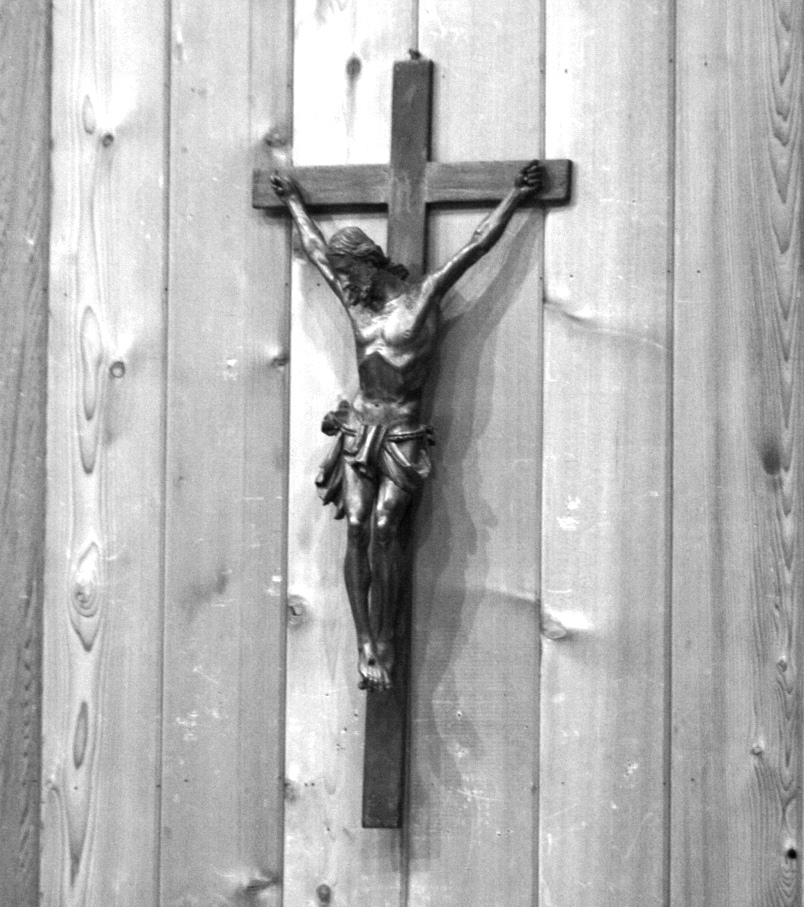
crucifix1At the abbey where I live, I preach at the Maundy Thursday liturgy and the Easter Vigil. I do not preach on Palm Sunday and Good Friday, the two liturgies where we chant the Passion. The Passion is long enough without added sermons and the Passion speaks for itself. That is, it speaks for itself as long as we don’t add things it does not say that undermine what the Passion does say.

To belabor what should be the obvious, the Passion Story tells us what human beings chose to do. Jesus chose to drive the money changers from the temple and teach the people there. The Jewish authorities chose to plot to have Jesus arrested and handed over to the Roman authorities. Judas chose to betray Jesus, thus facilitating the arrest and handing over. Pilate, to varying degrees in the four Gospels, vacillated but in the end chose to sentence Jesus to crucifixion. Meanwhile, the people who had cheered Jesus upon entering Jerusalem ended up crying for his crucifixion. The Roman centurions nailed Jesus to the cross where he died. The Passion narratives say nothing to suggest that anything that was done to Jesus, from the arrest to harassment and flogging to nailing him to the cross was in any way the will of God.

In all this, God does not do anything. Why do I bother to make a big point of this? The reason is that many Christians have suggested that God positively willed the sacrifice of Jesus for some cosmic purpose, usually because God was upset with wayward humans and was somehow incapable of forgiving humans unless somebody took the punishment for human sin. If Jesus, innocent of sin, should take the punishment, well and good. Well, not well and good. What kind of god demands punishment and doesn’t care who gets punished as long as somebody does? The Passion Story never says anything of the kind.

If God did not will Jesus’ violent death, what did God will? What was God’s plan? Jesus understood the heavenly Father’s plan to be that he Jesus knew that if he defeated Caiaphas and Pontius Pilate with force would only keep the world forever embroiled in retaliatory violence. The only way to avoid that was to gather people peacefully no matter the outcome, even if it meant death.

But Death, much as it was the plan of humans, was not God’s plan as a group of women found out early in the morning on the first day of the week.

See also Two Ways of Gathering


The First Supper

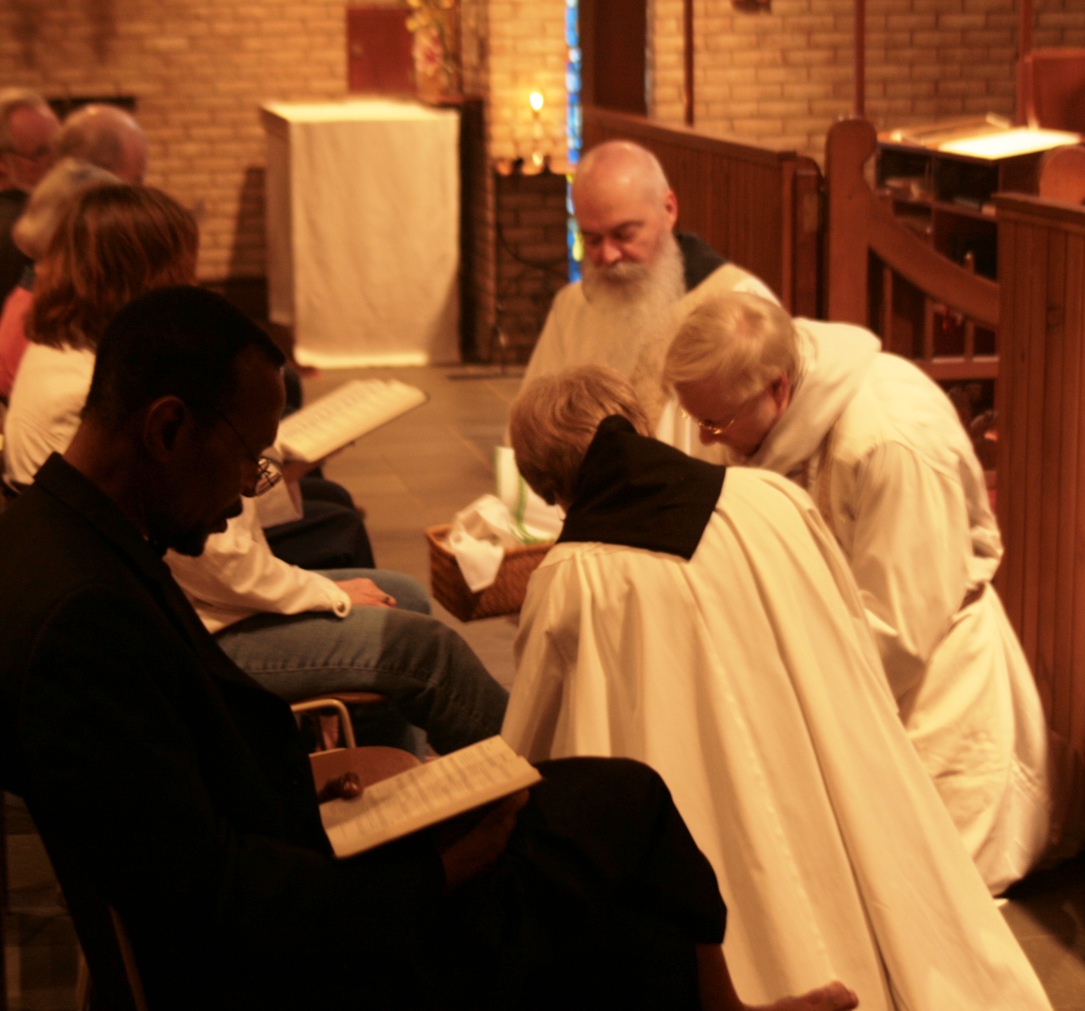
AndrewWashingFeet - CopyBy the time Jesus gathered with his disciples for what is called “the last supper,” not only had the social tensions in Jerusalem reached a point where all parties agreed that Jesus must be put to death, but the tensions among Jesus’ disciples had formed against him as well. The disciples’ fighting over who was the greatest, their incomprehension of his predictions that he would be put to death and their collective disapproval of the woman who anointed Jesus with oil all led to this point. In their current collective frame of mind and heart, there was a real possibility that all of them would either join the crowd in crying for crucifixion, or would band together after his death as a tightknit rebellious group united by resentment over the death of their leader, thus thwarting the Kingdom of God that Jesus came to proclaim. Jesus had one last chance to do something that would keep his life and intentions alive for his disciples. He did two things.

The first thing Jesus did was wash the feet of his disciples. The act was so simple that anybody could do it, even a child. If the disciples follow this simple command, they will not have time to harbor resentment over their master’s death and plot vengeance for the deed. Instead, this simple act that embodies love and concern for others will cause that love and concern to grow within their hearts and drive out resentment and a desire for revenge. If more and more people imitate each other in imitating Jesus in this action, then the entire social order of the day will crumble around the communal life that emerges through this simple action.

The second thing Jesus did was tell them to eat bread that was his body and drink wine that was his blood in remembrance of him. Jesus was not just telling the disciples that he was about to die for them. That would be comprehensible, if unsettling. Rather, Jesus was telling them that his very life was being given to them. Jesus was not giving himself as a corpse in the hope that the world might become a better place if enough people felt bad about killing him. Jesus was giving himself as a living being. Only when Jesus disciples broke bread and passed the cup of wine in memory of Jesus would they begin to realize the extent to which the living Jesus was giving them his life, life that he possessed in abundance in spite of the fact that he had been nailed to a cross and left to hang there until dead.

This is why Jesus was hosting the first supper of a new beginning for us all.

For comments on Passover see Eucharist (1) 

Crying out with Palm Branches in our Hands

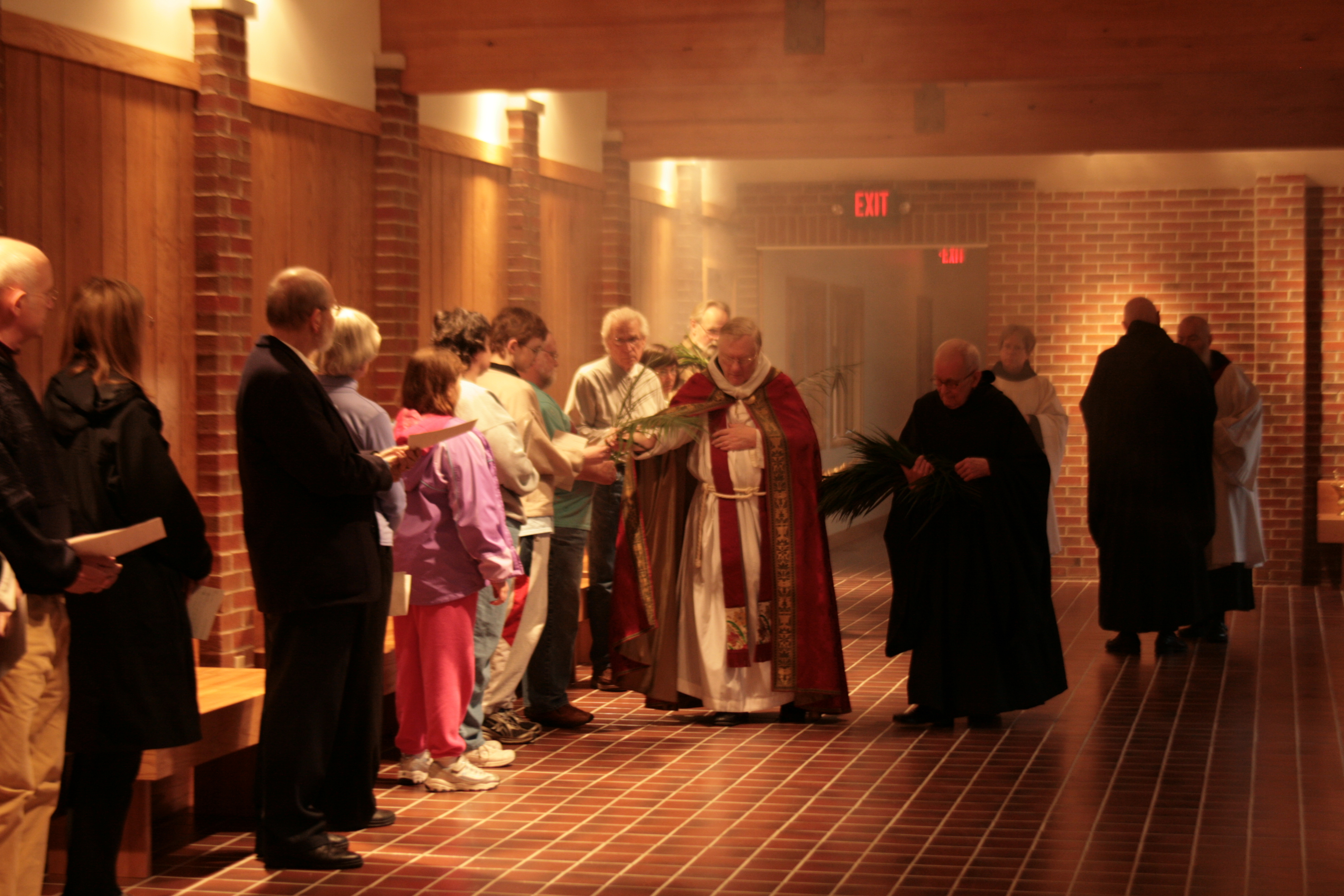
AndrewPalmSunday1Jesus entered Jerusalem to the acclaim of crowds strewing branches before him and proclaiming him the king. A few days later, the same crowd gathered before Pilate to cry out for Jesus’ crucifixion. What happened?

Before answering this question, it is helpful to recall another crowd that went out into the desert to see John the Baptist. “What did you come out to see?” John asked them. “A reed blowing in the wind?” John suspects that people have come out in droves because people were coming out in droves. That is, it was the “in” thing to do. Fast forward a few months and we have a crowd at Herod’s palace supporting Salome’s request for John’s head on a dish. What did they come to see?

The post Ignominious Glory—Glorious Ignominy: a Doxology goes a long way in explaining this phenomenon. One can’t help but suspect that people are crying out because everybody else is crying out, no matter what the outcry is about. Advertising usually does not advertise the product but its alleged popularity. Political campaigns do the same thing. What would happen if people stopped to listen to what people were actually saying instead of crying out what they think everybody else is crying out?

It so happens that the Gospels do precisely this. The suggestion that the Gospels are Passion narratives with long introductions gives short shrift to what the Gospels are about. What these “long introductions” do is tell us at great length what Jesus actually said and what he taught. They also tell us what Jesus did before he was nailed to the cross, i.e. he healed people and cast out demons and he unilaterally forgave sins. These “long introductions” also tell us why the power brokers in Judea and Jerusalem wanted Jesus dead. By reading these “long introductions” to the Passion narrative, we are drawn away from crying out what everybody else is crying out and waving signs that only proclaim what the current fashion is believed to be. Instead, we are drawn into a very different social mimetic process, a process that builds up mutual respect between people, seeing people as they really are and as they really can become when they receive the unilateral forgiveness that Jesus gives them, a social process of not retaliating for wrongs done, a socially mimetic process of forgiving debts, of sharing what we can, of offering healing to others.

It is instructive that the Palm Sunday liturgy begins with everybody playing the part of the crowd welcoming Jesus with palms and then, a bit later, we hold these palms while acting the part of the crowd in crying out for Jesus’ death during the reading or chanting of the Passion. What we need to do afterward is return to the “long introductions” to see what the fuss was about and hopefully, hear the cock crow as did Peter.

I develop these ideas in my book Tools for Peace.

Gathering to Give Life to Victims

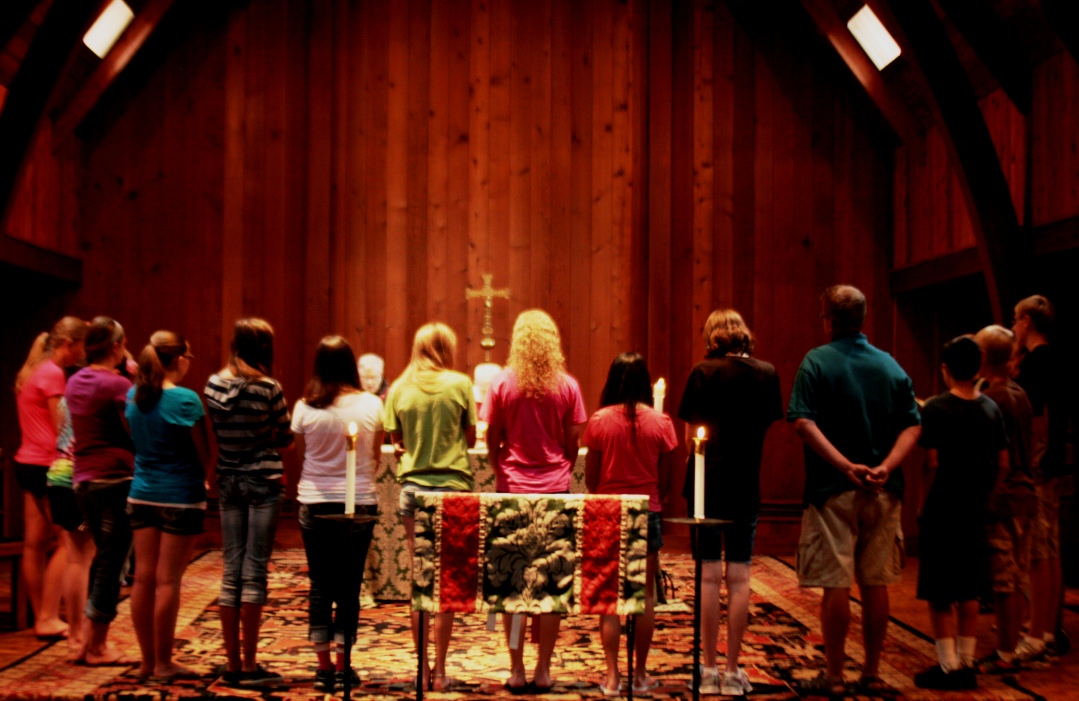
eucharist1Since the dawn of humanity, humans have gathered most quickly and powerfully around a victim. (See Two Ways of Gathering and Violence and the Kingdom of God.) Just think of how quickly we gravitate around whoever is currently seen to be to blame for whatever is going wrong in the world today. This gathering, however, is always at the expense of at least one person or group of people. A similar and yet very different gathering around a victim occurred when the eleven disciples saw the risen Jesus in Galilee and “worshiped him.” (Mt. 28:17) The huge, even infinite difference in this gathering is that the victim is alive and is gathering people around victims, “the least of those who are members of [his] family.” (Mt. 25:40) Ever since, Christians have gathered in worship around Jesus and his fellow victims, primarily in the Divine Office and the Eucharist.

The Divine Office is structured prayer that is uses the Psalter and other biblical canticles as the primary vehicle of prayer. Much can be said of the psalms but the thing that jumps out at anyone who prays them with any frequency is the many outcries of victims. “They surrounded me like bees; they blazed like a fire of thorns; in the name of the Lord I cut them off!  I was pushed hard, so that I was falling, but the Lord helped me.” (Ps. 118: 11-13) Verses such as these raise the question of whether we gather “like bees” around another person, or if we are entering the circle of bees in solidarity with the victim. Being a victim tempts us to anger, bitterness and violence. “Cutting off” our assailants in “the name of the Lord” is the reflex reaction, but is the opposite of what Jesus himself did in the same position. These rough verses help us renew our awareness of our own violent reactions to being victimized, even (especially!) petty matters such as being slighted by another. If we focus on Jesus when we are in the place of the victim, we find that the Lord has made the rejected stone the “chief cornerstone” that is “marvelous in our eyes.”

In the Eucharist, we gather around an altar which has been transformed into a table where, instead of laying out a sacrificial victim for slaughter, we place a piece of bread and a cup of wine to share among those present. We do this in memory of Jesus’ Last Supper, suffering, death, and Resurrection. The Greek word anamnesis does not mean a mere memory but to make present. That is, we enter the place of the victim with Jesus when we gather around the table. In so gathering, we feed on Jesus’ forgiveness of us for our own victimization are our challenged by this forgiveness to give this same life to others, both in terms of physical needs and emotional and spiritual sustenance. (See Miserable Gospel)

In his Rule, St. Benedict says that prayer should be made with “utmost humility and sincere devotion.” Entering the place of the victim with Jesus leads to both humility and devotion, attitudes that allow us to follow Benedict’s admonition that we sing the psalms (and also break bread in the Eucharist) “in such a way that our minds are in harmony with our voices.” (I develop these thoughts on the Divine Office in Tools for Peace)

The Prophet Between the Fox and the Hen

turkeys1We often think of a prophet as a person who speaks the word of God such as Elijah and Isaiah do, but Jesus gives us a deeper definition of what a prophet at the climax of his diatribe against the scribes and Pharisees in Mathew: “so that upon you may come all the righteous blood shed on earth, from the blood of righteous Abel to the blood of Zechariah son of Barachiah, whom  you murdered between the sanctuary and the altar.” (Mt. 23:35) Here, the prophet is one who says not a word but speaks the Word of God nonetheless in the sense that Abel’s blood cries from the ground.

This diatribe is often cited as a proof that Jesus, at least at times, was violent. It is worth noting, however, that Jesus didn’t shoot an automatic rifle at anybody; he spoke truth to presumptive power with a two-edged sword for a tongue. More importantly, these harsh words are followed by Jesus’ wish that he could gather his “children together as a hen gathers her brood under her wings.” Here we see very clearly the Two Ways of Gathering outlined in my blog post of that title.

In Luke, the lament over Jerusalem is put in a different, but similar, context. Warned by some Pharisees that Herod wants to kill him, Jesus calls him “that fox.” (Lk. 13:32) In preaching on this Lukan text, Prior Aelred here at St. Gregory’s, drew out the comparison of the fox and the hen. In the face of a threatening fox, Aelred suggested that Jesus might have been a better protector by being a tougher animal, such as the Lion of Judah. But no, Jesus assumed the role of a vulnerable hen gathering her chicks. Aelred went on to extoll Vicki Soto and her colleagues at Sandy Hook who covered as many of their small pupils with their bodies as they could to protect them, a contemporary embodiment of Christ the vulnerable, protective hen.

A fox scatters, while a hen gathers. What if Jesus had chosen to be a lion to deal with that fox Herod? It occurs to me that a lion would scatter all foxes who might threaten the chicks. Sort of like a superhero crushing the bad guys so that good guys like us can get on with our lives. Aelred noted that Jesus the Hen is not a popular image in Christian lore as is the Lion of Judah. The problem is, if Jesus the Hen gathers, then not only is Jesus the Hen trying to gather the scribes and Pharisees,  but Herod and his court as well, thus robbing us of more favorite enemies.

Celebrating the Prince of Peace

snowKatrinaCrossBW1This year’s rejoicing over the birth of the Christ Child is darkened by the recent murders at Sandy Hook School in Newton, CT. Lest I be accused of being a killjoy by keeping these two events together, let me remind you that Saint Matthew is just as much of a killjoy when he tells the story of the Holy Innocents who were killed in Bethlehem. Christmas has been darkened by human violence from the start.

When a tragedy like this strikes, it is only responsible to find ways to prevent it happen again, or at least lower the chances of it. The problem with prevention is our tendency to fall into a blame game. Some of it is absurd, such as blaming homosexuals or the banning of prayer from public schools, never mind the countless attacks on schoolchildren that predated that Supreme Court decision. Then there is the NRA. There is unquestionably a long overdue need to re-examine the ubiquity of firearms in our country but we have to dig deeper.

Which gets me to what we need to learn from the baby laid in a manger on a cold winter night. When this child grew up, he became the victim of collective violence in a tense city, the one blamed for that tension. And yet God raised this victim to prove his innocence. When Jesus encountered human problems, he did not blame people, he healed them. Even when he spoke strongly, as he did to the Pharisees, he was trying to heal them. When threatened with violence, Jesus told the disciple who drew a sword to put it back in its scabbard and stay there.

The killing of the children at Sandy Hook was violent, but the casting of blame is also violent. Hacking the Internet pages of the Westboro Baptist Church, egregious though its actions are, is only a further escalation of violence. The problem with the blame game, even when there is some truth to the charges, is that it always distracts us from other factors that are at least as important.  We all need to look at the logs in our own eyes, at the resentments within ourselves that fuel the violent tensions in our society.

The angels appearing to the shepherds sang of peace for all people. Not peace orchestrated by a violent empire, but peace emanating from the human heart that wants to protect not only Jesus from Herod, but all children from all who would hurt them, most of all, ourselves. By taking responsibility for ourselves, we make ourselves responsible to all. Then we can really celebrate Jesus as the Prince of Peace.

See also Two Ways of Gathering

Ignominious Glory—Glorious Ignominy: a Doxology

Since when is glory ignominious ? Probably since humans first became concerned about what others thought of them. Seeking glory from others is a sure way to get its opposite as  celebrities know all too well. In the New Testament the Greek word doxa is sometimes translated as “glory,” sometimes with “shame.” How can one word mean two opposite things. James Alison says that is because the word means “reputation.” What kind of reputation? Any kind of reputation.

The Harry Potter books give some interesting examples of the double-edged meaning of doxa. Harry arrives for his first year at Hogwarts as a celebrity, not for anything he had done but because he had survived Voldemort’s attack when his mother gave her life to save him. In his second year at Hogwarts, Harry is blamed by many for an epidemic of people turning into stone although he had done nothing to earn this ignominy than he had done to earn his celebrity status. In the fourth book, when Harry’s name is entered in the competition in a questionable way but through no fault of his own, there is bad feeling towards him from students of all three schools involved. (Spoiler alert!) His defeat of Voldemort has no external fireworks and he ends up with a quietly respectable position in the wizard world without celebrity status.

Bob Dylan has been praised as one of the greatest poets and songwriters of our time but he has also been the object of much ignominy with every turn in his career. He did not receive it for drugs or sex, but for using electric guitars instead of a simple acoustic guitar like a true folk singer. Then he got it for seeming to relax and live an ordinary life, as if living an ordinary life is a scandal! The worse ignominy was for turning to Christ and doing some Gospel albums.

Speaking of Christ, in his Gospel, John plays with both sides of the meaning of doxa in relation to Christ. Jesus seeks doxa from his Father while the people who put him to death or keep their sympathy for him a secret because  they seek doxa from other people. So it is that doxa inevitably falls into sacrificial violence if reputation is sought from people instead of from God. The raising of the cross is Jesus’ doxa. That is why God has such a bad reputation nowadays. Where do we look for our own reputations?

Life of Benedict

The only biography of St. Benedict is by St. Gregory the Great. Gregory highlights the ways Benedict’s life was lived in imitation of the great figures in Scripture and most importantly of Christ himself. I have posted an article called Imitating Elisha that analyzes Gregory’s Life of Benedict with René Girard’s concept of mimetic desire. The result is a rich vision of the spiritual life for any Christian.

On Expelling the Accuser, not the Victim

It seems that every time a hurricane or other natural disaster strikes, there are some religious leaders who proclaim that the disaster was a punishment from God. This is an old game. During the Middle Ages, for example, plagues were routinely blamed on the Jews or on those who tolerated their existence in the city. Interestingly, such accusations are still leveled mainly at unpopular minorities, such as homosexuals. If God is punishing New York for its wickedness, why not suggest God is punishing the city for the misconduct of financial leaders?

Does Jesus go for this sort of blaming game? On the contrary, Jesus insists that the eighteen people killed when the Tower of Siloam fell on them were not worse sinners than the rest (Luke 13:4). Jesus sounds threatening when he says others will likewise perish if they do not repent, but Jesus is not exasperated by the people killed by the falling tower, but by the people who thought the victims were greater sinners. Jesus is reminding us that the disasters that fall on other people can just as easily fall on us, regardless of how good or bad we are.

A stronger repudiation of this blaming theology comes in John 9 when Jesus’ disciples ask if it was the blind man’s parents who sinned or the blind man himself that he was born blind. Jesus replies that neither were to blame, but the man was born blind that so the “works of God might be manifest in him.” That is, nobody was blamed for the blindness, but Jesus responded to the situation by giving the man his sight.

Most important of all, Jesus was executed because he was blamed for the social unrest in Jerusalem when any historian can see numerous causes that had nothing to do with Jesus. When Jesus rose from the dead, he did not cast blame on his killers, but returned as the forgiving victim. Is it credible that Jesus would encourage his heavenly father to send hurricanes to people who don’t measure up to his standards?

On the contrary, the story of the man born blind makes it clear that that the proper response to catastrophes is not blaming but compassion. That is, we should do everything we can to manifest God’s works in the face of these catastrophes. The name Satan means “Accuser.” In Revelation 12, Satan was cast out of Heaven when Jesus was raised into Heaven. With Jesus, there is no room for accusation. There is only room for healing the afflicted and doing everything we can to prevent or mitigate further catastrophes.

See also Two Ways of Gathering and article Violence and the Kingdom of God

Two Ways of Gathering

A strange gathering of devout Jews from every nation took place a little over two thousand years ago in Jerusalem. These Jews were bewildered to hear a group of Galileans speaking in each of their languages. A new and exciting gift of understanding was unfolding in their midst. In their perplexity some thought the Galileans were drunk.

Peter explains this strange gathering by telling his fellow Israelites about a very different gathering that had taken place just a few weeks earlier where everybody conspired to crucify an innocent man. The Pharisees, Sadducees and the Roman authorities, constantly at loggerheads about just about everything, suddenly and miraculously came to an agreement to put Jesus to death.

Peter goes on to say that this man was “handed over to you according to the definite plan and foreknowledge of God” and killed “by the hands of those outside the law.” That Jesus was killed unjustly, by those outside the law, indicates that God’s plan and foreknowledge should not be equated with God’s will. To the contrary, Peter insists that the execution of Jesus was contrary to God’s will. Peter’s next announcement was even more startling: “God raised him up, having freed him from death.” The risen victim, “sitting at the right hand of God” has poured out the Holy Spirit that everybody was seeing and hearing. In declaring that the crucified and risen Jesus was the Messiah, Peter was claiming that a radically new understanding of life was being given through the Holy Spirit.

Quotations from the psalms that accompany the apostolic preaching indicate that the story of people at enmity making peace by agreeing to persecute a person is then blamed for the discord in the community is actually an old story. The opening verses of Psalm two express this old story succinctly: “Why did the Gentiles rage . . . . the rulers have gathered together against the Lord and against his Messiah.” Children do the same thing on the playground every day.

What was truly strange about the gathering by the Holy Spirit was that people were being gathered without creating a victim. Instead, the victim of just a few weeks past has risen from the dead to gather God’s people in a radically new way based on sharing God’s love for every person.

 Tools for Peace explores how Benedictine spirituality helps us live in the gathering in the risen forgiving victim.