
Uncovering the Secrets of the Secret Zoo

deer1The set of five novels comprising The Secret Zoo by Bryan Chick have achieved a good deal of popularity, and for good reason. The loving relationships between Noah, his sister Megan, and their two friends Ella and Richie are touching and inspiring. In the first book, when Megan has been kidnapped by Sasquatches who are aligned with Man of Shadows, her brother and friends risk themselves to rescue her.

The love between them extends to a group of gifted animals they meet, a polar bear, a kingfisher, a rhinoceros and a prairie dog being prominent among them. These gifted animals belong to a secret zoo, a zoo and a word hidden by the “normal” Clarksville Zoo next to the neighborhood where these children live. The world of the secret zoo appears to be an enchanted utopia when the children are introduced to it by Mr. Darby. Humans and gifted animals live in a unified culture where both are equal and creativity bursts out in the architecture of the buildings, especially the library that is overwhelming in its awesomeness.

Usually there are some serpents in paradise and this proves to be the case here. The Secret Zoo is haunted by De Graaf, the Man of Shadows, a man who has lost almost all substance except from what he can steal from the shadows of others. (A good illustration of the parasitical nature of evil.) When it turns out that De Graaf is responsible for finding the magician brothers who created the Secret Zoo, the whole world becomes problematic.

Unfortunately, there is more that is disturbing. A group of four teenagers, called Descenders, who turn out to have powers connected with animal powers, are assigned the job of training the scouts as crossers (people who cross between the normal world & the Secret Zoo). The Descenders treat the scouts badly with heavy doses of condescension, but when three of the Descenders are captured in Book IV, it is the Scouts who help to rescue them, thus returning good for their ill will.

More disturbing is the growing awareness of how revenge motivates the Descenders, a group of girls called Specters because they have trained chameleons to cover them and render them invisible and Mr. Darby himself. Revenge for what? An earlier war that expelled the sasquatches doesn’t seem to explain it. At the end of the series, we do not yet know what the revenge is for. Perhaps this is a way of reminding us that revenge is, in the end, always empty. Most disturbing is the growing realization among the scouts that Mr. Darby, for all the benevolence he has shown, is looking more and more like a mirror image of De Graaf, the Man of Shadows. In all of this, we have four children whose loyalty to each other and other friends create a nexus of good mimesis (shared desire centered on the good of the other)

So it is that the series does not end on as triumphant a note as one might like, thus leaving the door open for at least one more series, which the author is indeed working on already.


Jesus Explodes with Life: His Reply to the Sadducees

buddingTree1When the Sadducees approach Jesus in the temple with their question ridiculing resurrection from the dead, they are part of the collective violence surrounding Jesus. This is not a polite debate to entertain viewers on evening TV. The Pharisees have just asked their question to entrap Jesus and triangled in the Roman authorities to boot. Groups of people who normally hate each other but have united against Jesus.

Their question zeroes in on the practice of Levirate marriage, where the younger brother of a man who dies childless marries his brother’s widow. This practice presupposes that one is dead when one dies and that immortality is gained only through one’s offspring. Even this ploy fails in this case as all seven brothers die childless after having married this poor widow. No immortality there. Jesus is trapped. Or is he?

Jesus reply, referring to the words spoken by God through the burning bush, is universally admired for its clever exegesis of a text from Torah that the Sadducees would have to accept as authoritative. But there is much more here than declaring that God is a God of the living. In Raising Abel James Alison explodes this reply by saying that the power of God which the Sadducees do not understand “is that of being completely and entirely alive, living without any reference to death. There is no death in God. God has nothing to do with death, and for that reason facts which are obvious to us, like Abraham, Isaac and Jacob having been long dead at the time of Moses, simply do not exist for God. Let’s put this another way: for us ‘being alive’ means ‘not being dead;’ it’s a reality which is circumscribed by its opposite. For God this is simply not the case. For God being alive has nothing to do with death, and cannot even be contrasted with death.”

These words pack a wallop that throws us through at least seven spheres of being teeming with life. Alison is surely not suggesting that Abraham, Isaac and Jacob are counting the days off their celestial calendar! This is about quality of life, eternal life as Jesus means it in John’s Gospel.

Let us revisit the question with these stirring words in mind. There is a second way that marriage is used as a way to defeat death besides having offspring. Marriage is a means of restraining mimetic rivalry by placing the partner off limits to all others. Otherwise, everybody might kill everybody fighting over sexual partners. In the context of seven brothers, this is especially important and incest laws add extra restraint on the brothers of the bride who might be especially presupposed to rivalry. The premature death of the older brother changes the picture and suddenly the wife goes to the next brother in line. This is not a good way to win a game of mimetic rivalry, however, as the offspring still belongs to the older, the dead brother and not to the younger brother who is still alive. The Sadducees’ hypothetical case adds to the mockery by imagining that the seven brothers meet up with this poor widow in the resurrection and fight over her like dogs fighting over a bone, presumably with no end in sight. (The widow doesn’t matter much in this scheme of things.)

Jesus explodes all this by saying that there is no marrying or giving of marriage in Heaven. There is no bride to fight over after all. There is no longer anything whatever to fight over. Just try to imagine life without having something to fight about! The image of Jesus as the Bridegroom and the Church (that’s all of us) as the bride suggests that the intimacy of marriage is a good shared by all without need of restraints of any kind. Like the Sadducees, we are profoundly mistaken about the power of God as long as we cling to the rivalries of the seven brothers.

Caring for the Dead (Thoughts for All Souls Day)

cemetery1The most solemn and moving chapter in Søren Kierkegaard’s remarkable book Works of Love is “The Work of Love in Remembering One Dead.” Throughout this Book, Kierkegaard models love on God’s agape, love that is not transactional and therefore requires nothing in return. After exploring such self-giving love in live human relationships at length, Kierkegaard avers that “the work of love of remembering one who is dead is a work of the most unselfish love.” This love, according to Kierkegaard is the purest love because it is nonreciprocal; the dead “make no repayment.” This is in contrast with love for newborn children who also cannot repay as the love freely given to newborns has the potential of being repaid in the future as the child matures.

However, the dead are not as dead as Kierkegaard seems to think as the dead continue to live in us in a dynamic way that can be enriching. Caring for the dead, as does caring for any live person, tends to lower resentment if there happens to be any to start with. This often begins when a person dies. We often say we should not speak ill of the dead. The instinct behind this adage is that sympathy for the dead person, warts and all, tends to kick in automatically, making the release of resentment and forgiveness free gifts from God that we can pass on to the dead. There is something about death that helps us see that person as God sees him or her, and God sees everybody, without exception, with forgiveness and freely-given love.

Resentment makes any relationship destructively static. God is completely boxed out of the relationship. Which is a way of saying the resentment creates an idol out of the one who is resented. That is, the resented person becomes central to one’s life and God does not. The lessening of resentment allows a relationship to change. This is just as true of a relationship with a dead person as it is with that of a person still alive. This dynamic allows us to understand aspects of the person we had never understood before. Giving this dynamic free reign with a dead person frees the dead person to reciprocate in a way because the dynamic of increased sympathy and understanding is so rewarding.

Caring for the dead includes commending them to God. When we do this, we become more aware of how deeply God loves both the dead and the living and that this love spurs a desire for change until one has reached the fullest potential (teleios in Greek, a word suggesting finality). If this is what God desires, then it should be what we desire for the dead and the living, including for ourselves. Of course, it also follows that the dead desire the same. And so it is that the dead, living with God, can give us much more in return for our care than we can give them.

See also “Living with the Dead.”

Mimetic Laughter

outsideSupper1Laughter is one of the more pleasant things in life, but is it just a frill? In his book The Phantom of the Ego,” Nidesh Lawtoo discusses the importance Georges Bataille attached to laughter for the emerging consciousness of a newborn child. Laughter is one of the first things a baby learns in imitation of a mother, father, or other caregiver. So it is that laughter comprises the first bond a newborn child makes. Interactions with babies may seem silly, something to be transcended with intellectual maturity and so we don’t value laughing with babies.

At its best, laughter is spontaneous and infectious. How many times do we laugh without knowing why, just because other people are laughing? When children are laughing helplessly as part of playing, happiness spreads to everyone around them. We don’t want to be left out of the joke, even if we don’t know what it is. Just think of some of our best times when we laughed with family and friends with no other reason than we were together and we got caught up in laughter.

There is a darker side to laughter, however. Actually it is a darker side of us and our mimetic desires, rather than a darker side of laughter. Often laughter is used to wound others, to score points against others, to put others down to lift ourselves up. Almost as soon as they learn how to speak, small children use laughter in this way. School playgrounds are filled with this sort of thing. Children learn all this from their elders, of course. Just as they imitated the spontaneous laughter of those around them as infants, they imitate the cruel humor that surrounds them as they grow older. Unfortunately, children usually learn this mode of laughter through being shamed by adults who think ridicule is a good way to train children for the hard knocks of life. Laughter continues to be a bond between people, but it is a bonding at the expense of someone, a butt of jokes, a victim.

When he discourages laughter as a sign of pride, St. Benedict certainly had this darker side of laughter in mind, although it is possible that he had a blind spot for the value of spontaneous, bonding laughter. Certainly, when laughter is a put-on act to gain attention, it is the opposite of spontaneous and it is a prideful act, an act seeking to dominate by drawing attention to oneself at the expense of others. I discuss this at length in my book Tools for Peace.

We get so habituated to using laughter as a weapon instead of a bond of love that we hardly know what the latter is. One way back is to use the wit we acquire to learn to laugh at ourselves and help others laugh at themselves. At its best, a comedy does just that. In Mozart’s “The Marriage of Figaro,” discussed in an earlier post, laughter is used as a means to overcome mimetic triangles and tensions and bring reconciliation. Shakespeare does this sort of thing masterly in comedies such as “Twelfth Night” and “As You like It.” In “The Merchant of Venice,” Shakespeare sets a trap for the unwary, leading us into joining the persecution of Shylock before unmasking this derisory laughter for what it is.

Life is too serious and awesome a thing to be left to sourpusses who always want to be on top of somebody else. We all need heavy doses of spontaneous, selfless laughter shared with others.


Renouncing Resentment

buddingTree1Since resentment keeps us locked into the groups and individuals who feel have hurt us, it behooves us to let go of our resentments, as I suggested at the end of my post “Resentment: the Glue that Keeps us Stuck Together.” As everyone who has tried it knows, letting go of resentments is one of the greatest challenges in life. Concentrating on letting go of our resentments is counter-productive as this technique keeps us focused on the very thing we are trying to get rid of. It is like the childhood game: Try to get through one minute without thinking of strawberry shortcake. Obviously, all one can think of for the next minute is strawberry shortcake.

The thing to do is think of something else, and/or think of the sources of our resentments in a new way. At the end of my last post, I gave an example of the latter by bringing in St. Paul’s recurring admonition to think of others and their needs ahead of our own. We can often gain a degree of sympathy of the people we resent if we see some of the brokenness they suffer and see our own brokenness mirrored in them. (It is this mirroring effect that often makes us wish to escape this truth through projecting it on to others.) The something else that is most effective for redirecting focus is, at least for a Christian like me, Jesus the Forgiving Victim. The emphasis here is on “forgiving victim.” Far too many Christians have used the memory of Jesus’ death as a cause for resentment with tragic results.

Actually, thinking isn’t really the way to handle resentment because resentment isn’t a matter of thought; it’s a much more visceral phenomenon. It isn’t that we decide to be resentful because it’s a nice thing to do and we can decide to stop being resentful at the drop of a wish. Resentment is something that grabs us before we know it has grabbed us and resentment does not loosen its hold on us easily. It is as if resentment, like a virus infecting one’s body, has its own blind urge for survival no matter what damage it does to anything else. So, when I talk about redirecting attention to Jesus the Forgiving Victim and to the people we resent in the light of Jesus who has forgiven them as much as He has forgiven us, I mean that we have to undergo a revolution of the whole, embodied person. I didn’t say that we should initiate the revolution; I said we should undergo it. That is, we have to let go in a very deep way so that the Desire of the Forgiving Victim can become our visceral desire, a desire much deeper than the desire of resentment which is locked into the same resentful desire of other people.

Basic spiritual practices such as liturgical prayer, deep reading of scripture and meditation (contemplative prayer) are, or should be, practiced at this same deep visceral level so that they can open us up to being filled with the Desire of the Forgiving Victim. Praying with others is a means of being in a group that gains cohesion by praying without resentment rather than persecution, which breeds resentment. The more solitary practice of meditation is still made in solidarity with others, thus seeking to relate us to God and other people without resentment. In a short blog post, renouncing resentment sounds like a simple matter. Well, it is simple, but it takes years of devoted practice.

Each time we allow the Forgiving Victim to remove any resentment we harbor, we glimpse a bit more of the new Heaven and the new Earth coming down from Heaven into the midst of our lives.

[I discuss spiritual practices in reference to the Rule of St. Benedict in my book Tools for Peace]

Resentment: the Glue that Keeps us Stuck Together

fireworksBeing carried away by the contagion of the crowd is an obvious enough danger to some of us try to escape this danger by avoiding whatever the Crowd does. People who reject the Crowd are often people who have been rejected by the Crowd, such as those of us who failed to be in the “in” group at school. The position of an outsider easily becomes a jaundiced view, a “sour grapes” kind of view that sees how silly the Crowd is or how dangerous it is or could become if it needs to reinforce its cohesiveness through going beyond ostracism to persecution. For one who sees these dangers, it seems that all one has to do is reject the Crowd and become independent, free of the contagion that has engulfed everybody else.

But how free are we when we reject the Crowd? Not as free as the one who tries it thinks. Rejecting the crowd sucks us back into it at least as firmly as it sucks those who mindlessly allow themselves to be carried away by it. Actually, the attachment is usually even stronger than it is for the one who is carried away because rejecters are obsessed with what they reject. The name for this attempt at alienation is resentment.

What I have said about mimetic desire and the connections it creates with other people as soon as we are born and are capable of conscious thought tells us that we simply cannot, no matter how hard we try, break off these connections with others. Trying to pull away only adds to the tension, like a stretched rubber band, only the rubber band of mimetic desire is unbreakable. This is why children and teens who are relegated to the “out” group remained tied to the people who rejected them. Both the rejecters and the rejected use each other to define themselves. It is the scenario of the royal family who does not invite their unpopular relative to the child’s christening and the rejected relative comes anyway, bearing a curse that immobilizes the kingdom. Likewise, the tension of resentment freezes a social system, leading to a breakdown such as happened with the US government this month.

Resentment, then, tends to make the resenter the mirror image of the crowd. The resenter hates everything the crowd likes and does because the crowd likes it and does it. The resenter is prone to persecuting the crowd in thought and sometimes, tragically, in deed as much as the crowd persecutes its victims. When resenters get together to form their own anti-group, they tend to reproduce the persecutory dynamics of the crowd. I should, know, my high school memories are filled with this sort of thing from the viewpoint of a resenter.

The bottom line is that we cannot gain freedom from others by pulling away. We only tighten their hold on us and ours on them. Neither can we gain freedom by seeking power over the crowd by being the one who sways the crowd. The crowd sways the leader as much as the leader sways the crowd. The only way out I can see is to seek to gain freedom with other people. Following St. Paul’s admonition to think of the needs of others is the way to do this. In seeking the needs of others, we seek their freedom. We can only do this by letting go of resentment. Seeking the freedom of others leaves us vulnerable to those who do not reciprocate. However, by renouncing our own resentments, we already gain a measure of freedom that cannot be taken away from us. It is this freedom that makes it possible for us to use our connectedness to others to move the social system in a dynamic of mutual giving and receiving.

See Mimetic Desire and Mimetic Rivalry

Cast Out by the Outcasts

altarDistance1Jesus encounters the ten lepers between Samaria and Galilee. Luke often uses geography to point to a spiritual landscape and this is a particularly apt example. Jesus meets ten marginal people in a marginal space. The broader geography is that Jesus has “set his face” to Jerusalem, the center of meaning and power, where he will be crucified.

But some outcasts are cast out more than others. One of the lepers was a Samaritan who would presumably be marginalized by his marginal companions. Sort of a double whammy.  In this marginal place, Jesus tells the lepers to go to the center of power, to the very people who have declared them unclean, for validation that they are clean. I can’t help but suspect that Jesus was being sarcastic, grumbling at the lepers to find out how they really want to be “healed.” When they suddenly find themselves clean, only the marginalized Samaritan returns to Jesus, who is still standing in the marginal space. That the other nine would go straight to the priests, at the center of power, is the strongest indication of how the Samaritan was treated by them. The Samaritan was healed, not only of leprosy, but of the social and religious system that required that some people be declared unclean so that others can be “clean.” This is the healing that the other nine former-lepers miss out on.

Jesus and marginality come up so many times in the Gospels, giving us the occasion to preach about it many times, that it starts to sound like a cliché. Instead of falling asleep, we need to wake up and really listen. Surely the Gospels hammer this theme so many times because we need to be healed of being hard of hearing.

This story prompts us to reflect on what we do when we find ourselves in marginal positions, having been cast out and declared unclean in some way. Do we band together with other outcasts in a constructive way? Or do we band together in resentment at the establishment? Does our little outcast group amount to a mini-establishment with people divided between clean and unclean? Do we run back to the establishment that exiled us if we get a chance to do so?

That only the Samaritan returned to Jesus to thank him raises the question of what causes gratitude and what hinders it. I suggest that a system that divides people between clean and unclean inhibits gratitude. When we live with this kind of mindset, we inevitably feel entitled to our advantages and delude ourselves into thinking we have earned them. We also inevitably feel that lepers have “earned” their marginalization. If returning to the center of power is what we want, then gratitude is the last thing we feel if we manage to do just that.

Of course, the Samaritan had to advantage of not having the same option of going to a priest to be declared clean as his fellow lepers did. Being cleansed wasn’t enough to take him out of the margins. Remaining in the margins gave him the opportunity to give Jesus another look and let Jesus be the one who decides if he is clean or not. Giving Jesus this sort of authority is an exhilarating thing to do. It is also dangerous. Jesus just might tell us that not only is each one of us clean, everybody else is also clean and we have to live without our lepers.

Mimetic Desire and Truth (5)

???????????????????????????????????????????In my last post, I showed how the premiere place for perceiving truth, the place of the victim, has been distorted. The problem is, if a person in in the place of the victim deals with it by making victims of others, as so many abused people have done, then that person is no longer in the place of the victim and has lost “the intelligence of the victim.” Unfortunately, such people are so caught up in feeling entitled to make victims of others and with the mimetic rivalry I mentioned as to who is the greatest victim, that do not know that they do not have the victim’s “intelligence.”

The revelation of the true victim in the Gospels is very different. Jesus was not only the innocent victim; Jesus was the forgiving victim. No wishing for the limbs of his enemies to tremble or shake or that they be swept away, greenwood or dry, as the Psalmist wished for him! It is Jesus’ forgiveness which gives him a true view of humanity so that he saw the potential for Matthew and Zacchaeus and, after his Resurrection, of Paul when nobody else did. The place of the victim, then, is the place of truth when the victim is forgiving.

When the victim is forgiving, as Jesus was, is, and will be forever, then mimetic desire takes a sharp turn away from rivalry and moves again in the expansive direction of sharing. The forgiving victim does not pose as the greatest of victims; the forgiving victim only wants healing for everybody, including and, especially for the victimizers. The desire that the forgiving victim shares is a desire for the well-being of all, a desire that does not allow for rivalry as rivalry would undermine this desire of universal healing.

In a sense, we have come full circle from where I started with expansive mimetic desire that initiates young people into food and games and art and many other things that are good and desirable. This original mimetic desire, if we wish to call it that, is akin to the good of creation. We were created with mimetic desire for precisely this purpose. The universal fall into mimetic rivalry and its ensuing social crises is Original Sin. (Note the mimetic rivalry between Adam and Eve, Cain and Abel and humanity’s rivalry with God by building the Tower of Babel.) The recovery of expansive mimetic desire through Jesus the forgiving victim is restorative and redemptive. St. Paul said repeatedly the Christ’s redemption did not return us to original good creation; it brought us to a whole higher level of well-being that is grounded in forgiveness.

Since truth is grounded in creation, it follows, as Thomas Aquinas demonstrated, that the truth of things resides in the mind of God. That is, God sees what God has made and knows the depths of all that God has made in all truth. Insofar as we humans see things as God sees them, we see them truly. Our growing awareness of mimetic desire, however, shows us that seeing the truth is not a solitary endeavor; it is a corporate matter. Only through the expansive mimetic desire of sharing what is desirable can we, together, have a reasonably accurate apprehension of truth. Since truth is grounded in God, God becomes a partner in this corporate effort. Given the fallenness of humanity through rivalrous mimetic desire, it is through the forgiving victim that we can recover a vision of the world as God sees it in all its profound desirability.

See Mimetic Desire and Truth Series

See Mimetic Desire and Mimetic Rivalry for all posts on this topic

Mimetic Desire and Truth (4)

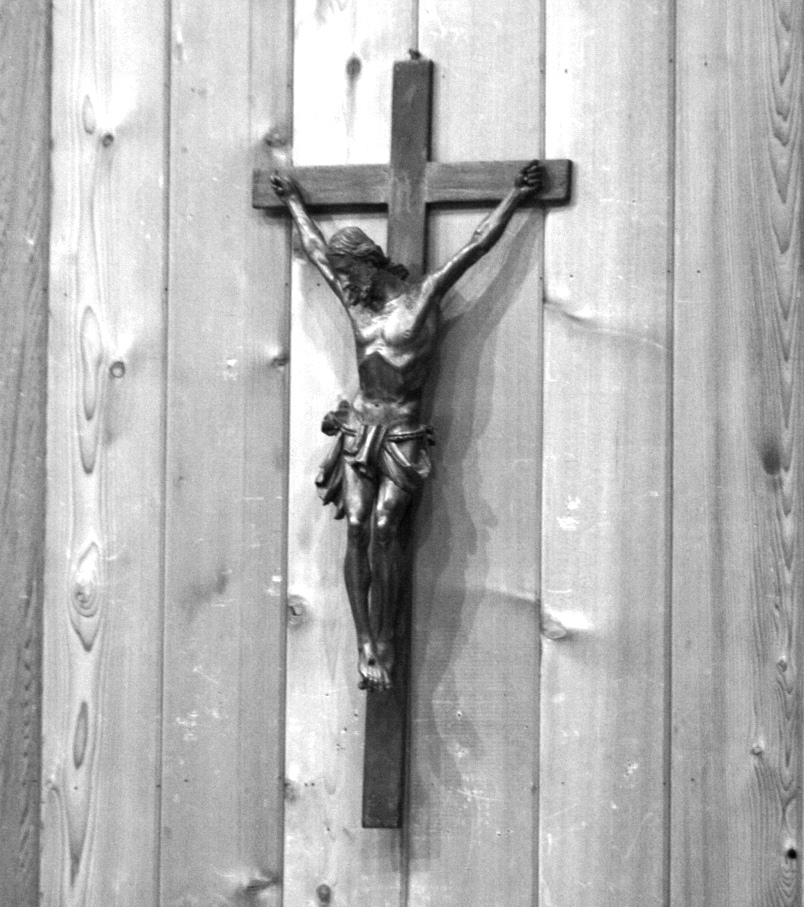
crucifix1In my last post in this series, I noted that mimetic rivalry inevitably distorts truth and that it creates victims. The mutual involvement of rivals with each other precludes their seeing each other truly and it makes them oblivious to the people who are affected by their rivalry. René Girard has demonstrated about as well as it is possible when examining the human behavior at the dawn of civilization that social meltdowns were resolved by collective violence that were covered up by myths that obscured the reality of what had happened. When Jesus said that the devil is a murderer and a liar from the beginning (John 8:44) he was not talking about a supernatural figure who was doing the damage; he was making an anthropological statement about human responsibility. That is, the violence of mimetic rivalry inexorably leads to mendacity. Philosophers might quibble with each other about where the limitations of the human intellect are for perceiving truth, but the real problem with perceiving the truth is rooted in the human will. The more involved we are in mimetic rivalry, the less truth we can see.

These considerations lead to the conclusion that truth is found, not in some fancy theory of human knowledge, but in the reality of the victim. It is this reality that is revealed in the numerous psalms of lament where the psalmist is constantly surrounded by enemies who blame him or her for all of the calamities inflicted upon the people. This truth is definitively revealed in the Passion narratives of the Gospels where Jesus is revealed as the innocent and forgiving victim vindicated by God. Andrew McKenna called it “the epistemological privilege of the victim.” Some privilege! James Alison coined the term “the intelligence of the victim.” René Girard consistently deflects postmodernists who insist there is no center of truth anymore by pointing to the reality of the victim as the starting point for perceiving truth.

This sounds simple but mimetic rivalry has twisted this truth in some subtle ways. In a way, the Gospels did the job of revealing the truth of the victim too well. As far as I can tell, nobody, not even Socrates, cared to be in the place of the victim before the Gospels were written. By the beginning of the twenty-first century, the most intense mimetic rivalry is precisely over who is the greatest victim. Everybody, every social group wants to be the most victimized victim and to hold that position at the expense of all other victims. CEO’s who rake in millions of dollars in bonuses while they ruin the finances of thousands of people claim to be victims when they become objects of opprobrium. Well, objects of opprobrium are victims, but they don’t know what they are doing. In every conflict between social groups or between individuals, each side, each person is very much aware of the truth of their own victimhood. What none of these people see at all is the truth of the victimhood of their enemies. Least of all do rivals over victimhood see the victims that their rivalry is creating.

The key to truth, then, has become violently distorted in our time. Fortunately, there is more to this key than what we humans have done to it and we will revisit this key in the final post of this series.

Continue on to Mimetic Desire and Truth (5)

See Mimetic Desire and Truth Series

See Mimetic Desire and Mimetic Rivalry for all articles on this subject

The Good Shepherd in the Desert

goodShepherdIf Jesus is the “living interpretive principle of scriptures, as James Alison says, then the Parable of the Good Shepherd who leaves the ninety-nine to search out the one lost sheep should be a powerful and accurate interpretive lens for other passages in scripture.

In the RoCa lectionary, this Gospel is coupled with a tense episode in Exodus 32. As he comes down the mountain with the tablets of the Ten Commandments, he finds that Aaron has set up a golden calf for the Israelites to worship. God tells Moses to get out of the way so that his wrath can “burn hot against them.” Doesn’t sound like a good shepherd.  Instead, it is Moses who acts out the part of the good shepherd by interceding with God, as Abraham did earlier to avert the divine wrath from the people. At the end of this same chapter, there is another narration of Moses coming down the mountain. This time, he is so furious he breaks the tablets and then rallies the Levites to his side to slay thee thousand people who were worshipping the golden calf. Although Moses claims to be doing God’s work, what we have is a narrative of human rather than divine violence. Moses doesn’t look like a good shepherd this time, but the morning after this monstrous slaughter, Moses intercedes with God to forgive the people although it is a bit late for the three thousand who were slain. This strange doubling of narrations seems to point to a debate in the Jewish tradition moving in the direction of unveiling God’s love for God’s people.

In 1 Corinthians 10, St. Paul refers to this incident by saying “we must not indulge in immorality as some of them did, and twenty-three thousand fell in a single day.” (He ups the death toll.) In isolation, this is about the chilliest verse in the Pauline epistles but in its sacramental context, it is much more in keeping with Jesus the Good Shepherd. Leading into this verse, Paul says that “we were baptized into Moses in the cloud and in the sea, and all ate the same supernatural food and all drank the same supernatural drink.” This, in turn, recalls the reinterpretation of the Flood in 1 Peter where the water corresponds to the baptism that delivered Noah and his family and delivers us now. The Genesis story clearly indicates a social meltdown with a few, probably the intended victims, escaping. The Exodus story refers to the social meltdown in Egypt that lead to the expulsion of the Israelites. In the desert, the Israelites had their own social meltdown centered around rivalry between Moses and Aaron. (Arnold Schönberg’s opera Moses and Aron portrays this rivalry with great insight.) For both Peter and Paul, baptism is the deliverance from the surrounding sacrificial society into the Kingdom centered on the Eucharist, the new way of gathering without need of victims and certainly not needed the slaughter of three thousand. Paul is not, then, warning his readers against a wrathful deity but against a wrathful society that will engulf them if they return to its sacrificial ways, just as a relapse into the wrathful society of Egypt lead to a meltdown in the camp and the deaths of thousands.

Jesus the Good Shepherd does not strike dead those who re-enter a sacrificial society that today manifests hardness of heart to the extent of trying to prevent fundamental ministries such as feeding the hungry. Instead, Jesus enters into the heart of the society to bring back all who are lost. Rather than starting a bloodbath, we should intercede for all such people as Moses did and follow Jesus in searching for the lost.

See also: The Communal Good Shepherd