Hope as Inheritance

churchDistanceBlossoms - CopyThe faithfulness of Jesus opened up a new way of living, a way hitherto inconceivable. In this way, Jesus is a pioneer of faith, as the author of Hebrews tells us. (See Faith as Faithfulness) A pioneer blazes a trail that others can follow which otherwise would be either very difficult or downright impossible. In some ways, Abraham had a harder time blazing the trail in that he didn’t even have Jesus to follow, but as Jesus says in John, Abraham followed Jesus’ trail retroactively by seeing Jesus and rejoicing. Abraham rejoiced in Jesus when he saw the ram caught in a thicket by its horns and understood what that meant. As Kierkegaard argued, it was not the willingness to give up Isaac that constituted faith but his belief in the promise made to him that his descendants would be as numerous as the stars in the sky and the particles of dust on the earth.

Abraham’s faith was grounded in hope, but it was not hope in the subjective sense in which we hope things will turn out okay. That is the hope we have when we read a story, say a story about a boy or young man who is about to be sacrificed, and we hope the boy somehow escapes that fate. Likewise, we might read the Gospels hoping that the hero escapes the cross, but he doesn’t and our hope is dashed. But hope is not dashed at all.

In a provocative paper, James Alison helps us redefine hope. By that I mean Alison helps us see how Jesus has redefined hope. To begin with, redefined hope is grounded in the death of Jesus that seemed to blot out all hope. Jesus’ being raised from the dead might be enough to revive hope in the subjective, “hopeful” sense but that did not redefine hope. What does redefine hope is that the risen Jesus adopted all of us as brothers and sisters so as to make all of us adopted daughters and sons of Jesus’ Father. Alison picks up on the dynamics of inheritance and runs with it. When his mother died, the family inheritance entered the process of coming to him and his two siblings, same as it does when we inherit from our parents. Alison and his brother and sister had not actually inherited the estate right away, but they already were placed in new status because the transition of transferring the estate was in process and one day it would be completed, which it was one fine day. They weren’t “hoping” they would get the estate; the estate was already theirs.

If we return to Abraham and Sarah, we see that their faith became strengthened by hope when they understood that the promise of heirs meant that they had already been made the progenitors of countless descendants even before the first descendent was born. It was because of his prearranged status as a forebear that Abraham could see the ram for what it was, at which point he also understood what the culture he was being led to was all about: that it was about sparing the sacrificial victim. Even when it looked like he would have no heirs after all, Abraham acted like the progenitor God has already made him to be and so he spared Isaac.

With us, the pre-established status is the opposite. We are not progenitors but heirs. This is why faith is the substance of things hoped for; the proof of things not seen. (Heb. 11:1) The substance is the testament of our inheritance. Alison says this substance is a demonstration of what is not seen. The change of status as an heir has already changed us: “At the testator’s death, the promised inheritance is substantially mine even when it is not yet in my possession, and because of that, I already now find myself starting to become a publicly visible demonstration, a reliable sign of what is on its way. Who I am is objectively being altered as someone else’s promise, their desire, moves towards its fulfilment in my reception of it.”
Let us follow this anthology further. Imagine a ten-year-old son of the owner of a vast estate who is the heir of that estate. Because of this status, although he is not yet the owner of the estate, his father takes him around to begin teaching him how to run the estate: how to handle the workers, make sure the foremen order supplies at the right time, etc. This boy spends time learning these things because he is the heir.

Now let us change the story the way God changed it. Imagine being one of the workers in the vineyard of this vast estate who is sweating profusely while the well-dressed boy coolly walks by with his father on his tour of the place. Imagine further being caught up in the rebellious fervor that spreads among the workers so that you go on strike and allow the grapes to grow wild. When the son, grown into a young man, comes to collect the produce, you join in the attack and kill the heir. Then comes the reckoning. You and your fellow workers are brought to the magistrates and you expect to suffer a grim fate for what you have done. To your shock, the son you had killed shows up at the court, very much alive, although the wounds inflicted on him are still there. This really has you shaking in your boots. But to your further shock, the father gets out his will and announces that the vineyard was bequeathed not only to the son but to all of the workers. More shocking still, the father and his son assure welcome all of you back to work in the vineyard as joint owners. As fellow heirs, you are ready to act like an heir who will work to keep the grapes from growing wild so as to produce so much wine for the wedding feast that they will never run out. So it is that hope, far from wishing for a happy ending to the story of the workers in the vineyard, is, in Alison’s words, “ a realignment of our whole way of being towards what really is, as what really is begins to manifest itself in us.”

Proceed to Love as Ultimate Respect

Christian Community (6): The Church as Bride of Christ

NewJerusalemAnother biblical image of the Church is the Bride of Christ. Paul admonishes husbands to love their wives “just as Christ loved the Church and gave himself up for her in order to make her holy by cleansing her with the washing of the water of the Word so as to present the church to him in splendor, without a spot or winkle of any kind.” (Eph. 5:25-27) Here, Paul interweaves the image of spouse with that of the family as a whole with its hierarchical aspects. Before taking too much umbrage at the apparent subordination of women to men in these verses, it is important to note the Christological dimensions of these admonitions. The husband is the head of the woman as Christ is the head of the Church. That is, the husband must first subordinate himself to Christ before he can properly function as the head of anybody else. By saying that Christ gave himself up for his bride, the Church, Paul makes it clear that subordinating oneself to Christ means subordinating oneself to the self-giving of Jesus, a self-giving that took him to the cross. This doesn’t leave any room for dominating anybody in a domineering manner. Indeed, although parents have authority over children, Paul cautions against “provoking them to anger.” (Eph. 6:4)

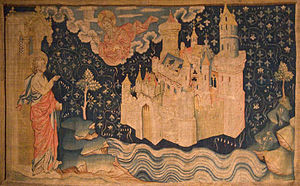
In Revelation, the seer sees a new Jerusalem “coming down out of heaven from God, prepared as a bride adorned for her husband.” (Rev. 21:2) This deepens the Christological dimensions of the bridal imagery for the Church. Throughout this book, the seer sees imperial violence for the destructive force that it is and its inevitable collapse under its own violence. Meanwhile, although the Lion of Judah was announced to make an appearance, presumably to exact divine vengeance, which is what most people expect and hope for, what actually appears is “a lamb appearing as if it had been slaughtered.” (Rev. 5: 5-6) That is, just as Jesus confounded the peoples’ expectations of what kind of Messiah they would get, the risen Christ confounds these expectations yet again, which is precisely what the risen Christ died when he ascended to Heaven and sent the Holy Spirit.

There is a paradox in this bridal imagery because, although  spouses are fundamental to families, they share an intimacy that other members of the family simply cannot share. In fact, the fecundity of the spousal relationship, that most usually manifests in producing children but can take many other forms for nurturing other people, requires the unsharable intimacy at its core. I have noticed acts of intimacy among spouses that go beyond physical acts of affection that show the depth of their union, such as sharing food off each other’s plates at meals. This is something I notice when I am the table server at the monastery.

The Church, as Bride of Christ, is foreshadowed by Hosea who married a prostitute and remained faithful to her throughout her infidelities. The prostitute, Gomer, stands for unfaithful Israel and for unfaithful us to this very day. More positively, the Church as bride is also foreshadowed in the Song of Songs where the playful hide-and-seek games of the lovers celebrates the hide-and-seek games we play with God and God plays with us.

The stronger paradox of the image of the Church as Bride of Christ is that every member of the Church shares the marital intimacy with God. That is, we share marital union with Christ and with each other. In this way, the image of the church as “living stones” is personalized in a deep union through mimetic resonance with one another in Christ’s Body. It is this image we see acted out at the Wedding at Cana where Jesus is the bridegroom and we are the Bride. The deeper we move into brideship with Christ, the more subordinationism among humans melts away and we experience our fundamental equality and unity in Christ. Within this union, Christ is the head of each and every one of us in an intimacy beyond our imagining even at times we experience in in fleeting moments.

See also: Christian Community (3), Mimetic Resonance, Strange Wedding

Her Gates Will Never Be Shut

JerusalemIn Her Gates Will Never Be Shut: Hope, Hell, and the New Jerusalem, Bradley Jersak has given us an insightful study on the destiny of humans after death. For the most part, he examines scriptural categories associated with heaven and hell to glean their most likely meanings, and this is the most helpful part of the book. His overviews theological positions in the church from the Church Fathers to contemporary evangelicals does not give much depth but it does make sure the reader is at least basically informed on the major strands of thought.

He discusses briefly several relevant New Testament words such aionos but what was really new and revelatory to me was the distinction between kolasis and timoria. They both refer to punishment but although timoria could be unrelenting, kolasis is always remedial, and that is the word Jesus always used for punishment.

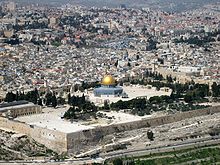
The extended discussion of Gehenna is particularly valuable. It is fairly well-known that Gehenna was the massive garbage dumb just outside Jerusalem where indeed the flames were never extinguished, as Jesus said. Jersak explores the use of the image in Jeremiah, noting that Jesus often imitated Jeremiah as a suffering prophet and was influenced by his prophecies. It is Jeremiah who denounced the Valley of Hinnom for the child sacrifices committed there. It is this valley that was used for the garbage dump in later generations, making it a shadow side of Jerusalem. Jeremiah announced that Jerusalem was subject to the same destruction as the Valley of Hinnom for the sins of Israel BUT when Jeremiah proclaims the new covenant in chapter 32, he declares that God will make this unholy valley holy again. That is, God will redeem Gehenna!

Jersak also has an extended discussion of the “lake of fire” which he correlates with the Dead Sea and finds in scripture the same redemptive thrust for this place of horror as well.

By following through on the redemptive passages in Isaiah, Jeremiah, the Gospels and Revelation, Jersak makes a strong case for the eternal, irrevocable offer of salivation and healing for all comers. That is, those cast outside the city in Revelation are still invited in at the end of the book.

A Church of Living Stones

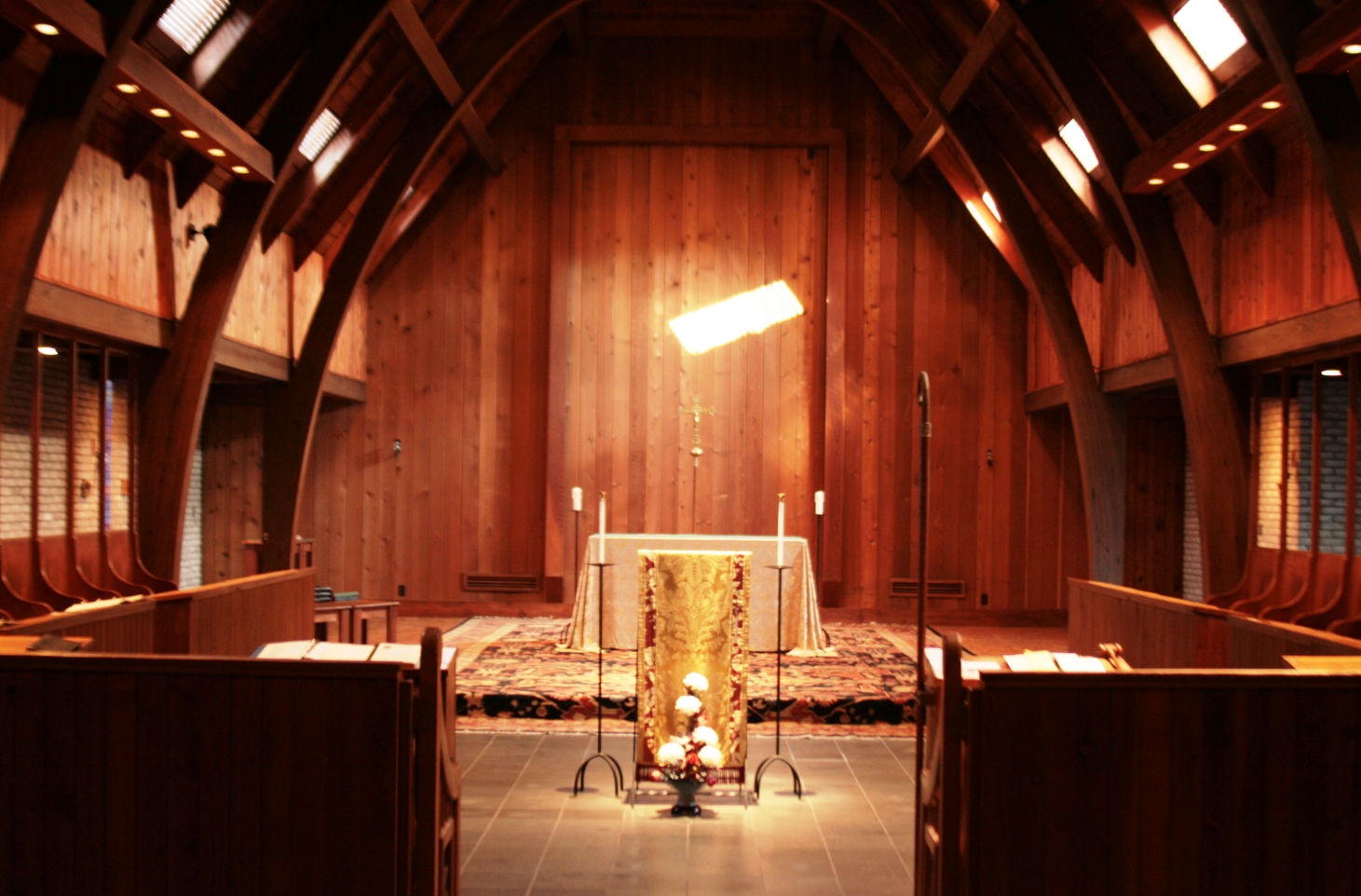
altarWhite 1When we celebrate an event like the anniversary of the consecration of the Abbey church, we are brought up short by the many negative things scripture says about temples and church buildings. Solomon humbly notes that not “even Heaven or the highest Heaven” can contain God, let alone a dinky temple in a backwater of civilization. Many of the prophets expressed discomfort or worse over the idea. David had wanted to build a temple but Nathan said God nixed it because David had fought too many battles that had made him impure for the task. A big part of the problem was that God wanted more elbow room than a temple would give. One of the more dramatic denunciations was Jeremiah’s admonition not to put any trust in stammering: “This is the temple of the Lord, the temple of the Lord, the temple of the Lord.” Fast forward to Jesus and we have him throwing the money changers and animals out of the temple.

What’s wrong with having a temple or a church building? Although Christians can and have worshiped in private houses, there are many practical reasons for having a building dedicated to worship, among them the problem of a host and hostess or their servants having to clean house before and after the service. Mircea Eliade famously pointed out humanity’s need of sacred space to draw attention to the Divine. St. Benedict affirmed the importance of the oratory in the monastery when he said that nothing else should be done there and nothing should be stored there so that there would be no mistaking this being the place for prayer and nothing but prayer. In throwing out the money changers, Jesus said that temple should not be a marketplace but a place of prayer.

There is an interesting detail in Matthew’s account of the cleansing of the temple that helps us understand Jesus’ actions in the temple. Jesus healed the blind and the lame who came to him there. We easily skip over this detail because Jesus was healing the blind and the lame all the time so yet another healing session doesn’t seem worthy of note. An obscure verse in Second Samuel sheds some light on this. When David brought his troops into Jerusalem, the Jebusites insulted David by saying that even the lame and the blind would turn him back. David reacts to the insult by heaping scorn on all lame and blind persons and barring them from the “house,” presumably once it was built. This was hardly fair to handicapped persons.

Jesus, by healing the lame and the blind was giving a strong signal that maybe he was the Messiah but if so, he was not a Davidic Messiah who would conquer by military might. More important, Jesus is giving us a positive teaching rather than simply denouncing the sacrificial cult. In short, Jesus was demonstrating, in action, the word of Hosea that God prefers mercy rather than sacrifice, a verse Jesus quoted more than once. In his first Epistle, Peter says we should rid ourselves of malice and all guile, insincerity, all slander and envy” so that we can become “living stones” “built into a spiritual house.” We are the ones who are called to be the temple of God, the Church grounded in Jesus who is the true temple. Being living stones that prefer mercy to sacrifice is how we do it. If we so allow ourselves by the grace of God to become such living stones, then having a place dedicated to precisely that is more than just fine.

The Tree of Salvation

YggdrasilRonald Murphy’s fine book Tree of salvation: Yggdrasil and the Cross in the North provides some intriguing insights into the relationship between mythology and Christianity. As the title implies, the main focus is on the Germanic cosmic tree Yggdrasil. Indeed, this Tree was converted to the Tree of life from Eden and the tree on which Christ was hung when the Norse cultures were converted to Christianity. Moreover, these people were told to abandon Odin and the other deities but were allowed to keep Yggdrasil, which became the structural principal of the stave churches and the round churches as Murphy demonstrates at length.

Although a Christian could hardly worship Odin, there are some interesting elements in his myth of interest to a Christian who uses Girard’s critique of myth. Odin had one eye, having sacrificed it for wisdom. Although the victims of primordial collective violence are arbitrary, anything, such as a physical blemish, that makes a person stand out makes that person a likely target. More interesting yet, Odin hung on the tree Yggdrasil to gain more wisdom. It is the Girardian thinker James Alison who coined the phrase “the intelligence of the victim” to indicate that the victim understands what the persecutor do not. As a likely target for violence because of his deformity, he would already have understood the sacrificial dynamics of society more than other people. The early medieval Germanic poem The Heliand and the old English Dream of the Rood both write of the cross as the cosmic tree, namely Yggdrasil. Murphy analyzes these poems well for their rich theological vision where redemption is glorious with no punitive aspects to it. (See Violence and the Kingdom of God.

Of greatest interest is the role of Yggdrasil in the Ragnarök myth. The Ragnarök myth is unique in world mythology as far as I can tell because of its future orientation. Normally the chaos  precedes civilization and culture emerges out of it. According to Girard this emergence is possible because of the collective violence that puts a tourniquet on the chaos. With the Norse, the chaotic violence concludes civilizatoin. All social order breaks down and Yddgrasil, always subject to attack by the serpent that eats at its roots, is subject to more intense attack. As humanity unravels and reaches the brink of destruction, Yggdrasil saves the couple Lief and Lifthrasir by sheltering them unto the danger is past so that they can start humanity anew.

When Murphy describes the Yggdrasil symbolism in the stave and round churches in Scandinavia with all the carved and painted leaves and the enormous central pillars in the round churches, he suggests that the church has become Yggdrasil that offers shelter from the culture of violence. Only, rather than sheltering only one couple, it shelters everybody who comes into it, making the church a symbol of what it ought to be in human culture.

The Viking culture is notorious to this day for its wanton violence and cruelty, especially for people like me who are descended from inhabitants of the British Isles. Horrible as their violence was, maybe it was that very violence that helped them understand the Gospel in new ways that we could profit from today. Their dread of eschatological violence is quite a contrast to the fascinated desire for the same in American culture today. Perhaps they had some instinct for knowing that chaotic violence would be the result of their sacrificial way of life if they were not turned around. With this emphasis on deliverance from violence, there is little or no room for a penal notion of Christ’s Atonement. Murphy’s book is a great place to start to learn about the Norse contribution to Christianity.

A Highway to Seeing the Glory of the Lord

treespath1After her humiliating defeat by Babylon, Israel was broken. The movers and shakers who had kept the society going were taken to Babylon where they couldn’t move or shake any more. Then, fifty years later, the prophet known as Second Isaiah proclaimed comfort to Jerusalem: the exiles will return, travelling through the desert on “a highway for our God.” Jerusalem will be made whole once again! This return of the exiles is a new thing, at least as great a new thing as God’s delivery of the Jews out of Egypt. Not only that, but, like the earlier new thing, this deliverance is a re-creation of the world by the God who is now proclaimed to be the sole creator of the world out of nothing.

René Girard suggested that the levelling of mountains and valleys stood for the levelling of society that precipitates a sacrificial crisis. I have a counter Girardian suggestion: the levelling of the desert landscape is God’s removing of the obstacles that prevent us from seeing God. The obstacles here are the social tensions created through mimetic rivalry that tear a society apart. For Isaiah, this levelling is God’s work and removing obstacles is what God does. God does not create social crises; humans do that. Isaiah said that, with the highway smoothed out, “all flesh” will see the glory of the Lord.” Not only that, but if a Gentile king had made this return possible, how much greater would the outreach be from Jerusalem to all Gentiles once the Jewish nation was reunited?

But such was not to be. The Jewish nation broke again and this time it was the Jews who broke it, not the Babylonians. Denunciations of social injustice protested by the Isaianic prophets before the Exile were repeated by Isaiah’s successors after the exile. The movers and shakers who had returned from exile also returned to moving and shaking at the expense of their weaker Jews. An anonymous victim, known as the “Suffering Servant” paid the price for the nation’s brokenness. The mountains and valleys had been recreated and the glory of the Lord was hidden once again.

“The Beginning of the Good News of Jesus Christ” is the opening of Mark’s Gospel. The Greek word “arche” also refers to the ultimate beginning of creation and the two attempted re-creations in Jewish history. Mark quotes the words of Isaiah to announce that once again (or still) God is creating a highway for God. So it is that the subsequent appearance of Jesus and his baptism by John is yet a new beginning for humanity. Once again God is removing the obstacles and just as quickly, humans are putting the obstacles back in place, with the result that Jesus was left hanging on a cross.

By coming round every year, the Season of Advent proclaims God’s removing of obstacles so that all of us, together, can see the Glory of the Lord. Will we join God, at least a little, in the work of removing obstacles so that we can glimpse the glory the obstacles hide?

Celebrating the Saints in our Lives

GuestsoutsideAll Saints is a feast for all of us. Does this mean we are all sanctified in the sense of perfected in Christ? No, but it is a feast that celebrates the true glimpses of Christ that others have given us. What does Christ look like in the actions and bearing of those people who have had an effect on us?

The Beatitudes in Matthew give us a sense of direction and a daunting one at that. Hungering and thirsting for righteousness, being merciful and making peace are clear signs of sanctity in the sense of imaging Christ who was and is all of the above. But what about meekness? What is so holy about that? In this context, meekness seems not to be about obsequiousness, which is not holy, but about being out of the loop of the power brokers. Being poor goes with meekness in this respect. Being poor and meek does not guarantee that one will image Christ and it is important not to trash the movers and shakers out of resentment. Jesus did not resent the young rich man’s wealth; he felt sorry for the guy because that wealth prevented him from becoming a follower. By adding the phrase “in spirit” to being poor, Matthew gives us a loophole that Luke’s version doesn’t. A rich and powerful person can be a saint if that person is willing to be a peace maker and merciful and to thirst after righteousness.

Being pure of heart so as to see God is an inner virtue. In his Epistle, John says that “what we will be has not yet been revealed” but when it is revealed, “we will be like [God], because we will see him as he really is.” (1 Jn. 3: 2) One of the fundamental things that purity of heart means is being empty of self so as to give room for God. This is a big part of what being “poor in spirit” is all about. The more we see God, the more visible God will be to others who see us.

Being persecuted and hated and reviled on Jesus’ account is not something that we normally think of as a blessing, but if we thirst for righteousness, we will prefer to be vilified than to be praised for betraying our principles. Making peace, or trying to, is a good way to make enemies. The poor and meek are targets for persecution because they are vulnerable. In Revelation, John the Divine assures us that when we come through such ordeals, we will be given white robes and will be among the pure in heart celebrating before the Lamb who was slain. (Rev. 7: 14)

Many have suffered badly at the hands of people in the Church. Many of those who came through “the ordeal” suffered it not from pagans but from fellow Christians. Such suffering that amounts to scandal can make some of us think there are no saints in the church. Elijah thought he was the only faithful person left in Israel until God told him of seven thousand prophets who had not bent their knee before Baal. Likewise, the uncountable multitude of people from all tribes, languages and nations shows us that there have been and are many saints than we sometimes think.

In my own life, four such come to mind most prominently. During my college years, my parents transferred to an Episcopal Church they thought would be more responsive to our pastoral needs than the one we left. It was. I visited the rector of this church every time I came home for vacation. He listened generously to everything I said although much of what I said was outrageous. His kind listening made it easier for me to see through my silliness than if he had called me out on it. Meanwhile, at college, I had a religion professor who not only taught me how to think theologically, but was a model of gentle listening and gentle prodding to nudge me in better directions of thinking. At the abbey, I was nurtured by a novice master who was one of the most self-effacing people I have ever known, self-effacing to a fault that some people take advantage of. He gently provided the space for me to grow as a monk. During a tough time at the abbey, we had an oblate who was like a grandmother to many of us. She couldn’t solve any of our problems but she could listen and encourage us and strengthen us to seek constructive solutions. None of these people cared about making waves in the world; they were content to be themselves. Let us celebrate this feast by remembering the saints that the “world” may not know about but we do.

Rivalry over Pure Music

angel trumpetMark Evan Bonds’ book Absolute Music: the History of an Idea deals with the most fundamental question in musicology. There are many music lovers for whom the subject is meaningless but some music lovers, including me, like to reflect on these matters. These days, music appreciation courses routinely teach the distinction between absolute music and program music. The latter paints a picture (say, a lake) in tones or tells a story (such as in Dukas’ “The Sorcerer’s Apprentice.”) The former doesn’t refer to anything beyond itself. The basic question, though, is whether or not music is its own isolated world, manipulating tones with no reference to anything else at all, or is related to the world in some way. This latter possibility could suggest that, say Schubert piano sonatas express emotions even if they are hard to define in words.

The title might lead a potential reader to think that Bonds is defending absolute music. That is not the case. Bonds is studying the history of this idea and along the way leaves us with an argument that a commonsense position that music is its own world but connects with phenomena elsewhere in the world. Central to this study is Edward Hanslick whose book Von Musikalischer-Schöne is pivotal to the debates it touched off, although Hansklick was neither the first by a long shot nor the last to make the argument he made (which Bonds examines at length.) (Sorry, the German title is hard to translate; it means something like “the musically beautiful.) Hanslick’s book did have the merit of being lucidly written in a field of thought that produced turgid and obscure tomes. Hanslick’s arch-enemy was Richard Wagner who lampooned Hanslick in the character of Beckmesser in Die Meistersinger.

Bonds’ own writing is very lucid and a great pleasure to read. One does not need to have technical knowledge of music to read this book. The key terms are clearly defined to help the reader understand the debate. There is also much about the characters of the principal debaters of what became the most intense musical debate in Europe for several decades in the 19th century. What the personal element shows is that the heat of debate distorts clear thinking and leads to exaggerated positions that get derailed from common sense and the evidence. More important, the debaters simply failed to understand accurately what their opponents were saying. Bonds traces the debate to the point where some reconciliation (for the time anyway) took place and even shows evidence of softening on the parts of Hanslick and Wagner. And yet neither could get over their personal animosities enough to admit publicly the changes in their positions, let alone reconcile with a hated adversary.

The personal elements in this debate interest me as my study of the thinking of René Girard and his colleagues has given me a keen interest in the phenomenon of what Girard calls “mimetic rivalry.” In light of Girard’s thinking, another personal element stands out for me. Hanslick began writing his book in the wake of the revolutions of 1848-9. This turmoil, climaxed for him by witnessing crowd violence that killed a hapless victim, motivated Hanslick (in Bond’s judgment as well as mine) to find in music a pure refuge from such human turmoil. This shows up in Hanslick’s insistence on the purity (reinlichkeit) of music. This same thing happened in the twentieth century. During and after World War I, there was a strong movement to absolutize music, to isolate it from human affairs. Igor Stravinsky was a ringleader here. That is ironic. His ballet The Rite of Spring (premiered in 1913) can be seen a prophecy of the sacrificial bloodshed about to tear Europe apart. After the war, Stravinsky insisted that it was an abstract symphonic poem. This same kind of thing happened after World War II with another wave of insistent manifestos that tried to tuck music into isolated boxes.

As for me, a Schubert piano sonata is a world with its own beautiful musical argument that spills out into the worlds of real human hearts. Maybe this is a bit fanciful, but there are times when I think Schubert was subtly undermining the Austrian Empire in his dramatic shifts of keys and the uncertainty of which end was sometimes up.