Escape from the Denial of Death

cemetery1Richard Beck’s new book The Slavery of Death works with the powerful thesis of Ernest Becker which states that fear and denial of death fuels human aggression. I have read both of Becker’s books (Denial of Death and Escape from Evil) and I find Becker’s analysis of this phenomenon compelling. Moreover, much scientific testing has verified Becker’s theory. Beck outlines Becker’s demonstration this existential fear of death and its subsequent denial leads to striving for heroism. For Becker, heroism is a compulsive drive to succeed, to prove that one matters, and to gain recognition for one’s efforts. One might think that there is nothing wrong with any of this but this neurotic striving for “heroism” comes to the expense of other things in life such as family and friends. Moreover, the social settings for such striving tend to magnify aggressive behavior so that not only fearful individuals but the social groups as well persecute others to validate themselves.

Impressive as Becker’s insights are, they are very bleak and they don’t offer humanity any constructive way out the denial of death except, perhaps, a heavy dose of Stoicism. Most humans find this cold comfort at best and an impossible prescription at worst. Might as well join Jean-Paul Sartre in a life of existential despair.

Richard Beck brings Christian theology and spirituality to Becker’s insights which brings us into a whole new ball game. To begin with, he notes the importance the Eastern Orthodox Churches give to Death, rather than Sin being the prime enemy that Jesus must destroy. He adds depth to the slavery to “heroism” by comparing it to the “principalities and powers” of the world denounced by St. Paul. Beck then uses the social and anthropological thought of Walter Wink and William Stringfellow (who deserves to be much more remembered than he seems to be) to help us see the strength of social forces that pull us into a “heroic” mode. Much more important, Beck shows how an eccentric life can pull us out of this death anxiety so as to live a healthy, loving life. Beck is not talking about being somebody’s eccentric uncle; he is talking about living a life centered outside the self. He uses Arthur McGill as a resource for understanding how love and concern for others benefits the one doing the loving by pulling us out of ourselves. Jesus, of course, is the perfect example of eccentric living. Jesus was positioned fully out of himself out of concern for others and also his grounding in his heavenly Father. That is why, although he feared the painful death to come in Gethsemane, he had the courage to endure it. Lest one be overly daunted by the extent of Jesus’ self-sacrifice and that of people like Teresa of Calcutta, Beck also shows how important small sacrifices on a daily basis are for eccentric living. These are within reach of everybody. The “little way” of Thérèse of Lisieux is are stirring and practical example. For Thérèse, eccentric living can be as simple as pushing a wheelchair of an elderly sister who complains bitterly over every bump on the way. It is such eccentric living that leads to Jesus’s resurrected life which we are all invited to share.

Mimetic Blessing through Abraham (2): Abraham’s Offspring

Jacob_Blessing_the_Children_of_Joseph_-_WGA19117[Continuation of Mimetic Blessing through Abraham (1): Cain and Abel

God promised Abraham that he would have as many descendants as the dust of the earth. (Gen. 13:16) I like the later image of the stars in the sky and the grains of sand on the seashore (Gen 22:17) but the earlier image ties in with the creation of humanity out of dust, thus making it clear that descendants of Abraham (like us) are part of God’s ongoing creation. That’s how expansive God’s blessing and being God’s blessing can be.

When Abraham and his nephew Lot found there was tension between their herdsmen, Abraham suggested that they separate and he gave Lot the choice of taking the land to the left or the land to the right. This is quite the opposite from what most of us do which is the first see what the other desires and then desire it for ourselves. Instead, Abraham renounces desiring what his nephew desires and goes in the other direction. (The better-looking land turned out to have its liabilities but that is another story.)

Unfortunately, Abraham does not renounce mimetic desire and rivalry when it comes to his sons Ishmael and Isaac. In spite of being called to be a blessing and promised as many descendants as the dust of the earth, Abraham fails to believe that both of his sons can inherit the blessing he has been given by God. Far from fighting each other, Ishmael and Isaac play well together but they fall victim to the rivalry between their mothers. (Women are equal participants in the mimetic rivalry game in Genesis.) Abraham casts Ishmael out so that his favorite son born of Sarah can inherit the blessing. God, however, makes it clear that there is a blessing for Ishmael, too, even if Abraham did not believe it.

Following his father’s example, Isaac assumes that only one of his two sons can receive his blessing and, like Abraham, he wants to give it to his favorite son. Rebekah’s involvement in this rivalry causes this Isaac’s scheme to misfire. This time, it is the son who receives (takes) the blessing who is exiled where Jacob spends many years in rivalry with his kinsman Laban. When Esau re-enters the story on Jacob’s return, we can see that Esau has done well for himself and has no need to envy his brother’s success. Apparently there was a lot more of a blessing left for Esau than Isaac thought.

Jacob stubbornly upholds the family tradition of disbelief in the scope of God’s blessing and singles out his favorite, Joseph, over/against his ten older brothers. This time the fratricidal strife has enough brothers to create a scenario of collective violence. In contrast to the primitive sacred, however, the unanimity is not complete. Both Reuben and Judah, separately, make plans to save Joseph but they both fail. If they had stood up to their brothers, the mimetic process would likely have been redirected in a peaceful direction. The upshot of the story is that Joseph ends up becoming a blessing to Egypt and to lands far beyond and he saves his own family through his foresight in collecting food during the years of plenty. (Joseph’s making the Egyptians buy back the food that had been taken from them does make Joseph less generous than his God.)

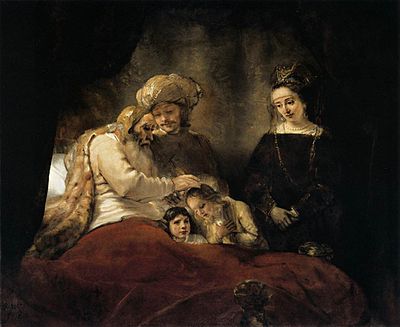
Before he dies, Jacob blesses the two sons of Joseph: Ephraim and Manasseh. He crosses his hands to indicate that Ephraim will be greater than his elder brother, but he gives both boys the same blessing. Finally, through excruciatingly painful experience, Jacob has learned that God has blessings for all of Abraham’s offspring.

Seeing with More than the Eyes

churchDistanceBlossoms - CopyJesus’ healing of a man born blind in John’s Gospel (chapter 9) is much more remarkable than fixing the eyes so that they can see. In order to really see, the healed man would have needed a radical overhaul of his neurological system so that his brain could grasp what was being seen. John didn’t know about neurology but he did know that really learning to see involves at least as radical an overhaul of our human system to heal our deeper levels of blindness.

John shows us the blindness surrounding the blind man when the disciples ask Jesus if it was the man’s own sin or the sin of his parents that caused him to be born blind. The notion that the poor guy sinned before he was born should be enough to show us how blind this attitude is. This blindness was compounded by excluding the blind man from the religious practices of Judaism because he was blind. Neither the Jewish leaders nor even Jesus’ disciples could see any potential worth in the blind man.

That Jesus shows the intention to take the man’s blindness as an occasion for revealing God’s work rather than for blame by putting mud on everybody’s eyes to recreate the world for us. The Jewish leaders react to the healing with anger. They seem determined from the start to discredit the healing rather than change their own way of seeing. Their search for blaming was rewarded when they discovered that the healing was done on the Sabbath.

It is important not to let Gospels stories such as this discredit the Jewish practice of the Sabbath. It was a great gift for Jews and for Christians who treat Sunday in a similar fashion, a day for renewal. That is the key: a day for renewal. The use of mud paste clearly refers back to the creation of humanity out of moist clay. The blind man is being recreated. In sharp contrast to the paralytic in John 5 who remained as paralyzed as he ever was no matter how much he carried his mat, the formerly blind man shows himself to be renewed at a very deep level. The clever way he handles the hostile questions from the Jewish leaders reveals a man with sharp intelligence and wit. Meanwhile, the Jewish leaders make it clear that their initial judgment that the blind man was a sinner and an outcast was immutable. As long as he was blind he was an outcast and once he could see, he was cast out for being healed by the wrong person in the wrong way. There can, of course, be no renewal, no re-creation if we insist on being immutable, neither can we see renewal or re-creation even when it takes place right under our noses.

But the man shows even more. James Alison’s concept of the “intelligence of the victim” suggests that the blind man had insight into what life was about and what God was about because he was blind and an outcast. He was given the opportunity of repudiating Jesus the way the paralytic did, which would have brought him approbation from the community, but instead, he staunchly defended Jesus, which landed him in the precise place of blame and expulsion as Jesus himself. It is in this place that the man really sees.

The disciples fade from the story after their question about who sinned, but far from really disappearing, their circle expands to include all of us who read and hear the story. This expansion forces us to choose: will we let Jesus re-create us in the place of shame shared with the man born blind, or will we hop out of the circle so that our lives will continue to be etched in stone?

Ignatiusly Reading

Ignatius_of_Loyola_(militant)[This is a companion post to Quixotic Reading]

Reading in a life-giving way is not primarily a matter of reading but of living; of how we read our lives. Don Quixote idolized Amadis of Gaul, Emma Bovary idolized her lovers and Werther idolized Lotte. The primary reason for the Werther effect is that readers of Goethe’s novel committed the same idolatry through mimetic desire as did Werther. If we are too embroiled in our mimetic desires to have eyes to see what Cervantes and Flaubert see, then we will only see what Goethe seems to have been able to see when he wrote Werther: the despair of desiring a woman desired by another who has made that woman unattainable. That is, the way the readers of Werther were living their lives affected their reading and their reading reinforced the way they were living their lives.

In his incisive study of Don Quixote (The Humble Story of Don Quixote; Reflections on the Birth of the Modern Novel) Cesario Bandera leads us to the heart of the Don’s problem and ours: “God-like Amadis is not God. God transcends empirical reality but does not ignore it or make it irrelevant.” The more we look at the world around us and interact respectfully with it, the less apt we are to be swept away by the fantasies of mimetic desire. God “demands an absolute act of faith beyond empirical reality, but such an act of faith does not obliterate the inherent rationality of the world ‘out there.’ The act of faith is essential only to prevent empirical reality from becoming a god unto itself, an idol.” (p.155) Bandera is alerting us to the problem of allowing our models to distort the world around us, making models like Amadis or Albert (Lotte’s husband) the lens through which we interact with the world instead of God.

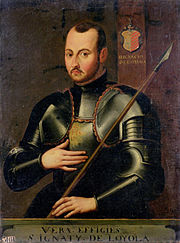
Ignatius of Loyola provides an instructive contrast to Don Quixote. According to his Autobiography, Ignatius liked to read the same sorts of chivalrous romances the Don Quixote did and, while he was recovering from his battle injuries, he asked for this sort of literature, but only a life of Christ and a book of the lives of the saints was available, so he read those instead. These books changed not only what Ignatius read, but how he read. Not only did he stop to think about the things he was reading, he also stopped to think “about the things of the world that he used to think of before.” That is, Ignatius was using what he read to connect him to real life, the life God had created rather than what life looks like through the lens of an idol like Amadis. During this time of struggle and repentance, Ignatius then confesses his infatuation with the idea (not reality) of going into the service of a “certain lady,” oblivious to “how impossible it would be.”

But then Ignatius started to think about what it would be like to imitate Saint Francis or Saint Dominic who had imitated Christ? Such thoughts gave him consolation that thoughts of soldiering and chivalry did not give him. Here were models that were challenging but not impossible. Ignatius was spurred on to develop a spirituality based on the imitation of Christ, not an imitation of external actions only but, more important, of cultivating the inner disposition of Christ’s charity for others that was to become the backbone of his Spiritual Exercises. Bandera draws the contrast for us when he says that “unlike Christ, Amadis cannot give his follower what he wants without ceasing to be Amadis.” (P.157) That is, Amadis, if real, would be what Girard calls a model-obstacle whom Quixote would need to best in combat, which would change Amadis for the worse if Amadis was vanquished. Christ, on the other hand is a model without rivalry, who wishes to be imitated without rivalry. Ignatius discovered that Christ creates an abundance of charity that can only become more abundant through imitating him. The idea of imitating Jesus led to a real pilgrimage to Jerusalem and then to a real spiritual pilgrimage of imitating Christ for the rest of his life.

The Servant of the Servants of God

GregoryIcon1For anybody to fight about who is the greatest at any time is a disgrace. For the disciples of Jesus to fight about who is the greatest is especially ludicrous, making one wonder if they had understood a word Jesus had said. Very possibly they hadn’t. That they should fight over who is the greatest at table the night before Jesus died is beyond ludicrousness. If they had fought in this way after Jesus had washed their feet, as recounted in John, then their fight is transfinitely ludicrous.

Jesus shows transfinite patience to the disciples by not acting the way most of us in authority would. An argument among people under our authority as to who is the greatest has the potential to spill over into a dispute with the one in authority over the same question. But Jesus explains that it is the Gentiles who wish to exercise lordship over others and it should not be that way with them. Stepping on toes and maybe even necks is what most worldly authorities would have done in Jesus’ position but that is precisely what Jesus did not do. There is an edge to Jesus use of the word “benefactors” for those practicing lordship; such people used their benefactions more to assert their superiority and social control than to be charitable to others. Jesus goes on to say that he has come among the disciples as one who serves, not one who lords it over them.

Our patron saint, Pope Gregory the Great, did not coin the phrase that the Pope is the servant of the servants of God, but he was the first to make extensive use of the phrase and thus make it such a quotable quote through the ages. The phrase certainly picks up the meaning of Jesus’ words to the apostles as captured in Luke.

A deeper sign of Jesus’ infinite patience with his disciples (and us) is his assurance that they will sit on twelves thrones to judge the tribes of Israel. This assurance is startling since it seems to go counter to what Jesus had just been talking about. But does it? If being a ruler means being a servant, as Jesus suggests and Gregory the Great averred, then maybe sitting on a throne to judge a tribe of Israel is not such a good deal for the judge. We tend to think that being a judge means being judgmental; that judging the Twelve Tribes of Israel means accusing them of their wrongdoings. But what if a judge is a servant? In his response to the disciples’ infighting, Jesus is surprisingly unjudgmental, although he makes it clear that they haven’t gotten it right just yet. Jesus continues to serve them through his example, such as washing their feet and leading them gently but firmly to a new way of seeing the world and, more importantly, living in it.

The thing is, Jesus didn’t judge the disciples (and us) by browbeating them; Jesus judged them by serving them humbly. The twelve tribes of Israel is an expression for a renewed Israel, Gentiles and Jews alike. Judging them, then, means serving them the way Jesus served them and the way Jesus serves us. It is our acts of loving service that will judge all people who exercise lordship by browbeating others. The Pope isn’t the only one called to be a servant of the servants of God. All of us are so called. The trouble with calling Jesus the King of Kings is that we are tempted to swell with pride with being part of this imperial court. We do much better to call Jesus the Servant of Servants.

Human Weakness the Cornerstone

peter healing cripple_RembrandtThese days we take ramps and handicapped parking spaces for granted. However, such considerations for people with special needs are quite a flip-flop from what such people experienced in the early days of humanity. In the social crises at the dawn of humanity as envisioned by René Girard, when everybody was at everybody’s throat, the choice of the victim was usually arbitrary, almost like a lottery. It could be anyone. However, if any person in this melee of undifferentiation should stand out in any way, that person would be the most likely victim. The person who stood out might be the most talented; a scenario often repeated today. (See Ignominious Glory, Glorious Ignominy: A Doxology) Many mythological victim/deities were great musicians or poets. Another way a person might stand out is by being handicapped. René Girard points out that a predatory animal will spot the weakest member of a herd and go for that one and that the same holds true of a society in crisis. One need only think of the many lame victims such as Oedipus or deities like Odin with only one eye.

The flip-flop started as soon as the Church, inspired by Jesus’ healing ministry, had the resources to build facilities for the sick and disable. As far as I can tell, hospitals are a Christian invention. We are so used to infirmaries that we think nothing of Benedict’s provision for an infirmary in his Rule, but Benedict was an innovator in his time. The teaching and ministry of Jesus that involved reaching out to the weak, the people formerly rejected by society, had become the cornerstone of Benedict’s monastic vision that consideration should always be shown to the weak. Of course, Benedict meant far more than sick and handicapped people with this admonition, as Benedict well knew that we all experience weakness in many ways. I have discussed care of the sick and its ramifications at length in my book Tools for Peace.

Many years ago, when I was a seminarian taking CPE (Clinical Pastoral Education), one of the chaplains, who was legally blind, gave a talk on issues involving handicaps. He helped us greatly in sensitizing us to how people in his position felt with being helped either too much or not enough. He was also very honest about himself and he admitted that being handicapped did not necessarily make him any more sensitive to other handicapped people than anybody else. As an example, he told us of how he recoiled when introduced to a person with a withered arm.

To this day, even those of us who care for others experience this kind of recoil when we encounter others who are a bit different, especially if the difference is grotesque. But our treatment of alleged nerds and celebrities shows us that a difference in conspicuous talent raises the same sort of dread. If we notice ourselves in this respect, we can experience a kinship with our brothers and sisters who made sacrificial victims and then deities out of the likes of Odin.

Respecting All Things that God has Made

buddingTree1The Book of Common Prayer gives us an important focus for Lent by starting the collect for the Ash Wednesday Eucharist with “Almighty and everlasting God, you hate nothing you have made and forgive the sins of those who are penitent.” So often, we blame the material world for our sins and then hate what God has made which God also loves. In a sense, the material world becomes a scapegoat for our own disordered desires. If we eat too much, it isn’t really the fault of the food, though we quickly blame it for our own lack of self-control. Women, of course, have been blamed for being “tempting” as if it is their responsibility to control the desires of men while men need take no responsibility for themselves.

To complicate the picture, René Girard has demonstrated many times in his books that our desires are intertwined with the desires of others in a dense network of mutual imitation. If we become ensnared in desires for certain things or certain people because others desire them, we are in a frustrating situation and, again, it becomes convenient to blame the other people and other things for the pickle we are in.

We need to remember that God is our model for perfect love for all that God has made. That means that, unlike Zeus and many other mythological deities, God does not lust after humans but loves all humans with perfect respect. The more we respect other people and all things in the world, the more restraint we have in relation to them. So it is that when we repent and turn to God, we also turn to all things and to all people that God has made with new respect and love.

The Transfigured Glory of God’s Children

transfigurationThe glory of God revealed on Mount Tabor is dazzling. It is rightly seen as a vision of the glory of the created universe in all its materiality as well as a vision of the glory of the resurrected life. The presence of Moses and Elijah, representing Torah and the prophets, adds the weight of Jewish history to the moment and the voice from Heaven proclaiming Jesus as the beloved son entwines itself into this glory. But this turns out to be a strange glory as the world understands glory.

Moses was hounded out of Egypt after killing the Egyptian who was oppressing a fellow Jew and then was the object of threatened violence several times from the people he liberated from Egypt. Elijah was a persecuted prophet who lived only because he fled the wrath of Ahab and Jezebel. God proclaimed the king to be God’s son in in whom God delighted in Psalm two where the nations raged against each other and the other kings rose up against God and God’s anointed, i.e. the beloved son. The servant in Isaiah was declared God’s son in whom God delighted and this same servant was despised and rejected by his own people and “cut off from the land of the living.”

On the way down from the mountain, Jesus tells the disciples who came with him not to tell anyone until the “Son of Man” is raised from the dead. The disciples remind Jesus that it was believed that Elijah should come first. Jesus then says that Elijah has already come and people did to him “whatever they pleased,” something Herod saw to.

Jesus is reminding his disciples, and us, that death through collective violence is an old story that has been enacted since Abel to John the Baptist as a current event, and it is a story that is going to continue on in the lives of the apostles and on into our lives as well. It is through following Jesus who followed the prophets before him that we enter the glory of the transfigured life of the created world which explodes into the glory of the resurrected life filled with God’s love for those who do whatever they please with God’s beloved children.

Sacrificing the Aztecs

Teotihuacan9The sacrificial rites of the Aztecs at the time of their conquest give a rich example of the institutionalizing of sacrifice. The horrific quantity of children sacrificed to bring on rain with their tears, and the men whose hearts were cut out to keep the sun alive leads us to dismiss them as civilized human beings. But they were highly civilized. In the book Sacrifice and Modern thought, two stimulating articles help us understand Aztec sacrifice. Both Laura Rival and David Brown help us sympathize with the Aztecs as human beings. Rival points out that human sacrifice was modeled on the deities who threw themselves into the primordial fire to create the fifth sun and set it in motion. This myth points to a noble disposition behind the sacrifice. It is not hard, however, to see this as a typical myth that hides the collective violence that laid the foundations of their culture.

David Brown summarizes clearly the “flower wars” that were part of the sacrificial system. These wars had become as highly ritualized as the sacrifices performed on the top of the pyramids. The whole purpose of these wars was to capture sacrificial victims in fair fights. The initial chaos leading to the myths and sacrificial rites had led to a complex, highly restrained structure of warfare.

Brown quotes a moving statement by an Aztec leader who says that the Spaniards did not understand “how vital it is for us to give blood to the gods.” As selfless as the sacrifices were, and the Aztecs believed they were rewarded in the afterlife, they were convinced that if they failed to continue these sacrifices, the gods would become angry and turn away from them. Here we have it: as with so many other early cultures, the Aztecs were caught in a sacrificial system that allowed no escape. If the gods are subject to anger and capriciousness, one does not dare turn away from the only rites that had a chance of deflecting the divine wrath.

The structure and restraint of the Aztecs is a dramatic contrast to the chaotic overrunning of their country on the part of the Spanish Conquistadors. Cortes justified these measures out of repulsion at the sacrifices carried out by the conquered people, but in a cruel irony, the Spanish made a cruel holocaust of the sacrificers. A comparison with the lynching of blacks in the United States shows us the same chaotic mob violence. (See Selling Postcards of the Cross.) In The One by Whom Scandal Comes, René Girard contrasts the fundamental way Satan works in archaic cultures and in modern cultures where some awareness of the Gospel has occurred. Among the Aztecs, as with so many other peoples, Satan was the transcendent principal of order. But with Satan cast out of the sky during the ministry of the Hebrew prophet Jesus, Satan acts imminently within human cultures as a disrupter.

In my last post, I noted how killing twins became part of a package of maintaining a satanic social order. (See Twin Killings.) All twins can be thankful that this order has been dismantled. Likewise, we can be grateful that we don’t have pyramids where people’s hearts are torn out. We are free of the satanic order, but we are not free of the chaotic violence that has been unleashed on to the world unless we actively seek the freedom we gain from being grounded in the God of Love who has gathered all Aztec victims into the divine fire that fills us all with eternal life.

Twin Killings

220px-Rubens_Reconciliation_of_Jacob_and_EsauIn baseball a twin killing is a double play: two outs on one batted ball. “Two for the price of one,” as the great Detroit Tigers great sportscaster Ernie Harwell called it. Double plays are a legitimate part of baseball. But there is another kind of twin killing that has been a part of humanity until close to the present day that is not legitimate: the killing of twins.

Why was one, and sometimes, both twins been killed in early societies? René Girard suggests that it was the fear of what he called “mimetic doubles,” two people united through conflict. After the social chaos was resolved by collective violence, societies created structures to prevent the repeat of the chaos as much as possible. Twins, especially identical twins, were too much of an image of the indifferentiation that lead to conflict. They could not be allowed to live. During the time of chaos, indifferentiation was precisely the problem as differences between people melted in the heat of conflict. It is obvious to us now that these babies were innocent victims of society’s fear of mimetic doubles, but in today’s society where social differences are dissolving, perhaps we should fear, not twin babies, but mimetic doubles.

The authors of Genesis had no illusions about the danger of mimetic doubles. Brothers paired off against each other are the driving force of the book, culminating in Joseph’s brothers ganging up on him. Jacob and Esau were twins. The conflict that kept them apart for many years finally resolved in an uneasy reconciliation as Esau turned out to be more forgiving for the wrongs done him than Jacob ever believed possible.

Lois Lowry’s chilling dystopia The Giver also has a twin killing. The society is shown to be peaceful but colorless. (Literally so, as we learn when the protagonist, Matthew, begins to see colors.) It becomes apparent that everything is designed to prevent conflict. There is no courtship or sex; medication stifles the latter and babies are grown in test tubes, implanted in adolescent girls, and distributed to couples, each of whom gets one boy and one girl. Not surprisingly, the cost of this “peaceful” society is high. When Matthew is apprenticed to the Giver, he learns that it is his job to keep track of everything that is happening via TV monitors but to do nothing unless asked, as the job is consultative only. A day or two before Matthew makes his escape, he watches his own father “release” one of two twin babies with a lethal injection, the normal way of releasing somebody. (The elderly are so released at a certain age after a celebration of their lives.)

Much else is shown to be wrong with this society but the killing of a twin shows clearly enough that preserving the peace by squelching mimetic doubles inevitably institutionalizes violence, even if, as in Lowry’s society, it is kept invisible. René Girard would argue that one of many effects of the Cross and Resurrection is that we don’t kill twins and we have the freedom to build God’s kingdom where we actualize the freedom shown by Esau to forgive and then later by Joseph to his brothers. It is no longer possible for social structures to contain the potential violence of mimetic doubles in conflict. It is possible, and in our times, necessary to renounce conflict, even if it means forgiving the theft of a blessing. This renunciation leads to its own blessings. After all, Esau had done pretty well for himself while Jacob was away.