
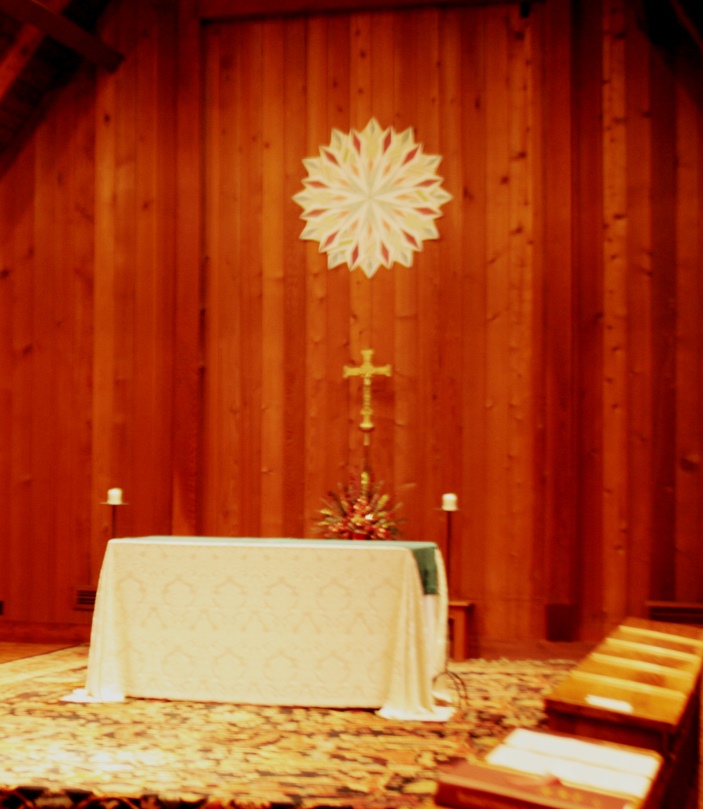
In Matthew’s Gospel, the Resurrection starts off with a bang in the form of an earthquake. It’s the sort of thing that grabs our attention and makes us take notice that something of great significance has happened. After this bang, the narrative in Matthew, not to speak of the other three gospels, is surprisingly quiet. It’s sort of like one of those symphonies that starts with a bold statement and then subsides to build up musical ideas for the long haul. And the Resurrection, far from being over-and-done-with, is an event for the long haul. We’re still hauling, and so is God.
When Matthew tells of the earthquake, we get a sense of Jesus exerting a huge amount of force to break out of the tomb. That would not be surprising. The stone that Joseph of Arimathea put at the opening was heavy enough, but the Pharisees had put a seal on the tomb and posted a guard. One would think it would take something like an atomic explosion to set Jesus free. But that isn’t what Matthew describes here. What Matthew describes is the angel coming down during the earthquake and rolling away the stone to show that Jesus was already gone! Jesus had quietly slipped away to begin his resurrected life before anyone knew anything had happened.
St. Benedict’s admonition to spend Lent looking forward to Easter with joy and spiritual longing has haunted me many times over the years and I have commented on this before. This year, it haunts me more than ever. Does Benedict’s admonition mean that now Easter is here, we don’t need to look forward to it any more? I don’t think so. Benedict introduces his chapter on Lent by saying that a monastic should live a continuous Lent, which means we should look forward to Easter all the time as well. That means that even on Easter Day we also look forward to Easter. This circles back to the notion that Easter is for the long haul.
What are we celebrating in celebrating Easter, and what are we looking forward to in looking forward to Easter? There are many good answers to these questions, but the answer that keeps coming to me is gathering. By the time of his death, Jesus’s disciples had scattered. Only a few women and the Beloved Disciple in John were at the cross. After his Resurrection, Jesus began gathering the disciples, starting with the women who had come to the grave to anoint the body that wasn’t there. Matthew fast forwards to the disciples being gathered at Galilee where Jesus told the women he would meet them. There, he sends them on the mission of gathering all people of all nations. Considering the scattering of people occurring today, that job of gathering is still a work in progress.
The scattering that we see, both in the many wars occurring at this time, and the intensifying racial tensions in the US are much more like a continuation of Passiontide than a celebration of Easter, even when the calendar turns to that day. This should not be surprising because the Passion of Jesus took place on account of a severe resistance to Jesus’ life of gathering. We’re still trying to seal up the tomb to try and keep Jesus there and find ways to keep people apart. Although Jesus has proved to be the ultimate escape artist, Jesus continues to live the resurrected life as the Lamb slain since the foundation of the world, as the Book of Revelation shows us. (Rev. 5: 6) Just as Jesus allowed the religious and political authorities to crucify him rather than commit violence against them, the risen Jesus did not and does not come in violence or vengeance, but comes in self-sacrificing peace and forgiveness. That means that the risen Lord continues to suffer through his members everywhere who are persecuted by those who prefer to scatter. Jesus is the leaven in the bread and the fermentation in the wine served at the altar at every Eucharist to leaven and ferment our lives with his life of gathering.
Unfortunately, pointing out the ways other people try to reseal the tomb seems to be everybody’s blood sport. It is worth recalling that at the Last Supper, Jesus was still dealing with resistance from his closest disciples. It is also telling that, after the Resurrection, when the disciples met with the risen Lord, Matthew says that even then “some doubted.” (Mt. 28: 17) If some disciples still held back from the risen Lord’s gathering of all people, what about us? In the subject of racism, for example, I find myself having to peel away layer after layer of my own racism, as if it were an onion. I suggest that a helpful Easter exercise would be to examine ourselves for the ways we seal the tomb and set up obstacles to the Risen Life Jesus would have us lead. We need more earthquakes that send angels to roll away the stone and remind us that Jesus is alive among us, suffering every time we try to put the stone back. Meanwhile, Jesus remains with us for all time, strengthening us to gather with others and giving us much to look forward to in looking forward to Easter.


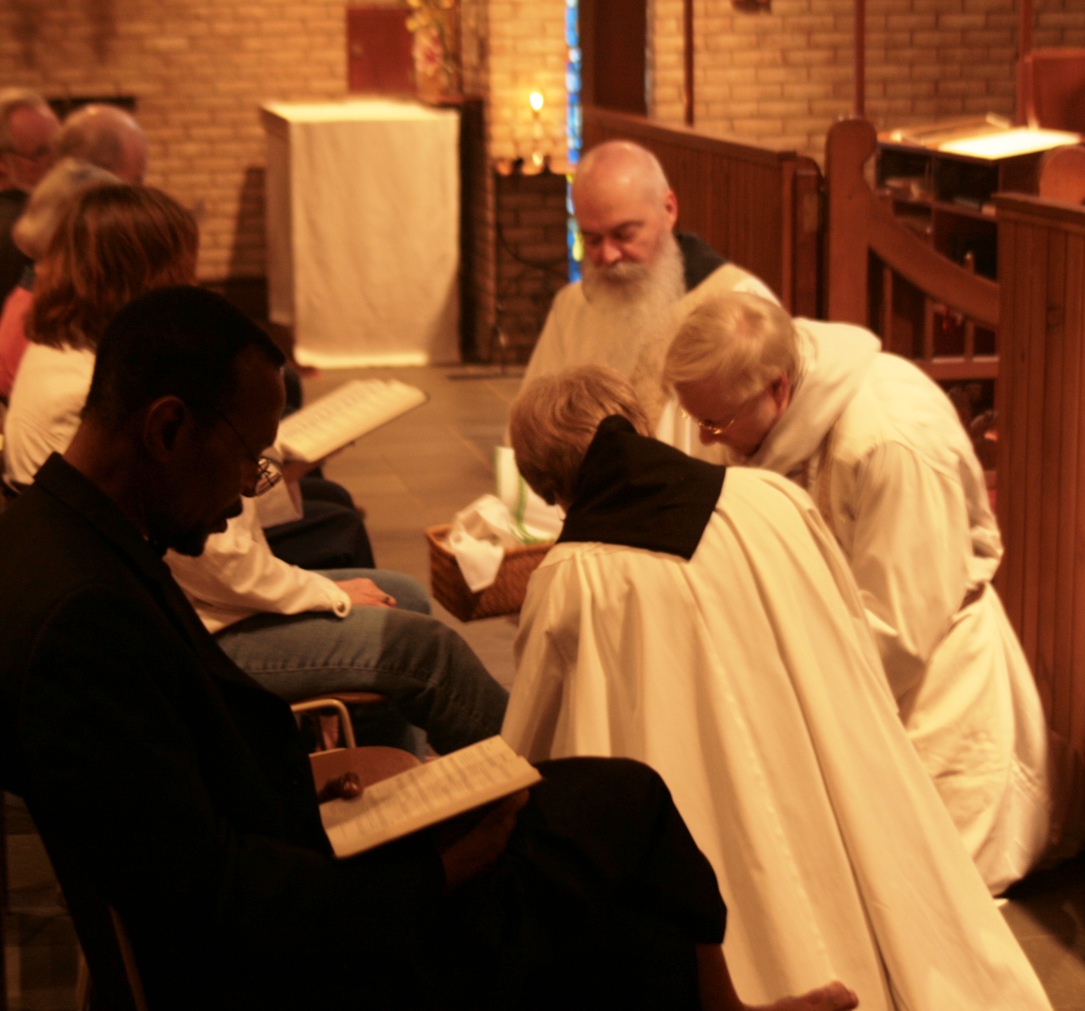
 Abraham’s call to leave his country and kindred has been a monastic trope ever since there was a monastic presence in Christianity. Entering the monastic life does entail leaving behind the life one had been leading up to that time. It is also a venture into the unknown. Reading books on monasticism or even visiting monasteries do not fully prepare one for life after actually entering. The author of Hebrews said that Abraham did not know where he was going and lived “as in a foreign land.” (Heb. 11: 9) The author of Hebrews was not writing for monastics but for a Christian community under pressure. For this author, all Christians have “no lasting city. (Heb. 13: 14) Abraham did not simply turn his back on his family and his culture. God told him that he would “be a blessing” and through whom all families would be blest. (Gen. 12: 3) This would include being a blessing for the family he had left behind. Monks, for that matter remain involved with their families of origin and offer help when it is needed. Benedict himself had left the Roman culture of his time in which we was well-placed socially to enter a new life in which he became a pioneer for many sons and daughters in the millennium and a half since his life.
 Imaginary Visions of True Peace