The Infinite Round Dance

churchDistanceBlossoms - Copy

Imagine an endless round dance of three persons dancing in and out of each other, dancing with a Desire they share infinitely with each other with such intense love that the three dancers are one, yet so strong is their love for each other that they desire that there also be three. The persons are not personas, as in fake faces of actors or hypocrites, neither are they rugged individualists believing in every person for oneself. These persons are pure relationship through their shared Desire of love.

This round dance could have gone on forever with nobody the wiser except for one amazing thing: the love of these three persons was so ecstatic, so explosive, that it overflowed into a world of galaxies and stars and planets and flowers and giraffes and humans with teeming brains filled with desire, all with the intent of making countless beings much the wiser for the infinite round dance.

The overflowing love of the infinite round dance required that all desires to dance be free so that humans could look at a tree and desire that tree’s fruit before receiving the fruit as a gift from the infinite dancers. When the desire flowing through humans turned into rivalry with the infinite dancers and with each other, suddenly countless trees disappeared in the conflagration, leaving only centered the few trees that drew the humans ‘desires.

As humans fought over their crossed desires and gathered only to share a desire to kill or expel a victim blamed for the violence overcoming them, the infinite dancers continued to dance through the human desires, inspiring desires to share the trees and fruits and poems and songs in tune with the Desire of the infinite dancers.  The infinite dancers poured their Desire into humans who proclaimed the Desire to others, even when they were stoned or ridiculed or cut off from the land of the living.

So strong was the Desire of the infinite dancers that with the fire and love of the other two persons, one person entered into humanity and became vulnerable to all the shared rivalrous desires that spread like a plague among humans. The Son, conceived in a human womb by the Holy Spirit, gave up his spirit when the humans he came to save chose to kill him. The Son received the spirit back as he was raised from the dead, and then forever after sends that spirit into the desires of all humans.

And so the endless round dance continues with the overflowing love of dancers’ shared Desire that all humans be ecstatically the wiser for the dance.


 

The Holy Spirit’s Fiery Desire

outsideSupper1What is the Holy Spirit? Wrong question.  The Holy Spirit is the third Person of the Trinity, not an ït.” Our difficulty in thinking of the Holy Spirit as a person is a symptom of our cultural problem of really seeing other persons as persons.

“Many terms and images are given for the Holy Spirit: a roaring wind, tongues of fire, breath, gift, counselor, consoler, teacher, guide, and the bond of love, to list a few. Some of the terms are personal, some not. This only adds to the confusion unless we get beneath the impersonal images to realize that breath requires a breather, a person’s temperament can be fiery, and a bond of love can’t really love unless that bond is a person who actually loves. Teaching and guiding, though done with personal agency, can be mechanical if they are only conveying information and or getting us from one place to another.

The Holy Spirit adds to our difficulty simply by being so shy. Jesus shows us the Father, the Holy Spirit shows us Jesus. Who shows us the Holy Spirit? Look behind you and the Holy Spirit is still behind you. Look deeply in yourself and the Holy Spirit is deeper yet. If we want to know the Holy Spirit, we have to be as shy, as hidden as this Person. Most of us think it important to be more assertive than that.

Perhaps the Holy Spirit is hidden in much the same way as mimetic desire is hidden. (See Human See, Human Want.) Our imitation of other peoples ‘desires occurs below our conscious awareness. The Holy Spirit does the same. Is there a connection between the two? As our teacher and guide, the Holy Spirit conveys the Desire of God.  More than that, the Holy Spirit is the Desire of God. What is this Desire of God? The image of a fiery wind burning all of God’s people without consuming us gives us a hint of God’s fundamental Desire: that we all may be one as the Father and the Son are one. (There is the Holy Spirit hiding again! The Spirit is just as much one with the Father and the Son as the other two Persons of the Trinity.)

Let us try thinking of the Holy Spirit as the Gatherer with fiery arms of Love. Mimetic desire unites us with other people whether we like it or not, or will it or not. Mimetic desire deepens our lives when we share desires in mutually enriching ways, but when mimetic desire falls into conflict, it unites us to that person in the bad sense of being stuck together.  The Holy Spirit weaves through the swirl of other peoples’ desire with God’s Desire, teaching us and guiding us with fiery love how to fill all these desires between us with tongues of fire that deepen our communion with others beyond what words can say.

Jesus’ Escape to the Kingdom

crosswButterfliesThe Ascension is among the most puzzling festivals in the church calendar. The contradictory accounts of the event are a puzzle but one thing the accounts by Luke and John’s Gospel share is to connect Jesus’ departure with his sending the Holy Spirit. Jesus said the Holy Spirit would come to lead them into the truth. What truth did the disciples need that they hadn’t learned already from their teacher? Did Jesus have to leave before the disciples could hear the Holy Spirit?

During his ministry, Jesus warned his disciples three times that “he would be rejected by the elders, the chief priests, and the scribes, and be killed, and after three days rise again.” These warnings came precisely at the times the disciples thought that a Maccabean-like revolution against the Romans was just around the corner: when Peter proclaimed Jesus to be the Messiah, right after the Transfiguration, and when James and John asked if they will sit at Jesus’ right and left in his kingdom.

After his Resurrection, Jesus tried again to get across to the disciples what his kingdom was really all about. When Clopas glumly said that he and his companion had hoped that Jesus “was the one who was to redeem Israel,” Jesus, not yet recognized by them, rebuked them for their slowness of heart in believing what “the prophets have declared.” Then he “interpreted to them all the things about himself in all the scriptures.” Later, Jesus appeared to the twelve and explained that everything written about him in “the law of Moses, the prophets, and the psalms must be fulfilled. “Since the phrase “the Law and the Prophets” was used to refer to the whole Hebrew Bible, the special mention of the psalms is significant. The psalms include many laments over persecution from the standpoint of the victim. Jesus went on to say that when the scriptures say that the Messiah was “to suffer and to rise from the dead on the third day,” it means that “repentance and forgiveness of sins is to be proclaimed” in Jesus’ name to all nations, beginning from Jerusalem. Proclaiming repentance and forgiveness is a very different proposition from starting a revolt to restore the kingdom to Israel.

When, in spite of hearing this teaching for forty days, the disciples asked their Risen Lord: “Is this the time when you are going to restore the kingdom to Israel?” Jesus must have banged his head against the nearest tree and cried out: “I’m out of here!” This repeated question may have convinced Jesus that the disciples were never going to stop asking him to restore kingdom of Israel as long as he was walking on the earth with them. Maybe Jesus was planning all along to leave after forty days; maybe he planned to stick around indefinitely but this question was the last straw.

Jesus’s Ascension put paid to any notion of his leading a second Maccabean-type revolution. The disciples were left with no choice but to try doing what Jesus told them to do when he breathed on them and said: “Receive the Holy Spirit. If you forgive the sins of any, they are forgiven them; if you retain the sins of any, they are retained.” Jesus’ kingdom is to preach repentance and forgiveness to the whole world until everybody has repented, been forgiven, and has forgiven everybody.

Hospitality Initiative

WilliamGuestsChurch1On May 3-4 I will be attending the Hospitality Initiative hosted at Oakland University in Oakland, MI. The convener is Charles Mabee, a scholar who works with the thought of René Girard. This is a multi-faith gathering where papers from a wide variety of spiritual traditions will be represented by the presentation of papers. I will be presenting a brief paper called “Mimetic Hospitality: Guests and Community in the Rule of St. Benedict.” Some of the content overlaps with my blog post Cleaning up our Unclean Acts which introduces some of the thoughts I develop in this paper. You can read my paper here.

Cleaning Up Our Unclean Acts

eucharist1Peter was surprised when he had a vision of a sheet carrying all the animals listed in the Law as unclean accompanied by a voice telling him that God had made them clean. Peter was even more surprised when he was told to go to the house of an unclean Gentile named Cornelius and preach the Gospel to him. That is, God had made all humans clean.

We all have a hard time living without the comfort of knowing that some people, some things, are unclean. This fear that sustains us is the fear of what is Other. All we have to do is get to know “unclean” strangers and we will be happy and no longer afraid.

René Girard, however, would give us pause. Girard is often invoked when there is need to scold people for creating “out” groups to make them feel good about their “in” groups. Actually, Girard alerts us to our problems within our “in” groups. Prior to our fear of the Other is our fear of what is the same. Rivalry and the violence rivalry lead to does not originate in battles with strangers but with those closest to us. In Genesis, almost all of the strife is between brothers.

Girard suggests that this fratricidal strife tends either to the death of a brother or a reconciliation through killing somebody else. At the dawn of humanity, a tribe first struggled with rivalry within its own ranks and either imploded through its violence or came together through killing one of its members, who then was designated at Other, the monster who caused the commotion. Then the tribe held itself together on an ongoing basis by warring on other tribes who were designated as Other. In this regard we are not one wit wiser than the most “primitive” of people. A fundamental practice of statecraft today is to deal with rivalry and tensions within a nation by designating an enemy that the whole nation must fight.

Anthropologists such as Mary Douglas have demonstrated the human tendency to divide foods between those deemed clean and those considered unclean. Eating is the central activity of a community. We eat with those who are closest to us. However, as noted above, we also fight most with these same people who are closest to us. By dividing the food we eat between clean and unclean, we create a barrier between us and other people, between us as the “in” group and those in the “out” group. That is, we relieve our communal tensions by banding against those who eat “unclean” foods.

Here we come to the importance of Jesus’ admonition to his disciples, while at table, that they (we) love one another. Some scripture scholars have poured cold water on idealistic readers by saying that John was concerned only with love within the community. But Jesus’ saying that others will know we are Jesus’ disciples by our love makes it clear that this loves does extend beyond the immediate community. These reflections on “clean” and “unclean” further suggest that fostering non-rivalrous love within the community allows the community to reach out to others. This love will make everything and everybody clean and bring us all to one great table in the Heavenly Banquet.

How Are We Saved?

yellowTulips1The New Testament and two thousand years of Christian preaching has consistently proclaimed that the death and resurrection of Jesus Christ has opened the way of salvation for all humanity. Precisely how this mysterious, earthshaking event has done that   has raised more questions than answers. It is understandable that the focus would tend to be on the death of Jesus since the event is so dramatic and creates intense emotional effects in Jesus’ followers. However, understandings of the atonement of Jesus through this route have raised long-standing problems that cry out for a fresh approach. The growing realization that the killing of Jesus was just plain wrong on the part of many Christians, and not just those influenced by the thought of René Girard,  opens a way for a re-thinking of atonement theology that can support a deep spirituality grounded in God’s unconditional love for all people. As article I wrote for the Abbey Letter Saved By the Life of Jesus contributes to this re-thinking that actually reclaims the Gospel for us. It is included in the collection of articles in Come Let Us Adore. You can read it here.

Abraham out on Highway 61

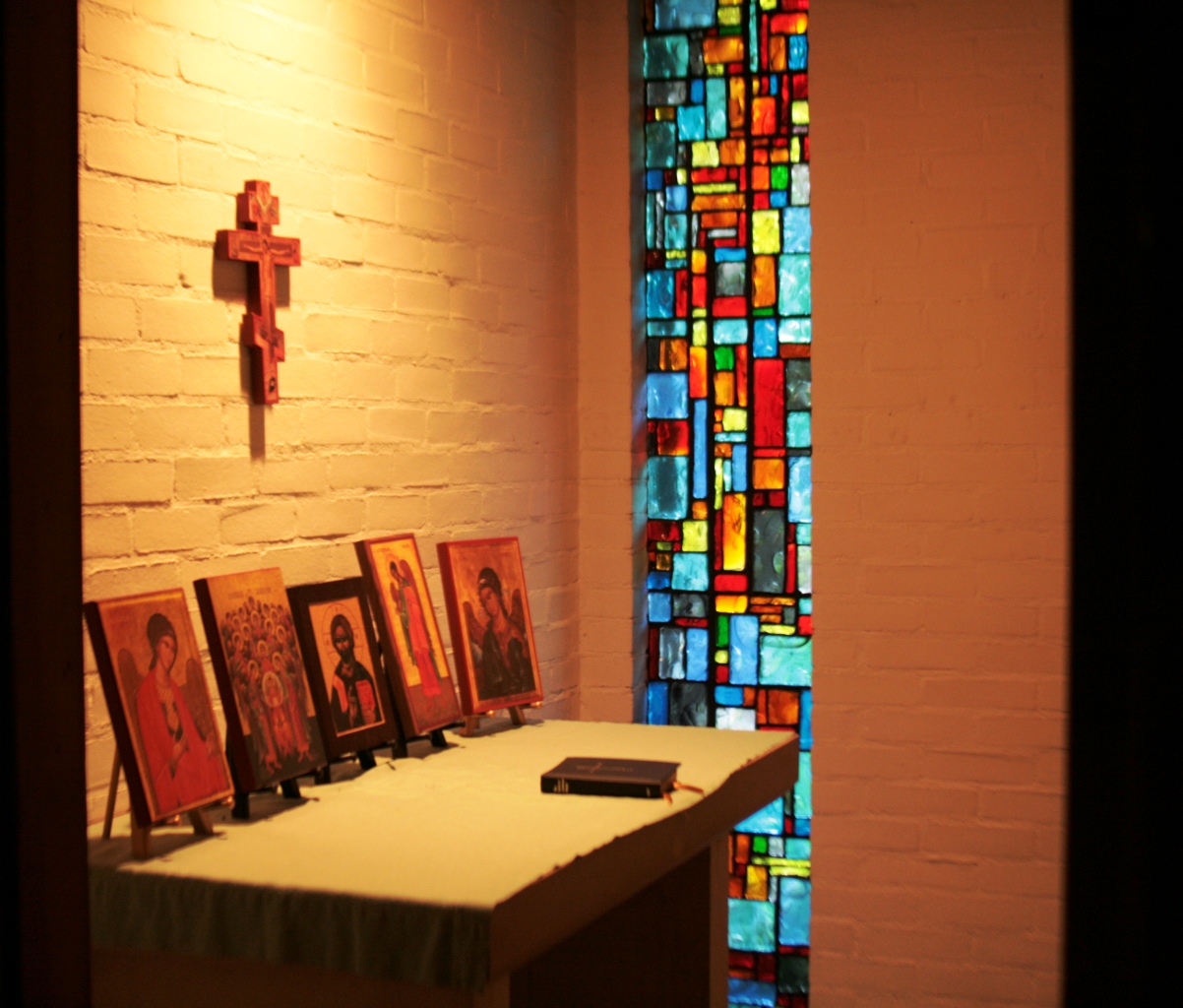
sideAltarsIcons1The near-sacrifice of Isaac by his father Abraham, the Father of Faith, is the most troubling of stories. It should be. Chaim Potok’s young protagonist Asher Lev remembers the shiver he felt when he first heard the story. What is most troubling is the suspicion that Abraham was right to be willing to sacrifice his son. But was he? Jeremiah says Yahweh denounced the sacrifice of children, saying “that such a thing had never entered my mind.” (Jer. 19:5) Perhaps we are right to be troubled by any notion that Abraham was right to even let the idea enter his mind and even more troubled by any thought it ever entered into God’s mind.

Bob Dylan makes a bitter burlesque of the story in his song “Highway 61 Revisited.” The “god” who requires the sacrifice is a bully, warning Abraham that if he doesn’t comply: “Next time you see me, you’d better run.” To the question: “Where do you want to see this killing done? God said out on Highway 61”, the place for “a thousand telephones that don’t ring” and where to “put some bleachers out in the sun” to stage the start of the next world war. As with so many Dylan songs, the imagery reveals a society filled with mimetic rivalry and victimization where sacrifice and war become a spectator sport.

Soren Kierkegaard’s searing Fear and Trembling is at least as troubling as the biblical story. SK’s category of the “teleological suspension of the ethical” raises fears that the author celebrates Abraham’s willingness to do the deed. (What the fancy phrase means is: anything at all God says to do is right—end of story.) However, this troublesome category is coupled with what SK called “infinite resignation.” This is what Abraham had when he was willing to kill his son by God’s command. However, infinite resignation falls far short of faith and faith is what the biblical story and SK’s book is all about. Faith is receiving back what is given with infinite resignation “by virtue of the absurd.” Still troubled?

The most clear and piercing critique of this “infinite resignation” I know of comes in the powerful poem retelling this story by the World War I poet Wilfred Owen. Abraham builds parapets and trenches around the wood, suggesting the sacrifice of sons sent off to the war. But when the angel of the Lord admonishes Abraham to “slay the ram of pride instead of him . . . the old man would not so, but slew his son,/ and half the seed of Europe one by one.” This poet, one of many young victims of the war, and the creator of the bitter irony that poets like Bob Dylan use so well, has revealed once and for all the sacrificial horror of “infinite resignation.” That is, anyone infinitely resigned to sacrifice oneself without faith will also sacrifice others, especially one’s own children, also without faith.

The typological interpretation of the story where it stands for God the Father’s being willing to sacrifice His only begotten son is also troubling. But Jesus did not go to the cross with infinite resignation. Rather, by “virtue of the absurd,” he believed that God, being the God of Abraham, Isaac, and Jacob was God, not of the dead, but of the living.” (Mt. 22:32) St. Paul says we are saved by the faith of Christ, the faith that, on the cross, embraced not death, but the life of his heavenly father. The virtuous absurd, then, is the ecstatic embrace of God’s love so filled with life that there is no room for death for anybody.

Rising to the Life of Christ

crosswButterfliesWhen St. Paul says in Romans that we are baptized into Jesus’ death, what kind of death are we baptized into? An aged person drifting off while asleep? A ritual death with no consequences? No, we are baptized into the death of Jesus. This particular death, the one we are baptized into, is a judicial death resulting from collective violence. This is the shameful death of an alleged insurrectionist at the hands of an Empire. This death was caused by the meltdown of rivalry in the society of first century Jerusalem, exacerbated by the betrayal and cowardice of Jesus’ closest followers.

Once we know what death we are baptized into, we know what life we are raised to. In his risen life, Jesus showed no resentment or vengeance to those who had gathered to put him to death or had dispersed out of cowardice.  Moreover, Jesus was not entangled in any of the rivalrous feuds that are a way of life for most humans. Imagine living without all the entanglements and resentments swirling around and inside of us. Hard to do, isn’t it? That is how radically different the risen life is from the life we live now.

If our “old self” is crucified with Jesus, then we have, like Jesus, died in the place of the victim. That means we have died to our tendency to fuel resentments and resolve these resentments through gathering against the victim, as Paul himself repented of having held the clothes of the men who stoned Stephen and openly approving of what they did.

None of this means that repenting of personal sins and faults doesn’t matter and that becoming free of them is part of the resurrected life. However, Christian teaching has a strong tendency to stress personal renewal to such an extent that horrifyingly sick participation in collective persecution goes unnoticed. That hundreds of thousands of Christians could lynch thousands of black people shows us now, now that the lynching era is over, how easily this sort of group contagion can take over in what is often called an “enlightened” and “civilized” era.

Rather than congratulating ourselves on giving up lynching after roughly a hundred years of the sport, I suggest we take careful note of the growing polarization in our country over social and religious issues. Honest disagreement is not a problem; it’s a good thing, something that keeps us honest. But polarization tends to be conflict for the sake of conflict so that conflict feeds itself and it feeds each one of us. Never mind that polarized conflict is as nourishing to humans as sawdust and glue. What is really dangerous about this polarization is that it easily collapses into collective violence as a way of resolving the tensions.

If we wish to be serious about living the risen life with Christ, we must be baptized by the love and forgiveness of the risen Christ and allow him to gently but firmly remove all the resentments we feed on so as to feed on body and blood of the Lamb of God who reaches out to everybody with vulnerable love.

Can you imagine such a thing? Can you be overwhelmed by such a thing in baptism?

A Risen Life Full of Forgiveness and Love

crosswButterfliesHere is my favorite thought experiment: Imagine that everybody around you ganged up on you, leveled incredible accusations against you, and rained savage blows on your body. Your friends either joined in the persecution or slunk away, too afraid to defend you. Your attackers pressed on until they had put you to a most painful death. Imagine further that, miraculously, you found yourself alive three days later. Having already died, you could hardly die again. You have become invincible. What would you do to the people who had mistreated you? How would you approach your cowardly friends?

Perhaps this thought experiment can give us an inkling of how amazing it is that, when this very miracle happened to Jesus, he did not retaliate, but instead, invited everybody to a big whooping party that will never end. After rising from the dead, Jesus continued to do what he was doing before he was killed: gather God’s people in peace by peaceful means only. That is, after his Resurrection, Jesus practiced what he preached in the Sermon on the Mount: return evil with good, hatred with love. The fullness of Jesus ‘forgiving love can be as earth-shattering as an earthquake or as gentle as stepping through a wall.

If Jesus were dead and there was a body in the tomb for the women to anoint, chances are that Jesus’ disciples would either have remained in hiding or they would have reacted to the violent act of the crucifixion with violence. But in Luke the young men in white asked the women: “Why seek the living among the dead?” That is, God did not will the death of Jesus, God willed life for Jesus because that is what God wills for each one of us. As long as we stop at Jesus’ death, we also stop at the grief and anger and that leads to violence. If we move on to the life of Jesus, than there isn’t the same room for grief and anger because Jesus is alive and wants us to be alive in Him.

In short order, Peter passes on the same absence of revenge of Jesus’ persecutors and fullness of forgiving love for them when he tells the people in Jerusalem precisely what they had done, sticking to the bare facts and not adding irrelevant insults the way we usually do in such situations. When Peter’s listeners were “cut to the heart” and asked: “What should we do?” Peter extended the invitation that he and the disciples had received from the Risen Lord: “Repent and be baptized every one of you in the name of Jesus Christ so that your sins may be forgiven; and you will receive the gift of the Holy Spirit.” This is a far cry from the response we get from most followers of a slain leader. Peter had heard the cock crow, repented and accepted Christ’s forgiveness and love. Peter was a weak human being like the rest of us. If Peter is like us, we can be like him.

See also Two Ways of Gathering and Violence and the Kingdom of God.

What Humans Willed: the Passion Story

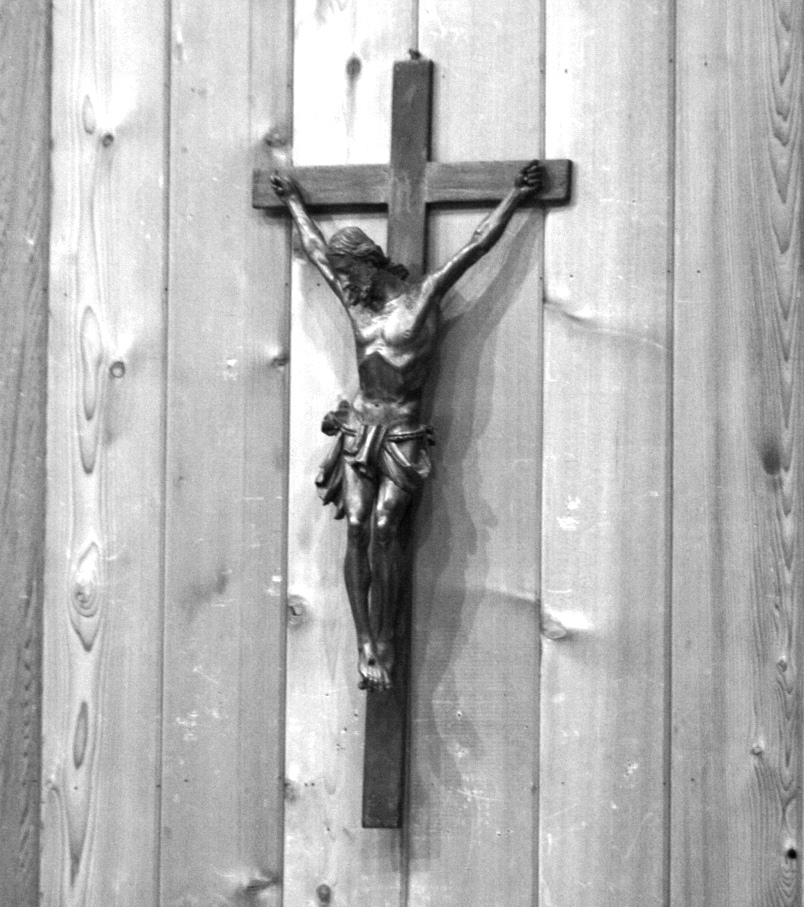
crucifix1At the abbey where I live, I preach at the Maundy Thursday liturgy and the Easter Vigil. I do not preach on Palm Sunday and Good Friday, the two liturgies where we chant the Passion. The Passion is long enough without added sermons and the Passion speaks for itself. That is, it speaks for itself as long as we don’t add things it does not say that undermine what the Passion does say.

To belabor what should be the obvious, the Passion Story tells us what human beings chose to do. Jesus chose to drive the money changers from the temple and teach the people there. The Jewish authorities chose to plot to have Jesus arrested and handed over to the Roman authorities. Judas chose to betray Jesus, thus facilitating the arrest and handing over. Pilate, to varying degrees in the four Gospels, vacillated but in the end chose to sentence Jesus to crucifixion. Meanwhile, the people who had cheered Jesus upon entering Jerusalem ended up crying for his crucifixion. The Roman centurions nailed Jesus to the cross where he died. The Passion narratives say nothing to suggest that anything that was done to Jesus, from the arrest to harassment and flogging to nailing him to the cross was in any way the will of God.

In all this, God does not do anything. Why do I bother to make a big point of this? The reason is that many Christians have suggested that God positively willed the sacrifice of Jesus for some cosmic purpose, usually because God was upset with wayward humans and was somehow incapable of forgiving humans unless somebody took the punishment for human sin. If Jesus, innocent of sin, should take the punishment, well and good. Well, not well and good. What kind of god demands punishment and doesn’t care who gets punished as long as somebody does? The Passion Story never says anything of the kind.

If God did not will Jesus’ violent death, what did God will? What was God’s plan? Jesus understood the heavenly Father’s plan to be that he Jesus knew that if he defeated Caiaphas and Pontius Pilate with force would only keep the world forever embroiled in retaliatory violence. The only way to avoid that was to gather people peacefully no matter the outcome, even if it meant death.

But Death, much as it was the plan of humans, was not God’s plan as a group of women found out early in the morning on the first day of the week.

See also Two Ways of Gathering