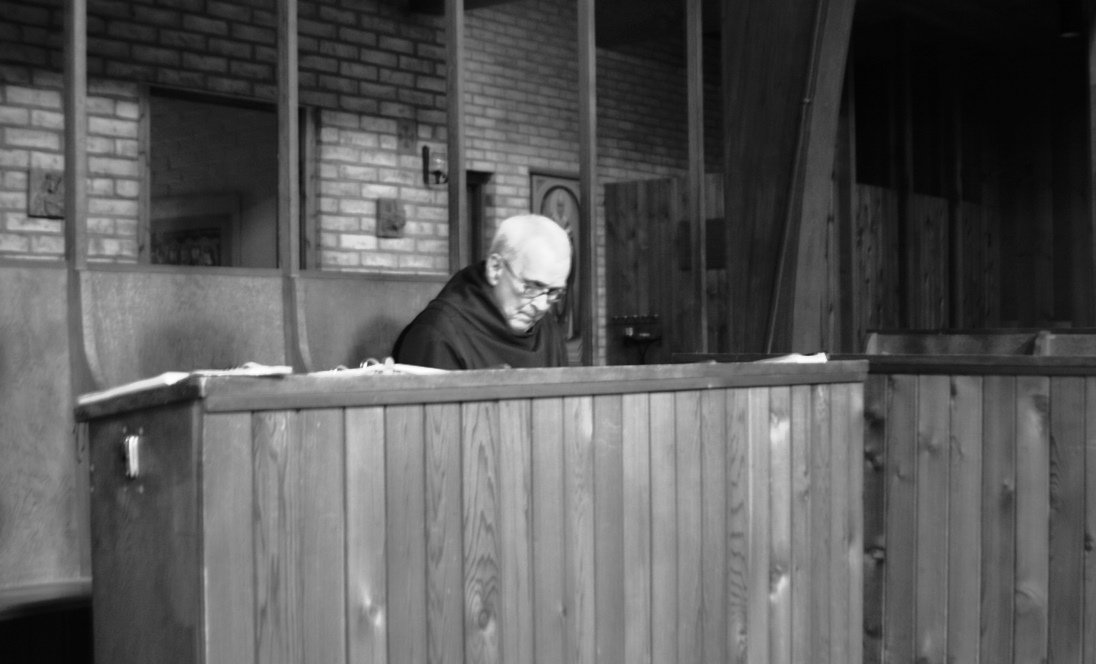
Christian Community (5)

guestsNarthex1Unfortunately, I can’t discuss Church without saying something about institutions called churches. I also can’t overlook the unfortunate fact that although the word “church” has six letters in it, for some it is a four-letter word.

A common distinction is made between the visible Church and the invisible Church. The former is made up of people who wear clerical collars and vestments and those who sit or stand or kneel in pews and sing hymns or songs of praise. The latter is made up of those who actually have their hearts and minds conformed to Christ regardless of whether or not they place their bodies in buildings with a cross on it. In such a distinction, the invisible Church is the real Church, although people invested in the visible church (sorry about the pun!) hope that at least some of them are in the real, invisible Church as well. Of course, this invisible church isn’t really invisible. It is perfectly visible to God and it is visible to all people who have eyes to see. In my earlier posts on the subject of Church, I have suggested that the essence of Church is to be aligned with the forgiving love of Christ that brings us to the place of the victim in opposition to the principalities and powers that feast on victims. Acting out the role of Church in this way is quite visible, just as visible the people who sing hymns and preach in buildings that we call churches. Again, we hope there is at least some overlap between the two, but we all know that the two hardly coincide.

The Church is, then, visible in acts of worship and in charitable acts such as ministering to the poor. The disconnect between these two visibilities is a cause of dismay and downright confusion. Some people who are devoted to both might find that the people they worship with and the people they work with in ministry are very different. This problem becomes particularly acute when a “church” openly allies itself with Empire. To this day, there is concern that when the Roman Empire theoretically converted to Christianity, Christianity was actually converted to the Empire. The establishment of what was called “Christendom” tended to institutionalize the violent tactics of Empire. The Inquisition was a particularly notorious example of this. In more recent history, the Nazi government of Germany ordered the Evangelical (Lutheran) Church to expel all members of Jewish descent from leadership positions. Complying with this demand was a betrayal of their own members and of Christ. The Confessing Church which seceded in protest was a remnant of the Body of Christ.

The disunity and discord among Christians is a further cause of scandal to many. That there should be many ecclesiastical bodies with long or sometimes short traditions is not a problem to me. People are different and cultures are different. It is sad, however, that most churches, were founded in protest against the ecclesiastical body they left. Many of the long-standing debates have been resolved and many ecclesiastical bodies work together charitably in matters such as world relief. Many of the divisions, however, smack of emulating the disciples who argued about who is the greatest and/or the slogans in 1 Corinthians: “I am of Apollos!” “I am of Cephas!” Many of the theological debates in the early Christian centuries over the Trinity and the Natures of Christ could have been carried on with less rancor if church leaders had not been so afraid that God would eternally torture anyone who didn’t get the formulas just right. Getting the theology right just isn’t enough when we get the Love of God wrong.

The scandal of Church for so many of us tempts us to chuck it all and try to go it alone. If Girard’s theory of mimetic desire is true, that is simply not possible. We are affected by the desires and intentions of others whether we like it or not. If we set ourselves over against everybody else in defiance, that very defiance makes us totally dependent on the people we are defying. After all, if we aren’t defying people, we aren’t doing much in the way of defying. The deeper problem is that when we make ourselves that dependent on other people, we are easily sucked into the power of persecutory mechanisms when they occur. A lone individual can’t hold out against such a thing.

So there is need to connect with others. This is a point I illustrate in some of the stories I’ve written, most particularly in Merendael’s Gift. The protagonist can’t stand up to social pressures of the kids he hangs out with until he allies himself with other children who band together to befriend this strange visitor from another planet. This group becomes an analogy for the Church as the Body of Christ. In real life, we have to be alert to the people who are sincerely and humbly entering the place of the Victim. (I say “humbly” because some people pridefully use “victimhood” to manipulate others.) We can only hope that some of these people actually are in a church in the ecclesiastical sense.

Girard’s theory of mimetic desire and the rivalry and sacrificial violence it can lead to suggests that they greatest division among Christians is along the lines of a theology and practice that is sacrificial on the one hand and one that is grounded in Jesus the Forgiving Victim on the other. Girard’s theory shows us how easily followers of Jesus’ Kingdom could easily slide back into remnants of the primitive sacred. The Body of Christ looks like the Body of Christ when it is embodied by people who stand up to the persecutory mechanism whenever it occurs. Unfortunately, any of us can easily fall into embodying instead the Satan who is the Accuser. That is to say, this schism between sacrificial and forgiving members can split right down the middle our own selves. This is why we need to strengthen ourselves with the practices of Church such as worship and interior prayer and mutual encouragement.
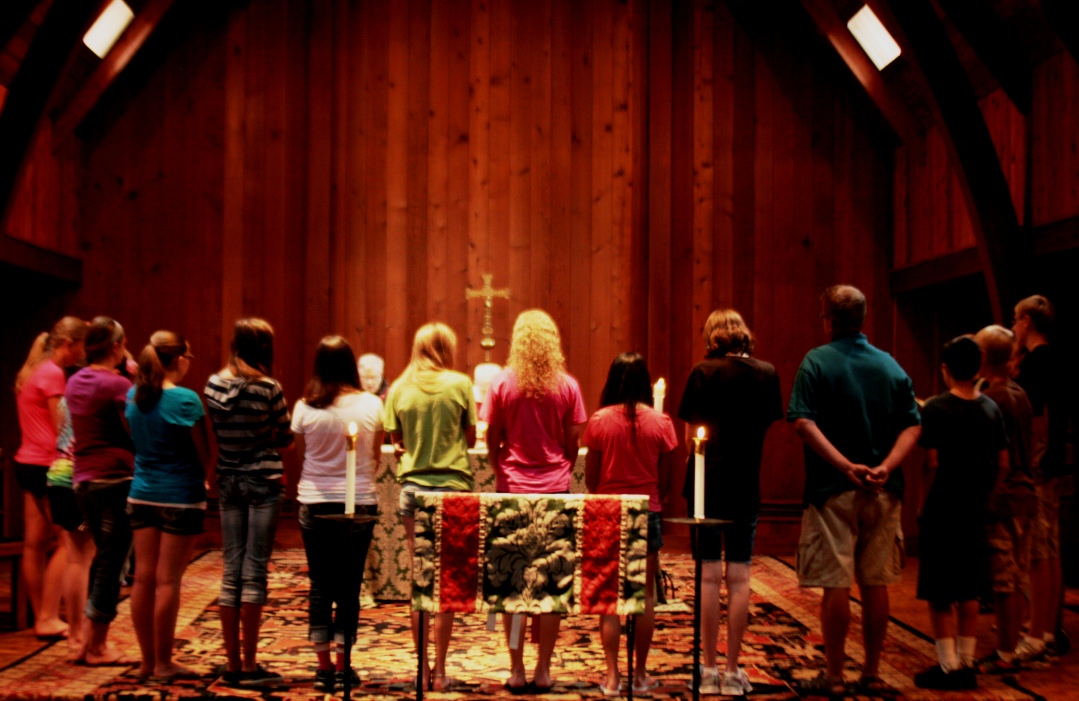
On Gathering with Those who Keep Oil in their Lamps

eucharist1Like many parables, the Parable of the Wise and Foolish Maidens is obvious and yet puzzling in some respects. The notion of forfeiting eternal life for failing to be prepared at a certain level is oppressive, but we can lift this degree of oppression by noting that the Kingdom of God is something we are supposed to be living NOW, in this life. This is what we are to be prepared for. If we are prepared NOW for the kingdom, entering more deeply into the Kingdom when we die will take care of itself.

It is worth noting that just before this parable, Jesus has thrown out the parable of the household where the wicked servant beats his fellow servants and gets drunk with the drunkards. Here we have an image of the violence humanity commits and suffers for not being alert to God’s Kingdom. Ironically, the wicked servant thinks the Master is delayed when the Master is already there in the servants he is beating. In contrast, the Foolish Maidens do not commit violence, but they fail to do anything that would stand up to violence such as that of the wicked servant.

I also think it significant that the parable is about two groups of maidens rather than just two maidens. As one who uses the thought of René Girard as a tool for interpreting scripture, I am inclined to interpret this parable in turns of contrasting human groups, each governed by a collective desire they share within that group. The wise maidens who have extra oil for their lamps are a community whose members encourage one another so as to keep their lamps burning. When they care about the Bridegroom and those the Bridegroom identifies with, their lamps burn yet more. I know how valuable it is to live in a community of men who all encourage me to remain ardent in prayer and kindness to those who come here, which makes it easier for me to encourage them in turn. The Foolish Maidens are quite the opposite. Here is a community, if one even wants to call it that, where the members encourage each other to remain apathetic and so strengthen apathy among themselves. Apathy is just as contagious as ardor, if not more so. When the people around us act (or fail to act) out of apathy, our own lamps are sure to burn lower and lower and eventually go out.

When the Wise Maidens say there is not enough oil to share when the Bridegroom comes, they are wrong in one respect. The strengthening of ardor among themselves could easily catch the foolish Maidens into its burning. The problem is that it is very difficult to extricate oneself from a group whose process has a strong grip on us and it is even much more difficult yet to change a whole group around all at once. Not even with the best will in the world could the Wise Maidens have enough oil burning to do that. The Foolish Maidens are like the drunkards in the previous parable who let the wicked servant beat the other servants and then drink with him. The Wise Maidens have the strength to stand up to the violence and witness to a nonviolent way of living. The Foolish Maidens may not be violent themselves, but they will be swept away by violence when it comes. We really do have to pay attention to the company we keep and how we keep it. The Wise Maidens do need to find ways to reach out to their Foolish sisters without getting caught in their apathy.

Finding themselves flatfooted when they realize the Bridegroom is here, the Foolish Maidens compound their foolishness by running off to the store in the middle of the night. With some stores open 24/7 these days, this act isn’t quite as irrational now as it was then but it is irrational enough. What they are doing is running away from the Maidens who have their lamps lit and away from the Bridegroom. They would have better off to stay with the Wise Maidens and the Bridegroom. It may have been humiliating to have empty unlit lamps but the Bridegroom is the one who lights the lamps of those who hold them out. They also would have been in a position to start catching the ardor of the Wise Maidens. By running off, they get plenty of oil but they have missed the chance to encounter the Bridegroom and those the Bridegroom identifies with. All of this is a perfect image of the kind of crowd panic in reaction to a problem that ensures that it only gets worse.The foolish maidens will almost certainly just let the oil run out all over again.

As with the wicked servant who thought the Master was delayed, the Maidens think the Bridegroom is delayed. The truth is that the Bridegroom is always already HERE. We can turn to the Bridegroom in love at any time and we can respond to the least of those the Bridegroom identifies with at any time they show up. THIS is what we have to be alert to and prepared for. There is lasting damage to being unprepared through apathy for the Bridegroom’s presence. I’m sure all of us can think of opportunities that we squandered and there is now no way to go back and make them good. The Forgiving Victim will still redeem all of us, but the diminishment and needless pain we have allowed always remains. Let these memories that we regret motivate us to stay close to the Bridegroom who lights our lamps in the company of others who will encourage us to keep our lamps lit.

Christian Community (1)

guestsNarthex1The French modernist theologian Alfred Loisy famously quipped: “Jesus preached the kingdom of God and got the church.” This dictum pits the Jesus movement against the church that followed.

The Gospels attest to Jesus having many people gathering around him for healing and to listen to his teachings. Except for the twelve apostles and the women who, according to Mark, provided for him when he was in Galilee and followed him to the cross in Jerusalem, there is no indication of how stable the group of followers was. Since many of them had to eke out hard livings on the land, probably most people gathered around Jesus when he was in town and that was about it.

The teachings of non-retaliation and forgiveness in the Sermon on the Mount and in other parables were clearly on a higher plane than his listeners could have been used to. They pose such a severe challenge that many of the greatest Christian writers have relegated these teachings to the margins and re-instituted retaliation both in moral theology and dogma. Maybe monks and nuns could turn the other cheek if a fellow monk or nun insulted them, but that was about it. No wonder Alfred Loisy and many others have grumbled about the church. Did the people who listened to Jesus and tagged along at least for a while catch on to the preaching of the kingdom based on peace and forgiveness in the midst of a world just as violent as our own? The indications I can see suggest that they probably did not.

Jesus’ closest followers consistently failed to understand and absorb Jesus’ teachings. Peter’s question as to whether or not he should forgive a brother or sister as much as seven times betrays this incomprehension. The constant bickering among the disciples as to who was the greatest further exposes their incomprehension. Mark juxtaposes this inner fighting with predictions of his crucifixion three times. Three is universally the number standing in for infinity so probably this didn’t happen just three times but an uncountable number of times. Moreover, when Jesus was arrested, he had to tell Peter to put his sword away.

The man who asked Jesus to make his brother share their inheritance equitably, only to be rebuked (along with his brother) for avarice, suggests that his listeners weren’t giving up rivalry over possessions at the drop of Jesus’ words. The crowd’s seizure of Jesus right after he had fed them bread from heaven seems to be John’s retrospective image of what Jesus’ listeners understood and hoped for.

The mysterious reversals of the crowd during Jesus’ last week are especially astonishing until we reflect on what the Gospel writer teach us about crowd psychology. All of the synoptic Gospels emphasize the fear the Jewish leaders had of the crowd. They wanted to put off the arrest until after the Passover at which point the crowd would disperse. When Jesus forced their hand, they had to do their own crowd manipulation. None of that would have worked if Jesus had spoken before Pilate. I suspect that Jesus chose to be silent because any words at all, no matter what they were, could have been construed as an encouragement to start an uprising. In the wake of Jesus’ silence, the disappointed crowd who had wanted to make him king were ready to be turned against him.

It is not productive to knock these people for being stupid, obtuse, and hard of heart. The truth is that we imitate their very stupidity, obtuseness, and hardness of heart more often than not. The followers of Jesus during Jesus’ earthly life do not give us very good models for how to listen and act. All except the few faithful women and the Beloved Disciple had deserted Jesus by the time he died. The rest of Jesus’ “followers” are very accurate mirrors that continue to stare us in the face. Then something happened. Jesus met up with the women to begin the process of re-gathering a following. Will we gather with them this time around?

Go to Christian Community (2)

American war Sacrifice

crossRedVeil1The escalation of militarized violence has reached bewildering levels in the USA. Kelly Denton-Borhaug gives us an important theological response centered on the theme of sacrifice.

First, Denton-Borhaug surveys the militarization of our society which will be an uncomfortable eye-opener for most of us. Recruitment is taking place in our public schools and has infiltrated our computer games which are being more and more designed to train us for real war that is no game—or shouldn’t be.

One of the most disconcerting elements of our society’s militarization is the large number of Christians who are avidly supporting our wars. Denton-Borhaug zeroes in on the rhetoric of sacrifice which she suggests is the keystone of the presidential speeches since 9/11. The sacrifice being made on our behalf by those serving in the military is noble, sanctified. How dare we oppose those who make these great sacrifices? Well, there is the matter of the countless people “over there” who are being sacrificed without having enlisted with the US military for the job. These deaths are countless because the US military does everything it can to prevent counting their deaths.

Denton-Borhaug analyzes the Christian theologies of sacrifice, especially substitutionary atonement, that makes Jesus’ death a sacrifice required by the Father, or at least the cosmos. What has been happening is that political rhetoric is syphoning off the Christian resonances of sacrifice, corralling the sacrifices required of war as if the god of war were the God of Christ. Much of this works on subliminal levels.

Those of us working with the thought of René Girard and his colleagues see ourselves in a different place regarding sacrifice, but Denton-Borhaug has problems here as well. Girard himself she mentions almost in passing, only to suggest that Girard sees it as human nature to be violent so not much can be done with it. Mark Heim’s fine book Saved from Sacrifice is examined in some depth. Although Denton-Borhaug respects Heim’s attempt to get away from a theology of sacrifice, she thinks he fails. The failure hinges on Heim’s (and Girard’s) notion that only through his sacrificial death could Jesus reveal the truth of sacred violence.

I think Heim and Girard are right about this but Denton-Borhaug has pointed to an important point. If Jesus’ death is considered “necessary” in any way whatever, then it is vulnerable to the military rhetoric that proclaims the sacrifices of war as “necessary.” Girard avoids philosophical and theological terminology and so does not consider the category of contingency. This is where theological analysis is necessary for Girard’s anthropological insights. Granted, the power of mimetic desire analyzed by Girard was highly likely to lead to the violent outcomes of collective violence leading to sacrificial rites. But to retain any sound doctrine of Original Sin, we must insist that this violent outcome at the dawn of humanity was contingent. The same applies to Heim’s analysis of the Atonement. Heim is as clear as it can be that Jesus’ death was not necessary as far as God was concerned. If it was “necessary,” it was “necessary” for humans. Given the weight of history and the situation in Judaea at the time Jesus lived, it seems highly unlikely any other outcome was possible for Jesus’ earthly ministry but we have to insist that the death of Jesus was contingent. That is, the truth of sacred violence could have been (and actually was) revealed through Jesus’ teaching. It was not “necessary” for Jesus to be killed to reveal this truth, but that is what happened. Knowing Mark Heim as I do, I am almost certain this is his position. I have taken the time to go over this section of the book in more detail to show how the challenge from Denton-Borhaug can help those of us who use Girard’s thought to sharpen our thinking in this area.

In a broader sense, Denton-Borhaug has trouble with sacrifice and for good reason, since the militarized rhetoric is such a powerful form of emotional and spiritual blackmail that really has ruined many of the brightest and best of our younger generation. One need only note the traumatized lives, high rate of homelessness and suicides of our veterans to see how thoroughly they have been made sacrificial victims. Denton-Borhaug has trouble understanding the nobility of Christian martyrdom in the early centuries, not realizing the degree to which it was nonviolent resistance to the Empire. In fact, her practical suggestions are along the lines of actively making peace, a “theology of work” she calls it which amount to much sacrifice as well as resistance to violent political structures.

A thought-provoking and important book that helps us grapple with a major ongoing crisis in our time.

For an introduction to René Girard’s thought see Violence and the Kingdom of God

The Process of Forgiveness (2): Letting Go

purpleFlower1Owning the hurt of injury is the beginning of letting go of the hurt that strangles us. For some people some of the time, letting go and forgiving happen simultaneously so as to seem like one movement.(See The Process of Forgiveness 1)  For most of us most of the time, the two are distinct, though closely related. This is most clearly the case when a kind of reverse psychology allows a letting go that leads to forgiveness. I have already noted that pressuring somebody to forgive horrendous injury such as childhood molestation because it is the “Christian” thing to do intensifies the pain of the injury with guilt for not being able to forgive it. In such cases, absolving the victim of forgiving the hurt allows that person to let go of it. Letting go removes the hurt from the center of our lives where it has been a major, often the central organizing principle of our lives and gives us the freedom to move on. Letting go does not mean that the hurt doesn’t hurt, but letting go loosens the hold the hurt has on us.

The most important element in letting go is non-retaliation. Here is where the famous admonitions in the Sermon on the Mount come into play: turning the other cheek, walking a second mile etc. It is important to note that non-retaliation, in itself, is not forgiveness. Withholding a counter punch that one is capable of delivering does not necessarily mean that one has forgiven the injury to the cheek. What non-retaliation does is push the pause button on violence that keeps it from escalating out of control, a scenario that makes forgiveness harder for everybody.

Letting go, especially in its form of non-retaliation, is a renunciation of trying to “win” a situation and instead assumes the position of the “loser.” This also makes the renunciation of retaliation a renunciation of mimetic rivalry. Remember that seeking revenge is fundamentally an attempt to “win” a struggle against the other and thus it perpetuates mimetic rivalry. In the heat of battle, winning is everything. When the battle is over and we are scarred more than ever or worse, winning turns out to be nothing but the burden of holding on to the hurt. After all, we haven’t let go and so the hurt keeps us in its relentless grip.

This is where humility comes in. Humility is the willingness to be a “loser” in the hope that we might win the person injuring us. Humility is particularly important here because not retaliating tempts us to think we have taken the higher moral ground. The tricky thing is that we have taken the higher moral ground but if we pat ourselves on the back for that, we become obsessed with ourselves and so turn the situation back into a contest of wills, which is mimetic rivalry. This is a case where it is important that the right hand not know what the left hand is doing.

Proceed to The Process of Forgiveness (3)

The importance of non-retaliation is that it gives us a tangible means of letting go that tells us if and when we really have let go of the hurt. If we slug the person back or sincerely wish we had, we have not let go. If we refrain from slugging the person back and don’t wish we had done it, we have let go. Simple as that.

Non-retaliation has been extolled by some, most notably by Walter Wink, as a strategy for resistance to the Empire. Wink suggests, for example, that turning the other cheek puts the aggressor in the awkward position of having to strike back-handedly. This take is attractive to many and it may be right, but insofar as turning the other cheek is intended as a strategy to muck up bullying behavior, it is not forgiveness. On the other hand, insofar as imperial politics requires reciprocal violence, any act that opens the way to forgiveness is an act of resistance to any Empire.

The most important thing to realize about letting go is that we are not cutting the connection between us and those who injure us. Trying to do that is futile. Our mirror neurons see to that. What letting go does is loosen what had been a tight, strangling connection to the other. Letting go gives each of us room to maneuver and to change the situation. We can’t, of course, take responsibility for what the other person does with the room this loosening gives. We can only take responsibility for ourselves. That is all we can handle anyway. More important, non-retaliation provides room for God to enter into the broken relationship and fix it.

After letting go of the hurt, the next step is to make sure we don’t grab it back and that we leave ourselves open to the mystery of forgiveness itself.

The Process of Forgiveness (1): Owning the Hurt

purpleFlower1When I suggest that forgiveness is a process, the implication is that there are several steps to the process and we take them one at a time. It isn’t as simple as that. There are steps that can be articulated to give us a sense of direction for the process, but they are all so closely interrelated that it is more like disentangling a tangle of yarn than a matter of climbing steps on a ladder or a staircase. The image of the tangled yarn, something that often feels more like a tangled rope around our necks, suggests that the process has a lot to do with loosening something that is tight, which is precisely what the Greek word aphesis, a word often translated as forgiveness, is about. Letting go that which has tied us up simply takes time.

Desmond and Mpho Tutu have written a valuable book called The Book of Forgiving that helps us understand the process of forgiveness. In my own reflections I don’t come up with precisely the same list, but it comes close and the four-step process in Tutu’s book gives us something to work with.

The first two steps listed by the Tutus are: 1) Telling the Story and 2) Naming the Hurt. These two steps are so closely related that they feel like one step to me, albeit a more complex step. I am inclined to call this first step: own the hurt. This step seems simple but it can be difficult emotionally because it means facing the pain and that is—well, very painful. It is, however, pain that is necessary for healing just as an infection has to be opened before it can be healed. Community is important as one almost always needs at least one sympathetic listener and often there is need for many more than that. The importance of telling the story is that when another has invaded us by injuring us, we are suffering on the terms of the perpetrator. The first step of suffering on our own terms is to tell the story, to face the truth of what has happened to us. We cannot forgive what we have not seen and faced for ourselves. As long as the truth of injury is repressed, it holds us in its grip. Over the years I have listened to people tell their stories, some of them about childhood sexual abuse. This listening makes it clear that the very act of telling the story changes the story from what it was before. Something moves within us when we tell our stories.

The many psalms of lament model for us this step of owning the hurt by telling the story. There is a communal element to these psalms as they seem to have had cultic use in Israel, and in fact are sometimes collective laments, and they have a long history of use in public worship in Christianity. These verses from Psalm 31 are one sample among many that could be picked out from the Psalter:

I am the scorn of all my adversaries,
a horror[c] to my neighbors,
an object of dread to my acquaintances;
those who see me in the street flee from me.
                      I have passed out of mind like one who is dead;
I have become like a broken vessel.
                   For I hear the whispering of many—
terror all around!—
as they scheme together against me,
as they plot to take my life. (Ps, 31: 11-13)

The Truth and Reconciliation Commission in South Africa that Bishop Tutu chaired is, to date, the most powerful instant of a communal telling of stories. Everybody who wished was allowed to tell the truth of the injuries they had received during Apartheid. Perpetrators were also invited to tell their stories and were granted amnesty for doing so. Telling the story also makes it clear that much more is at stake that the forgiveness by the victim. Those in South Africa who listened to the testimonials, from the bishop himself to those watching on their TVs, were challenged to forgive what had happened.

There is a danger in telling the story. Doing so does not automatically begin a healing process. It can do quite the opposite. Asking God to blot our abusers from the land of the living (Ps. 69:28) once we have told the story of waters rising up to our necks (Ps. 69:1) hardly moves us in the direction of forgiveness. Telling the story of victimization and listening to it can enrage us and lead us to seek revenge. Worship in Holy Week involves telling the story of Jesus’ sufferings that culminated on the cross. What these observances should do is deepen our compassion for the victim, leading to compassion for all victims. Instead, Jews learned over the centuries that it was dangerous to be walking about during Holy Week if there were Christians around.

This is why I include “own the hurt” as an integral part of this first step. It isn’t enough to tell the story; it is necessary to tell the story in a listening way. That is, we must listen to ourselves when we tell the story. The importance of at least one more person listening is that a good listener can help the teller listen more deeply to him or herself. The mimetic desire to hear the story between two or more people increases the listening that is happening. Since the abuse we have experienced is inscribed in our bodies, we need this deep listening to reach our guts so that the muscles tightened over what has happened can loosen. The act of loosening happens in our bodies before it happens in our heads and we can’t put our hearts into forgiving until our guts have done it. I have listened to enough people to have learned that there is a strong and clear distinction between those who listen to what they are saying and those who don’t. Those who listen well to themselves move towards healing. Those who do not listen to themselves remain stuck with their pain, trapped with no exit until they do learn to listen.

Such deep listening is owning the hurt. Owning the hurt does not make it hurt less and it certainly does not solve any problems, but it is the first step toward healing and forgiveness. Owning the hurt is the beginning of letting go, which is the second step. This shows us how closely related the steps are. We will look at this second step in the next post of this series.

Proceed to The Process of Forgiving (2)

The Five Kinds of Prayer (5): Adoration

abyssAdoration is the one form of prayer where are not concerned with ourselves but with God alone.  When we praise another person just for being that person, we are expressing an appreciation that transcends any tangible benefits we may have received or ever will receive from the one we are praising.  Likewise, the highest praise we can offer God is to praise God just for being God.  Praise is an ecstatic liberation from all self-preoccupation.
Praise is an ecstatic rocketing into God’s Desire; mimetic Desire at its most glorious. Nothing could be further from mimetic rivalry than praise. Praise has nothing to do with wanting what other people want except for wanting God for Godself. As thanksgiving moves towards praise, praise continues what thanksgiving started: it removes mimetic rivalry, all competition with everybody. Once thanksgiving is plunged into praise, gratitude and joy blend into one. Praise is the great unifier that brings all of us together
Since adoration is so totally centered on God, there is very little we can do on our own to praise God.  Praise is not a commodity we can pull out of our inner selves at will.  We can only open ourselves up to a flow of praise that comes from without but penetrates deeply within us and flows back out of us to God.  Praise is a gift from God; it is the water welling up within us unto Eternal Life.
Praise may be as exciting as blaring trumpets or as silent as the still small voice the prophet Elijah heard.  In fact, we praise God most deeply in silence.  When we are silently directing our attention to the God, we can gently lay our preoccupations to one side and simply enjoy God’s presence.  In silence, we come to appreciate more deeply the Person God is. Since praise transcends words and dissolves them, praise takes us far beyond rational thought. In doing this, praise is moving into contemplation where we rest in God for the sake of resting in God with no thought about what God will get out of it, let alone what we will get out of it.
Just as the praise of lovers for each other turns into babbling, baby talk, so does praise of God as we is shouted out in Psalm 148:

Praise the Lord!
Praise the Lord from the heavens;
praise him in the heights!
Praise him, all his angels;
praise him, all his host!

Next thing we know, all of creation gets into the act of praising the Creator:

Praise him, sun and moon;
praise him, all you shining stars!
Praise him, you highest heavens,
and you waters above the heavens!

The mountains and hills and stormy winds and sea monsters all join in. When all of creation, including earthly rulers, are praising God, any covetous desires for anything vanishes.
Most important, praise is the light of God on earth.  In Heaven God is praised continuously, so when we offer praise, we are anticipating life in Heaven.  Praise is not an escape from earthly life but an enrichment of it. Praise gives us the strength to face life with the conviction that God will bring all creation into God’s eternal glory.  No matter how much we fear the ways we can destroy God’s world, the praise we allow to flow through our hearts and our bodies remains a light that no darkness can overcome.

This series begins with The Five Kinds of Prayer (1): Petitionary Prayer

The Five Kinds of Prayer (4): Thanksgiving

yellowTulips1Thanksgiving differs from petition and intercession in that we focus on what we have and how grateful we are that we have it. Actually, thanksgiving should accompany all of our petitionary and intercessory prayer because we should be thankful in the act of asking. Usually, we prefer to wait until a request has been granted before thanking the donor. Here, however, when we pray with thanksgiving, we thank the donor in advance. This does not mean asking God for something with confidence that the request will be granted in precisely the way we asked for it. Thanksgiving is gratitude for whatever is given us in whatever way it is given. In short, gratitude is an ongoing attitude that permeates our requests.

When Jesus tells us not to worry about what we are to wear or what we will eat, Jesus says that “it is the Gentiles who strive for all these things; and indeed your heavenly Father knows that you need all these things.” (Mt. 6:32) The key word here is “strive.” It is one thing to need certain things and quite another to strive for them. Striving, of course, implies mimetic rivalry; wanting things because other people want them or you think want them. Striving after goods is the quickest way to lose any sense of thanksgiving. If mimetic rivalry destroys gratitude, then gratitude quells mimetic rivalry.

Gratitude entails receiving what we receive as a free gift rather than something we have earned. In his speech before the Israelites entered the Promised Land, Moses warned them: “When you have eaten your fill and have built fine houses and live in them, and when your herds and flocks have multiplied, and your silver and gold is multiplied, and all that you have is multiplied, then do not exalt yourself, forgetting the Lord your God, who brought you out of the land of Egypt, out of the house of slavery.” (Deut. 8:12-14) We exalt ourselves by thinking that: “My power and the might of my own hand have gotten me this wealth.” (Deut. 8:17). When we think that we have earned what we have received, then we feel no gratitude for it. If we had what he have coming to us, there is nobody to thank for it but ourselves. We don’t write a thank you note to our employer for paying us our salary. Likewise, if we feel that God owes us what God gives us as the just payment for the prayers or for acts of service, then we don’t thank God for it. On the contrary, if “the wheat and barley, of vines and fig trees and pomegranates, olive trees and honey” fall short of our standards, we complain to God about them. It is important, then, to realize that a covenant between God and humanity it is not a contract where God gives us a pre-established “salary” for what we do for God. Rather, a covenant sets in motion a circle of giving. We give free gifts to God and God gives free gifts to us.

Jesus’ counsel that we not worry about tomorrow, for tomorrow will bring worries of its own,” (Mt. 6: 34) is vital to an attitude of thanksgiving. When we are thankful, we focus on what we already have rather than on what we do not have. More important, when we are thankful, we are content with what we have. When we strive for what we do not have, we are focused on what we lack and so we do not even think about what we have already, let alone give thanks for it. This attitude is also important in our human relationships as well. When we are thankful for what the people in our lives do for us and for what they mean to us, we are content with them as they are, even if there is room for them to grow in virtue and holiness. Striving to change another person easily becomes a contest against that person where change for the better becomes a “victory.” Being content with the other person as that person is can lead to complacency, but it is also a condition with great potential for encouraging a person to change.

Contentment with what we have does not deny the intrinsic value of those goods we desire but do not have already. It only means that we can be patient about what we do not have because we appreciate the intrinsic value of what we have already. This is the key to letting our requests known to God” with thanksgiving (Phil. 4:6). This does not mean that we pray with thankful hearts because we assume we are going to get what we want when we want it. Rather, this is a matter of praying out of contentment in the present where “today’s trouble is enough for today.”

Jesus gives us the true focus for gratitude when he goes on to admonish us to “strive first for the kingdom of God and his righteousness, and all these things will be given to you as well.” (Mt. 6:33) Note that the word “strive” is used again here to show us that striving in itself is not necessarily a bad thing. What matters is the object of our striving. If we strive for God’s kingdom, then we do not strive for “all these things” like the “Gentiles.” Striving for God’s kingdom, of course, entails striving to provide the needs and wants of other people, i.e. being “doers of the word” rather than hearers only (James 1:22). When we strive for God’s kingdom, it becomes immediately apparent that our efforts cannot earn the good we are striving for. Our efforts fall far short and we can only receive God’s kingdom as a gift. When we know that we cannot earn the kingdom, then we don’t require other people to earn it either. We become free of worry over whether or not the widows and orphans are worthy of the aid we give them Likewise, we become free from the need to grumble like the workers in the vineyard who didn’t like it when the master was generous with his money to other people (Mt. 20:15). This freedom from worry encourages us to become more open-handed and open-hearted towards other people in their needs. The more we open our hands and hearts to others, the more we receive to be thankful for.

This series begins with The Five Kinds of Prayer (1): Petitionary Prayer

Continue on to The Five Kinds of Prayer (5) Adoration

The Five Kinds of Prayer (3): Penance

sideAltarsIcons1Much of what is written about penitential prayer is centered on personal, individual sin. However, our tendency to desire according to the desires of others suggests that a more interdividual model is needed in our approach to penance. To begin with, sin is never personal in an individual way. Our own participation in sinfulness is intertwined with the sinfulness of others. As with petitionary and intercessory prayer, penitential prayer, confessions of our sins to God, is an important way of becoming aware of our own desires in their interactions with others and what we are doing with them. The old list of seven capital sins from traditional Catholic teaching is a handy structure for a brief look at how to confess these sins in the light of our participation in mimetic desire.

Lust and Gluttony are the sins most grounded in the physiological structure of each person. There is a physical craving involved with these sins, but our physical urges in these areas are pulled by the advertising media and cultural factors where we want a particular kind of sexual mate or food or drink because they are presented as more desirable than various alternatives. In my first post on Respect, I noted the rivalry that surrounds what often passes for love in human relationships. Gluttony is not subject to rivalry in the same way but some people seem to make a point of consuming more than others as a way feel that they are “winners” in the game of life.

Both lust and gluttony are subject to bodily addictions that are easily exacerbated by mimetic rivalry. The exasperation of people who live with addicted persons often amounts to a contest of wills. This is perhaps where the term enabler is most applicable. That is, the enabler adds to the tension caused by the addictive behavior so that the addict feels that he or she “loses” by giving up the addiction and being healed. In fact, many enablers fail to cope with healed addicts. Family systems thought illustrates the systemic elements of addictive behavior and it reaches for the jugular of the social system, not the individual who is addicted.

Envy and avarice are the most mimetic of the capital sins. Envy, of course, is pure mimetic desire, wanting what somebody else has and usually preferring to destroy what the other has if the envious one cannot get it. Avarice is envy in advance, or peremptory envy. An avaricious person wants what others want and tries to get it before anybody else can. Such a one, for that matter, often tries to anticipate what others will want, make that thing desirable, and then grab before anybody else can.

Sloth is a sin that can be committed with little or no reference to anybody else except that the failure to perform deeds others need or would appreciate affects them. The Latin word is accidie and it means a lot more than laziness, although it includes it. Accidie is primarily a lack of seeking the good; staying in the dumps rather than make an effort for the good, especially for the things of God. One way we are afflicted by sloth is by not noting how the desires of others are affecting us. When we do that, the default is that we just float along on others’ desires without taking any responsibility for our lives.

Anger is the opposite of sloth insofar as it is energetic while sloth is lethargic. While Sloth is uncritically floating with the social mimetic process, whatever it is, anger is an equally uncritical participation in mimetic movement but one that is overcome by the contagion of the crowd’s collective anger. Anger, of course, is the fuel for mimetic rivalry and most particularly for the desire for revenge. The more revenge is fueled by anger, the less examination as to the appropriateness of revenge. We tend to think of anger as personal because we feel it physiologically in our bodies but anger is always relational, even if it is in relationship with oneself. Because of the involvement of body chemistry in anger, it poses the danger of falling into a substance addiction.

Pride and his cousin vainglory have already been examined at length in the posts on humility. In examining ourselves in confessionary prayer we need to be especially alert to pride that begins with tempting us to claim our anger, our possessiveness, our lust as our own, something to fight for as much as the people and things we think we want. In all mimetic rivalry, there is a strong dose of pride.

Above all, we need to remember in our hearts the Gospel’s revelation of the truth of sacred collective violence. As the culture of lynching in the US reminds us, collective violence can easily slip into a cultural matter—the way we have always done it—therefore an eternal “truth” when the real truth is that it is the old lie of the devil who has been a liar and a murderer from the beginning.

The sacrament of confession is well-known as a therapeutic exercise, one that lifts a heavy burden from us. Even for those who do not believe in penance as a sacrament find it important to confess their sins to another to get them off one’s chest.

The mimetic dimension of our sinfulness also impresses upon us the necessity of turning to the Other who is outside the system of the mimetic process that constitutes the principalities and powers to gain an alternative to them. The story of Peter walking on water—or trying to—illustrates this turning. The wind and the choppy waves represent our being overwhelmed by the mimetic movements that tend toward rage and persecution. When Peter looked at the waves instead of at Jesus, he started to sink. By himself, he would have sunk and drowned. By looking again at Jesus, he was pulled into the boat and taken safely to shore.

Continue to part 4: Thanksgiving

The Five Kinds of Prayer (2): Intercession

FrJudeInChoir - Copy

Intercessory prayer is asking God to give something to another person rather than to oneself. In this respect it seems much more generous than petitionary prayer and often it is. But not necessarily. Our resonance with each other’s desires makes it difficult to know where our personal desires end and where another’s desires begin. There is inevitably some overlap and the considerations we made for petitionary prayer hold for intercessory prayer as well. Actually, the problem can be more insidious when praying for others than with praying for ourselves.

The biggest pitfall in intercessory prayer is praying to God to meet our needs in relationship to that person rather than to that person’s needs. That is, we project our desires, our needs, on the other and pray for that. More seriously, there is a chance of there being a hidden rivalry in intercessory prayer where we pray against somebody in a self-serving manner. The most common way to clothe concern for others in this way is to pray judgmentally, which is to put ourselves in the “superior” position. This soon falls into the prayer of the Pharisee who thanked God for being better than that publican. Years ago, at a prayer meeting I attended, one man prayed to God to cure his brother of his “dirty, stinking habits.” I’m sure that if the man’s brother being prayed for (or against) really had one or more destructive habits, God would want that person to be cured. The thing is, God would be much more gracious in entering that person’s deepest self and offering strength to that person.

When we pray for others, we are, as when we pray for ourselves, entering into God’s Desire, only now we have expanded the field to include other people in their need besides ourselves and our own needs. Praying for ourselves opens us to the deep love God has for each of us. Praying for others opens us up to the deep love God has for other people. There is no room for judgmentalism in prayer since prayer is about humbling ourselves before God and before others.

At its best, intercessory prayer is a powerful participation in the desires of other people in a constructive way. Better still, it is a participation in God’s Desire for others as well as for ourselves. We share what is best in ourselves with the other for the good of the other and for the sake of the other. When we pray for others in this way and they pray for us in this same way, we create an expanding web of prayer that reaches out to everybody. This is what our built-in mimetic desire is for.

Continue to part 3: Penance