
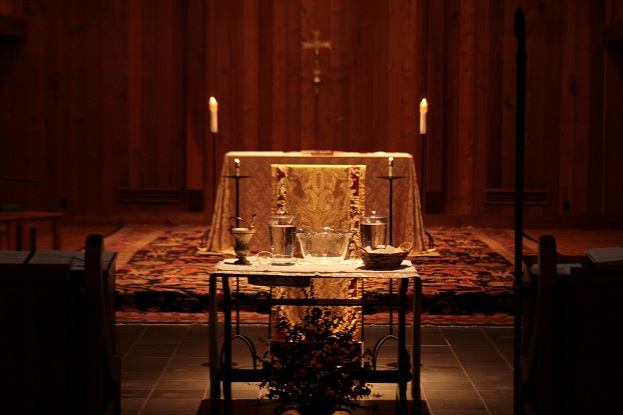
For most of the millennia since humanity appeared on earth, humans lived in darkness when the sun set. On moonless nights, the darkness was total. People did not know where they were going. The harnessing of electricity in the nineteenth century changed that for most people, especially for those living in cities. It allowed for a lively night life in New York and other places. But when the electricity failed, as in the 1965 blackout, or had to be given up, as in the London Blitz, the darkness was worse than it had ever been, not least because people were used to having light at night. All of this is recounted in a fascinating book by Jane Brox titled Brilliant: the Evolution of Artificial light.
The blackouts to protect against the Blitz, especially under the severe restrictions at the beginning of the War, were darker than almost anything experienced before. In medieval times, street lamps hadn’t been invented yet, but people could carry torches to give them sone sense of direction, but during the earliest days of the Blitz blackout, flashlights were forbidden as well as use of headlights on cars. People literally did not know where they were or where they were going. They didn’t know where there houses were. Thousands of Londoners died in accidents in the dark.
When Isaiah said that the people who walk in darkness have seen a great light, he was giving great news. Life really was dark in his day. The chaos and misdirection of living in the dark gives rise to many evils. It is understandable that darkness is traditionally a symbol of evil and light a symbol of goodness. During times of war, such as the days of Midian referred to by Isaiah or World War II, people do not know which end is up. With truth being the first casualty of war, moral compasses go haywire. We don’t know where we are going, we don’t know where our homes are. The 1965 New York blackout caused many problems, but many people helped out other people. But during the 1977 blackout, there was much looting and arson. The physical darkness had become moral darkness. This violence seems to have been a response to the darkness of injustice and racism that was blanketing the city and the nation. Back in time, Isaiah was prophesying the birth of a king who would give people the light of a moral compass. This is the kind of political leader we need today.
In his Gospel, Matthew quotes these verses from Isaiah right after noting the arrest of John the Baptist. This arrest is a particularly prominent example of the moral darkness fallen on Palestine and the Roman Empire as a whole. John the Baptist, a shining lamp, according to John, was put out, but a great light is still shining. Another prophet, who turns out to be more than a prophet, is preaching: “Repent, for the kingdom of heaven has come near.” (Mt. 4: 17) This preacher is telling us that we are all going in the wrong direction, but if we turn around and follow him, we will be following a light that shows us the way.
While preaching repentance and being the light, Jesus calls his first four disciples. By leaving their nets and following Jesus, they are turning their lives around in a totally new direction. Even for those of us who can pinpoint a particular time and place when we were converted, repentance isn’t something that is over with in a day or a year. Repenting is something we must do every day, every hour, for the rest of our lives. It is so easy to allow darkness to come over us and to turn us off in a wrong direction. We need to hear Jesus calling us in the darkness and turn to where we see the light.
Right after calling his first four disciples, Matthew gives us Jesus’ Sermon on the Mount. This is a sermon full of light, showing us the way. It is also full of teaching that is quite opposite of the way we habitually do things in life. To follow these teachings, we will have to turn continually so as to be facing the light and to be walking in the right direction and towards the Kingdom of God.
See also: Blueprint of the Kingdon
 Imaginary Visions of True Peace