
 Tonight, we celebrate the birth of a child. Usually, there is rejoicing when a child is born. One of my family stories is that my grandmother was so excited about my birth that she burned two pots of beans.
When we celebrate a birth, we celebrate the fact that a baby is. The simple act of coming to be is a cause of wonder and joy. So it is that we celebrate Jesus before he did anything at all except come out of his mother’s womb and maybe cry a bit and suckle some milk. As a friend of mine said once about newborn babies: “They don’t do much at that age.” We also celebrate our hopes for the future and for the future of that child. We know that in the case of Jesus, the future wasn’t all rosy. That Jesus was born in a stable because there was no room for him and his family and that Herod would be out to get him as soon as he found out about him shows that there was cause for anxiety from the very start. Unfortunately, many babies being born right now are born into much the same sort of anxiety that is mingled with hopes for the child. So not every birth leads to unequivocal rejoicing. Such anxiety is exacerbated by our tendency to focus on those who stir up fear in us, goading us on to adding further fuel to the violence growing all around us. We can see in news reports, Twitter, and Facebook that we are locked in violent systems of condemnation that stoke our fears exponentially.
Although we celebrate tonight the very being of Jesus, that Jesus is, when Jesus was apparently not doing much, God was and is already doing a great thing, an unprecedented thing: God had entered humanity. God chose to share, in frail human flesh, the very threats and anxieties that we all share. God has not left us to the human powers over which we have little or no control, powers we doubt we can trust with our well-being. Moreover, God shares the vulnerability other humans suffer from us on account of our fears and our own violence that we cannot see. In this way, God, in Jesus, lives up to the name: Emmanuel, which means “God is with us.”
God’s presence among us means many things. Tonight I will touch on one of them. By entering humanity, God has opened our human nature to God’s nature. We are no longer as trapped in our own human fear and violence as we often think we are. Later in life, Jesus spoke about God coming “like a thief in the night” but at the time of Jesus’ birth, God had already broken into the household of our humanity and started to sneak around, taking away bits of fear and violence and leaving bits of love behind.
This Christmas, let us celebrate the sneaky child who is already crawling around in the dark places of our lives, taking away the things we need to lose and giving us the gifts we need the most.
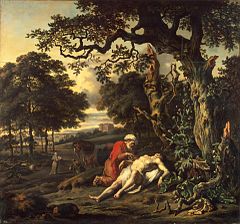 Many of us instinctively think that knowing is something we have in our heads, something we can recite, like a catechism. This is the sort of knowing that the lawyer demonstrates when he recites, correctly, the two great commandments when Jesus encourages him to answer his own question as to what he must do to inherit eternal life. (Lk. 10: 27) But then the lawyer shows a certain ignorance, a missing piece. He doesn’t know who or what his neighbor is. Jesus answers this question by telling a story that pinpoints exactly the missing piece in the lawyer’s cognition.
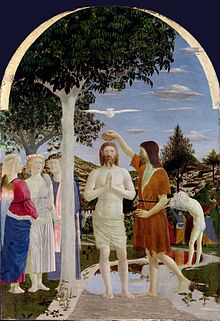 There is much theology that treats the Trinity as a mathematical game, trying to work out how three can be one and one can be three. But math, important as it is for many things, is not the way of salvation.
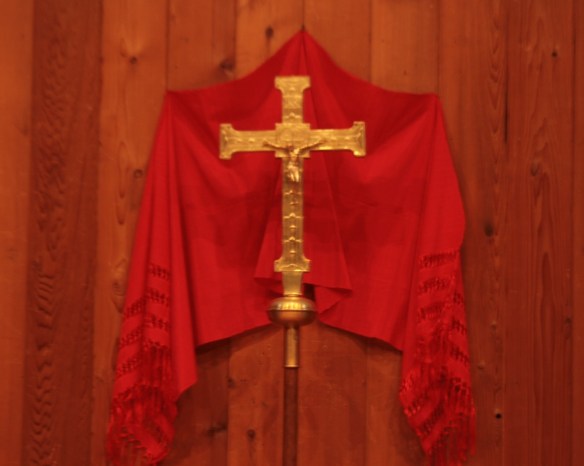 Jesus’ prayer in the garden of Gethsemane may well have been the loneliest moment of all for Jesus. His disciples were not able to stay awake with him. Much worse, his disciples still seem not to have understood anything of what Jesus had tried to teach them. At what he knew would be his last meal with his disciples, a meal when he had poured himself into the bread and wine to give his life to his disciples and all others who would follow him, his disciples fought yet again about who was the greatest. (Lk. 22:24–26) As he had done many times before, he told his disciples that the one who would be first would be the one who served, but he must have realized his words had had the same effect as before.
 We celebrate the Transfiguration of Jesus at the end of Epiphany to prepare ourselves for Lent. This is a joyous feast where the Light of Mount Tabor should inspire us for the days of penance and then entering into the Paschal Mystery of Christ. However, there is a discordant element in the reading from St. Paul that I want to focus on. He, too, writes of the inspiring light of the Transfiguration, but he also writes about the veil over Moses’ face. This refers to the story in Exodus where Moses put a veil over his face when he came down from Mount Sinai with the tablets of the Law because his face shone too brightly for his fellow Israelites to look upon. (Ex. 34: 29–34) Paul goes on to say that the Jews remain veiled when they hear the words of the Law. In light of Holocaust, this verse causes much uneasiness, all the more so as it has been used to justify anti-Semitic attitudes and behaviors.
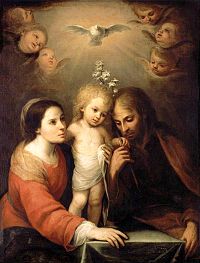 “After eight days had passed, it was time to circumcise the child; and he was called Jesus, the name given by the angel before he was conceived in the womb.” (Luke 2:21)

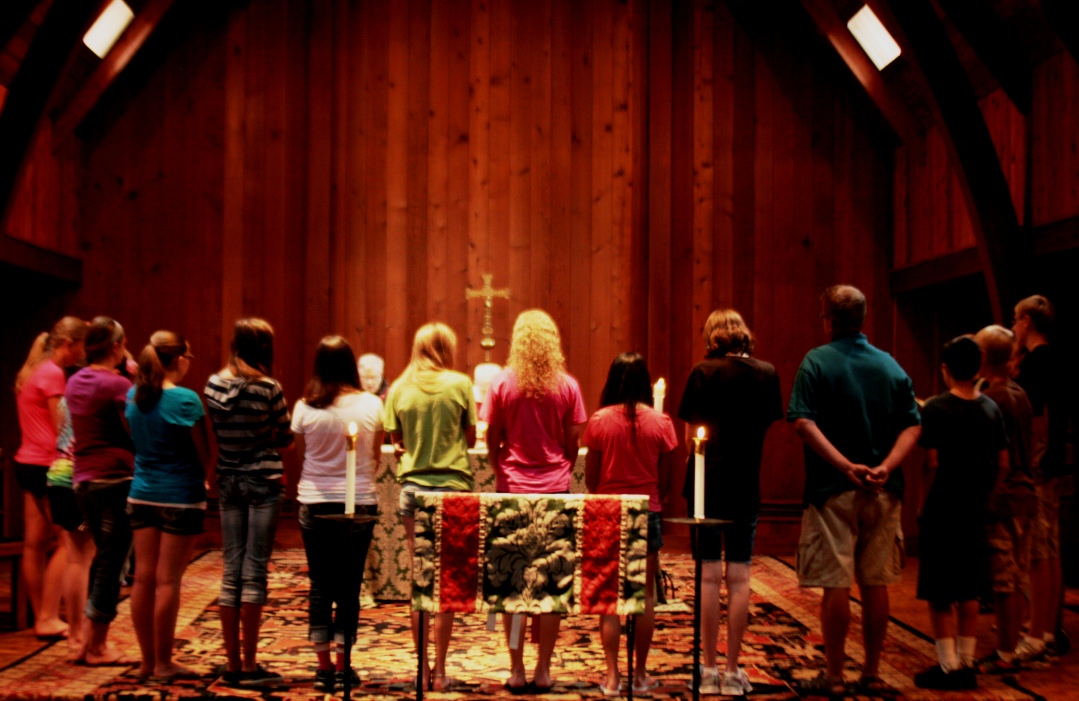
 Imaginary Visions of True Peace