Eucharist (1) Christ our Passover

eucharist1

Baptism is our initiation into the Paschal Mystery where the death and resurrected life of Christ begin to shape our lives. But how do we keep going so that we can finish what we start so that we are not like the person who started to build a tower and didn’t have the resources to complete it? This question is all the more urgent for those of us who were baptized when we were infants, before we knew what was happening to us. (I don’t dispute for a minute infant baptism for the purpose of raising a child in the shape of the Paschal Mystery.)

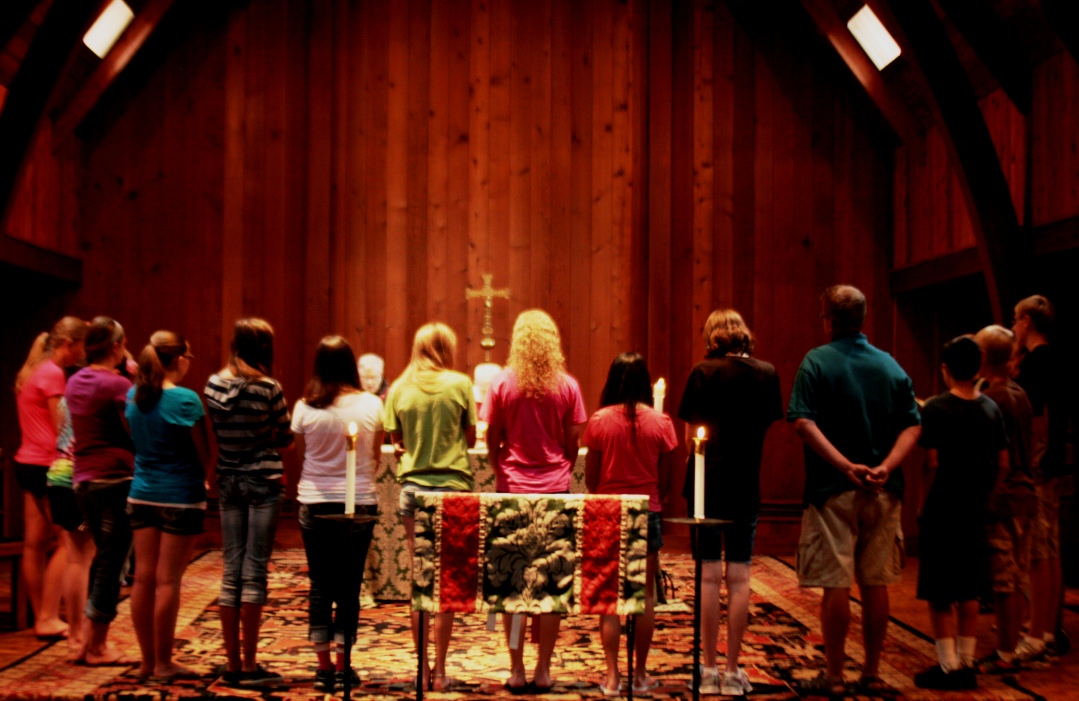
Clearly it is the Eucharist that feeds us on the way we have started with baptism. St. Paul’s line “Christ our Passover is sacrificed for us” that we say just before the distribution of communion says everything about the sacrament and more. What is all the more astounding is that, as Robert Daly says in Sacrifice Revealed, it’s a throwaway line said in passing while writing about something else. That indicates how fundamental a presupposition it was in the early church.

The Passover, of course, re-lives the deliverance of the Jewish slaves from Egypt. The roots of the Passover are obscure but it may have been a protective rite of shepherds that the Jews were performing at the time they were expelled from Egypt for causing the plague that killed far more Egyptian children than Hebrew children. Nowadays, there is the simple scientific explanation that the Hebrew slaves were rigidly segregated from the Egyptians so that it is reasonable that one social group could escape a plague that struck the other. (Medieval cities copied the Egyptians by blaming the Jews for plagues that struck them and expelling them when we now know that the Jews were more intelligent about matters of hygiene.) When Jesus welcomed the children whom his disciples tried to keep away, he demonstrated for all time that God is not a child-killer.

The Passover quickly moved away from its sacrificial origins and became a domestic feast as outlined in Exodus 12 that is to be repeated every year. (In Jesus’ time, the temple priests slaughtered the Passover lambs for those who had come to the Holy City for the feast. In John’s Gospel Jesus was crucified precisely at the time that the Passover lambs were slaughtered.) As the Passover became an oft-repeated practice of remembrance of God’s deliverance, the Eucharist is an oft-repeated renewal of our baptism. Just as the death and resurrection of Jesus are made present at baptism, they are again made present in the Eucharist. For those who, like me, enjoy science fiction and fantasy literature, we could note that these sacraments constitute time travel of a sort.  This time travel is not to change the past but to change the present and the future. (The Greek word anamnesis means memory in the sense of making the remembered event currently present. The fundamental change is to bring ourselves and our communities out of sacrificial, persecuting societies into forgiving societies grounded in the forgiving victim.

In Exodus 12, there is a sense of urgency with the Passover. It must be eaten “in haste.” We don’t usually feel this same sense of urgency while celebrating the Eucharist, but maybe we should. Insofar as we are governed by Pharaoh’s way of living, we really shouldn’t waste any time moving out of that way and entering more deeply into the way of the forgiving victim. The bread and wine are gifts to give us what we need to finish what we started. When we eat Christ our Passover, we need to ask ourselves: How ready and willing are to pass over from one way of living to another? How willing are we to serve one another as demonstrated by Jesus’ washing the disciples’ feet?


Eucharist (2)  Eucharist (3)  See also Baptism (1)

Baptism: Overwhelmed by Christ’s Love (1)

lakeGray1“We were buried therefore with him [Jesus] by baptism into death, so that as Christ was raised from the dead by the glory of the Father, we too might walk in newness of life.”  Rom. 6:4

If baptism is our initiation into Christ, our entry into the Paschal Mystery, then baptism is the underlying, ongoing dynamic of our lives in Christ. Dying and rising with Christ is something we need to do every day. The Greek word baptismo means to be overwhelmed, inundated. In baptism we are overwhelmed by and inundated with the Paschal Mystery. I will explore this mystery by looking at a few key scripture passages that give us variations on this one theme.

Jesus himself was baptized in the River Jordan by John the Baptist. For John, it was a baptism of repentance from the violent society of his time, to prepare for God’s winnowing fork in “the wrath to come.” But when Jesus comes, he does not bring a winnowing fork; he only brings himself and asks to be baptized. As he is baptized, the heavens open, the Spirit descends, and a voice from heaven says “This is my beloved Son with whom I am well pleased.”

These words refer to two key verses in the Hebrew Bible that tell us what baptism is all about. These words ring out in Psalm 2, addressed to the king, the Messiah, who is being singled out from the nations that are raging together and rising up against the Lord and his anointed. The inundation of baptism draws Jesus out of the inundation of the nations raging with each other. In Jesus, we too are drawn out of this inundation in the sense of being freed from raging against everybody else. We are not freed from being the target of these raging nations when they unite against the one who has been freed from their wrath. These same words also refer to Isaiah 42:1, the first line of the first song of the Servant of Yahweh. Throughout these songs, we find that the servant has been called out of a violent society and becomes the victim of that society’s violence. Unlike the psalmist who threatens the raging nations with a rod of iron, the Servant does not retaliate in any way against the violence inflicted on him. In baptism, we too are overwhelmed by the Servant’s suffering but then we are overwhelmed by the Servant’s vindication by God.

John’s Gospel does not narrate the baptism of Jesus but, as in so many other instances, John shows us the underlying story in a different key. When Nicodemus approaches Jesus by night, Jesus tells him that one cannot see the kingdom of God without being “born anew,” born “from above” by water and the Holy Spirit. Jesus seems only to compound Nicodemus’ puzzlement (and ours!) by suddenly shifting to Moses raising the bronze serpent in the wilderness. However, the bronze serpent was raised during a social crisis in the form of a plague. (Both the disease and the violence against Moses were contagious.) The phrase “lifted up” refers to Jesus being raised on the cross and then being raised from the dead. The bronze serpent, then, becomes an image of Jesus being raised on the cross to draw all people out of the society overwhelmed by violence into a new society as free of the violence as Jesus is himself.

This is the context of the famous words that follow: “For God so loved the world that he gave his only Son, that whoever believes in him should not perish but have eternal life.” If God so loves the world, then God is not bringing a winnowing fork or a rod of iron, but is bringing only himself, wounds from the cross and all, to lift all of us out of the world’s overwhelming violence to overwhelm us with his love.

See Part 2

Jesus Explodes with Life: His Reply to the Sadducees

buddingTree1When the Sadducees approach Jesus in the temple with their question ridiculing resurrection from the dead, they are part of the collective violence surrounding Jesus. This is not a polite debate to entertain viewers on evening TV. The Pharisees have just asked their question to entrap Jesus and triangled in the Roman authorities to boot. Groups of people who normally hate each other but have united against Jesus.

Their question zeroes in on the practice of Levirate marriage, where the younger brother of a man who dies childless marries his brother’s widow. This practice presupposes that one is dead when one dies and that immortality is gained only through one’s offspring. Even this ploy fails in this case as all seven brothers die childless after having married this poor widow. No immortality there. Jesus is trapped. Or is he?

Jesus reply, referring to the words spoken by God through the burning bush, is universally admired for its clever exegesis of a text from Torah that the Sadducees would have to accept as authoritative. But there is much more here than declaring that God is a God of the living. In Raising Abel James Alison explodes this reply by saying that the power of God which the Sadducees do not understand “is that of being completely and entirely alive, living without any reference to death. There is no death in God. God has nothing to do with death, and for that reason facts which are obvious to us, like Abraham, Isaac and Jacob having been long dead at the time of Moses, simply do not exist for God. Let’s put this another way: for us ‘being alive’ means ‘not being dead;’ it’s a reality which is circumscribed by its opposite. For God this is simply not the case. For God being alive has nothing to do with death, and cannot even be contrasted with death.”

These words pack a wallop that throws us through at least seven spheres of being teeming with life. Alison is surely not suggesting that Abraham, Isaac and Jacob are counting the days off their celestial calendar! This is about quality of life, eternal life as Jesus means it in John’s Gospel.

Let us revisit the question with these stirring words in mind. There is a second way that marriage is used as a way to defeat death besides having offspring. Marriage is a means of restraining mimetic rivalry by placing the partner off limits to all others. Otherwise, everybody might kill everybody fighting over sexual partners. In the context of seven brothers, this is especially important and incest laws add extra restraint on the brothers of the bride who might be especially presupposed to rivalry. The premature death of the older brother changes the picture and suddenly the wife goes to the next brother in line. This is not a good way to win a game of mimetic rivalry, however, as the offspring still belongs to the older, the dead brother and not to the younger brother who is still alive. The Sadducees’ hypothetical case adds to the mockery by imagining that the seven brothers meet up with this poor widow in the resurrection and fight over her like dogs fighting over a bone, presumably with no end in sight. (The widow doesn’t matter much in this scheme of things.)

Jesus explodes all this by saying that there is no marrying or giving of marriage in Heaven. There is no bride to fight over after all. There is no longer anything whatever to fight over. Just try to imagine life without having something to fight about! The image of Jesus as the Bridegroom and the Church (that’s all of us) as the bride suggests that the intimacy of marriage is a good shared by all without need of restraints of any kind. Like the Sadducees, we are profoundly mistaken about the power of God as long as we cling to the rivalries of the seven brothers.

Mimetic Desire and Truth (5)

???????????????????????????????????????????In my last post, I showed how the premiere place for perceiving truth, the place of the victim, has been distorted. The problem is, if a person in in the place of the victim deals with it by making victims of others, as so many abused people have done, then that person is no longer in the place of the victim and has lost “the intelligence of the victim.” Unfortunately, such people are so caught up in feeling entitled to make victims of others and with the mimetic rivalry I mentioned as to who is the greatest victim, that do not know that they do not have the victim’s “intelligence.”

The revelation of the true victim in the Gospels is very different. Jesus was not only the innocent victim; Jesus was the forgiving victim. No wishing for the limbs of his enemies to tremble or shake or that they be swept away, greenwood or dry, as the Psalmist wished for him! It is Jesus’ forgiveness which gives him a true view of humanity so that he saw the potential for Matthew and Zacchaeus and, after his Resurrection, of Paul when nobody else did. The place of the victim, then, is the place of truth when the victim is forgiving.

When the victim is forgiving, as Jesus was, is, and will be forever, then mimetic desire takes a sharp turn away from rivalry and moves again in the expansive direction of sharing. The forgiving victim does not pose as the greatest of victims; the forgiving victim only wants healing for everybody, including and, especially for the victimizers. The desire that the forgiving victim shares is a desire for the well-being of all, a desire that does not allow for rivalry as rivalry would undermine this desire of universal healing.

In a sense, we have come full circle from where I started with expansive mimetic desire that initiates young people into food and games and art and many other things that are good and desirable. This original mimetic desire, if we wish to call it that, is akin to the good of creation. We were created with mimetic desire for precisely this purpose. The universal fall into mimetic rivalry and its ensuing social crises is Original Sin. (Note the mimetic rivalry between Adam and Eve, Cain and Abel and humanity’s rivalry with God by building the Tower of Babel.) The recovery of expansive mimetic desire through Jesus the forgiving victim is restorative and redemptive. St. Paul said repeatedly the Christ’s redemption did not return us to original good creation; it brought us to a whole higher level of well-being that is grounded in forgiveness.

Since truth is grounded in creation, it follows, as Thomas Aquinas demonstrated, that the truth of things resides in the mind of God. That is, God sees what God has made and knows the depths of all that God has made in all truth. Insofar as we humans see things as God sees them, we see them truly. Our growing awareness of mimetic desire, however, shows us that seeing the truth is not a solitary endeavor; it is a corporate matter. Only through the expansive mimetic desire of sharing what is desirable can we, together, have a reasonably accurate apprehension of truth. Since truth is grounded in God, God becomes a partner in this corporate effort. Given the fallenness of humanity through rivalrous mimetic desire, it is through the forgiving victim that we can recover a vision of the world as God sees it in all its profound desirability.

See Mimetic Desire and Truth Series

See Mimetic Desire and Mimetic Rivalry for all posts on this topic

Mimetic Desire and Truth (4)

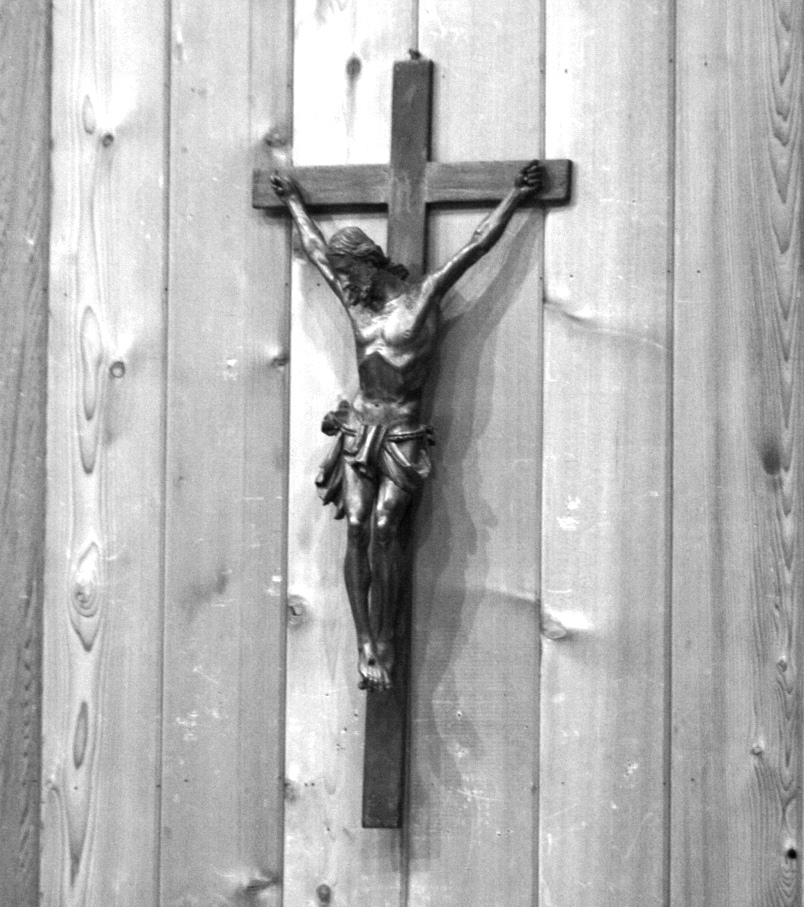
crucifix1In my last post in this series, I noted that mimetic rivalry inevitably distorts truth and that it creates victims. The mutual involvement of rivals with each other precludes their seeing each other truly and it makes them oblivious to the people who are affected by their rivalry. René Girard has demonstrated about as well as it is possible when examining the human behavior at the dawn of civilization that social meltdowns were resolved by collective violence that were covered up by myths that obscured the reality of what had happened. When Jesus said that the devil is a murderer and a liar from the beginning (John 8:44) he was not talking about a supernatural figure who was doing the damage; he was making an anthropological statement about human responsibility. That is, the violence of mimetic rivalry inexorably leads to mendacity. Philosophers might quibble with each other about where the limitations of the human intellect are for perceiving truth, but the real problem with perceiving the truth is rooted in the human will. The more involved we are in mimetic rivalry, the less truth we can see.

These considerations lead to the conclusion that truth is found, not in some fancy theory of human knowledge, but in the reality of the victim. It is this reality that is revealed in the numerous psalms of lament where the psalmist is constantly surrounded by enemies who blame him or her for all of the calamities inflicted upon the people. This truth is definitively revealed in the Passion narratives of the Gospels where Jesus is revealed as the innocent and forgiving victim vindicated by God. Andrew McKenna called it “the epistemological privilege of the victim.” Some privilege! James Alison coined the term “the intelligence of the victim.” René Girard consistently deflects postmodernists who insist there is no center of truth anymore by pointing to the reality of the victim as the starting point for perceiving truth.

This sounds simple but mimetic rivalry has twisted this truth in some subtle ways. In a way, the Gospels did the job of revealing the truth of the victim too well. As far as I can tell, nobody, not even Socrates, cared to be in the place of the victim before the Gospels were written. By the beginning of the twenty-first century, the most intense mimetic rivalry is precisely over who is the greatest victim. Everybody, every social group wants to be the most victimized victim and to hold that position at the expense of all other victims. CEO’s who rake in millions of dollars in bonuses while they ruin the finances of thousands of people claim to be victims when they become objects of opprobrium. Well, objects of opprobrium are victims, but they don’t know what they are doing. In every conflict between social groups or between individuals, each side, each person is very much aware of the truth of their own victimhood. What none of these people see at all is the truth of the victimhood of their enemies. Least of all do rivals over victimhood see the victims that their rivalry is creating.

The key to truth, then, has become violently distorted in our time. Fortunately, there is more to this key than what we humans have done to it and we will revisit this key in the final post of this series.

Continue on to Mimetic Desire and Truth (5)

See Mimetic Desire and Truth Series

See Mimetic Desire and Mimetic Rivalry for all articles on this subject

The Good Shepherd in the Desert

goodShepherdIf Jesus is the “living interpretive principle of scriptures, as James Alison says, then the Parable of the Good Shepherd who leaves the ninety-nine to search out the one lost sheep should be a powerful and accurate interpretive lens for other passages in scripture.

In the RoCa lectionary, this Gospel is coupled with a tense episode in Exodus 32. As he comes down the mountain with the tablets of the Ten Commandments, he finds that Aaron has set up a golden calf for the Israelites to worship. God tells Moses to get out of the way so that his wrath can “burn hot against them.” Doesn’t sound like a good shepherd.  Instead, it is Moses who acts out the part of the good shepherd by interceding with God, as Abraham did earlier to avert the divine wrath from the people. At the end of this same chapter, there is another narration of Moses coming down the mountain. This time, he is so furious he breaks the tablets and then rallies the Levites to his side to slay thee thousand people who were worshipping the golden calf. Although Moses claims to be doing God’s work, what we have is a narrative of human rather than divine violence. Moses doesn’t look like a good shepherd this time, but the morning after this monstrous slaughter, Moses intercedes with God to forgive the people although it is a bit late for the three thousand who were slain. This strange doubling of narrations seems to point to a debate in the Jewish tradition moving in the direction of unveiling God’s love for God’s people.

In 1 Corinthians 10, St. Paul refers to this incident by saying “we must not indulge in immorality as some of them did, and twenty-three thousand fell in a single day.” (He ups the death toll.) In isolation, this is about the chilliest verse in the Pauline epistles but in its sacramental context, it is much more in keeping with Jesus the Good Shepherd. Leading into this verse, Paul says that “we were baptized into Moses in the cloud and in the sea, and all ate the same supernatural food and all drank the same supernatural drink.” This, in turn, recalls the reinterpretation of the Flood in 1 Peter where the water corresponds to the baptism that delivered Noah and his family and delivers us now. The Genesis story clearly indicates a social meltdown with a few, probably the intended victims, escaping. The Exodus story refers to the social meltdown in Egypt that lead to the expulsion of the Israelites. In the desert, the Israelites had their own social meltdown centered around rivalry between Moses and Aaron. (Arnold Schönberg’s opera Moses and Aron portrays this rivalry with great insight.) For both Peter and Paul, baptism is the deliverance from the surrounding sacrificial society into the Kingdom centered on the Eucharist, the new way of gathering without need of victims and certainly not needed the slaughter of three thousand. Paul is not, then, warning his readers against a wrathful deity but against a wrathful society that will engulf them if they return to its sacrificial ways, just as a relapse into the wrathful society of Egypt lead to a meltdown in the camp and the deaths of thousands.

Jesus the Good Shepherd does not strike dead those who re-enter a sacrificial society that today manifests hardness of heart to the extent of trying to prevent fundamental ministries such as feeding the hungry. Instead, Jesus enters into the heart of the society to bring back all who are lost. Rather than starting a bloodbath, we should intercede for all such people as Moses did and follow Jesus in searching for the lost.

See also: The Communal Good Shepherd

Bewitched, Bothered, and Repentant

???????????????????????????????????????????The persecution of so-called witches in Salem Massachusetts in 1693 is well-known as a notorious event in American history. Not so well-known is the spiritual journey of one of the judges on the panel that ordered the execution of the twenty convicted prisoners. The biography of him by Eve Laplante is not a particularly good book with its chronological skips and copious details that are of not great interest, but she does bring the remarkable land telling story to light.

Samuel Sewall was a good and generous and devout man. Bracket out his voting for the twenty executions and one finds nothing reprehensible about him and much to commend. What happened?

The type of Calvinistic spirituality in colonial Boston posited a God of boundless mercy but a god who could just as quickly break out in wrath. When several of his children died in infancy, Sewall wondered what he had done to deserve this grief. When the English government revoked the colonial charter and  then French and Indians attacked and destroyed coastal cities to the north, he wondered what the community had done to deserve these calamities.

Laplante describes Salem Village as “beset with squabbles” where “neighbor battled neighbor over land boundaries, crops, and grazing rights.” Moreover, the congregation habitually battled with successive ministers over due compensation for their work. Not surprisingly, the witchcraft accusations started in the home of the incumbent minister, Samuel Parris. Many of those accused were involved in the various ongoing disputes and many of the accusers were servant girls suddenly empowered to get back at those who were normally their social betters.

Samuel Sewall, accepting the social advancement that came with the appointment to the panel of judges, was among those trying the cases. All of those condemned were convicted on what was called “spectral evidence.” This was the phenomenon of one or more witnesses seeing a spectral image of the accused person committing foul deeds of the devil. There can be no more powerful image for the mirage thrown up by what René Girard calls the skandalon, the stumbling block. One’s rival has been transformed into a spectral image of wickedness.

In the days of the primitive sacred, according to Girard, one death was enough to reconcile a community. In Salem, twenty deaths and counting wasn’t nearly enough. Girard leads us to expect this to be the case in the wake of the Gospel’s unveiling of the truth of collective violence. There are two fundamental reasons the witch trials ceased and the remaining prisoners were all freed. 1) There was never any unanimity that the witches were guilty. One judge had resigned early on in protest. Sewall’s own minister at Third Church was among the clergy who opposed the persecutions. 2) There was no end in sight if the persecutions continued. Anyone at all could be accused regardless of social position.

Although Sewall kept a thorough diary of events and thoughts, the months during these witch trials are surprisingly and dismayingly empty. This is a huge disappointment for one who would like more insight into Sewall’s reflections at the time, but the empty pages speak volumes that no amount of words could tell. Sewall could not face what he was doing.

There are some hints as to what lead to Sewall’s public declaration of guilt and remorse during worship at Third Church. Sewall had been publically snubbed by his minister on more than one occasion. That probably made him think. During a family funeral service for yet another dead child, his eldest son read from Matthew the verse that includes: “”I will have mercy and not sacrifice,” a key verse for the unequivocal love of God and total rejection of persecutory violence.

Through this sobering experience, Sewall went on to show insight into two major issues way beyond that of almost all of his contemporaries. 1) In spite of the Indian attacks that had been the scourge of the colony, Sewall wrote of the inherent dignity of native Americans as worthy of salvation on an equal footing with his own race. 2) Sewall wrote the first anti-slavery treatise composed on North American soil, using the story of Joseph as his proof-text.

Like St. Paul, Samuel Sewall learned some things about victimization from being a persecutor. We can all learn from the man who stood in the midst of his congregation with his head bowed while his minister read his confession.

Human Swords, God’s Peace

vocationersAtTable1Jesus’ words that he came not to bring peace but a sword (Matthew) or division (Luke) are startling, coming from a man who is commonly referred to as “the Prince of Peace.” Does this mean that Jesus is a war-god of some sort after all? Since Jesus never used a sword and rebuked Peter from using one at Gethsemane, and died rather than call on legions of angels to defend him and beat up his enemies, and approached his disciples and even the persecutor Paul with forgiveness after rising from the dead, it is fair to assume that Jesus is not in the least encouraging swords and divisions, but is warning us that we will have both as long as we experience the world in terms of us vs. them.

The approach to scripture inspired by René Girard and colleagues such as Raymund Schwager and James Alison is strongly committed to an unequivocally loving God who seeks only peace as opposed to any two-faced Janus-like deity who is capriciously loving one moment and wrathful the next. This approach tends to interpret “wrath” associated with God as human projections that distort the truth of God’s unconditional love. Basic to Girard’s thinking is the conviction that humans tend to unify conflictive societies through scapegoating vulnerable victims with collective violence. Society has regained peace—for a time—but at a cost to at least one person. This sort of a peace simply has to be disrupted once and for all by a God who is unequivocally loving and who wishes that not even one person be lost. According to Girard, this is precisely what Jesus did by dying on the cross and exposing the reality of collective violence for what it is.

As a result, we now have a world where there is an ever heightening awareness of victims, but a serious lack of anywhere near a corresponding awareness of the need for forgiveness. Without forgiveness, awareness of victims increases resentment and escalated conflict. Since the awareness of victims does not allow collective violence to bring peace to a society, there is nothing to stop the escalation of violence. As resentment grows rampant, it infects every level of society including the family so that family counselors are in great demand to try and talk people into giving up their resentment against those closest to them. They often fail as much as conflict mediators in political hotspots and for the same reason. Resentment becomes a defining factor of many lives and defining factors are not easily given up. So it is that the coming of Jesus the forgiving victim has brought swords and divisions.

The offer of peace and forgiveness, for all of the divine love behind it, inevitably causes division between those who accept it and those who don’t. There are two possible reactions to such a choice and a unanimous conversion to God’s peace wasn’t in the cards then any more than it is today. (Of course we humans stack the deck heavily against peace.) For those of us who seriously try to choose peace, it is tempting to think we are on the “peaceful” side of this division but we need to realize that the Word, the forgiving victim, is a divisive two-edged sword “piercing to the division of soul and spirit” and “discerning the thoughts and intentions of the heart” as the author of Hebrews puts it. That is, the pure forgiveness of the divine victim shows up the least bit of resentment we allow ourselves to harbor in the farthest, darkest, corners of our souls.

The escalation of violence occurring right at the time of this writing is a sure cause of discouragement. What we can do is take hope, primarily for ourselves, but also for our personal relationships and for humanity as a whole that the offer of peace from the forgiving victim remains open to all of us at every time of day and night and this offer will never end no matter what we do with our swords and divisions.

Transfiguration of the Material World

transfigurationThe Transfiguration of Jesus on Mount Tabor is celebrated twice in the Church Year. The celebration on the last Sunday before Lent stresses the event’s preparation for the death and resurrection of Jesus. The celebration in August, being a standalone feast, can be seen as a celebration of Creation in all its materiality. Since there is no feast of the Creation, any celebration that points to our origins in God’s creative Desire is for the good.

That Jesus’ body and his clothing should be transfigured by a dazzling light is about as powerful a sign of the goodness of the material world as anything could be. The only fly in this primordial ointment is the suspicion that if the material world needed to be transfigured, then it wasn’t all that perfect to begin with. That is, the material world is impure, at least to some extent, and needs to be purified. Eastern Orthodox writers, however, suggest that it wasn’t that Jesus was transfigured on Mount Tabor, but that the disciples’ eyes were opened so that they could see the transfiguration that, for Jesus, was an ongoing reality.

The powerful and startling story of the transfiguration of Seraphim of Sarov emphatically illustrates this truth. Seraphim was discussing spiritual matters one night with his disciple Nicholas Motovilov when suddenly Nicholas saw his staretz engulfed in transfiguring light. When Nicholas remarked on this, Seraphim said he had not changed but Nicholas’ ability to see had changed. Not only that, but Nicholas, unknown to himself, was also shining in the same transfiguring light.

If we can see all of the material world from the simplest atoms to the grains of dirt to squirrels and cats to humans in the transfigured light in which they, we, are all created, we will not reach out to grasp anything out of a lust for ownership or push anything or anyone away with expulsion. (See Connecting our Desires.) The catch is that we must be transfigured ourselves in this same light in order to see the transfigured glory all about us.

This need brings us back to the second and more fundamental meaning of the Transfiguration: the redemption of the groaning created world (Rom.8) by the cross and resurrection of Jesus. If our vision of reality is occluded by society’s tendency to hold itself together through the victimization of others through ownership and/or expulsion as Egypt was under Pharaoh, then we will not see the transfigured truth of the world under the Risen forgiving Victim breathes the Paraclete through our eyes and mirror neurons to show us the truth. (See Mirroring Desires.)

Yes, God’s act(s) of Creation is the beginning of the universe but Creation is also each present time of the universe up to and including the present moment and Creation is the End of the universe in the sense of being its goal. It is God’s creative work in redemption all along that has alerted us to the truth of Creation, starting with the deliverance of a ragtag group of slaves expelled from Egypt, continuing with the return of the Jews from their Babylonian exile to the Resurrection of Jesus where Mary Magdalene enters a garden to recalls the Garden of Eden and mistakes the risen Jesus for the gardener.

May we open our eyes to see this renewed glory within ourselves and around us, a glory filled with God’s Desire for all Creation.

The Infinite Round Dance

churchDistanceBlossoms - Copy

Imagine an endless round dance of three persons dancing in and out of each other, dancing with a Desire they share infinitely with each other with such intense love that the three dancers are one, yet so strong is their love for each other that they desire that there also be three. The persons are not personas, as in fake faces of actors or hypocrites, neither are they rugged individualists believing in every person for oneself. These persons are pure relationship through their shared Desire of love.

This round dance could have gone on forever with nobody the wiser except for one amazing thing: the love of these three persons was so ecstatic, so explosive, that it overflowed into a world of galaxies and stars and planets and flowers and giraffes and humans with teeming brains filled with desire, all with the intent of making countless beings much the wiser for the infinite round dance.

The overflowing love of the infinite round dance required that all desires to dance be free so that humans could look at a tree and desire that tree’s fruit before receiving the fruit as a gift from the infinite dancers. When the desire flowing through humans turned into rivalry with the infinite dancers and with each other, suddenly countless trees disappeared in the conflagration, leaving only centered the few trees that drew the humans ‘desires.

As humans fought over their crossed desires and gathered only to share a desire to kill or expel a victim blamed for the violence overcoming them, the infinite dancers continued to dance through the human desires, inspiring desires to share the trees and fruits and poems and songs in tune with the Desire of the infinite dancers.  The infinite dancers poured their Desire into humans who proclaimed the Desire to others, even when they were stoned or ridiculed or cut off from the land of the living.

So strong was the Desire of the infinite dancers that with the fire and love of the other two persons, one person entered into humanity and became vulnerable to all the shared rivalrous desires that spread like a plague among humans. The Son, conceived in a human womb by the Holy Spirit, gave up his spirit when the humans he came to save chose to kill him. The Son received the spirit back as he was raised from the dead, and then forever after sends that spirit into the desires of all humans.

And so the endless round dance continues with the overflowing love of dancers’ shared Desire that all humans be ecstatically the wiser for the dance.