
Jerusalem, Jerusalem

Jerusalem“Jerusalem, Jerusalem´ was the outcry of Jeremiah in his Lamentations, and of Jesus when he was rejected by the leadership in in the holy city. James Carroll’s searingly excellent book of this title is an extension of this outcry with historical, theological and spiritual depth.

This book is not so much a history of Jerusalem as a history of the idea of Jerusalem, the Jerusalem of the imagination. The history of the city itself, of course is deeply affected by the ideas and imagination projected on it, almost always to its detriment. Jerusalem is an image of the ideal, the perfect city and yet this great ideal has shed more blood than could fill an ocean and at the present day the ideal threatens the survival of humanity and the planet we live on. How can this be?

Carroll finds the groundwork for an answer to this troubling question in the thought of René Girard. The anthropological insights into mimetic desire and the resulting rivalry often arising from it is most apt a framework for working through the troubled history of the city on the hill. Carroll’s introduction of Girard’s thought is concise, pointed, and highly insightful even for those familiar with Girard’s thought. (See Violence and the Kingdom of God.)

The sacrifice of Isaac, imagined to have been nearly committed on the rock where the temple was later built, is another underlying motif of the book and is a powerful illustration of how God’ revelation of peace and love gets twisted towards violence. A story that almost certainly was intended to reveal the wrongness of human sacrifice got twisted to praising the obedience of Abraham being willing to sacrifice his son which then lead humanity to be willing to sacrifice its children, not just “half the seed of Europe” but at least half the seed of the whole world, “one by one” in the words of Wilfred Owen’s powerful poem on this story. (See Abraham out on Highway 61.)

The Jerusalem of the imagination is narrated through the Jewish establishment of the city as the capital of Judah, a city that became loved when it was lost during the Babylonian exile. It is the city where Jesus ended his preaching ministry and died under the Roman authorities. It is the city the first Moslems wanted because of their share in the tradition of Abraham and the prophets. It is the city that swirled through the Christian imagination, spurring a virulent anti-Semitism that reached its climax in the Shoah. Jerusalem inspired the crusading ideal that lead millions of soldiers and civilians to their deaths. The Battle Hymn of the Republic powerfully sings this violent ideal of the crusade in its purple poetry and Hubert Parry’s noble hymn tune gives force to the ideal of conquering the holy city anew.

It is not possible to do justice to the scope and depth of this book. Anyone interested in religious studies, theology, history, human culture and almost anything else would do well to give the reading of this book a high priority and to read it slowly, carefully and thoughtfully. I do not agree with quite every detail in Carroll’s analysis. Some of his interpretations of the New Testament seem to confuse the content with its reception history, although his analyses of the reception history is fully accurate. The overall thrust is highly compelling and will give every reader, whether Jewish, Christian, Moslem, atheist, or anything else a stiff challenge to one’s thinking, imagination, and relationship to violence, most especially supposedly “noble,” “redemptive” violence.


Jesus the Rejected Cornerstone among the Weeds

field1Jesus’ parable of the wheat and the weeds inflicts on us the discomfort of being told that we have to put up with the people we don’t like but the end of the parable and the explanation of it afterwards give us the comfort of knowing that the people we don’t like will get it in the end. But does Jesus really mean to give us this “comfort?”

When we consider the workings of mimetic desire, the image of a field densely filled with plants intertwined with each other is easily seen as an image of our entanglement with the desires of other people, some of whose desires we covet, others we try to separate ourselves from. Of course, each person who wants something we want and we don’t think it can be shared, is an enemy, a weed who should be pulled out, expelled from the garden. In such a situation, each of us is prone to considering ourselves to be one of the intended, desirable plants while the others are weeds. Of course, when we are preoccupied with how “weedy” everybody else is, we are totally wrapped up with them in our hostility. It is easy, then, to understand this parable as teaching us to mind our own business and not worry about everybody else. The trouble with this interpretation is that we are all in the thick of this garden whether we like it or not and we need to find a constructive way to live with everybody else in it. A deeper interpretation that is often offered, and one I have much sympathy with, is that we should commend everybody else to God and let God deal with them. To make this work, we have to commend ourselves to God as well, or we think we are commending those bad guys to God but we are good guys who can take care of ourselves. Moreover, the word for “letting” the weeds grow is aphete, which also is used in the New Testament to mean “forgive.”

If we give this parable a Christological interpretation, everything looks different. In being the stone rejected by the builders, Jesus was a weed. That’s the way Caiaphas and Pontius Pilate and Herod saw him. Jesus identified himself with a lot of “weeds” on the way to the cross such as the woman with a bad name in town who washed his feet at Simon the Leper’s house and the tax collectors Zacchaeus and Matthew. Every planter knows that it can be difficult to tell an intended plant from a weed. This is why well-intentioned but uninformed “helpers” are the bane of gardeners. If we try to weed out the garden based on our own judgment, we are likely to weed out Jesus himself.

The explanation of the parable seems to be at cross-purposes with the parable itself. Many scholars absolve Jesus of having ever given it, relegating the explanation to a later redactor to the text finalized in Matthew, as Simon Joseph argues with such vengeful texts in The Nonviolent Messiah. Or, we can argue that Jesus was giving us a parody of what an obtuse listener who lacks ears to hear takes away from the parable, as Paul Nuechterlein suggests on his site Girardian Reflections on the Lectionary. The trouble is, self-righteousness takes us to such extremes that it is impossible to parody. Let’s take a look at where the “explanation” takes us. First, we become preoccupied with weeding out the undesirable plants. Second, we identify with the angels who weed the garden. Third we think we shine in righteousness that blinds us to our self-righteousness. That is, we play the role of God, which is idolatry. The end result is weeping and wailing and gnashing of teeth for everybody and no harvest for anybody.

If we look forward to harvesting as opposed to weeding, we get a totally different scenario that fits well with the parable itself. When it comes to harvesting, weeds just don’t matter. The only thing that does matter is picking the fruits and bringing them in so they can offer sustenance to others. When it’s all about harvesting, things start to look a lot like the heavenly banquet that all of us can share without worrying about who is wheat and who is a weed.

Ignatiusly Reading

Ignatius_of_Loyola_(militant)[This is a companion post to Quixotic Reading]

Reading in a life-giving way is not primarily a matter of reading but of living; of how we read our lives. Don Quixote idolized Amadis of Gaul, Emma Bovary idolized her lovers and Werther idolized Lotte. The primary reason for the Werther effect is that readers of Goethe’s novel committed the same idolatry through mimetic desire as did Werther. If we are too embroiled in our mimetic desires to have eyes to see what Cervantes and Flaubert see, then we will only see what Goethe seems to have been able to see when he wrote Werther: the despair of desiring a woman desired by another who has made that woman unattainable. That is, the way the readers of Werther were living their lives affected their reading and their reading reinforced the way they were living their lives.

In his incisive study of Don Quixote (The Humble Story of Don Quixote; Reflections on the Birth of the Modern Novel) Cesario Bandera leads us to the heart of the Don’s problem and ours: “God-like Amadis is not God. God transcends empirical reality but does not ignore it or make it irrelevant.” The more we look at the world around us and interact respectfully with it, the less apt we are to be swept away by the fantasies of mimetic desire. God “demands an absolute act of faith beyond empirical reality, but such an act of faith does not obliterate the inherent rationality of the world ‘out there.’ The act of faith is essential only to prevent empirical reality from becoming a god unto itself, an idol.” (p.155) Bandera is alerting us to the problem of allowing our models to distort the world around us, making models like Amadis or Albert (Lotte’s husband) the lens through which we interact with the world instead of God.

Ignatius of Loyola provides an instructive contrast to Don Quixote. According to his Autobiography, Ignatius liked to read the same sorts of chivalrous romances the Don Quixote did and, while he was recovering from his battle injuries, he asked for this sort of literature, but only a life of Christ and a book of the lives of the saints was available, so he read those instead. These books changed not only what Ignatius read, but how he read. Not only did he stop to think about the things he was reading, he also stopped to think “about the things of the world that he used to think of before.” That is, Ignatius was using what he read to connect him to real life, the life God had created rather than what life looks like through the lens of an idol like Amadis. During this time of struggle and repentance, Ignatius then confesses his infatuation with the idea (not reality) of going into the service of a “certain lady,” oblivious to “how impossible it would be.”

But then Ignatius started to think about what it would be like to imitate Saint Francis or Saint Dominic who had imitated Christ? Such thoughts gave him consolation that thoughts of soldiering and chivalry did not give him. Here were models that were challenging but not impossible. Ignatius was spurred on to develop a spirituality based on the imitation of Christ, not an imitation of external actions only but, more important, of cultivating the inner disposition of Christ’s charity for others that was to become the backbone of his Spiritual Exercises. Bandera draws the contrast for us when he says that “unlike Christ, Amadis cannot give his follower what he wants without ceasing to be Amadis.” (P.157) That is, Amadis, if real, would be what Girard calls a model-obstacle whom Quixote would need to best in combat, which would change Amadis for the worse if Amadis was vanquished. Christ, on the other hand is a model without rivalry, who wishes to be imitated without rivalry. Ignatius discovered that Christ creates an abundance of charity that can only become more abundant through imitating him. The idea of imitating Jesus led to a real pilgrimage to Jerusalem and then to a real spiritual pilgrimage of imitating Christ for the rest of his life.

I Me Me Mine

abyssEach of us knows what my own self is, right? Yeah, my self is right here, right inside of me, running my life. My self is who I am. What could be more obvious? “Everyone’s weaving it, coming on strong all the time!” Hmm. Who is doing the driving, who the weaving. “I-me-me-mine” is doing it according to George Harrison put it? So where is my self in all this?

If René Girard is right, then the human self is not in the midst of our desires, I-me-me-mine, where we tend to locate it. Rather, we derive our desires from the desires of other people and they from us. (See Mimetic Desire and Mimetic Rivalry) Well, we don’t want other people driving our desires or snatching ours away, so we fight back, insisting that I-me-me-mine is the one who wants whatever it is and others are copying I-me-me-mine. The problem is, the whatever-it-is falls away as a desire defining the self and the entire self of I-me-me-mine is embroiled with this rival. Some autonomy. So, I-me-me-mine will try refusing to desire what anybody else desires. This is resentment. Of course, resentment I-me-me-mine me into the enemy’s desire since opposition to a desire is as strong a driving motor as combat over the desire. (See Resentment)

This spiral of desire tilts I-me-me-mine to the abyss that shows this desiring self to be an illusion, a void. While reflecting on Chuang Tzu’s Taoist writings, Thomas Merton suggested that “it is the void that is our personality, and not our individuality that seems to be concrete and defined by present and past, etc.” This “not-I” is seen by Chuang Tzu and Thomas Merton as a source of freedom, but “we are completely enslaved by the illusory.” (Merton & the Tao)

In New Seeds of Contemplation Merton warns us that “every one of us is shadowed by an illusory person: a false self. This is the man I want myself to be who cannot exist, who cannot exist because God cannot know anything about him.” The false self a.k.a. I-me-me-mine, is constantly in rivalry with other false selves who have the same alias. “All through the night, all through the day, everyone’s saying it, flowing more freely than wine.” Like Merton, George Harrison warns us that an epidemic of desire threatens to flood the whole world.

We aren’t lost in this abyss of “not-I.” If we let go of the matrix of desires that I-me-me-mine clings to, than we find ourselves called by name. This calling voice asks us why we are persecuting him? Persecuting? We weren’t doing nuthin’. I-me-me-mine’s desire machine blinds us to what we are doing to other people, all of whom Christ identifies with.

When we answer with our names to the voice in the abyss, the self is still not-I, but that does not matter because the Persons of the Trinity are filling this void with their forgiving love that clarifies what all this forgiveness is about.

Well, Jesus did say something about dying in order to live.

Mimetic Laughter

outsideSupper1Laughter is one of the more pleasant things in life, but is it just a frill? In his book The Phantom of the Ego,” Nidesh Lawtoo discusses the importance Georges Bataille attached to laughter for the emerging consciousness of a newborn child. Laughter is one of the first things a baby learns in imitation of a mother, father, or other caregiver. So it is that laughter comprises the first bond a newborn child makes. Interactions with babies may seem silly, something to be transcended with intellectual maturity and so we don’t value laughing with babies.

At its best, laughter is spontaneous and infectious. How many times do we laugh without knowing why, just because other people are laughing? When children are laughing helplessly as part of playing, happiness spreads to everyone around them. We don’t want to be left out of the joke, even if we don’t know what it is. Just think of some of our best times when we laughed with family and friends with no other reason than we were together and we got caught up in laughter.

There is a darker side to laughter, however. Actually it is a darker side of us and our mimetic desires, rather than a darker side of laughter. Often laughter is used to wound others, to score points against others, to put others down to lift ourselves up. Almost as soon as they learn how to speak, small children use laughter in this way. School playgrounds are filled with this sort of thing. Children learn all this from their elders, of course. Just as they imitated the spontaneous laughter of those around them as infants, they imitate the cruel humor that surrounds them as they grow older. Unfortunately, children usually learn this mode of laughter through being shamed by adults who think ridicule is a good way to train children for the hard knocks of life. Laughter continues to be a bond between people, but it is a bonding at the expense of someone, a butt of jokes, a victim.

When he discourages laughter as a sign of pride, St. Benedict certainly had this darker side of laughter in mind, although it is possible that he had a blind spot for the value of spontaneous, bonding laughter. Certainly, when laughter is a put-on act to gain attention, it is the opposite of spontaneous and it is a prideful act, an act seeking to dominate by drawing attention to oneself at the expense of others. I discuss this at length in my book Tools for Peace.

We get so habituated to using laughter as a weapon instead of a bond of love that we hardly know what the latter is. One way back is to use the wit we acquire to learn to laugh at ourselves and help others laugh at themselves. At its best, a comedy does just that. In Mozart’s “The Marriage of Figaro,” discussed in an earlier post, laughter is used as a means to overcome mimetic triangles and tensions and bring reconciliation. Shakespeare does this sort of thing masterly in comedies such as “Twelfth Night” and “As You like It.” In “The Merchant of Venice,” Shakespeare sets a trap for the unwary, leading us into joining the persecution of Shylock before unmasking this derisory laughter for what it is.

Life is too serious and awesome a thing to be left to sourpusses who always want to be on top of somebody else. We all need heavy doses of spontaneous, selfless laughter shared with others.


Renouncing Resentment

buddingTree1Since resentment keeps us locked into the groups and individuals who feel have hurt us, it behooves us to let go of our resentments, as I suggested at the end of my post “Resentment: the Glue that Keeps us Stuck Together.” As everyone who has tried it knows, letting go of resentments is one of the greatest challenges in life. Concentrating on letting go of our resentments is counter-productive as this technique keeps us focused on the very thing we are trying to get rid of. It is like the childhood game: Try to get through one minute without thinking of strawberry shortcake. Obviously, all one can think of for the next minute is strawberry shortcake.

The thing to do is think of something else, and/or think of the sources of our resentments in a new way. At the end of my last post, I gave an example of the latter by bringing in St. Paul’s recurring admonition to think of others and their needs ahead of our own. We can often gain a degree of sympathy of the people we resent if we see some of the brokenness they suffer and see our own brokenness mirrored in them. (It is this mirroring effect that often makes us wish to escape this truth through projecting it on to others.) The something else that is most effective for redirecting focus is, at least for a Christian like me, Jesus the Forgiving Victim. The emphasis here is on “forgiving victim.” Far too many Christians have used the memory of Jesus’ death as a cause for resentment with tragic results.

Actually, thinking isn’t really the way to handle resentment because resentment isn’t a matter of thought; it’s a much more visceral phenomenon. It isn’t that we decide to be resentful because it’s a nice thing to do and we can decide to stop being resentful at the drop of a wish. Resentment is something that grabs us before we know it has grabbed us and resentment does not loosen its hold on us easily. It is as if resentment, like a virus infecting one’s body, has its own blind urge for survival no matter what damage it does to anything else. So, when I talk about redirecting attention to Jesus the Forgiving Victim and to the people we resent in the light of Jesus who has forgiven them as much as He has forgiven us, I mean that we have to undergo a revolution of the whole, embodied person. I didn’t say that we should initiate the revolution; I said we should undergo it. That is, we have to let go in a very deep way so that the Desire of the Forgiving Victim can become our visceral desire, a desire much deeper than the desire of resentment which is locked into the same resentful desire of other people.

Basic spiritual practices such as liturgical prayer, deep reading of scripture and meditation (contemplative prayer) are, or should be, practiced at this same deep visceral level so that they can open us up to being filled with the Desire of the Forgiving Victim. Praying with others is a means of being in a group that gains cohesion by praying without resentment rather than persecution, which breeds resentment. The more solitary practice of meditation is still made in solidarity with others, thus seeking to relate us to God and other people without resentment. In a short blog post, renouncing resentment sounds like a simple matter. Well, it is simple, but it takes years of devoted practice.

Each time we allow the Forgiving Victim to remove any resentment we harbor, we glimpse a bit more of the new Heaven and the new Earth coming down from Heaven into the midst of our lives.

[I discuss spiritual practices in reference to the Rule of St. Benedict in my book Tools for Peace]

Resentment: the Glue that Keeps us Stuck Together

fireworksBeing carried away by the contagion of the crowd is an obvious enough danger to some of us try to escape this danger by avoiding whatever the Crowd does. People who reject the Crowd are often people who have been rejected by the Crowd, such as those of us who failed to be in the “in” group at school. The position of an outsider easily becomes a jaundiced view, a “sour grapes” kind of view that sees how silly the Crowd is or how dangerous it is or could become if it needs to reinforce its cohesiveness through going beyond ostracism to persecution. For one who sees these dangers, it seems that all one has to do is reject the Crowd and become independent, free of the contagion that has engulfed everybody else.

But how free are we when we reject the Crowd? Not as free as the one who tries it thinks. Rejecting the crowd sucks us back into it at least as firmly as it sucks those who mindlessly allow themselves to be carried away by it. Actually, the attachment is usually even stronger than it is for the one who is carried away because rejecters are obsessed with what they reject. The name for this attempt at alienation is resentment.

What I have said about mimetic desire and the connections it creates with other people as soon as we are born and are capable of conscious thought tells us that we simply cannot, no matter how hard we try, break off these connections with others. Trying to pull away only adds to the tension, like a stretched rubber band, only the rubber band of mimetic desire is unbreakable. This is why children and teens who are relegated to the “out” group remained tied to the people who rejected them. Both the rejecters and the rejected use each other to define themselves. It is the scenario of the royal family who does not invite their unpopular relative to the child’s christening and the rejected relative comes anyway, bearing a curse that immobilizes the kingdom. Likewise, the tension of resentment freezes a social system, leading to a breakdown such as happened with the US government this month.

Resentment, then, tends to make the resenter the mirror image of the crowd. The resenter hates everything the crowd likes and does because the crowd likes it and does it. The resenter is prone to persecuting the crowd in thought and sometimes, tragically, in deed as much as the crowd persecutes its victims. When resenters get together to form their own anti-group, they tend to reproduce the persecutory dynamics of the crowd. I should, know, my high school memories are filled with this sort of thing from the viewpoint of a resenter.

The bottom line is that we cannot gain freedom from others by pulling away. We only tighten their hold on us and ours on them. Neither can we gain freedom by seeking power over the crowd by being the one who sways the crowd. The crowd sways the leader as much as the leader sways the crowd. The only way out I can see is to seek to gain freedom with other people. Following St. Paul’s admonition to think of the needs of others is the way to do this. In seeking the needs of others, we seek their freedom. We can only do this by letting go of resentment. Seeking the freedom of others leaves us vulnerable to those who do not reciprocate. However, by renouncing our own resentments, we already gain a measure of freedom that cannot be taken away from us. It is this freedom that makes it possible for us to use our connectedness to others to move the social system in a dynamic of mutual giving and receiving.

See Mimetic Desire and Mimetic Rivalry

Cast Out by the Outcasts

altarDistance1Jesus encounters the ten lepers between Samaria and Galilee. Luke often uses geography to point to a spiritual landscape and this is a particularly apt example. Jesus meets ten marginal people in a marginal space. The broader geography is that Jesus has “set his face” to Jerusalem, the center of meaning and power, where he will be crucified.

But some outcasts are cast out more than others. One of the lepers was a Samaritan who would presumably be marginalized by his marginal companions. Sort of a double whammy.  In this marginal place, Jesus tells the lepers to go to the center of power, to the very people who have declared them unclean, for validation that they are clean. I can’t help but suspect that Jesus was being sarcastic, grumbling at the lepers to find out how they really want to be “healed.” When they suddenly find themselves clean, only the marginalized Samaritan returns to Jesus, who is still standing in the marginal space. That the other nine would go straight to the priests, at the center of power, is the strongest indication of how the Samaritan was treated by them. The Samaritan was healed, not only of leprosy, but of the social and religious system that required that some people be declared unclean so that others can be “clean.” This is the healing that the other nine former-lepers miss out on.

Jesus and marginality come up so many times in the Gospels, giving us the occasion to preach about it many times, that it starts to sound like a cliché. Instead of falling asleep, we need to wake up and really listen. Surely the Gospels hammer this theme so many times because we need to be healed of being hard of hearing.

This story prompts us to reflect on what we do when we find ourselves in marginal positions, having been cast out and declared unclean in some way. Do we band together with other outcasts in a constructive way? Or do we band together in resentment at the establishment? Does our little outcast group amount to a mini-establishment with people divided between clean and unclean? Do we run back to the establishment that exiled us if we get a chance to do so?

That only the Samaritan returned to Jesus to thank him raises the question of what causes gratitude and what hinders it. I suggest that a system that divides people between clean and unclean inhibits gratitude. When we live with this kind of mindset, we inevitably feel entitled to our advantages and delude ourselves into thinking we have earned them. We also inevitably feel that lepers have “earned” their marginalization. If returning to the center of power is what we want, then gratitude is the last thing we feel if we manage to do just that.

Of course, the Samaritan had to advantage of not having the same option of going to a priest to be declared clean as his fellow lepers did. Being cleansed wasn’t enough to take him out of the margins. Remaining in the margins gave him the opportunity to give Jesus another look and let Jesus be the one who decides if he is clean or not. Giving Jesus this sort of authority is an exhilarating thing to do. It is also dangerous. Jesus just might tell us that not only is each one of us clean, everybody else is also clean and we have to live without our lepers.

Mimetic Desire and Truth (5)

???????????????????????????????????????????In my last post, I showed how the premiere place for perceiving truth, the place of the victim, has been distorted. The problem is, if a person in in the place of the victim deals with it by making victims of others, as so many abused people have done, then that person is no longer in the place of the victim and has lost “the intelligence of the victim.” Unfortunately, such people are so caught up in feeling entitled to make victims of others and with the mimetic rivalry I mentioned as to who is the greatest victim, that do not know that they do not have the victim’s “intelligence.”

The revelation of the true victim in the Gospels is very different. Jesus was not only the innocent victim; Jesus was the forgiving victim. No wishing for the limbs of his enemies to tremble or shake or that they be swept away, greenwood or dry, as the Psalmist wished for him! It is Jesus’ forgiveness which gives him a true view of humanity so that he saw the potential for Matthew and Zacchaeus and, after his Resurrection, of Paul when nobody else did. The place of the victim, then, is the place of truth when the victim is forgiving.

When the victim is forgiving, as Jesus was, is, and will be forever, then mimetic desire takes a sharp turn away from rivalry and moves again in the expansive direction of sharing. The forgiving victim does not pose as the greatest of victims; the forgiving victim only wants healing for everybody, including and, especially for the victimizers. The desire that the forgiving victim shares is a desire for the well-being of all, a desire that does not allow for rivalry as rivalry would undermine this desire of universal healing.

In a sense, we have come full circle from where I started with expansive mimetic desire that initiates young people into food and games and art and many other things that are good and desirable. This original mimetic desire, if we wish to call it that, is akin to the good of creation. We were created with mimetic desire for precisely this purpose. The universal fall into mimetic rivalry and its ensuing social crises is Original Sin. (Note the mimetic rivalry between Adam and Eve, Cain and Abel and humanity’s rivalry with God by building the Tower of Babel.) The recovery of expansive mimetic desire through Jesus the forgiving victim is restorative and redemptive. St. Paul said repeatedly the Christ’s redemption did not return us to original good creation; it brought us to a whole higher level of well-being that is grounded in forgiveness.

Since truth is grounded in creation, it follows, as Thomas Aquinas demonstrated, that the truth of things resides in the mind of God. That is, God sees what God has made and knows the depths of all that God has made in all truth. Insofar as we humans see things as God sees them, we see them truly. Our growing awareness of mimetic desire, however, shows us that seeing the truth is not a solitary endeavor; it is a corporate matter. Only through the expansive mimetic desire of sharing what is desirable can we, together, have a reasonably accurate apprehension of truth. Since truth is grounded in God, God becomes a partner in this corporate effort. Given the fallenness of humanity through rivalrous mimetic desire, it is through the forgiving victim that we can recover a vision of the world as God sees it in all its profound desirability.

See Mimetic Desire and Truth Series

See Mimetic Desire and Mimetic Rivalry for all posts on this topic

Mimetic Desire and Truth (4)

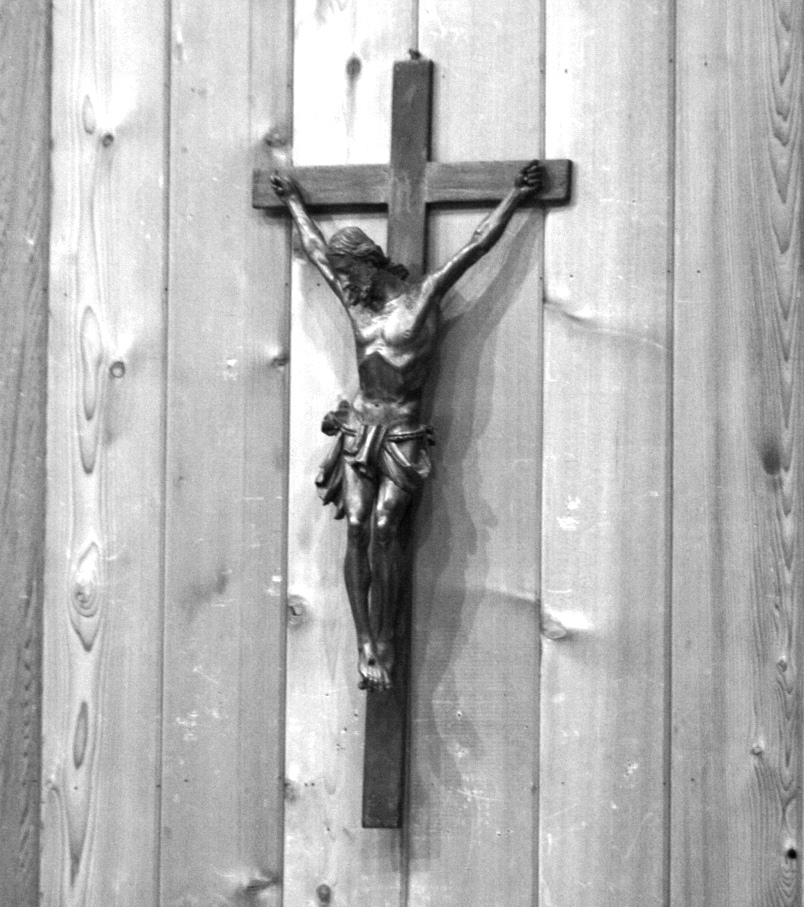
crucifix1In my last post in this series, I noted that mimetic rivalry inevitably distorts truth and that it creates victims. The mutual involvement of rivals with each other precludes their seeing each other truly and it makes them oblivious to the people who are affected by their rivalry. René Girard has demonstrated about as well as it is possible when examining the human behavior at the dawn of civilization that social meltdowns were resolved by collective violence that were covered up by myths that obscured the reality of what had happened. When Jesus said that the devil is a murderer and a liar from the beginning (John 8:44) he was not talking about a supernatural figure who was doing the damage; he was making an anthropological statement about human responsibility. That is, the violence of mimetic rivalry inexorably leads to mendacity. Philosophers might quibble with each other about where the limitations of the human intellect are for perceiving truth, but the real problem with perceiving the truth is rooted in the human will. The more involved we are in mimetic rivalry, the less truth we can see.

These considerations lead to the conclusion that truth is found, not in some fancy theory of human knowledge, but in the reality of the victim. It is this reality that is revealed in the numerous psalms of lament where the psalmist is constantly surrounded by enemies who blame him or her for all of the calamities inflicted upon the people. This truth is definitively revealed in the Passion narratives of the Gospels where Jesus is revealed as the innocent and forgiving victim vindicated by God. Andrew McKenna called it “the epistemological privilege of the victim.” Some privilege! James Alison coined the term “the intelligence of the victim.” René Girard consistently deflects postmodernists who insist there is no center of truth anymore by pointing to the reality of the victim as the starting point for perceiving truth.

This sounds simple but mimetic rivalry has twisted this truth in some subtle ways. In a way, the Gospels did the job of revealing the truth of the victim too well. As far as I can tell, nobody, not even Socrates, cared to be in the place of the victim before the Gospels were written. By the beginning of the twenty-first century, the most intense mimetic rivalry is precisely over who is the greatest victim. Everybody, every social group wants to be the most victimized victim and to hold that position at the expense of all other victims. CEO’s who rake in millions of dollars in bonuses while they ruin the finances of thousands of people claim to be victims when they become objects of opprobrium. Well, objects of opprobrium are victims, but they don’t know what they are doing. In every conflict between social groups or between individuals, each side, each person is very much aware of the truth of their own victimhood. What none of these people see at all is the truth of the victimhood of their enemies. Least of all do rivals over victimhood see the victims that their rivalry is creating.

The key to truth, then, has become violently distorted in our time. Fortunately, there is more to this key than what we humans have done to it and we will revisit this key in the final post of this series.

Continue on to Mimetic Desire and Truth (5)

See Mimetic Desire and Truth Series

See Mimetic Desire and Mimetic Rivalry for all articles on this subject