
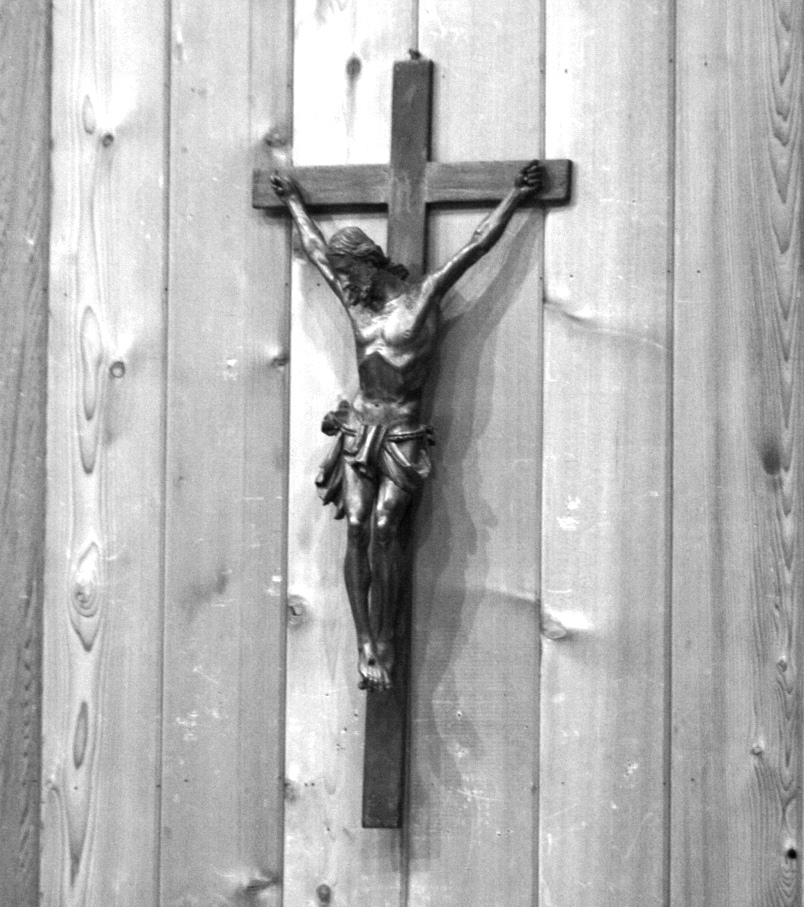
 At the abbey where I live, I preach at the Maundy Thursday liturgy and the Easter Vigil. I do not preach on Palm Sunday and Good Friday, the two liturgies where we chant the Passion. The Passion is long enough without added sermons and the Passion speaks for itself. That is, it speaks for itself as long as we don’t add things it does not say that undermine what the Passion does say.
To belabor what should be the obvious, the Passion Story tells us what human beings chose to do. Jesus chose to drive the money changers from the temple and teach the people there. The Jewish authorities chose to plot to have Jesus arrested and handed over to the Roman authorities. Judas chose to betray Jesus, thus facilitating the arrest and handing over. Pilate, to varying degrees in the four Gospels, vacillated but in the end chose to sentence Jesus to crucifixion. Meanwhile, the people who had cheered Jesus upon entering Jerusalem ended up crying for his crucifixion. The Roman centurions nailed Jesus to the cross where he died. The Passion narratives say nothing to suggest that anything that was done to Jesus, from the arrest to harassment and flogging to nailing him to the cross was in any way the will of God.
In all this, God does not do anything. Why do I bother to make a big point of this? The reason is that many Christians have suggested that God positively willed the sacrifice of Jesus for some cosmic purpose, usually because God was upset with wayward humans and was somehow incapable of forgiving humans unless somebody took the punishment for human sin. If Jesus, innocent of sin, should take the punishment, well and good. Well, not well and good. What kind of god demands punishment and doesn’t care who gets punished as long as somebody does? The Passion Story never says anything of the kind.
If God did not will Jesus’ violent death, what did God will? What was God’s plan? Jesus understood the heavenly Father’s plan to be that he Jesus knew that if he defeated Caiaphas and Pontius Pilate with force would only keep the world forever embroiled in retaliatory violence. The only way to avoid that was to gather people peacefully no matter the outcome, even if it meant death.
But Death, much as it was the plan of humans, was not God’s plan as a group of women found out early in the morning on the first day of the week.
See also Two Ways of Gathering

 Imaginary Visions of True Peace