
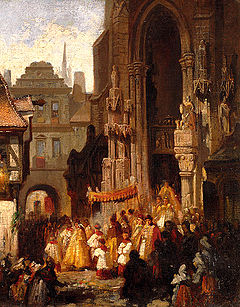
 The Feast of Corpus Christi celebrates the presence of Christ’s body in the Eucharistic host. One of the events that inspired the institution of the feast was a vision granted Fr. Peter of Prague in 1263. He had doubted the presence of Christ in the sacrament until he had a vision of blood dripping from the host as he consecrated it. This vision, along with earlier visions of St. Juliana of Mont Cornillon, led Pope Urban IV to order the institution of this feast. Of other Eucharistic visions I’ve heard of, it is better to be silent rather than ruin today’s celebration.
I happen to have a high devotion to the real presence of Christ in the sacrament and the two great hymns that St. Thomas Aquinas wrote for the feast are edifying. But the problem with focusing on the presence of Christ in the Sacrament is that it circumscribes the consecrated host and seems to imprison Christ in it. This is to take the Eucharistic mystery out of context. After all, the phrase Corpus Christi is used in the New Testament to refer to the Church and not the sacrament by itself. Benediction has the danger of re-creating this isolation and its origins aren’t reassuring. It derives from a devotion to see the elevation of the Host at Mass, which is fine, except that this viewing was in place of receiving the Host or even of worshiping in community. There are stories of people who would rove from Mass to Mass to see as many elevations as possible! My theology professor in seminary, Arthur Vogel, railed against Benediction because it treated the sacrament as an object rather than an integral part of a dynamic celebration.
Corpus Christi processions have the same danger, but they do bring a communal aspect to the feast. Just a few years ago I found the custom alive and well in Innsbruck. I attended Mass at the cathedral where it was standing room only. After the Mass, there was a procession throughout the town with devotions read by the mayor and other dignitaries and the Landwehr fired off salutes with their rifles.
In John 6 Jesus speaks of his presence in the bread from Heaven in a dynamic way where those who eat his flesh and drink his blood abide in him as he abides in us. In isolation, these verses suggest a relationship with individual believers but the broader context is the feeding of the multitude in the wilderness, which was a communal event if there ever was one. Jesus, then, does not abide in us on an individual basis but abides in all of us as a sharing community. If we eat the Body of Christ, we are eating the very generosity and self-giving of Jesus. If we don’t give of ourselves, we have missed abiding in the community that abides in Jesus.
St. Paul’s recounting of the Last Supper begins with the solemn words that he is handing on the tradition as it was handed on to him. He then quotes what are called the Words of Institution, the words traditionally believed to change the bread and wine into the body and blood of Jesus. When put this way, we again have the sacrament restricted to a few words and Christ’s presence in the Eucharistic elements. St. Paul, however, provides many more words to the social context of the Eucharist, namely that the Corinthians should be sharing the food they bring to the celebration with the poorer members of the congregation rather than flaunting their feasting in front of those deprived. That is, it is not enough to discern the presence of Christ in the sacrament; it is also necessary to discern the body in all of God’s people.
The leaders of the Liturgical Movement of the last century, Lambert Beauduin in Belgium and Virgil Michel in the United States, grounded their liturgical principles, featuring engaged participation of the laity, with a theology of the Church as the Body of Christ. More importantly, they argued that the Eucharist is a sign and dynamic of social change, especially in ameliorating life for the poor. Dorothy Day and the Catholic Worker Movement worked very closely with Michel to this end. Far from being trapped in the bread and wine or in a monstrance, Christ is running wild throughout the world, changing not only bread and wine, but people and the whole fabric of society.
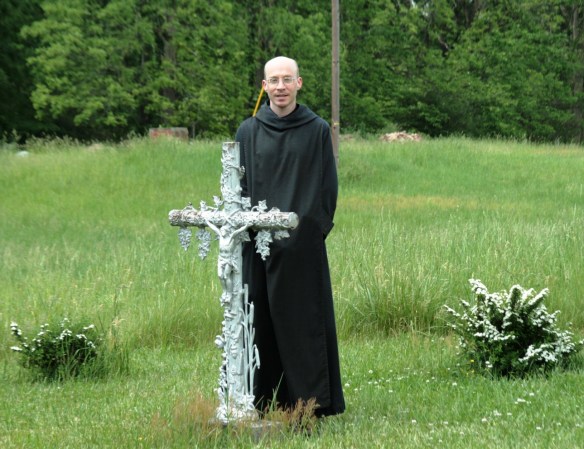 The Trinity is a fundamental doctrine for Christianity but Christianity is a story of salvation before it is a set of doctrines. The Trinity is no exception. If we get the story right, we might get the doctrine right, but if we get the story wrong, then we get the doctrine wrong for sure.
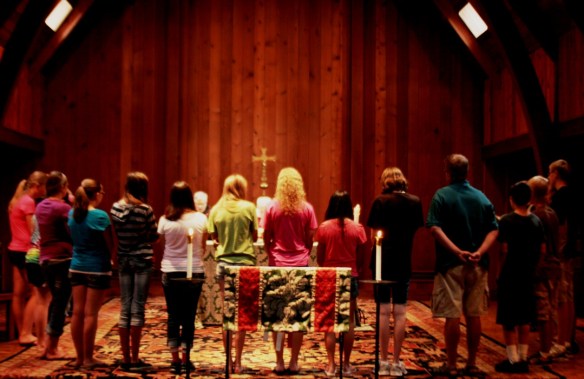 The image of the vine and the branches in John 15 gives us a powerful image of closeness both between ourselves and God and also with each other through our grounding in God.
 St. Paul proclaims the Resurrection of Jesus as a radical game changer. It is a passage from death to ourselves to a new life in Christ. This proclamation is often understood as an individual conversion. It is that but it is much more. During his life, Jesus proclaimed the kingship of God. A kingship, of course is social, not individual, much as we like to fancy ourselves kings and queens of our little castles. The kingship of God looked like a lost cause when Jesus died, but after being raised from the dead, Jesus leads us into the kingship that we rejected when we crucified him. It is important to note that Paul was not writing to an individual but to a community, indeed, the community that at the time represented all humanity as Paul knew it. St. Paul proclaims the Resurrection of Jesus as a radical game changer. It is a passage from death to ourselves to a new life in Christ. This proclamation is often understood as an individual conversion. It is that but it is much more. During his life, Jesus proclaimed the kingship of God. A kingship, of course is social, not individual, much as we like to fancy ourselves kings and queens of our little castles. The kingship of God looked like a lost cause when Jesus died, but after being raised from the dead, Jesus leads us into the kingship that we rejected when we crucified him. It is important to note that Paul was not writing to an individual but to a community, indeed, the community that at the time represented all humanity as Paul knew it.
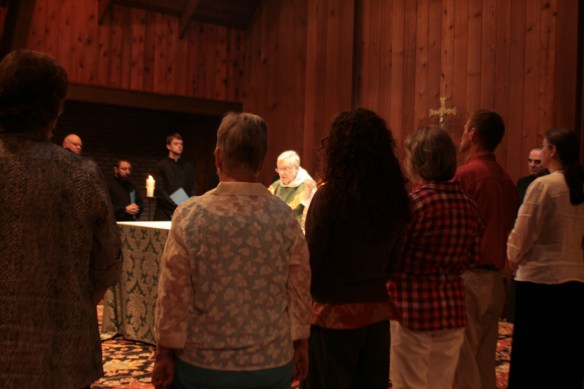 The Passover is the formative event for Jews, the event that constitutes them as a culture. The Last Supper, the Eucharist, is as formative for Christians. Although there is debate as to whether the Last Supper was a Passover meal, the association with that feast is clear enough for Jesus’ supper to have incorporated and redefined Passover. The big question is: What is the culture that these events are intended to form?
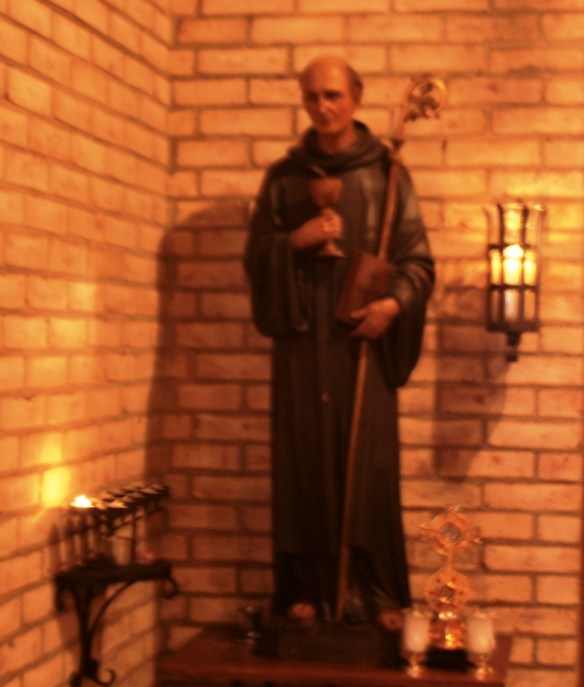 Abraham’s call to leave his country and kindred has been a monastic trope ever since there was a monastic presence in Christianity. Entering the monastic life does entail leaving behind the life one had been leading up to that time. It is also a venture into the unknown. Reading books on monasticism or even visiting monasteries do not fully prepare one for life after actually entering. The author of Hebrews said that Abraham did not know where he was going and lived “as in a foreign land.” (Heb. 11: 9) The author of Hebrews was not writing for monastics but for a Christian community under pressure. For this author, all Christians have “no lasting city. (Heb. 13: 14) Abraham did not simply turn his back on his family and his culture. God told him that he would “be a blessing” and through whom all families would be blest. (Gen. 12: 3) This would include being a blessing for the family he had left behind. Monks, for that matter remain involved with their families of origin and offer help when it is needed. Benedict himself had left the Roman culture of his time in which we was well-placed socially to enter a new life in which he became a pioneer for many sons and daughters in the millennium and a half since his life.
 Mark tells us that immediately after his baptism, the Spirit drove Jesus out into the wilderness where he was tempted, or tested, by Satan.
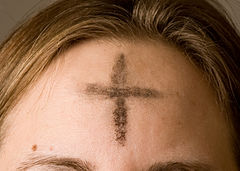 The custom of imposing ashes on our foreheads as a sign of our mortality on Ash Wednesday, the beginning of the penitential season of Lent, has the potential to encourage us to think that mortality is something we should repent of. The opposite is the case. We are not asked to repent of our mortality, we are asked to remember our mortality. Remembering our mortality is an important way to repent and to amend our lives. Since God made us mortal, mortality is not the problem. The problem, a huge problem, is the tendency to deny our mortality, to think that death should not apply to us. Clinical studies inspired by Ernest Becker show that denial of mortality leads to violent and insensitive behavior while some measure of acceptance leads to a much more humane way of relating to others, of connecting to others. I can’t help but reflect that in a great many fantasy novels, the villain tries to gain immortality which can only be achieved by stealing the life substance of others; an extreme example of how denial of mortality inevitably leads to victimization of other people. Such villains are always so deeply isolated as to be living deaths, no matter how many years they survive in this world. But if we accept our mortality, we put our trust in the crucified and Risen Lord, the true giver of life. When we accept our mortality, the time we have to repent becomes precious and we are ready to spend this precious gift wisely in the way we live so that others, too, may live.
 When Jesus opened his teaching ministry, Mark says that the people were “astounded” because he taught them“as one having authority, and not as the scribes.” (Mk. 1: 22) Oddly, Mark doesn’t include anything of what Jesus said. The Greek work exousia is much stronger than the English word that translates it. “Powerful authority” would bring us closer to the meaning. That Jesus’ teaching was not like that of the scribes doesn’t give us much more to go on as to the content, but it indicates that this authoritative teaching was distinct from those who were normally considered the teaching authorities.
 Imaginary Visions of True Peace