
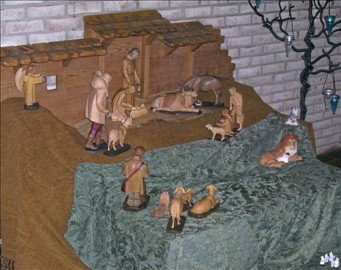
When the angel assured Joseph that Mary’s child was conceived from the Holy Spirit, the angel said the child’s name was to be Jesus. Matthew follows this with a quote from Isaiah’s prophecy that a young woman was about to conceive and bear a son who would be called Immanuel. (Mt. 1: 21–22; Is. 7: 14)
So it is that two names are given to the Christ Child, The name Jesus means: “Yahweh Saves.” As the angel said, the child is going to save his people from their sins. (Mt. 1: 20) The name Immanuel means “God is with us.” One name refers to what Jesus does, the other refers to what Jesus is.
Of the two names, it is Immanuel, God-is-with-us, that I want to reflect on in this Christmas reflection. There is an old theological conundrum: Would God have become incarnate if humanity had not fallen into sin? In one respect, the question is mute because humanity did fall into sin and so the Incarnation was a rescue mission. Many theologians leave it at that. But there are some theologians, who suggest that the Incarnation was not a Plan B but was Plan A all along. God was going to take on human nature no matter what. Ever since hearing this line of thought, I have been intrigued by it. I like to think that God did not need to have a desperate predicament on humanity’s part as a reason to come and be with us. Rather, God is the sort of God who wants to be with us. Period.
Let’s say there is a family that has an Aunt Polly who comes to visit from time to time. Aunt Polly is a very competent person who is always ready and willing to help out. So, if there should be any problems in the family at the time of her visit, she will help solve them or at least make them better. But does she come just because there are problems to solve? Clearly Aunt Polly comes to visit because she simply wants to be with the family. If there are no problems to work out, so much the better. If Aunt Polly is motivated by sheer fellowship to visit her family, then surely God is motivated by fellowship to come and visit God’s people. Shouldn’t we take both comfort and delight that God wants to be with us?
The name Immanuel reminds us of the ultimate aim of creation; namely fellowship with God. Redemption is the means to that end once humanity had fallen into sin. Since God was willing to die on a cross to open up the resurrected life to us, it follows that God cares about us very much. So surely God cares enough to want to be with us without needing us to go bad to get God’s attention. If God were Superman, would God have a life if all the bad guys repented?
We might think we are not worthy of God’s presence, and we aren’t, but God thinks we are. Christmas is a good time to reflect on this truth. Before Jesus does anything in particular to save us, Jesus rests in the arms of his mother and feeds at her breast. All Jesus is doing is being with us. Let us do the same and spend time just being with God.



 It is significant that Jesus had wandered over to Caesarea Philippi, deep in imperial territory, before asking his disciples who they thought he was. After they repeated a few rumors going round, Jesus asked who they thought he was. Simon Peter piped up: “You are the Messiah, the Son of the living God.” (Mt. 16: 16) Jesus’ commendation showed that Peter had caught on to something important: it was not Caesar, whose neighborhood they were hanging out in, but Jesus, who was the real, true Lord. But what kind of Lord was Jesus?
 In celebrating Mary, we celebrate the mystery that a human woman is the Mother of God. This is an explosive phrase. Nestorius is famous for his rejection of it and many other people have had trouble with it since. Why would God be willing, even want to have a human mother? Does this make Mary a goddess? Not at all. It is Mary’s humanity that makes the phrase a paradox, and it is Mary’s humanity that makes her a model to be imitated. Let us look briefly at the few glimpses of the human called Mary that the Bible offers us.
 The eighth chapter of Romans is among the most inspirational passages in all scripture. Paul assures us that “all things work together for good for those who love God, who are called according to his purpose” and that we will be “conformed to the image of his Son, in order that he might be the firstborn within a large family.” (Rom. 8: 28–29) Lest we think that only some people are predestined for God’s family, Paul asks: “If God is for us, who is against us?” (Rom. 8: 31) If Jesus is interceding for us, what more powerful persecutor is there to speak against us? Do we really want any personal being to veto the advocacy of Jesus? If we are truly stirred by these words, then we must stamp them deep into our hearts and allow them to govern how we view God and how we view other parts of scripture. For today, I suggest using these words to help us understand the parables in Matthew 13.
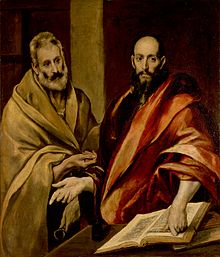 Much has been said about the conflicts between Saints Peter and Paul. I have
 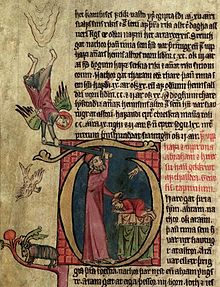 When the story of the near-sacrifice of Isaac was first told to me in Sunday school, the teacher prefaced the story by saying that in biblical times there were people who made sacrifices to “god” and some people even sacrificed their own children, but God decided to teach Abraham that he should not do that. The story was troubling but it was comforting to know that God did not want such an awful thing. Between that and being told around the same time the story about Jesus inviting the children to come to him did much to instill in me a trust in God as deeply loving from an early age. Since then, I’ve come across many learned scholars who think such an interpretation of the Isaac story is simplistic. Who’s right?
 The Holy Spirit is the most obscure of the three Persons of the Trinity, not that the other Persons aren’t mysterious as well. One reason is that the Son is said to show the Father, and the Holy Spirit is said to show the Son, but that leaves nobody to show the Holy Spirit. So obscure is the Holy Spirit that it is difficult to think of the Holy Spirit as a Person at all. It is not uncommon to hear the Holy Spirit referred to as “it,” although both masculine and feminine pronouns also fall far short of the Holy Spirit’s personhood.
 Imaginary Visions of True Peace