Abraham out on Highway 61

sideAltarsIcons1The near-sacrifice of Isaac by his father Abraham, the Father of Faith, is the most troubling of stories. It should be. Chaim Potok’s young protagonist Asher Lev remembers the shiver he felt when he first heard the story. What is most troubling is the suspicion that Abraham was right to be willing to sacrifice his son. But was he? Jeremiah says Yahweh denounced the sacrifice of children, saying “that such a thing had never entered my mind.” (Jer. 19:5) Perhaps we are right to be troubled by any notion that Abraham was right to even let the idea enter his mind and even more troubled by any thought it ever entered into God’s mind.

Bob Dylan makes a bitter burlesque of the story in his song “Highway 61 Revisited.” The “god” who requires the sacrifice is a bully, warning Abraham that if he doesn’t comply: “Next time you see me, you’d better run.” To the question: “Where do you want to see this killing done? God said out on Highway 61”, the place for “a thousand telephones that don’t ring” and where to “put some bleachers out in the sun” to stage the start of the next world war. As with so many Dylan songs, the imagery reveals a society filled with mimetic rivalry and victimization where sacrifice and war become a spectator sport.

Soren Kierkegaard’s searing Fear and Trembling is at least as troubling as the biblical story. SK’s category of the “teleological suspension of the ethical” raises fears that the author celebrates Abraham’s willingness to do the deed. (What the fancy phrase means is: anything at all God says to do is right—end of story.) However, this troublesome category is coupled with what SK called “infinite resignation.” This is what Abraham had when he was willing to kill his son by God’s command. However, infinite resignation falls far short of faith and faith is what the biblical story and SK’s book is all about. Faith is receiving back what is given with infinite resignation “by virtue of the absurd.” Still troubled?

The most clear and piercing critique of this “infinite resignation” I know of comes in the powerful poem retelling this story by the World War I poet Wilfred Owen. Abraham builds parapets and trenches around the wood, suggesting the sacrifice of sons sent off to the war. But when the angel of the Lord admonishes Abraham to “slay the ram of pride instead of him . . . the old man would not so, but slew his son,/ and half the seed of Europe one by one.” This poet, one of many young victims of the war, and the creator of the bitter irony that poets like Bob Dylan use so well, has revealed once and for all the sacrificial horror of “infinite resignation.” That is, anyone infinitely resigned to sacrifice oneself without faith will also sacrifice others, especially one’s own children, also without faith.

The typological interpretation of the story where it stands for God the Father’s being willing to sacrifice His only begotten son is also troubling. But Jesus did not go to the cross with infinite resignation. Rather, by “virtue of the absurd,” he believed that God, being the God of Abraham, Isaac, and Jacob was God, not of the dead, but of the living.” (Mt. 22:32) St. Paul says we are saved by the faith of Christ, the faith that, on the cross, embraced not death, but the life of his heavenly father. The virtuous absurd, then, is the ecstatic embrace of God’s love so filled with life that there is no room for death for anybody.


Rising to the Life of Christ

crosswButterfliesWhen St. Paul says in Romans that we are baptized into Jesus’ death, what kind of death are we baptized into? An aged person drifting off while asleep? A ritual death with no consequences? No, we are baptized into the death of Jesus. This particular death, the one we are baptized into, is a judicial death resulting from collective violence. This is the shameful death of an alleged insurrectionist at the hands of an Empire. This death was caused by the meltdown of rivalry in the society of first century Jerusalem, exacerbated by the betrayal and cowardice of Jesus’ closest followers.

Once we know what death we are baptized into, we know what life we are raised to. In his risen life, Jesus showed no resentment or vengeance to those who had gathered to put him to death or had dispersed out of cowardice.  Moreover, Jesus was not entangled in any of the rivalrous feuds that are a way of life for most humans. Imagine living without all the entanglements and resentments swirling around and inside of us. Hard to do, isn’t it? That is how radically different the risen life is from the life we live now.

If our “old self” is crucified with Jesus, then we have, like Jesus, died in the place of the victim. That means we have died to our tendency to fuel resentments and resolve these resentments through gathering against the victim, as Paul himself repented of having held the clothes of the men who stoned Stephen and openly approving of what they did.

None of this means that repenting of personal sins and faults doesn’t matter and that becoming free of them is part of the resurrected life. However, Christian teaching has a strong tendency to stress personal renewal to such an extent that horrifyingly sick participation in collective persecution goes unnoticed. That hundreds of thousands of Christians could lynch thousands of black people shows us now, now that the lynching era is over, how easily this sort of group contagion can take over in what is often called an “enlightened” and “civilized” era.

Rather than congratulating ourselves on giving up lynching after roughly a hundred years of the sport, I suggest we take careful note of the growing polarization in our country over social and religious issues. Honest disagreement is not a problem; it’s a good thing, something that keeps us honest. But polarization tends to be conflict for the sake of conflict so that conflict feeds itself and it feeds each one of us. Never mind that polarized conflict is as nourishing to humans as sawdust and glue. What is really dangerous about this polarization is that it easily collapses into collective violence as a way of resolving the tensions.

If we wish to be serious about living the risen life with Christ, we must be baptized by the love and forgiveness of the risen Christ and allow him to gently but firmly remove all the resentments we feed on so as to feed on body and blood of the Lamb of God who reaches out to everybody with vulnerable love.

Can you imagine such a thing? Can you be overwhelmed by such a thing in baptism?

What Humans Willed: the Passion Story

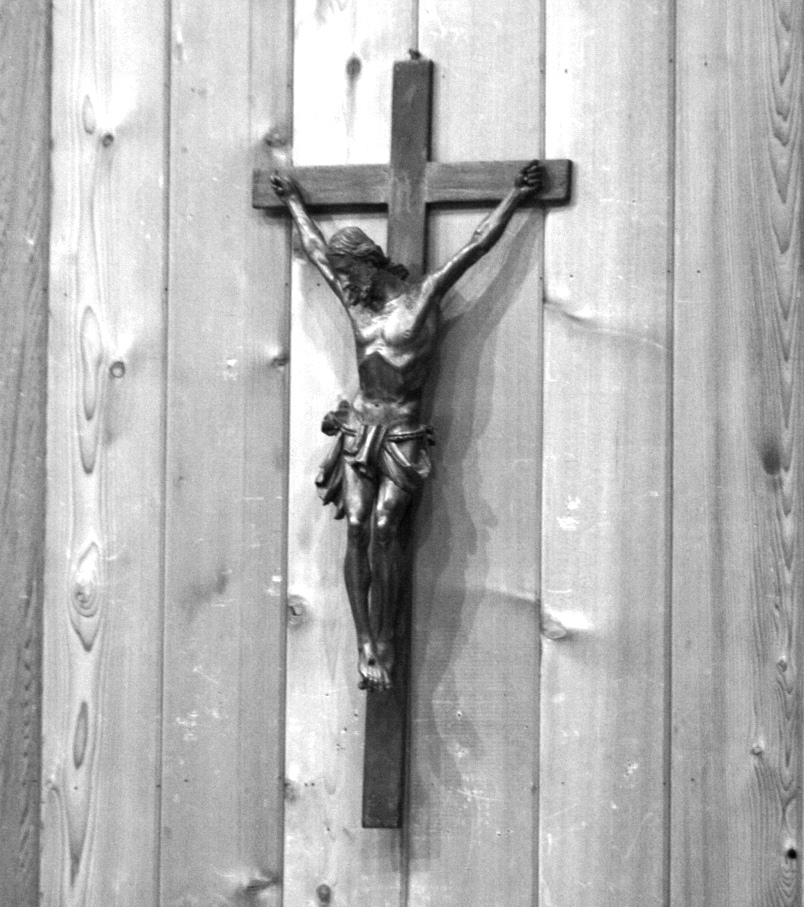
crucifix1At the abbey where I live, I preach at the Maundy Thursday liturgy and the Easter Vigil. I do not preach on Palm Sunday and Good Friday, the two liturgies where we chant the Passion. The Passion is long enough without added sermons and the Passion speaks for itself. That is, it speaks for itself as long as we don’t add things it does not say that undermine what the Passion does say.

To belabor what should be the obvious, the Passion Story tells us what human beings chose to do. Jesus chose to drive the money changers from the temple and teach the people there. The Jewish authorities chose to plot to have Jesus arrested and handed over to the Roman authorities. Judas chose to betray Jesus, thus facilitating the arrest and handing over. Pilate, to varying degrees in the four Gospels, vacillated but in the end chose to sentence Jesus to crucifixion. Meanwhile, the people who had cheered Jesus upon entering Jerusalem ended up crying for his crucifixion. The Roman centurions nailed Jesus to the cross where he died. The Passion narratives say nothing to suggest that anything that was done to Jesus, from the arrest to harassment and flogging to nailing him to the cross was in any way the will of God.

In all this, God does not do anything. Why do I bother to make a big point of this? The reason is that many Christians have suggested that God positively willed the sacrifice of Jesus for some cosmic purpose, usually because God was upset with wayward humans and was somehow incapable of forgiving humans unless somebody took the punishment for human sin. If Jesus, innocent of sin, should take the punishment, well and good. Well, not well and good. What kind of god demands punishment and doesn’t care who gets punished as long as somebody does? The Passion Story never says anything of the kind.

If God did not will Jesus’ violent death, what did God will? What was God’s plan? Jesus understood the heavenly Father’s plan to be that he Jesus knew that if he defeated Caiaphas and Pontius Pilate with force would only keep the world forever embroiled in retaliatory violence. The only way to avoid that was to gather people peacefully no matter the outcome, even if it meant death.

But Death, much as it was the plan of humans, was not God’s plan as a group of women found out early in the morning on the first day of the week.

See also Two Ways of Gathering


Crying out with Palm Branches in our Hands

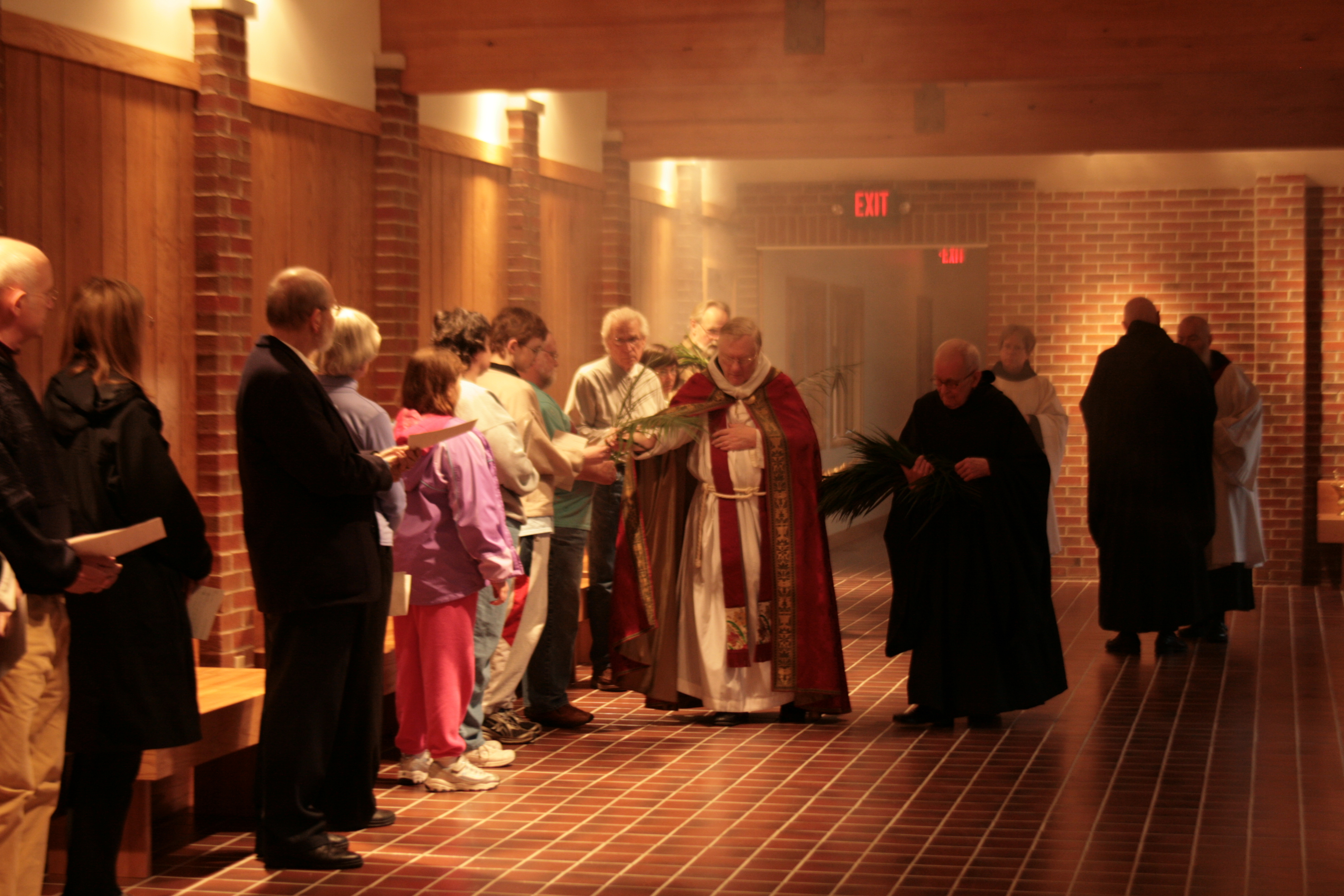
AndrewPalmSunday1Jesus entered Jerusalem to the acclaim of crowds strewing branches before him and proclaiming him the king. A few days later, the same crowd gathered before Pilate to cry out for Jesus’ crucifixion. What happened?

Before answering this question, it is helpful to recall another crowd that went out into the desert to see John the Baptist. “What did you come out to see?” John asked them. “A reed blowing in the wind?” John suspects that people have come out in droves because people were coming out in droves. That is, it was the “in” thing to do. Fast forward a few months and we have a crowd at Herod’s palace supporting Salome’s request for John’s head on a dish. What did they come to see?

The post Ignominious Glory—Glorious Ignominy: a Doxology goes a long way in explaining this phenomenon. One can’t help but suspect that people are crying out because everybody else is crying out, no matter what the outcry is about. Advertising usually does not advertise the product but its alleged popularity. Political campaigns do the same thing. What would happen if people stopped to listen to what people were actually saying instead of crying out what they think everybody else is crying out?

It so happens that the Gospels do precisely this. The suggestion that the Gospels are Passion narratives with long introductions gives short shrift to what the Gospels are about. What these “long introductions” do is tell us at great length what Jesus actually said and what he taught. They also tell us what Jesus did before he was nailed to the cross, i.e. he healed people and cast out demons and he unilaterally forgave sins. These “long introductions” also tell us why the power brokers in Judea and Jerusalem wanted Jesus dead. By reading these “long introductions” to the Passion narrative, we are drawn away from crying out what everybody else is crying out and waving signs that only proclaim what the current fashion is believed to be. Instead, we are drawn into a very different social mimetic process, a process that builds up mutual respect between people, seeing people as they really are and as they really can become when they receive the unilateral forgiveness that Jesus gives them, a social process of not retaliating for wrongs done, a socially mimetic process of forgiving debts, of sharing what we can, of offering healing to others.

It is instructive that the Palm Sunday liturgy begins with everybody playing the part of the crowd welcoming Jesus with palms and then, a bit later, we hold these palms while acting the part of the crowd in crying out for Jesus’ death during the reading or chanting of the Passion. What we need to do afterward is return to the “long introductions” to see what the fuss was about and hopefully, hear the cock crow as did Peter.

I develop these ideas in my book Tools for Peace.

“Stupid” Galatians, Stupid Us

peacePole1Galatians Re-imagined by Brigitte Kahl gives us a major and salutary paradigm shift in our understanding of Paul’s Epistle to the Galatians.

1)      Kahl explores the extent (considerable) that the Celtic tribes, known collectively as Galatians were archetypal designated enemies of the Roman Empire, i.e. representative of lawlessness vis-à-vis Roman lawfulness. (Never mind how violent Roman law was.) The many sculptures of dying Gauls attest to Roman dominance of their designated enemies.

2)      The Pergamum frieze (likely what St. John the Divine called “the seat of Satan”) depicting the defeat of the “giants” by the Olympian deities is analyzed as an embodiment of Greek & Roman dominance of demonized enemies, i.e. the Galatians. Kahl also gives a chilling analysis of the sacrificial nature of gladiatorial games and how social mimetic tensions were channeled into these games.

3)      After several genocidal conquests, the Galatians in Asia Minor were “tamed” & integrated (uneasily) into the Roman power structure where they do to other enemies of the Empire what the Empire had done to them.

4)      Kahl then analyzes the uneasy status of the Jews in the Empire, allowing them to avoid direct participation in the Emperor’s cult in exchange for Jewish support of the Roman power structure.

5)      This provides the background to the bitter debate over circumcision in the epistle. For Paul, Jews and Gentiles are only fully reconciled in Christ if the two remain distinct while united, i.e. Jews are circumcised and Gentiles are not. To the Roman power structure, the notion of an uncircumcised person not participating in the imperial cult was an abomination, a confusion of categories. For those Jews who had accommodated themselves to the Roman Empire, this was a source of anxiety as it could jeopardize their fragile standing with the Empire, which proved to be the case.

6)      If Kahl is right, then Paul was not battling a Judaizing tendency but rather was battling an accommodation to the imperial structures, thus allowing the Roman Empire to define the relationships between Jews and Gentiles on their terms. This is why Paul is so insistent that the relationship between the two must be on Christ’s terms. The “stupid” Galatians were not in danger of backsliding into Jewishness but into the tyranny of the Empire, a danger we all face when tempted to allow contemporary imperial structures organize our outlook instead of Christ. Allowing the Empire to define our relationships assures that they will be violent because violence is the essence of Empire. (Divide and conquer.) Caring for one another in the reconciliation of Christ threatens imperial violence.

This list hardly does justice to the thorough research of this book. I strongly recommend it for its fresh and vital understanding of this important epistle of Paul, one that gives us a deep vision of the new humanity in Christ Paul was longing for.

The Prodigal Father and His Sons

???????????????????????????????????????????

The famous parable traditionally known as the Parable of the Prodigal Son (Lk. 15:11–32) is the quintessential illustration of pre-emptory forgiveness, one that closes the case on Jesus’ teaching on vengeance and forgiveness. This parable is better called “The Parable of the Prodigal Father and His Two Sons.” The opening of the parable draws a triangle: “There was a man who had two sons.” We expect tension out of a triangle, and we get it right off the bat when the younger son asks for his share of the property. The father accedes to his son’s request (demand?) and the younger son goes off with the proceeds. The elder son stays at home with his share of the property, at least geographically. What kind of father would be so foolish? Why would a young man leave a father who would give him whatever he wanted? Was it to get away from his brother? The stories about paired brothers in Genesis predispose us to suspect that the two brothers are mirror images of each other.

The parable goes on to say that the younger son “squandered his property.” Literally, he “scattered his substance.” That is, the younger son, while trying to forge an individual selfhood separate from his father and brother, completely loses himself in dissolute living. Geographical distance has not freed him from continuing to be a mirror image of his older brother. Then comes a famine and the social crisis that comes with it. Chances are that the scarcity was magnified by created scarcity. In such a social crisis, there must be a victim. A foreigner is particularly vulnerable to being a victim in such a crisis. The younger son fit the bill perfectly. He was deserted by everybody, in spite of all the money he spent on his women and carousing friends. Nobody was willing to take him in. He ended up as a servant who feeds the pigs (an unclean animal for Jews) and “no one gave him anything.” In this desperate situation, the younger son recalled how well-fed his father’s servants were, and he “came to himself.” Perhaps it was embarrassment that made him want to return as a servant, but perhaps he also didn’t want to re-enter the triangle with his father and brother.

The father’s ecstatic reception of the lost son and subsequent celebration blows apart the family triangle, leaving no room for mimetic strife. In contrast to the mimetic process that organizes society around a dispensable victim, the indispensable victim who is no longer lost has been found. The elder son, however, wanted to preserve the old triangle. His sour attitude suggests that he still needs to have his younger brother live irresponsibly. The elder brother’s universe would collapse if his younger brother began to play a responsible role in family affairs. No wonder the younger son ran away from a brother like that!

When the older brother keeps his distance, the father runs out to him with the same solicitude he showed the returning younger son. The elder son’s disingenuous accusation of not being allowed to celebrate is shown up for what it is. Apparently, the elder son never thought to celebrate with his friends until his father threw a party for that son of his. What the elder son has done is put himself into competition with his younger brother, when there is no need for competition. This sort of mimetic rivalry creates a stumbling block in the way of forgiveness. It remains to be seen whether or not the younger brother will forgive the elder for his unforgiving attitude.

We are likely to judge the younger brother for his callous irresponsibility and the elder brother for his amazing insensitivity. But if we do that, we find ourselves ensnared in the mimetic struggle between the two brothers, comparing them and taking sides until our own capacity for love is obscured and our capacity for celebration fizzles. The Prodigal Father does neither. He does not upbraid the younger son for leaving; neither does he upbraid his elder son for being such an insufferable prig. He only invites both of them to the party. Most of us have a hard time even wanting to be a father like that!

The parable ends with this challenge of forgiveness and unconditional love: Do we rise to the challenge of the Prodigal Father and renounce our irresponsibility and self-righteousness?

New Story about a Strange Plague that Hits a Town

???????????????????????????????????????????I have just posted a new story called “The Gray Plague.” It tells the story of Jimmy Peppersap and the other people in his town where a plague strikes without any explanation. The first version of this story was written years before I was aware of René Girard’s thought but even back then it showed some intuition of the social dynamics Girard has analyzed so well. To read this story and reflect on what it has to tell us, click Here.

How my Story “The Rainbow Butterfly” Came to Be

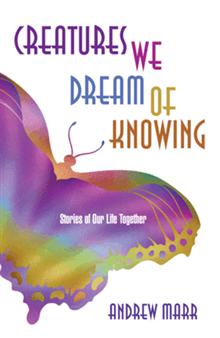
creatures coverThe writing of my story “The Rainbow Butterfly” has a complicated history. My first inspiration came from a short story by Nathaniel Hawthorne called “The Artist of the Beautiful.” In it, a craftsman creates a very delicate and beautiful butterfly that has a numinous quality. In Hawthorne’s grim imagination, this fragile work falls victim to insensitive people.

In my imagination, this image got hooked into an idea of a story about a town at war with another town to the extent that the war defined the town’s life at every level.  An underground group, devoted to finding an alternative to war, was engaged in a project of constructing a rainbow butterfly that would take on a transcendent life of its own. The project succeeded and the rainbow received a mixed reception depending on the dispositions of each person.

A few years later, at the time of the civil wars in the Balkan Peninsula, I got the idea of writing a story about a city in the state of civil war where occupation of the city was roughly divided between each side. The children too young for combat (starting at age twelve) spent their time getting a piecemeal education with the result they learned of a possible to stop the war, but one requiring self-sacrifice. (I used the Welsh legend of the black cauldron that turns dead bodies into zombies until a live person jumps into the cauldron voluntarily which breaks the cauldron. As you can guess, it was a pretty dark story.

Over time, I continued to feel there was a lot to like in both stories but at the same time some fundamental problems that kept either of them from working. After puzzling about this for some time, I got an inspiration to take elements of each story and create a whole new story using the same themes about war. The result was “The Rainbow Butterfly.” Basically, it combines the inter-city civil war scenario with that of an underground resistance group seeking peace. This time, there was no attempt to create the rainbow butterfly; finding a cup that had the butterfly’s life in it was enough.

I created a whole new character as the protagonist who tells the story, twelve-year-old Darren Forty-Third. His vocabulary is limited because linguistic skills are limited to the pragmatics of perpetual war. That already tells the reader a lot about what a culture is like when it is so totally focused on war.

Want to see how Darren and his friends and the Rainbow Butterfly fare? Read the story in Creatures We Dream of Knowing.

Stumbling blocks in the Desert: the Temptations of Jesus

freshBread1When Jesus went out into the desert after his baptism, he became aware of the fundamental temptations he would have to fight throughout his life. James Alison helps us understand the social nature of these temptations by pointing out that “devil” (diabolous) means “divisive obstacle.” Such an obstacle requires two or more people to stumble over it. That is temptations are unavoidably social.

The social implications of the first temptation are spelled out in John 6 where Jesus feeds the multitude in the desert. The feeding is a sign of God’s willing of abundance (see Divinely Created Abundance) but bread, like any material good, exists in a social context.  The temptation presented here is to align bread with economic and political power. The people who have been fed fall into this temptation and try to seize Jesus and make him king (the glory of all the kingdoms of the word–see Ignominous Glory). Jesus had to resist the temptation, go off alone, and then return to preach about bread from heaven, bread that is a gift from God.

In the temptations, the devil taunts Jesus as being the “son of god.” Likewise, when Jesus casts demons out of people possessed by them, the demons call Jesus “the son of god.” Thinking back to the attempt to seize Jesus and make him king, Jesus’ ordering those he has healed to tell nobody makes a lot of sense. Jesus was focused on healing those who had need. The demons tried to politicize the healings to make them part of a thrust for social power. This dimension is particularly apparent in the name of the demon possessing the man of Gadara: Legion.

When Jesus predicts his imminent suffering and death, Peter is called a “satan” when he tries to dissuade Jesus from following that course. As with “devil,” the word “satan” means a stumbling block. Lacking support from his closest followers could only have multiplied Jesus’ difficulty in holding the course laid out by his heavenly father. How much better would it be to fling himself off the roof of the temple and force his heavenly father’s hand? The devil was right to quote the verses from Psalm 92. God would bear up the son of man, but not until the son of man had truly and deeply put himself into the unforced hands of the heavenly father by allowing himself to be handed over into the hands of angry sinful humans.

Like Jesus, we must be alert to where the stumbling blocks are in our relationships with other people and with God. Like Jesus, we must learn that the stumbling blocks are too heavy for human hands to lift and toss away. Like Jesus, we must turn to our heavenly father who is always waiting for us to ask him to toss the stumbling blocks away.

Arachne, Athena, and a Thousand Princes

Xenia1Imagine a world where competitiveness is that world’s foundation, where it is nothing but mimetic rivalry all the way down. (See my post Human See, Human Want.) Actually many people have, but I am going to focus on a couple of recent fantasy novels I’ve just read which do that.

The Mark of Athena is the latest volume in Richard Riordan’s second series about adolescent demigods, Heroes of Olympus. These books can be a fun way to learn about Greek and Roman mythology, but if ever these gods are real and they really (mis)rule the universe, we’re in trouble. The positions of Zeus and the other Olympians, for example, are the result of earlier conflict. In Riordan’s novels, Cronos and Gaia make comebacks that fuel the divine in-fighting.

This latest book Riordan makes the millennia-old resentments come alive in their tense paralysis. Arachne who offended Athena by weaving a better tapestry than Athena could. Arachne is imprisoned under Rome as a giant spider with a monstrously bad attitude. Beth, a daughter of Athena, has to take from Arachne the Athena Parthenos that was stolen by the Romans and restore it to the Olympians. We see frozen resentments such as Arachne’s in human experience all the time. What if God really were like Athena instead of a God who generously brings us into being and even more generously saves us from follies such as that of Athena and Arachne?

The other books is A Confusion of Princes by Garth Nix. Prince Khemri is one of countless youths raised in privileged but inhuman conditions to serve the inter-galactic empire as a prince. Each prince is connected to the imperial mind upon coming of age (if he or she is not assassinated first) and is plunged into a system fueled by rivalry and nothing but rivalry. Material goods and programed courtesans are furnished in abundance so there is nothing to fight over except power and position. Nix does a superb job of showing us what such a system looks like, a system that is totally sacrificial. Khemri is singled out for a unique assignment that forces him to live with normal human beings. He is quite bewildered when he finds himself instinctively defending a woman when all his training taught him to use a human as a shield for himself. Is it a shock to us if ever we discover something in the world that isn’t rivalry all the way down, but is grounded instead in love that reaches out to others?

See Baptizing the Imagination for an essay on religious aspects of fantasy literature. See Violence and the Kingdom of God for more about mimetic rivalry and religion.