

When Jesus was asked by the Pharisees and the Herodians whether it was lawful to pay taxes to Caesar or not, they were not really interested in resolving the question and Jesus knew it. (Mt. 22: 15–27) They were, of course, trying to trap Jesus into giving a reply that would alienate his supporters. But if Jesus didn’t exactly resolve the question, he gave a firm answer that eluded the trap. It is significant that the Pharisees and Herodians, who normally hated each other, united in the cause of discrediting Jesus, just as they would unite in having Jesus executed when their scheme of discrediting failed.
The question that the Pharisees and Herodians didn’t want answered was: Who owns you? The Jewish tradition was quite clear that it was Yahweh who claimed ownership over the entire Jewish nation, so that each individual person was owned by Yahweh. Not only that, but the prophet Isaiah also claimed Yahweh’s ownership of King Cyrus of Persia, the most powerful ruler in the known world at the time. Yahweh claimed to have anointed Cyrus “to subdue nations before him and strip kings of their robes.” (Is. 45: 1) Admittedly, the prophet realized that Cyrus did not know that he had been claimed by Yahweh, (Is. 45: 4) but Cyrus was nonetheless doing the work Yahweh wanted done, namely, allowing the Jews to return from the Babylonian exile. All of this might sound like a good deal for Cyrus, but not really. Cyrus seemed to think he owned all of the people in his empire, including the Jew,s and he was moving the chess pieces for the sake of his agenda, which included weakening Babylon in favor of a Jewish restoration that wouldn’t be strong enough to threaten him. But Yahweh not only claimed ownership over all of the people Cyrus thought he owned but Yahweh also claimed ownership of Cyrus himself. Cyrus, of course, hadn’t signed the dotted line on that.
The Pharisees who were questioning Jesus took a hard line on Isaiah’s perspective and insisted that they were owned by Yahweh and not the Roman Emperor who, like Cyrus, was claiming ownership over everybody in the Empire, including the Jews. The Herodians perhaps paid lip service to Yahweh’s theoretical ownership of them but in practice, they acknowledged the Emperor’s ownership while treating Yahweh like an absentee landlord. The Pharisees and Herodians were fighting each other over the allegiance of the Jewish people as a whole. Although we can assume that most of the people accepted Yahweh’s ownership rather than the Empire’s, they weren’t so sure about allowing the Pharisees to claim ownership over them. If Jesus had said unambiguously that it was lawful for Jews to pay taxes to Caesar, then the people who were following him would have been disillusioned in their leader and would have forsaken him. If Jesus had said unambiguously that it was not lawful to pay taxes to Caesar, the Pharisees and Herodians could have handed him over to the Romans with a ready-made charge of treason.
As it happened, Jesus unambiguously affirmed Yahwe’s ownership of the people but in a way that took the wind out of the sails of the Pharisees and Herodians. Apparently not having a coin to produce himself, he asked the questioners to produce one. The very act of pulling out a coin with Caesar’s image on it undermined their attempt to discredit Jesus since simply having one of Caesar’s coins acknowledged the Empire’s ownership of them. Jesus’ emphasis on the word “image” is most significant here. The Jewish people could hardly help but recall that at the beginning of Genesis, Yahweh created humanity in Yahweh’s image, thus claiming total ownership of all humanity. Jesus suggests that one can give a coin with Caesar’s image back to Caesar, but as to one’s self, a self made in God’s image, that should be totally given to God.
In the opening of St. Paul’s letter to the Thessalonians Paul tells them that they are chosen by God. (1 Thess. 1: 4) This is a new kind of ownership, one based on divine initiative (as was the case with the Jews and Cyrus) but also based on relationship. Paul goes on to write about the Thessalonians imitating him and his fellow evangelists and, thus also imitating the Lord. (1 Thess. 1: 6) This imitation includes enduring persecution just as Paul had endured persecution in imitation of Christ who was crucified. The enthusiasm for the faith that Paul commends and celebrates gives us a picture of what it really means to be owned by God through Christ. Can we acknowledge God’s ownership of us as fervently as did Paul and the Thessalonians?

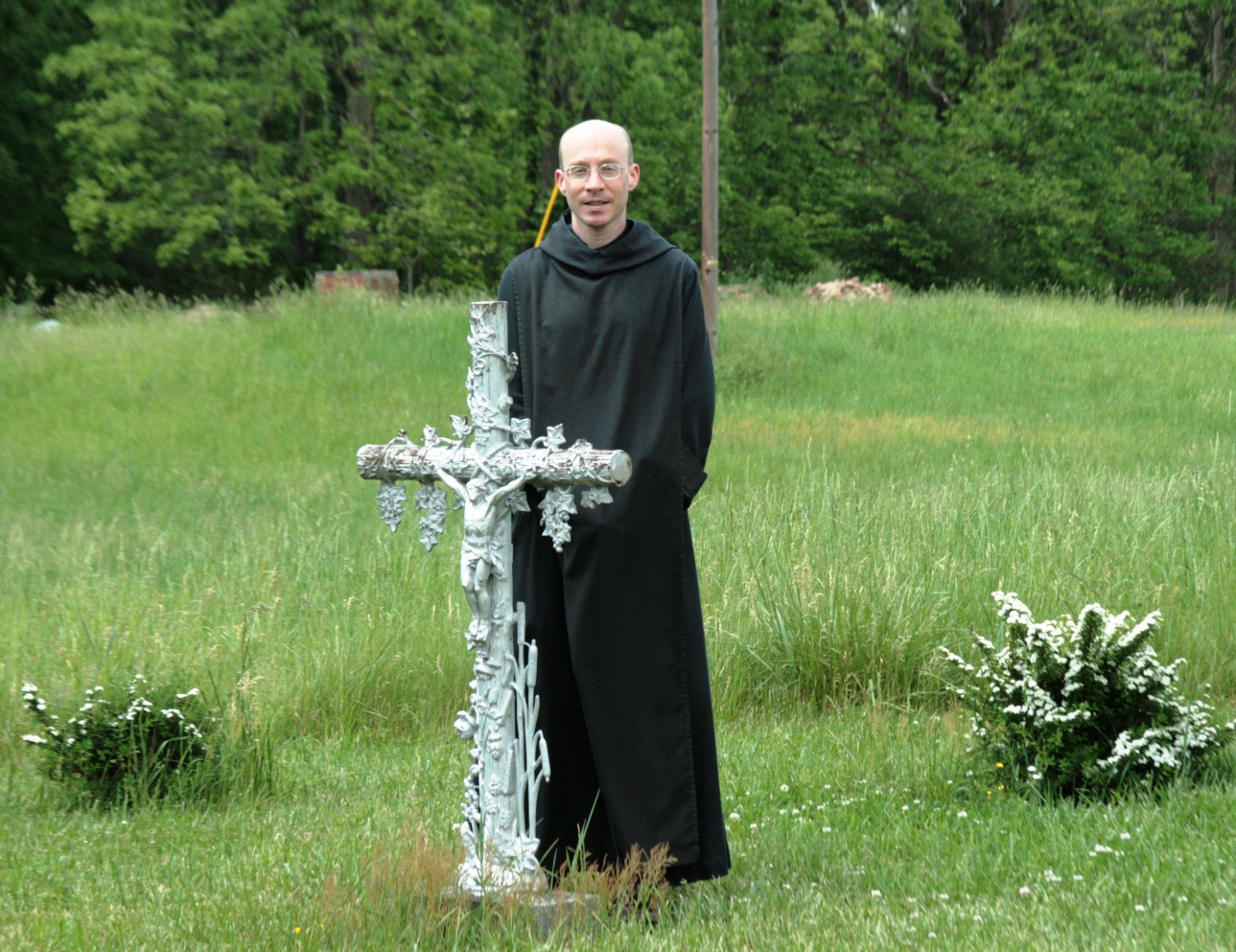 It is significant that Jesus had wandered over to Caesarea Philippi, deep in imperial territory, before asking his disciples who they thought he was. After they repeated a few rumors going round, Jesus asked who they thought he was. Simon Peter piped up: “You are the Messiah, the Son of the living God.” (Mt. 16: 16) Jesus’ commendation showed that Peter had caught on to something important: it was not Caesar, whose neighborhood they were hanging out in, but Jesus, who was the real, true Lord. But what kind of Lord was Jesus?
 In celebrating Mary, we celebrate the mystery that a human woman is the Mother of God. This is an explosive phrase. Nestorius is famous for his rejection of it and many other people have had trouble with it since. Why would God be willing, even want to have a human mother? Does this make Mary a goddess? Not at all. It is Mary’s humanity that makes the phrase a paradox, and it is Mary’s humanity that makes her a model to be imitated. Let us look briefly at the few glimpses of the human called Mary that the Bible offers us.
 The eighth chapter of Romans is among the most inspirational passages in all scripture. Paul assures us that “all things work together for good for those who love God, who are called according to his purpose” and that we will be “conformed to the image of his Son, in order that he might be the firstborn within a large family.” (Rom. 8: 28–29) Lest we think that only some people are predestined for God’s family, Paul asks: “If God is for us, who is against us?” (Rom. 8: 31) If Jesus is interceding for us, what more powerful persecutor is there to speak against us? Do we really want any personal being to veto the advocacy of Jesus? If we are truly stirred by these words, then we must stamp them deep into our hearts and allow them to govern how we view God and how we view other parts of scripture. For today, I suggest using these words to help us understand the parables in Matthew 13.
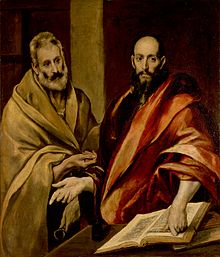 Much has been said about the conflicts between Saints Peter and Paul. I have
  When the story of the near-sacrifice of Isaac was first told to me in Sunday school, the teacher prefaced the story by saying that in biblical times there were people who made sacrifices to “god” and some people even sacrificed their own children, but God decided to teach Abraham that he should not do that. The story was troubling but it was comforting to know that God did not want such an awful thing. Between that and being told around the same time the story about Jesus inviting the children to come to him did much to instill in me a trust in God as deeply loving from an early age. Since then, I’ve come across many learned scholars who think such an interpretation of the Isaac story is simplistic. Who’s right?
 The Holy Spirit is the most obscure of the three Persons of the Trinity, not that the other Persons aren’t mysterious as well. One reason is that the Son is said to show the Father, and the Holy Spirit is said to show the Son, but that leaves nobody to show the Holy Spirit. So obscure is the Holy Spirit that it is difficult to think of the Holy Spirit as a Person at all. It is not uncommon to hear the Holy Spirit referred to as “it,” although both masculine and feminine pronouns also fall far short of the Holy Spirit’s personhood.
 The Good Shepherd is a reassuring image. The shepherd is in charge and the sheep follow the shepherd’s guidance. When thieves and robbers and wolves come to threaten the sheep, the shepherd deals with them in no uncertain terms. Jesus’ claim to be the gate, the way in and out of the fold, gives us another reassuring image: some of us are in and certain other people are out, just the way it should be.
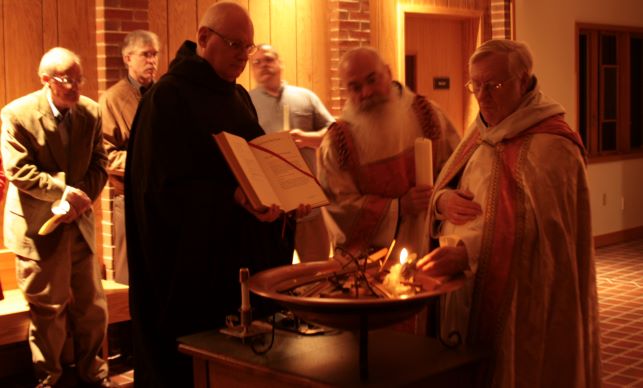 Matthew says there was an earthquake when the angel of the Lord came down, rolled away the stone of an empty tomb and sat on it. Both the earthquake and the empty tomb give us apt images for the way we experience Easter this year.
 Imaginary Visions of True Peace