
Life of Benedict
Reply


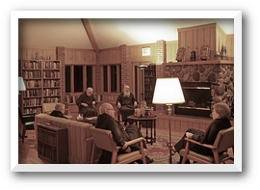 The stories of the desert monastics of the fourth and fifth centuries in Egypt are the bedrock of monastic lore that continue to inspire all who attempt to live by monastic spirituality.
In one charming story, a monastic who has shared his cave with another, notes that they have never had a quarrel and proposes that they try to have one, like all other people. The other monastic says he doesn’t know how to start a quarrel. The first monastic puts a block of wood on the ground between them and says” “This block is mine. Now you say the same thing.” The second monastic said, “This block is mine.” “No, this block is mine,” insists the first monastic. “Okay, it’s yours,” says the other. And so they failed to have a quarrel.
Would these monastics have quarreled if the first had put a gem between them instead of a block of wood? The story about the children and the balloons in “Human See, Human Want,” suggests that question is whether any article at all is given worth by the desire of the other. A block of wood can become as desirable as a gem if somebody else desires it and another person gets caught up in that desire.
If these two monastics were not quarreling, what were they doing? The desert literature tells us they would have spent large amounts of time in prayer, much of that in psalmody, and then the rest weaving baskets they would sell to give the money to the poor. That is, they were not focused on each other but were opening themselves to God’s Desire and to the needs of other people. Prayer and helping other people does not guarantee there will be no quarrelling, but the two combined surely help quite a lot.
My story “Haunted for a Time” in From Beyond to Here offers a counter-example to these two desert monastics. At the beginning of the story, Murray is so absorbed in his possessiveness of his comic books at the expense of others that he cannot see anything beyond that. Some unsettling apparitions from a ghostly figure challenge him to reconsider his ways.
My book Tools for Peace examines Benedict’s teachings on stewardship of material goods in the monastery that build on the insights of this simple story of the two desert monastics who failed to be movers and shakers in the world, but also failed to have a quarrel.
 Some of you might have seen in the title of my blog a parody of the famous line in Marianne Moore’s famous poem Poetry: “Imaginary gardens with real toads in them.” As an aspiring writer with a lot of imagination, I was strangely stirred by that line when I studied it in high school and it has stuck with me ever since.
Obviously, this line suggests a turning and twisting and re-turning and re-twisting relationship between imagination and reality. The two are not the same but they are intertwined one with another. These words also suggest that any attempt to explain the relationship will fail.
My title ties together the fantastical imagination with the yearning for peace, a yearning that seems more fantastical than flocks of dragons and herds of unicorns. But it is precisely because peace is so elusive that he must open our imaginations toward it. If we do not imagine peace, we will never get it. At the same time, if we do not pay close attentions to current human realities, we will never find peace.
In his Rule, Benedict was a down-to-earth person, grounded in reality. He never thought his community was made up of certified saints with immaculate records. He knew that community life requires living with the weaknesses of others each member prods the other to do better. When it is time to rise early in the morning for prayer, the monks need to “quietly encourage each other, for the sleepy like to make excuses.” At the same time, Benedict hopes that his monks will compete “in obedience to one another,” quite a vision of peace.
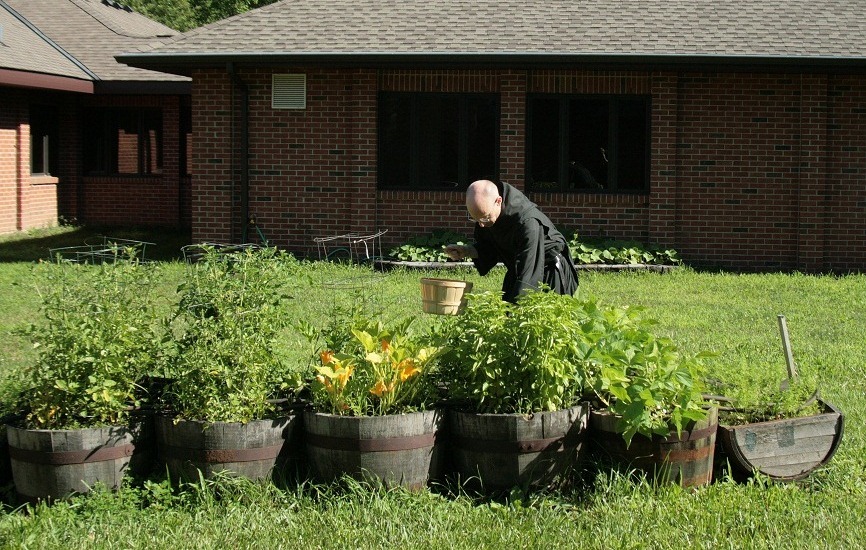
Benedict directed his heart toward heaven, but he knew that imagining peace begins with tending a real garden with real plants in it and sharing the produce with real human beings.
 We all become at least slightly disoriented when we meet a person who is different. This disorientation is often mixed with fear and distaste, maybe even disgust. If we encounter someone really strange, such as a visitor from another planet or a ghost, our fear can easily turn into panic. Although most daily strange encounters are less drastic than that, we often find that we react with fear and disgust before thinking rationally when meeting even a mildly strange person. If we get to know the stranger, however, we often find that person to be a gift to us.
Fantasy stories give us the opportunity meet with the strange, the weird and the frightening and learn to overcome our fears enough to see the potential giftedness in these encounters. In “Merendael’s Gift,” the opening story in the collection From Beyond to Here, a boy named Eddie encounters a very strange creature with an elusive and frightening appearance, yet the creature communicates to Eddie a desire to give a gift that is very important. As the story unfolds, Eddie has deal with his fears, not only of the creature, whose name is Merendael, but of losing his social standing with the boys he hangs out with. Each story in Creatures We Dream of Knowing brings together one or more allegedly fantastical creature and one or more children. In “The White Tree,” for example, a mysterious white plant growing quickly where four backyards meet frightens some people but offers great musical gifts to those open to receive them.
As a Benedictine monk, I follow a monastic rule that enjoins hospitality as a major apostolate, second only to the ministry of prayer. We are constantly challenged to open our hearts to strangers, some of whom seem strange and some of whom really are difficult to deal with. Hospitality, of course, is a Christian virtue. The author of the Epistle to the Hebrews reminds us that, like Abraham, we may entertain angels unawares when we offer hospitality. I discuss Benedictine hospitality in my book Tools for Peace.
The story “Merendael’s Gift” and the others in From Beyond to Here and in Creatures We Dream of Knowing can help readers of all ages reflect on the challenge of welcoming the truly strange stranger into our lives and learn what God would have us learn from them.
 Imaginary Visions of True Peace