
What Humans Willed: the Passion Story

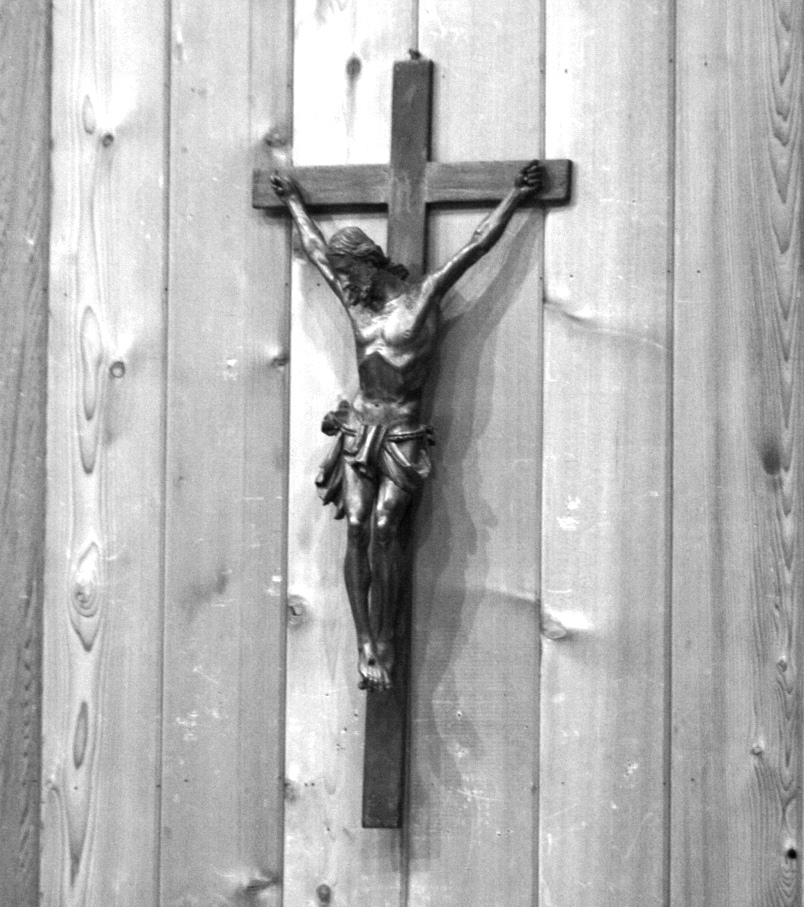
crucifix1At the abbey where I live, I preach at the Maundy Thursday liturgy and the Easter Vigil. I do not preach on Palm Sunday and Good Friday, the two liturgies where we chant the Passion. The Passion is long enough without added sermons and the Passion speaks for itself. That is, it speaks for itself as long as we don’t add things it does not say that undermine what the Passion does say.

To belabor what should be the obvious, the Passion Story tells us what human beings chose to do. Jesus chose to drive the money changers from the temple and teach the people there. The Jewish authorities chose to plot to have Jesus arrested and handed over to the Roman authorities. Judas chose to betray Jesus, thus facilitating the arrest and handing over. Pilate, to varying degrees in the four Gospels, vacillated but in the end chose to sentence Jesus to crucifixion. Meanwhile, the people who had cheered Jesus upon entering Jerusalem ended up crying for his crucifixion. The Roman centurions nailed Jesus to the cross where he died. The Passion narratives say nothing to suggest that anything that was done to Jesus, from the arrest to harassment and flogging to nailing him to the cross was in any way the will of God.

In all this, God does not do anything. Why do I bother to make a big point of this? The reason is that many Christians have suggested that God positively willed the sacrifice of Jesus for some cosmic purpose, usually because God was upset with wayward humans and was somehow incapable of forgiving humans unless somebody took the punishment for human sin. If Jesus, innocent of sin, should take the punishment, well and good. Well, not well and good. What kind of god demands punishment and doesn’t care who gets punished as long as somebody does? The Passion Story never says anything of the kind.

If God did not will Jesus’ violent death, what did God will? What was God’s plan? Jesus understood the heavenly Father’s plan to be that he Jesus knew that if he defeated Caiaphas and Pontius Pilate with force would only keep the world forever embroiled in retaliatory violence. The only way to avoid that was to gather people peacefully no matter the outcome, even if it meant death.

But Death, much as it was the plan of humans, was not God’s plan as a group of women found out early in the morning on the first day of the week.

See also Two Ways of Gathering


The First Supper

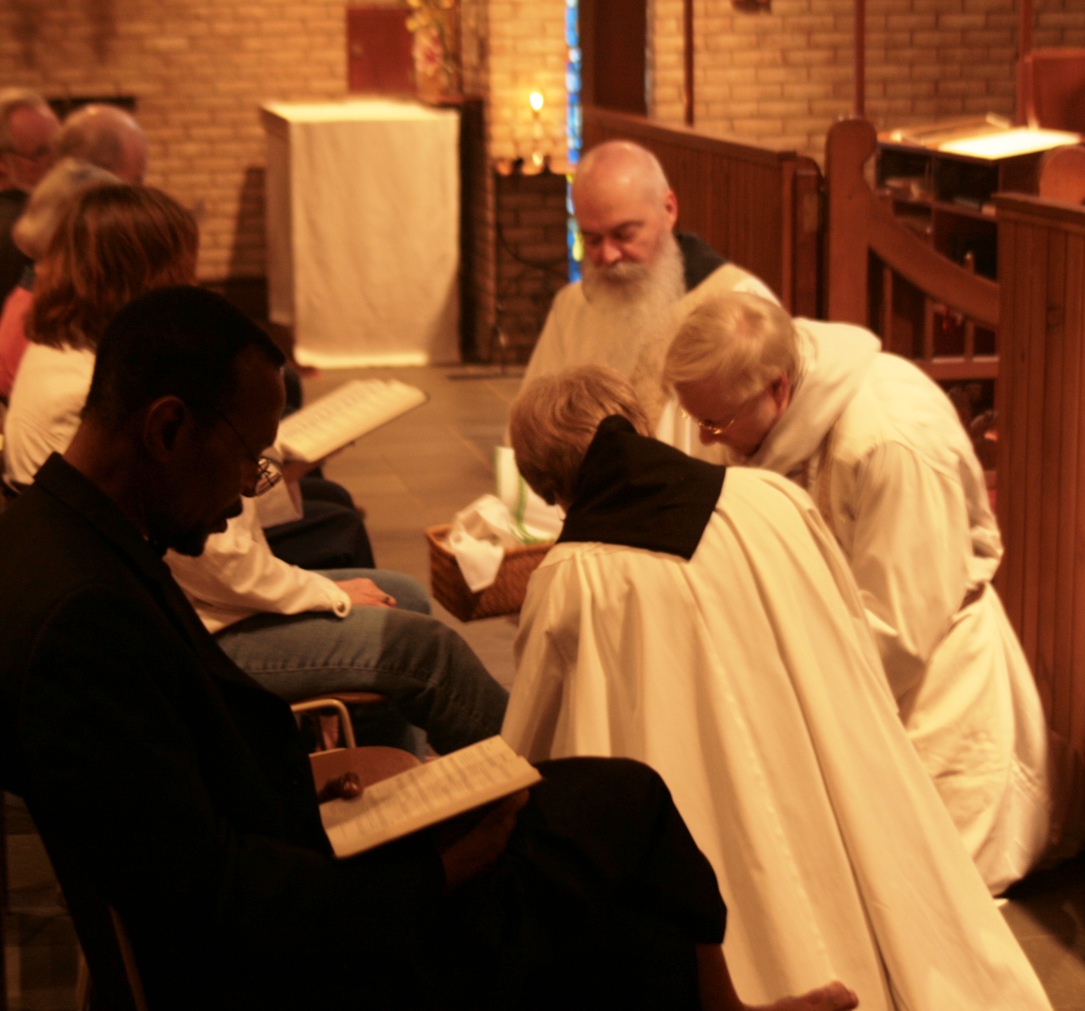
AndrewWashingFeet - CopyBy the time Jesus gathered with his disciples for what is called “the last supper,” not only had the social tensions in Jerusalem reached a point where all parties agreed that Jesus must be put to death, but the tensions among Jesus’ disciples had formed against him as well. The disciples’ fighting over who was the greatest, their incomprehension of his predictions that he would be put to death and their collective disapproval of the woman who anointed Jesus with oil all led to this point. In their current collective frame of mind and heart, there was a real possibility that all of them would either join the crowd in crying for crucifixion, or would band together after his death as a tightknit rebellious group united by resentment over the death of their leader, thus thwarting the Kingdom of God that Jesus came to proclaim. Jesus had one last chance to do something that would keep his life and intentions alive for his disciples. He did two things.

The first thing Jesus did was wash the feet of his disciples. The act was so simple that anybody could do it, even a child. If the disciples follow this simple command, they will not have time to harbor resentment over their master’s death and plot vengeance for the deed. Instead, this simple act that embodies love and concern for others will cause that love and concern to grow within their hearts and drive out resentment and a desire for revenge. If more and more people imitate each other in imitating Jesus in this action, then the entire social order of the day will crumble around the communal life that emerges through this simple action.

The second thing Jesus did was tell them to eat bread that was his body and drink wine that was his blood in remembrance of him. Jesus was not just telling the disciples that he was about to die for them. That would be comprehensible, if unsettling. Rather, Jesus was telling them that his very life was being given to them. Jesus was not giving himself as a corpse in the hope that the world might become a better place if enough people felt bad about killing him. Jesus was giving himself as a living being. Only when Jesus disciples broke bread and passed the cup of wine in memory of Jesus would they begin to realize the extent to which the living Jesus was giving them his life, life that he possessed in abundance in spite of the fact that he had been nailed to a cross and left to hang there until dead.

This is why Jesus was hosting the first supper of a new beginning for us all.

For comments on Passover see Eucharist (1) 

A Scandalous Woman as Extravagant as Jesus

churchDistanceBlossoms - CopyThe synoptic Gospels interlace Jesus’ disciples’ infighting as to who is the greatest with Jesus’ predictions that he will be handed over to the authorities to be crucified. The disciples consistently fail to understand or accept what Jesus is saying to them. Interestingly, the disciples suddenly come to an agreement when a woman enters the house of Simon the Leper in Bethany and pours an enormous amount of costly oil over Jesus. It is telling that it is a corporate condemnation of a marginal person that has united the disciples. To their chagrin, Jesus defends the woman, saying that she has prepared him for burial, precisely the destiny Jesus is facing and the disciples are denying. It is quite possible, however, that for Judas Iscariot, Jesus’ defense of the woman was the last straw. In both Gospels, Judas’ fateful interview with the chief priests follows immediately.

Curiously, Luke has a version of the same story that is detached from the passion narrative. That this woman had a bad name in the town suggests uneasiness with this woman and her extravagant actions. That she shamelessly washes Jesus’ feet with her tears doesn’t help matters. If the disciples were there, one wonders if they agreed with Simon in thinking that Jesus should have known that the woman was a sinner and therefore unworthy of offering such an extravagant gift.

John has a similar, but different account of the anointing of Jesus. The woman is Mary of Bethany and, far from being an intruder into somebody else’s house, she is herself the hostess along with her sister Martha. As in the Lucan story, Mary wipes Jesus’ feet with her hair. This time the gesture is all the more suggestive of things to come as John places the incident just before the Last Supper when Jesus of washes the feet of his disciples. This time, Judas alone objects to the waste. John goes on to say that Judas was upset, not because he cared for the poor, but because he wanted more money in the common treasury for him to steal. The question is: if the disciples unanimously censured the woman as they unanimously opposed Jesus’ predictions of his death, was Judas really the only betrayer? Chances are, Judas was saying out loud what the other disciples were thinking.

The parable of the Prodigal Father tells of the extravagant love of our heavenly father. Isaiah 43 proclaims God’s extravagant gesture of bringing God’s people through a desert overflowing with water. In Philippians, Paul insists that the cross and resurrection are so extravagant that all of his human qualifications are reduced to rubbish. Mary of Bethany shows the same extravagance, an extravagance that makes us uncomfortable to this day. This is the extravagance that embraces the cross and Jesus’ resurrected life and leads to truly caring about the poor and raising them up into a life of generosity for everyone.

Gathering to Give Life to Victims

eucharist1Since the dawn of humanity, humans have gathered most quickly and powerfully around a victim. (See Two Ways of Gathering and Violence and the Kingdom of God.) Just think of how quickly we gravitate around whoever is currently seen to be to blame for whatever is going wrong in the world today. This gathering, however, is always at the expense of at least one person or group of people. A similar and yet very different gathering around a victim occurred when the eleven disciples saw the risen Jesus in Galilee and “worshiped him.” (Mt. 28:17) The huge, even infinite difference in this gathering is that the victim is alive and is gathering people around victims, “the least of those who are members of [his] family.” (Mt. 25:40) Ever since, Christians have gathered in worship around Jesus and his fellow victims, primarily in the Divine Office and the Eucharist.

The Divine Office is structured prayer that is uses the Psalter and other biblical canticles as the primary vehicle of prayer. Much can be said of the psalms but the thing that jumps out at anyone who prays them with any frequency is the many outcries of victims. “They surrounded me like bees; they blazed like a fire of thorns; in the name of the Lord I cut them off!  I was pushed hard, so that I was falling, but the Lord helped me.” (Ps. 118: 11-13) Verses such as these raise the question of whether we gather “like bees” around another person, or if we are entering the circle of bees in solidarity with the victim. Being a victim tempts us to anger, bitterness and violence. “Cutting off” our assailants in “the name of the Lord” is the reflex reaction, but is the opposite of what Jesus himself did in the same position. These rough verses help us renew our awareness of our own violent reactions to being victimized, even (especially!) petty matters such as being slighted by another. If we focus on Jesus when we are in the place of the victim, we find that the Lord has made the rejected stone the “chief cornerstone” that is “marvelous in our eyes.”

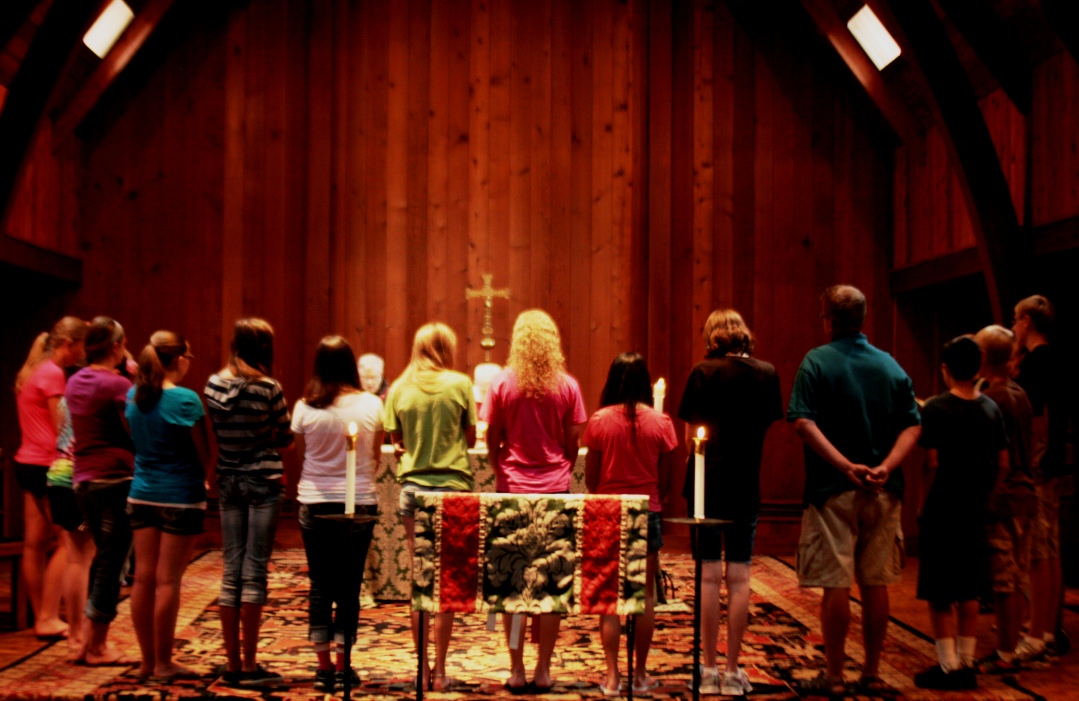
In the Eucharist, we gather around an altar which has been transformed into a table where, instead of laying out a sacrificial victim for slaughter, we place a piece of bread and a cup of wine to share among those present. We do this in memory of Jesus’ Last Supper, suffering, death, and Resurrection. The Greek word anamnesis does not mean a mere memory but to make present. That is, we enter the place of the victim with Jesus when we gather around the table. In so gathering, we feed on Jesus’ forgiveness of us for our own victimization are our challenged by this forgiveness to give this same life to others, both in terms of physical needs and emotional and spiritual sustenance. (See Miserable Gospel)

In his Rule, St. Benedict says that prayer should be made with “utmost humility and sincere devotion.” Entering the place of the victim with Jesus leads to both humility and devotion, attitudes that allow us to follow Benedict’s admonition that we sing the psalms (and also break bread in the Eucharist) “in such a way that our minds are in harmony with our voices.” (I develop these thoughts on the Divine Office in Tools for Peace)

Stumbling blocks in the Desert: the Temptations of Jesus

freshBread1When Jesus went out into the desert after his baptism, he became aware of the fundamental temptations he would have to fight throughout his life. James Alison helps us understand the social nature of these temptations by pointing out that “devil” (diabolous) means “divisive obstacle.” Such an obstacle requires two or more people to stumble over it. That is temptations are unavoidably social.

The social implications of the first temptation are spelled out in John 6 where Jesus feeds the multitude in the desert. The feeding is a sign of God’s willing of abundance (see Divinely Created Abundance) but bread, like any material good, exists in a social context.  The temptation presented here is to align bread with economic and political power. The people who have been fed fall into this temptation and try to seize Jesus and make him king (the glory of all the kingdoms of the word–see Ignominous Glory). Jesus had to resist the temptation, go off alone, and then return to preach about bread from heaven, bread that is a gift from God.

In the temptations, the devil taunts Jesus as being the “son of god.” Likewise, when Jesus casts demons out of people possessed by them, the demons call Jesus “the son of god.” Thinking back to the attempt to seize Jesus and make him king, Jesus’ ordering those he has healed to tell nobody makes a lot of sense. Jesus was focused on healing those who had need. The demons tried to politicize the healings to make them part of a thrust for social power. This dimension is particularly apparent in the name of the demon possessing the man of Gadara: Legion.

When Jesus predicts his imminent suffering and death, Peter is called a “satan” when he tries to dissuade Jesus from following that course. As with “devil,” the word “satan” means a stumbling block. Lacking support from his closest followers could only have multiplied Jesus’ difficulty in holding the course laid out by his heavenly father. How much better would it be to fling himself off the roof of the temple and force his heavenly father’s hand? The devil was right to quote the verses from Psalm 92. God would bear up the son of man, but not until the son of man had truly and deeply put himself into the unforced hands of the heavenly father by allowing himself to be handed over into the hands of angry sinful humans.

Like Jesus, we must be alert to where the stumbling blocks are in our relationships with other people and with God. Like Jesus, we must learn that the stumbling blocks are too heavy for human hands to lift and toss away. Like Jesus, we must turn to our heavenly father who is always waiting for us to ask him to toss the stumbling blocks away.

Strange Wedding

wineTableFeast1The Wedding at Cana of Galilee is a beautiful story of celebration. The only problem is the story makes no sense, perhaps because celebration is infinitely beyond sense.

Foremost among the oddities is the scarce presence of the groom and no mention of the bride. The effect of Jesus being at the center of the story and no bride mentioned has the effect of putting us into the position of the bride of Jesus as Isaiah said: “As the bridegroom rejoices over the bride, so shall your God rejoice over you. (Is. 62:5)” The scarcity of wine (probably humanly created—Cana was a poor village—looks ahead to the scarcity of bread in the wilderness. Both times, Jesus counters scarcity with extravagant abundance.

The six stone jars are supposed to hold water for purification. That would be a lot of purity, but the jars are empty. Well, purity laws and rituals tend to divide humans arbitrarily into clean and unclean. That is, purity always creates a scarcity of purity, especially of pure people. Quite the opposite of God’s marriage with all God’s people.

The water with which the attendants fill the jars suggests baptism, as does the water at the well in Samaria, another story with nuptial overtones. The wine is a festive drink but it also looks toward Jesus’ death as does the bread in the wilderness. The story of Jesus driving the money changers out of the temple, the event that drove the Jewish leaders in Jerusalem to plot the death of Jesus, further suggests that the water and wine refer to the Passion.

Dostoevsky makes powerful use of this story in Brothers Karamazov. The great staretz (spiritual father) Zossima has just died. When his corpse follows the normal course of nature and creates a stink, many of the people are scandalized, including Zossima’s youthful follower, Alyosha. Late at night, the stricken Alyosha  is praying in the hermitage where the body lies in state. Another monk is reading the story of the Marriage of Cana. The room expands to take in a vast celebration. Then Alyosha sees Zossima rejoicing. The elder says to him: “We are rejoicing . . . we are drinking new wine, the wine of great joy. See how many guests there are?” “He [Jesus] became like us out of love, and he is rejoicing with us, transforming water into wine, that the joy of the guests may not end. He is waiting for new guests, he is ceaselessly calling new guests.”

Cana was a backwater in a backwater, a place of no significance. The temple in Jerusalem was the center of Jewish religion and culture. As with the outcasts at the manger, the party is in the backwater, not the center. In this new center, Jesus calls all of us to the party, the party that transforms the body and blood of Jesus into bread and wine of feasting and rejoicing, a party open to all of us. . Jesus has indeed saved the best wine until last.

See blog posts Humanly Created Scarcity, Divinely Created Abundance, and Outcasts at the Manger and article Violence and the Kingdom of God for more comments on Brothers Karamazov.

Ignominious Glory—Glorious Ignominy: a Doxology

Since when is glory ignominious ? Probably since humans first became concerned about what others thought of them. Seeking glory from others is a sure way to get its opposite as  celebrities know all too well. In the New Testament the Greek word doxa is sometimes translated as “glory,” sometimes with “shame.” How can one word mean two opposite things. James Alison says that is because the word means “reputation.” What kind of reputation? Any kind of reputation.

The Harry Potter books give some interesting examples of the double-edged meaning of doxa. Harry arrives for his first year at Hogwarts as a celebrity, not for anything he had done but because he had survived Voldemort’s attack when his mother gave her life to save him. In his second year at Hogwarts, Harry is blamed by many for an epidemic of people turning into stone although he had done nothing to earn this ignominy than he had done to earn his celebrity status. In the fourth book, when Harry’s name is entered in the competition in a questionable way but through no fault of his own, there is bad feeling towards him from students of all three schools involved. (Spoiler alert!) His defeat of Voldemort has no external fireworks and he ends up with a quietly respectable position in the wizard world without celebrity status.

Bob Dylan has been praised as one of the greatest poets and songwriters of our time but he has also been the object of much ignominy with every turn in his career. He did not receive it for drugs or sex, but for using electric guitars instead of a simple acoustic guitar like a true folk singer. Then he got it for seeming to relax and live an ordinary life, as if living an ordinary life is a scandal! The worse ignominy was for turning to Christ and doing some Gospel albums.

Speaking of Christ, in his Gospel, John plays with both sides of the meaning of doxa in relation to Christ. Jesus seeks doxa from his Father while the people who put him to death or keep their sympathy for him a secret because  they seek doxa from other people. So it is that doxa inevitably falls into sacrificial violence if reputation is sought from people instead of from God. The raising of the cross is Jesus’ doxa. That is why God has such a bad reputation nowadays. Where do we look for our own reputations?

Life of Benedict

The only biography of St. Benedict is by St. Gregory the Great. Gregory highlights the ways Benedict’s life was lived in imitation of the great figures in Scripture and most importantly of Christ himself. I have posted an article called Imitating Elisha that analyzes Gregory’s Life of Benedict with René Girard’s concept of mimetic desire. The result is a rich vision of the spiritual life for any Christian.

On Expelling the Accuser, not the Victim

It seems that every time a hurricane or other natural disaster strikes, there are some religious leaders who proclaim that the disaster was a punishment from God. This is an old game. During the Middle Ages, for example, plagues were routinely blamed on the Jews or on those who tolerated their existence in the city. Interestingly, such accusations are still leveled mainly at unpopular minorities, such as homosexuals. If God is punishing New York for its wickedness, why not suggest God is punishing the city for the misconduct of financial leaders?

Does Jesus go for this sort of blaming game? On the contrary, Jesus insists that the eighteen people killed when the Tower of Siloam fell on them were not worse sinners than the rest (Luke 13:4). Jesus sounds threatening when he says others will likewise perish if they do not repent, but Jesus is not exasperated by the people killed by the falling tower, but by the people who thought the victims were greater sinners. Jesus is reminding us that the disasters that fall on other people can just as easily fall on us, regardless of how good or bad we are.

A stronger repudiation of this blaming theology comes in John 9 when Jesus’ disciples ask if it was the blind man’s parents who sinned or the blind man himself that he was born blind. Jesus replies that neither were to blame, but the man was born blind that so the “works of God might be manifest in him.” That is, nobody was blamed for the blindness, but Jesus responded to the situation by giving the man his sight.

Most important of all, Jesus was executed because he was blamed for the social unrest in Jerusalem when any historian can see numerous causes that had nothing to do with Jesus. When Jesus rose from the dead, he did not cast blame on his killers, but returned as the forgiving victim. Is it credible that Jesus would encourage his heavenly father to send hurricanes to people who don’t measure up to his standards?

On the contrary, the story of the man born blind makes it clear that that the proper response to catastrophes is not blaming but compassion. That is, we should do everything we can to manifest God’s works in the face of these catastrophes. The name Satan means “Accuser.” In Revelation 12, Satan was cast out of Heaven when Jesus was raised into Heaven. With Jesus, there is no room for accusation. There is only room for healing the afflicted and doing everything we can to prevent or mitigate further catastrophes.

See also Two Ways of Gathering and article Violence and the Kingdom of God

Article Introducing Girard’s Thought

I have posted on the “Articles” page an introductory article on René Girard called Violence and the Kingdom of God. Actually, Girard is sort of the catalyst for what is called “Mimetic Theory” as it is centered on the human tendency to imitate desires. (See Human See, Human Want) It is more accurate to say that there is a constellation of thinkers of whom René is one. It is my observation that Girard does not have followers; he has colleagues, of which I am one. Those wishing for a more in-depth discussion of the ideas I am working with on this blog may wish to read the article.