Working with Unjust Wealth

There is much puzzlement about the parable of the mid-manager who is dismissed from his office. (Lk. 16: 1–9) Not least is the question as to whether we should called him “the Dishonest Manger,” as does the NRSV, or the “unjust manager” as many other English translations have it. The Greek word here is adikaios. This is in the dikaios word group which normally is translated as “justice “ or “righteousness.” Here, it is preceded by the alpha privative so that literally it means a manager without justice or righteousness. Dishonest mangers do have that lack, but since the word dikaios occurs frequently in the New Testament meaning justice and/or righteousness, I think it is preferable to say that the manager is unrighteous rather than dishonest. The unjust Judge who would only do justice for the widow when pestered by the widow was also described by the word adikaios, which is clearly best translated as “unjust.” (Lk. 18: 6) There is a significant difference in the two English terms and since this parable is very opaque, we can use all the clarity we can get. This understanding of the word gains more credence when we note that the unrighteous manager is not accused of embezzlement but of squandering the property of the rich man who had hired him. There is also the matter of the rich man acting on hearsay without apparently doing any independent investigation.

The unrighteous manager’s inner dialogue is realistic and pragmatic. He is quite clear about the ulterior motive behind his scheme of lowering the debts of his former boss’s clients: that these people will welcome him into their homes for what he has done for them. It appears that the unrighteous manger is cheating his former master, but it is possible that he was receiving a commission on the notes and was deducting what would have been his share. That the former master chuckles over what his fired employee has done suggests that he had not suffered further loss over these transactions. It’s hard to see how the Kingdom of God can be like this sort of moral muddle, and Jesus does not, in fact, say the Kingdom of God is like this. So what does a parable like this have to do with the Kingdom of God?

The parable suggests that handling money is intrinsically problematic, and the greedier one is, the more problematic it is. Both the rich man and the people who owe the rich man material goods come across as wanting best value for their money. Almost all of us do that and that is why this parable mirrors our involvement with money and other material goods. Calling the wealth “unjust” rather than “dishonest” better captures the systemic injustice of the world’s economic system. The unrighteous manger is the only one in the parable who acts generously even if that is only under duress: unless the “squandering” of the rich man’s property involved being generous with the goods he was responsible for. Given recent events, I can’t help but think of the refusal of some politicians to “squander” money on helping those most in need of assistance.

Indeed, Jesus shifts the focus from handling money in this world to the relationship between how generous we are with money in terms of our eternal destiny: “And I tell you, make friends for yourselves by means of dishonest wealth so that when it is gone they may welcome you into the eternal homes.” (Lk. 16: 9) Jesus then goes on with a few other comments, the most pertinent being “No slave can serve two masters, for a slave will either hate the one and love the other or be devoted to the one and despise the other. You cannot serve God and wealth.” (:Lk. 16: 13) The rich man and the clients who owe the rich man goods are caught in serving wealth, while the unrighteous manager seems to have freed himself from it to some extent. By mirroring the morally chaotic life of pursuing wealth, Jesus alerts us to the need to escape this rat race by aiming for “the eternal homes.” So where is the Kingdom of God? It isn’t here unless we all practice the generosity of the unrighteous steward which disrupts the system he was living in up to the time he was fired.


The Call to Contemplation

The brief story of Jesus visiting Martha and Mary, when Martha serves Jesus and Mary sits at his feet, listening to him, (Lk. 10: 38-42) has been interpreted as contrasting the active and contemplative lives since the early church. The contrast between Martha being so frantically active and Mary so still a listener firmly calls for attention. In any case, the relationship between activity and contemplation is one with which Christians have struggled since the Early Church. Although the Desert monastics embraced an ardent contemplative lifestyle, there are stories about the need for Martha, such as the amusing story of a visitor to a monastery who said he would not help with the work because he had, like Mary, chosen the better part, but was upset when he wasn’t called to dinner.

On the face of it, though, the contrast of action and contemplation doesn’t seem to be an issue for Luke or the other Gospel writers, which raises the question of whether or not the use of this story for evaluating the relationship between action and contemplation might be a bit anachronistic, even if congruent to the story. So I thought about what the story might have met to Luke–-but came up empty. I couldn’t think of any other meaning than the traditional one, which raises the question of whether it is so anachronistic after all.

First, I reflected on the pace of each of the four Gospels. Mark, considered the earliest, is very fast paced, breathlessly narrating the healing miracles and overwhelming the reader (or listener) with the power of Jesus’ ministry. Matthew and Luke slow the pace considerably, mainly by including long episodes of Jesus’ teaching, teachings that require reflection to begin taking them in. Although Luke’s pace is roughly the same as Matthew’s, it is instructive that he stresses more the times Jesus went off alone to pray, suggesting that Jesus had to balance his active life with contemplation. John, most likely the latest Gospel, is much the most contemplative Gospel as it unfolds at a very slow pace and suggests deeper meanings to the events in the narration. Such a progression suggests a growing awareness of those who developed the Gospel traditions of the need to contemplate the meaning of Jesus’ life that culminated in the shocks of the crucifixion and Resurrection, as well as absorbing the teachings which seem to have puzzled Jesus’ closest followers at the time. So, the traditional interpretation of this brief story doesn’t seem anachronistic after all.

When we look at the opening chapter of the Epistle to the Colossians, we encounter profoundly contemplative insights on the part of Paul, or whoever else might have written the epistle. (I favor Pauline authorship, but if somebody else shared the same contemplative insights as Paul demonstrated in his undoubted epistles, that attests all the more to the contemplative development of the early church.) Paul connects Jesus, whom he encountered on the Road to Damascus, to the Creator of the world, (Col. 1: 15–17) perhaps sensing the same creative activity on the part of God in Genesis as in the re-creation Paul experienced when Jesus called him out. This same Jesus is also the head of the Church, (Col. 1: 18) the specific group of humans who have responded to Jesus as Paul has. All this convinces Paul that the fullness of God dwells within Jesus. (Col. 1: 19) Most important, Paul realizes that Jesus’ reconciliation with him, who had formerly been hostile to Jesus, is part of a general reconciliation Jesus has made with all people, a reconciliation made not through the military, political, and cultural force of the Pax Romana, but the Peace of Christ who suffered at the hands of the Roman Empire. (Col. 1: 20) The very persecution Paul engaged in was flipped to a reconciliation by the suffering of Jesus. In this dense passage, we see the fruits of profound contemplation, a sitting at the feet of Jesus in quiet prayer. This gives us all the more reason to believe that Luke, probably writing two or three decades later than Paul, was passing on a caution traced back to Jesus that the action required by charity, such as in the Parable of the Good Samaritan that directly precedes this story of Mary and Martha, and the need to proclaim the Kingdom of God, be grounded in quiet contemplation of what the Kingdom ix really about.

In Genesis, we have the incident when Abraham and Sarah welcome three men who turn out to be angels. (Gen. 18: 1–10) Although there is much activity, we don’t see the frantic movements of Martha, and certainly not a trace of the resentment on Martha’s part. Starting with the Early Church, there has been a tendency to interpret the angels as the Holy Trinity come to visit the patriarch and matriarch. That interpretation really is anachronistic, but Paul’s proclamation that “the mystery that has been hidden throughout the ages and generations but has now been revealed to his saints” (Col. 1: 26) suggests that some interpretations of scripture will transcend time. The well-known icon of the Trinity by Andrei Rublev, inspired by this scene, leads us into the deep contemplation, not only of the hospitality of Martha, Sarah, and Abraham, but also of the hospitality of Mary who invited Jesus deeply into her heart. Such a presence of God within us can never be taken away from us and will remain with us for all eternity.

Resurrection in Miniature

One of the oldest instinctual human acts is to reverence the bodies of the dead. Only in the most recent years have there been any signs of attenuation of such customs. There are no pragmatic reasons for it. As Søren Kierkegaard noted, the dead can’t pay you back for what we do for them, which makes reverence for the dead a profound act of disinterested love. Why do we have this instinct? Why was it important to the women to bring spices to the tomb at the dawn of the day after the sabbath at great expense? In answering these questions, it occurs to me that there is something awesome about death. How is it that the life that used to fill this body is no longer there? Where did that life go, if it went anywhere? Finding the tomb empty was bewildering to the women. How could they reverence the body if the body was not there? Worse, what sort of disrespectful act might have been committed on the body of a man who had died a criminal’s death?

Suddenly seeing the two men in dazzling clothes only compounded the bewilderment. These “men,” presumably angels, teased the women for looking for the living among the dead. (Lk. 24: 5) True, if one is looking for a live person, a tomb is not the best place to look, but the women had come to reverence a dead person who had meant much to them, and a tomb is the right place to look for that. As it turns out, the women who came to the tomb are the first to be told that Jesus is risen. They are also derided for not having expected this outcome, but since this is the only time in the history of the world that a dead person has risen bodily from the dead, they can be pardoned for not expecting it, Jesus’ prophesies of dying and rising notwithstanding. After all, the disciples didn’t believe Jesus when he said he was going to be killed. How could such a great man come to such an end? And if they didn’t believe Jesus was going to die, they would hardly have gotten to the notion he would rise again. Given the reaction of the women at the tomb, they hadn’t believed these prophesies any more than the disciples did.

It is highly significant that the first persons to be told about Jesus’ rising were not the disciples, but this small group of women who came to care for a dead body by anointing it with spices. One could say they got a lot more for their kind action than they bargained for. What if nobody had come to the tomb to reverence the body of Jesus? Would the resurrection have been made known? The story following in Luke gives us the first resurrection appearance of Jesus himself, but it isn’t straight-forward. The two disciples on the Road to Emmaus don’t recognize Jesus, but they invite him to stay with them when they come to an inn at eventide. If they had not kindly invited the stranger to stay and share supper with them, would they ever have seen the man as Jesus resurrected from the dead?

When the two disciples run back to Jerusalem to tell the other followers of Jesus, they are told that Jesus had appeared to Simon Peter. Although one would think this appearance the most momentous of all, it is mentioned almost in passing. Even Paul gives it more prominence is his list of appearances. (1 Cor. 15: 5) Luke then concludes with Jesus appearing to all of the disciples. It all seems low-key and very quiet. Hardly earth-shaking as the Resurrection is in Matthew.

I suggest we think further about how closely tied the Resurrection appearances in Luke are to small acts of human kindness. In Brothers Karamazov, Dmitri tells of how a man’s small act of giving him a bag of nuts made a deep impression on him. Such acts may seem to accomplish little, but they are the stuff of the resurrected life that abides.

A Cup of Cold Water

Jesus’ words about cutting off hands and feet and plucking out eyes in order to avoid unquenchable fire are pretty grim and can leave us feeling traumatized. (Mk. 9: 43–48) It is enough to make a preacher look for ways to make everybody feel better. For starters, I think I can safely say that this business of cutting off hands and feet and plucking out eyes is hyperbole and Jesus doesn’t expect or want us to do any such things. Even so, even if we take these words metaphorically, they are clearly metaphorical about giving up something that feels like a part of us, so we aren’t in for a free ride by any means.

Why the talk about stumbling blocks that lead to sin and the drastic solution of dismemberment? The French thinker René Girard is helpful for understanding what a stumbling-block is all about. The Greek word is skandalon. It refers to offense, scandalizing other people by our conduct or our words. In the preceding verses read as last Sunday’s Gospel, the disciples had argued about who was the greatest. Jesus then put a child among them and told them to become like this little child. (Mk. 9: 33–37) At the beginning of today’s reading, the disciples are complaining about somebody casting out demons in Jesus’ name, another example of arguing about who is the greatest, as they see this exorcist as a competitor while Jesus sees him as somebody else doing what needs to be done. (Mk. 9: 38–40) Girard suggested that when people become rivals, they become stumbling blocks to one another. They become entangled with one another, tripping and falling over each other. Children, such as the child Jesus placed among the contentious disciples, are very vulnerable to such a competitive environment in many ways. If they feel they have to compete to get attention in order to have their needs met, they copy the behavior that is modeled to them. More tragically, children are often “collateral damage” in the conflicts waged by their elders, whether it is in the family or large-scale warfare. A society permeated by people arguing and fighting about who is the greatest is hellish. It is a fire that never goes out. So we don’t have to think in terms of an afterlife, but it is worth mentioning that there can be no such rivalry in heaven so we do have to give it up if we are going to find heaven heavenly. Besides, the word translated as “hell” is Gehenna. Far from referring to the afterlife, Gehenna refers to a valley outside Jerusalem that Jeremiah and other prophets said was used for child sacrifice. (Jer. 19: 2–5) This image is most apt for the vulnerability of the “little ones” or “the least of these.” This term does not necessarily refer to children, although because Jesus had recently placed a child among the disciples, it is easy to think that. There is no question, however, that Jesus is referring to all vulnerable people, which certainly includes children.

These considerations would suggest that we need to cut off our rivalrous desires and throw them away so as to avoid the hell of rivalrous contention. The trouble is, we can’t really cut off our desires and throw them away. We are still human if we have one hand or one foot or one eye, but we aren’t human if we don’t have desires. And it isn’t that we have some bad desires we can throw away and some good desires that are keepers. We have desire. Period. So it isn’t a case of cutting off desire but directing it and, when necessary, redirecting it. Such redirection can feel like an amputation for those of us who are addicted to fighting over whether we are the greatest. We have a simple but powerful example of redirecting desire away from rivalry towards charity in the words sandwiched by the apostles’ complaint about the “unauthorized” exorcist and the exhortations to cut off hands and feet if they cause us to stumble. Here Jesus urges us to give a cup of cold water to anyone who bears the name of Christ. (Mk. 9: 41) Such redirection leaves us vulnerable to those who continue to play the hellish game, but Jesus has told us that the kingdom is about being among the least of all people, the most vulnerable. The more we are in touch with our own vulnerability, the more sympathy we have for the vulnerability of others, including the vulnerability of those who try to hide their vulnerability through rivalry. We need these cups of cold water to put out the fires.

Unfinished Story

We all like a story that ends happily with the loose ends tied together in satisfying ways. It makes us feel good, especially if the good guys had to overcome the machinations of the bad guys and the bad guys got what they deserved. Likewise, a symphony that ends triumphantly raises our spirits. The only thing wrong with these things is that real life isn’t like that. Yes, there are happy and satisfying moments and what we might call mini-happy endings, but happily ever after isn’t a sure thing, as Sondheim showed in his musical Into the Woods where we see just how grim the ever after can be. (Among many other things, Cinderella’s marriage with Prince Charming is on the rocks.) These thoughts suggest that the feel-good happy endings are illusory. The hard reality of real life can feel all the harder for it. A more positive way to look at it is to take the happy endings eschatologically. In God’s good time, everything really will be worked out. There is much comfort in this hope and it is fundamental to the Christian vision, but sometimes we need more direct and realistic encouragement and hope along the way. Sometimes an ending to a story that doesn’t resolve everything or even anything, or a symphony that ends with chords that hang in the ear, is actually more comforting (The sixth and ninth symphonies of Ralph Vaughan Williams are good examples of this.)

Easter Sunday tends to be celebrated as the ultimate happy ending. Yes, Jesus suffered a horrible death, but he came through alive and well and happy and the gates of eternal life have been opened to everybody. But with a lectionary that gives us Mark’s Resurrection story every three years, we get something very different. It ends with a group of frightened women running away from the empty tomb in spite of the angel’s announcement of Jesus’ Resurrection. All this after a totally bleak account of a god-forsaken Christ dying on the cross. What kind of happy ending is this? From the earliest Christian centuries to the present day many have had trouble believing Mark would end his Gospel this way. That is why there are a couple of additions clumsily attached to the end that don’t even remotely match the style of Mark’s writing and outlook.

For those of us who feel better with a happy ending, Mark is a real downer. But the advantage of an unresolved ending is that it can give us pause to think about some things we might not think about if blinded by a happy ending. The frightened women running from the empty tomb make it clear that the strife indeed isn’t over and the battle isn’t done as many horrifying current events make clear. The women thought they would anoint the dead body of Jesus, but that didn’t happen. Ending the Gospel with the women anointing the body to match the anointing of Jesus’ head at the house of Simon the Leper just before the passion would have been a satisfying bittersweet ending. But we don’t ever get that. So what hope do we get from the frightened women?

For one thing, a big thing, if we don’t really know what to make of the Resurrection, if we aren’t sure what it really means for our lives, we can take heart from these women who also didn’t know what to make of it. If we feel flat-footed and flat-brained about the Resurrection, these women in their awkward, frightened flight were obviously flat-footed and flat-brained themselves. This can give us space to ask ourselves what it really does mean that Jesus is risen from the dead. How do we live with a Jesus who died but who isn’t dead after all and is very much alive here and now? When we ask ourselves these questions, the answers are hardly obvious and we are then in a position to let the questions linger rather than prematurely clutching at a fully resolved happy ending.

Mulling over these questions can help us notice that the other Gospels also leave unresolved cracks in their narrations of the Resurrection. In Matthew and Luke, where the women are reported to have told the other disciples about the empty tomb and the angel’s message, the disciples think the women are out of their minds. Nobody seems to recognize Jesus at first when he appears. Why? The moving story of the journey to Emmaus is especially illuminating. The two disciples on the road are downcast, not the least cheered up by the rumors of what the women had said. But at least they are asking questions and this gives Jesus the opportunity to lead them into further insight as to what has happened. The story of Jesus becoming recognizable in the breaking of the bread and then disappearing leaves us hanging, but it leaves room for more to come. These disciples who listened to Jesus as he opened the scriptures to them have much more to learn and to look forward to, even if they don’t know what all of it is.

The ending in Mark is so abrupt because it isn’t really the end. It is the beginning. Galilee is where the story began. The disciples are told to go back and make a new start and we are told to do the same. The obtuseness and cowardice of the disciples throughout the Gospel aren’t the last word after all. Jesus isn’t finished with them and he isn’t finished with us either. Forgiveness is sneaking in right when we weren’t expecting it. With the stage cleared of Jesus, the disciples, the women, we are all that is left with the angel to prod us on. This Gospel is our story now and it will never have an end any more than the Risen Christ has an end. Will we return to the beginning of the story and live it ourselves? Let us sit quietly with the risen Christ with all our puzzlement and disorientation and prayerfully let the Risen Lord fill our hearts and minds with the Risen Life.

Jerusalem, Jerusalem

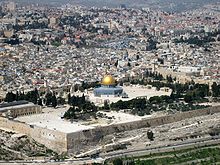
Jerusalem“Jerusalem, Jerusalem´ was the outcry of Jeremiah in his Lamentations, and of Jesus when he was rejected by the leadership in in the holy city. James Carroll’s searingly excellent book of this title is an extension of this outcry with historical, theological and spiritual depth.

This book is not so much a history of Jerusalem as a history of the idea of Jerusalem, the Jerusalem of the imagination. The history of the city itself, of course is deeply affected by the ideas and imagination projected on it, almost always to its detriment. Jerusalem is an image of the ideal, the perfect city and yet this great ideal has shed more blood than could fill an ocean and at the present day the ideal threatens the survival of humanity and the planet we live on. How can this be?

Carroll finds the groundwork for an answer to this troubling question in the thought of René Girard. The anthropological insights into mimetic desire and the resulting rivalry often arising from it is most apt a framework for working through the troubled history of the city on the hill. Carroll’s introduction of Girard’s thought is concise, pointed, and highly insightful even for those familiar with Girard’s thought. (See Violence and the Kingdom of God.)

The sacrifice of Isaac, imagined to have been nearly committed on the rock where the temple was later built, is another underlying motif of the book and is a powerful illustration of how God’ revelation of peace and love gets twisted towards violence. A story that almost certainly was intended to reveal the wrongness of human sacrifice got twisted to praising the obedience of Abraham being willing to sacrifice his son which then lead humanity to be willing to sacrifice its children, not just “half the seed of Europe” but at least half the seed of the whole world, “one by one” in the words of Wilfred Owen’s powerful poem on this story. (See Abraham out on Highway 61.)

The Jerusalem of the imagination is narrated through the Jewish establishment of the city as the capital of Judah, a city that became loved when it was lost during the Babylonian exile. It is the city where Jesus ended his preaching ministry and died under the Roman authorities. It is the city the first Moslems wanted because of their share in the tradition of Abraham and the prophets. It is the city that swirled through the Christian imagination, spurring a virulent anti-Semitism that reached its climax in the Shoah. Jerusalem inspired the crusading ideal that lead millions of soldiers and civilians to their deaths. The Battle Hymn of the Republic powerfully sings this violent ideal of the crusade in its purple poetry and Hubert Parry’s noble hymn tune gives force to the ideal of conquering the holy city anew.

It is not possible to do justice to the scope and depth of this book. Anyone interested in religious studies, theology, history, human culture and almost anything else would do well to give the reading of this book a high priority and to read it slowly, carefully and thoughtfully. I do not agree with quite every detail in Carroll’s analysis. Some of his interpretations of the New Testament seem to confuse the content with its reception history, although his analyses of the reception history is fully accurate. The overall thrust is highly compelling and will give every reader, whether Jewish, Christian, Moslem, atheist, or anything else a stiff challenge to one’s thinking, imagination, and relationship to violence, most especially supposedly “noble,” “redemptive” violence.