
Called to Repent

The calling of Jesus’ first four apostles in Mark is inspiring but it doesn’t make a lot of sense when we think about it. A complete stranger calls four complete strangers and they drop everything and follow him. (Mk. 1: 16–20) We can soften the improbability by noting that it is possible, even likely, that Jesus and these four men had sone acquaintance beforehand. but–let’s face it—answering a call from someone like Jesus just doesn’t make sense except maybe to the person who actually receives the call, and even then, the call tends to be a lot more compelling than sensible. At l east that’s what I still how I feel about my call to the monastic life. After all, a call from God tends to be disruptive to the life one has been living such as being a fisher on the shores of Lake Galilee. Does this call have anything to do with us?

We might try to distance ourselves from this calling by thinking that the apostles were exceptional people, but Mark and the other evangelists stress the ordinariness of the people called by Jesus. It’s professional religious people like ministers and monastics who should feel out of place with those first called. This ordinariness raises the suspicion that God, as Creator, calls everybody whom God has made. Such a call, then, is the norm, not an exception. This supposition is confirmed when St. Paul designates those called by God as members of an ekklesia, a word that means: “Those called out.” So all of us are called and the call makes no sense unless we accept that we are grounded in God as our creator, in which case God’s calling makes perfect, divine, sense. What else is involved with God’s calling of us?.

Jesus’ call of the four fishers follows straight upon Jesus call for repentance because the kingdom of God has come near. (Mk. 1: 15) What do we repent from? From fishing? Nothing wrong with that. As one who loves fish and seafood, I wouldn’t want all fishers to stop their work. Mark says that Jesus’ preaching began right after John had been put into prison. So persecuting prophets like John the Baptist is something we might want to repent of. But what if we are peaceful people who don’t persecute prophets, or think we don’t? In the Book of Jonah, the prophet calls on the Ninevites to repent—and they do! Since they were a violent society, one that had attacked Israel and destroyed the Northern kingdom, they had a lot of violence to repent of. But what if we aren’t invading other peoples’ countries? Jonah’s call for the Ninevites’s repentance circles back to Israel and the rest of us in a couple of ways. If Nineveh can repent surely Israel can repent; we can repent. More to the point, since Ninevites were violent enemies to Israel, who wants them to repent and become God’s people like us? Jonah didn’t want them. The call to witness to and welcome such strangers gets to the nub of what repentance is all about. It can be pretty disruptive to what we’re used to.

In his First Epistle to the Corinthians, Paul offers some cryptic directions for how we might repent: “those who have wives should live as if they do not; those who mourn, as if they did not; those who are happy, as if they were not; those who buy something, as if it were not theirs to keep; those who use the things of the world, as if not engrossed in them.” (1 Cor. 7: 29–31) Does this mean we should repent of marriage, shopping, mourning, or being happy? As Paul would say: “Me genoito!”—by no means! We can get some help with this passage by looking at the concept of mimetic desire on the part of the French thinker René Girard. Mimetic desire, as Girard conceives it, is the human tendency to want something, not because I want it but because somebody else wants it. This can lead to peaceful sharing but it can and does lead to violence. In this problematic passage in First Corinthians, Paul is showing his own profound insight into mimetic desire. It is bad enough to want what someone else has got just because that person has it and presumably wants to keep it. This scenario is greatly exacerbated when the person who has something purposely (though sometimes subconsciously) tries to inflame other peoples’ desire for what one has. Dostoevsky understood this problem profoundly. His intensely puzzling novel The Idiot becomes understandable when one realizes how Parfyon Semyonovich Rogozhin is stirring Prince Mjishkin’s desire for Natasha Philppovna in order to vindicate his own desire for her, and Aglaya Ivanova Epanchin, in turn, tries to intensify Natashya’s desire for the Prince, whom she had in hand until she played this game—all of this unfolds with tragic results. Paul would have us steer clear of this pitfall by being detached, not only from what we don’t have, but at least as much from what we do have. This misuse of mimetic desire is what Paul would have us repent of. This sort of detachment transforms the way we experience the world.

As Jesus’ ministry progresses, the disciples don’t look good, and Mark’s portrayal of them is the most negative. Perhaps the most egregious example of the disciples’ obtuseness is the way the disciples fight over who is the greatest in the face of Jesus’ predictions of his upcoming death and resurrection. Such infighting imitates the Ninevites rather than the Lord they are ostensibly following. Constant repentance, then, is needed to help us clarify what following Jesus is all about, and we have to expect it to take time. So let’s not waste any time getting started.
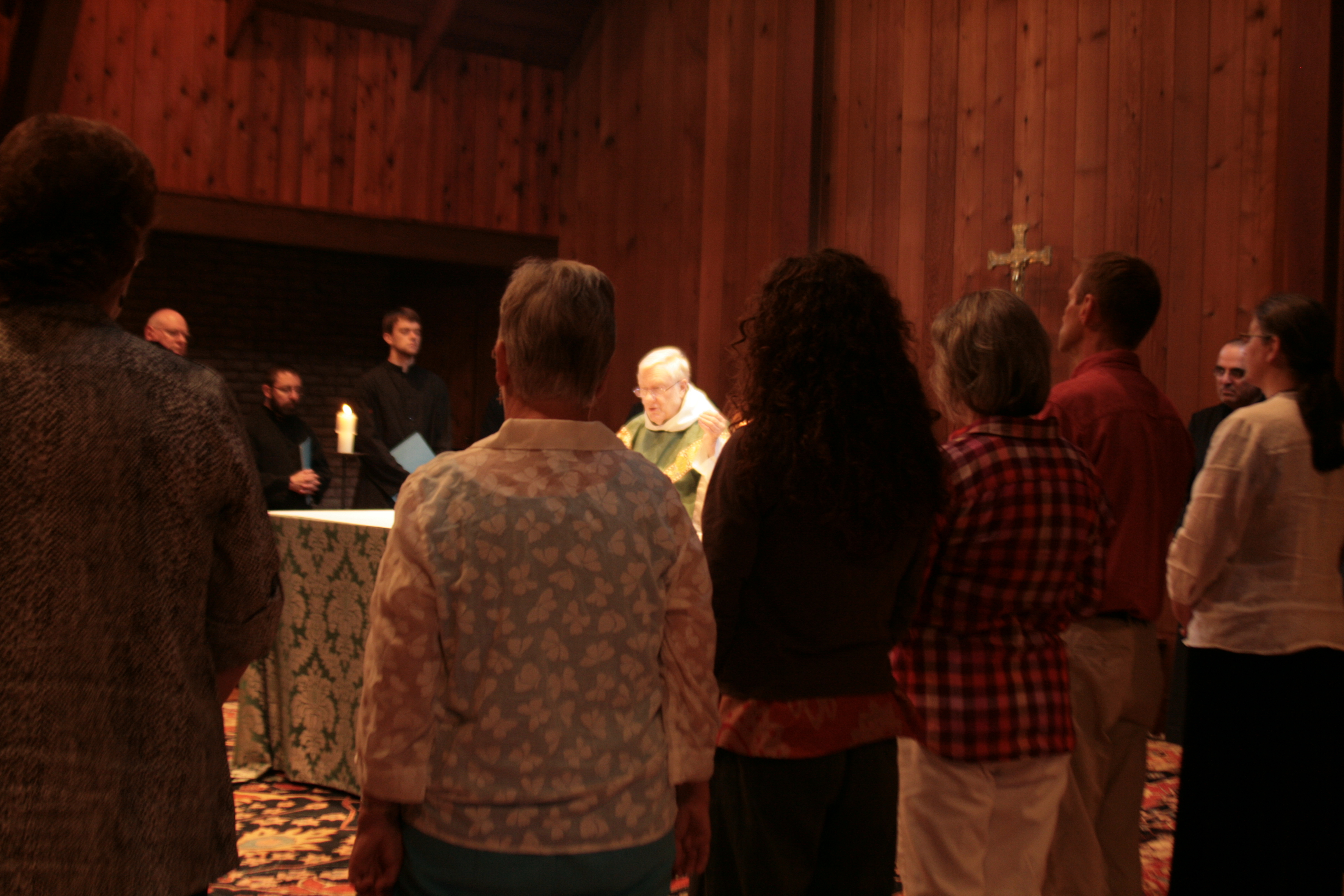
Our Deepest Calling

The calling of Jesus’ first four disciples raises the question of who else Jesus calls. To begin with, after calling the first four disciples, Jesus called eight more to add up to twelve. But there were many others. According to Luke, Jesus sent out seventy-two disciples on a mission. Several women also are mentioned as ministering to Jesus. And then Jesus asked that the children also should come to him and not be hindered. It begins to look like a lot of people are called by Jesus with the growing suspicion that Jesus calls everybody.

The sense of a call from God is quite meaningful to me. While I was at Nashotah House Seminary in Wisconsin, I felt called to be a Benedictine monk. This calling was quite palpable and it became unthinkable that I would do anything else but seek admission to St. Gregory’s Abbey after I graduated. Before I could respond to this call, though, I had to answer a more fundamental call: namely the calling to be a Christian. Long story short: although I was raised in the Episcopal Church and formed by the liturgy while singing in a boys choir, I had fallen away for several years. By hindsight, I can see God drawing me back during all that time even when I was fighting the hardest to resist God.

Many people also feel a calling to holy orders: priesthood or the diaconate, as I did myself several years after having joined the monastery. Although the church is working hard to expand the sense of calling, there is still a tendency to think of certain ministeries as callings but everything else is a job or volunteer work. But these are callings just as much as callings to holy orders or the monastic life. When we go back to the earlier call to be a Christian, we get a sense of God’s call to everybody, not just a few special people, (or better said: everybody is special in some way!) Everybody is called to baptism and from this calling, we each receive a calling to one thing or another. Actually, this preliminary call goes back even further. Each of us is called out of nothingness into being by the God who created all of us.

There are many implications to the fact that we are called. The most fundamental is that we are relational beings. As we become aware of the richness and depth inside each one of us, it is easy to become intoxicated with a sense of self that tries to build a little isolated world. But the notion that this inner world is autonomous in an individualistic sense is sheer illusion. Being called into being and then called to be in a particular way is based on a relationship with God. But note that Jesus did not call an individual here or there; God called several people into a community. Creation and re-creation in baptism are thus calls into community. We are all baptized in the Body of Christ, the Church. Indeed, we are not only called by God, we are called by many other people who also have a strong effect on us. The richness experienced within is in fact derived from other people calling on us from before we were born. With each particular calling, there is not only the inner sense of being called by God but the external call from other people. In my case, many people confirmed a potential call to the monastic life during my time in seminary, not least the dean and my diocesan bishop. And then there was the need for discernment with the abbot and chapter of St. Gregory’s. Likewise, when a person experiences a call to holy orders, there is a communal discernment process in place. From the standpoint of people helping with such a discernment, the question is: Do I want to call this person to minster to me? This question that makes it clear that a calling isn’t about me, it is about us as a community.

The particular calling that each of us has lies in the communal calling of the Church. In our Gospel reading, we have the rudiments of the communal calling through Jesus’ ministry of repenting and “proclaiming the good news of the kingdom and curing every disease and every sickness among the people.” (Mt. 4: 23) What is the Good News? Jesus’ movement into the territory of Zebulim and Napthtali is quite significant and not just an obscure geographical detail. This had been Gentile territory since the Assyrian invasion of Israel and was land occupied by the Romans in Jesus’ time. The history of military violence is the darkness in which Isaiah is prophesying that a “great light” was coming. Jesus was preaching the deliverance from violence based on forgiveness. Forgiveness is the deep healing offered by Jesus as he healed the people who came to him. In various ways, proclaiming the Good News of forgiveness is what each of us is called to through our calling in creation and baptism. The way each of us carries out this fundamental mandate will differ and it is because healing and proclaiming the Good News needs to be done in so many different ways that there are so many vocations in which we serve each other, even if in seemingly small ways.

A calling is not a once-in-a-lifetime done deal. Each calling has to be renewed year by year, day by day, hour by hour. The situation in Corinth that exasperated Paul is the result of failure to renew our communal calling. The disciples, too, fought over who among them was the greatest. Some of the healings by Jesus were exorcisms, the casting out of demons. This belief in possession may seem mythological to some people today, but we can easily become possessed by other people with whom we are in conflict who then draw us away from the call of Jesus to forgiveness and reconciliation. (Note how we say that this or that person gets under our skin.) This is where repentance comes in. Every time we are drawn into conflict, we need to hear anew the call of Jesus to repent and proclaim the Good News of forgiveness and healing.