Marriage of Figaro

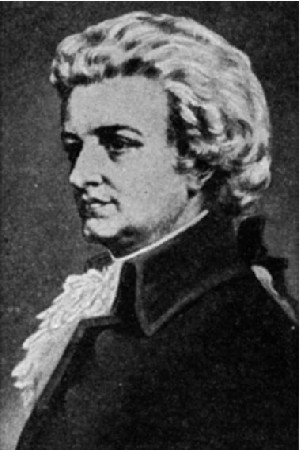
I watched Mozart’s Marriage of Figaro while in New York this week, and was impressed with the deep insights into mimetic desire this opera offers. (cf. Human See, Human Want) The opera centers on Count Almaviva’s desire for his servant Susanna who is betrothed to the count’s servant Figaro. For all of his roaming for women, the Count seems not to have desired Susanna until Figaro desired her and wished to marry her.

Meanwhile, Marcellina, a servant of Dr. Bartolo, wishes to marry Figaro and Dr. Bartolo, wishing revenge for Figaro’s helping the count marry Rosina when he himself had desired her, supports his servant’s claim based on Figaro’s unpayable debt to her. This triangle becomes farcical when it turns out that Figaro is Marcellina’s son begotten by Dr. Bartolo himself, who had done with his servant what the count wants to do with Suzanna.

The adolescent servant Cherubino provides a comical mirror image of the count in that he also desires all women, especially the countess, the only woman the count does not desire. This infatuation does not make him a serious rival to the count, but he becomes entangled with Rosina and Susanna’s plot against the count.

The count only shows any desire for his wife when he believes (mistakenly) that she is desired by another. In Act 2, he believes Cherubino was flirting with his wife and was hiding in the closet (which he was until Susanna helped him escape). When it is Susanna who emerges from the closet, an uneasy forgiveness ensemble ensues that foreshadows the opera’s finale, but then unravels when the gardener complains about somebody (Cherubino) jumping into the flower garden.

The abortive plans of Act 2 to trick the count come to fruition in the last two acts where Rosina and Susanna disguise themselves as the other and so entrap him so that the count has no choice but to drop to his knees and ask his wife’s forgiveness, which se freely gives.

The disguises and mistaken identities throughout the opera dissolve the characters into the indifferentiation of mimetic desire. At a deeper level, Mozart’s music weaves a unity out of the passions of all these characters so as to unite them in the mimetic desires, a unity transcending the class differences of the characters and creating a vision more subversive than the play by Pierre Beaumarchais used by the librettist Lorenzo Da Ponte.

The noble forgiveness scene is as fragile as it is beautiful; a fragile fleeting vision that can be blown away by the next breath of mimetic desire.

Christmas Stories

For quite a few years, I wrote a Christmas story as the Season approached and sent copies to family and friends. Once the number of stories had grown, I collected the ones I thought were particularly effective and published them in a volume called Born in the Darkest Time of Year: Stories for the Season of the Christ Child.” The Christmas season is offered as a time of hope in the midst of darkness. The hope is fragile, or at least seems so to human eyes. After all, God the Word had been born as a baby needing care from others to survive. Today, Christmas seems to be threatened at times even as Herod threatened the Christ Child. So it is that many of my stories deal with threats to Christmas through human folly, weakness, commercialism, or just plain malice. I know it is early for Christmas but some people will be thinking ahead already to their Christmas shopping. I invite you to read the opening story that I have just posted: Silent Night: How John Beaconsfield Saved Christmas.” John is a devoted chorister traumatized when all Christmas music mysteriously disappears just a few days before Christmas day.

Article on Rule of St. Benedict Added

I have added an article called Gathering a Community in the Spirit which is an introduction to the Rule of St. Benedict. This chapter comes from Tools for Peace. Introductory chapters on both René Girard and Benedict are now available. If a dialogue between the two interests you, please buy Tools for Peace.

On Expelling the Accuser, not the Victim

It seems that every time a hurricane or other natural disaster strikes, there are some religious leaders who proclaim that the disaster was a punishment from God. This is an old game. During the Middle Ages, for example, plagues were routinely blamed on the Jews or on those who tolerated their existence in the city. Interestingly, such accusations are still leveled mainly at unpopular minorities, such as homosexuals. If God is punishing New York for its wickedness, why not suggest God is punishing the city for the misconduct of financial leaders?

Does Jesus go for this sort of blaming game? On the contrary, Jesus insists that the eighteen people killed when the Tower of Siloam fell on them were not worse sinners than the rest (Luke 13:4). Jesus sounds threatening when he says others will likewise perish if they do not repent, but Jesus is not exasperated by the people killed by the falling tower, but by the people who thought the victims were greater sinners. Jesus is reminding us that the disasters that fall on other people can just as easily fall on us, regardless of how good or bad we are.

A stronger repudiation of this blaming theology comes in John 9 when Jesus’ disciples ask if it was the blind man’s parents who sinned or the blind man himself that he was born blind. Jesus replies that neither were to blame, but the man was born blind that so the “works of God might be manifest in him.” That is, nobody was blamed for the blindness, but Jesus responded to the situation by giving the man his sight.

Most important of all, Jesus was executed because he was blamed for the social unrest in Jerusalem when any historian can see numerous causes that had nothing to do with Jesus. When Jesus rose from the dead, he did not cast blame on his killers, but returned as the forgiving victim. Is it credible that Jesus would encourage his heavenly father to send hurricanes to people who don’t measure up to his standards?

On the contrary, the story of the man born blind makes it clear that that the proper response to catastrophes is not blaming but compassion. That is, we should do everything we can to manifest God’s works in the face of these catastrophes. The name Satan means “Accuser.” In Revelation 12, Satan was cast out of Heaven when Jesus was raised into Heaven. With Jesus, there is no room for accusation. There is only room for healing the afflicted and doing everything we can to prevent or mitigate further catastrophes.

See also Two Ways of Gathering and article Violence and the Kingdom of God

Article Introducing Girard’s Thought

I have posted on the “Articles” page an introductory article on René Girard called Violence and the Kingdom of God. Actually, Girard is sort of the catalyst for what is called “Mimetic Theory” as it is centered on the human tendency to imitate desires. (See Human See, Human Want) It is more accurate to say that there is a constellation of thinkers of whom René is one. It is my observation that Girard does not have followers; he has colleagues, of which I am one. Those wishing for a more in-depth discussion of the ideas I am working with on this blog may wish to read the article.

Living with the Dead” Thoughts for Halloween

For many in North America, Halloween is a day for children to dress up, have fun, and get lots of candy from indulgent neighbors. Skeleton suits and witch’s makeup are all in fun. Not as fun is the background to Halloween that goes back to rites, such as the Celtic Samhain festival, designed to allay anxiety over blurring the distinction between the dead and the living and make sure the dead stay dead. This anxiety causes some people to try to suppress modern Halloween, although the people who sentenced witches to burning should be more horrifying than girls running about in black dresses with candy bags.

Blurring distinctions between the living and the dead raise horrifying issues. To begin with, it calls into question what life and death really are. Zombies and vampires are very popular today as creatures haunting us with this blurred distinction. The idea of being “undead” is a haunting but unattractive possibility.

Rites of and against the dead, encountered by anthropologists worldwide, express fear that the dead envy the living and, if they get a chance to break into the land of the living, they will destroy the life we cherish. That is, the dead are set up as rivals for life that has been made scarce. These anxieties project rivalry experienced with other living persons on those same persons when they are (hopefully) departed this life. Cf. “Human See, Human Want.”

The execution of Jesus followed by his Resurrection, where Jesus appeared not as a vengeful ghost but the forgiving victim, opened up a whole different paradigm of the dead. Christian martyrs who gave up their precious lives to witness to Christ were believed by the early church to be, not vengeful ghosts, but saints in Heaven actively seeking our good. Dante’s Divine Comedy is a particularly powerful vision of those living on earth and those living in Heaven supporting each other in prayer without resentment or rivalry. Cf. “Two Ways of Gathering.”

Many people like to have their spines titillated at Halloween. My stories “Ghost of Swiss Castle” and “The Dark Window” in Beyond to Here might chill the spine a little bit, but they also invite the reader to think of lending a ghost a helping hand and receiving some healing in this life as well.

Rivalry and Competition (Or, the World Serious)

The time of the World Serious, as Bullwinkle and others called it, is a good time to reflect on why someone like me who doesn’t like rivalry is a baseball fan. I was raised in the Detroit era when Al Kaline was a star, so maybe that has something to do with it. Obviously, I can’t expect God to favor one team or another. More obviously, we need to keep games in perspective. Winning the World Serious is not as important increasing social justice for economically challenged people I have come to see a distinction between rivalry and competition. Rivalry is centered on the rival, making the rival an idol, in an attempt to win at the rival’s (and other people’s) expense. Competition can be undergirded by a deeper cooperation. For example, competitors in a game collaborate to create a well-played game that is fun for the participants, such as playing tennis or golf with friends, or playing professional baseball games that give fans pleasure along with some agony when my team blows a big lead in the last inning. Perhaps this distinction is of some use in economic issues as well. Capitalist theory tends to encourage completion as beneficial to the public good because companies that try to have the best product at the best price will deliver quality to the consumer. It is hard to see how as many useful and fun innovations would have been created without the spur of competition. I am skeptical, though, about Adam Smith’s contention that an “invisible hand” makes selfish motifs contribute to a sound and fair economy. Divine Providence surely is about a benevolent God fostering divine benevolence in humanity. However, the line between constructive competition and destructive rivalry can be very thin. Baseball games sometimes descend into brawlgames where pitchers throwing at opposing batters tit-for-tat. Likewise, competition can be cutthroat when companies only want to destroy other companies. I could go on with quite a rant about the toxic atmosphere of American politics when politicians should be collaborating to discern how to work for the public good, but aren’t. If it is all about winning, then it is toxic rivalry. If it’s about having fun with others, then it is healthy competition. When we fall into the middle, we have some spiritual work to do.  We need to remember the words of St. Paul that we don’t run for a wreathe that will wither, but for a prize that never fades.

The Failed Quarrel

The stories of the desert monastics of the fourth and fifth centuries in Egypt are the bedrock of monastic lore that continue to inspire all who attempt to live by monastic spirituality.

In one charming story, a monastic who has shared his cave with another, notes that they have never had a quarrel and proposes that they try to have one, like all other people. The other monastic says he doesn’t know how to start a quarrel. The first monastic puts a block of wood on the ground between them and says” “This block is mine. Now you say the same thing.” The second monastic said, “This block is mine.”  “No, this block is mine,” insists the first monastic. “Okay, it’s yours,” says the other. And so they failed to have a quarrel.

Would these monastics have quarreled if the first had put a gem between them instead of a block of wood? The story about the children and the balloons in “Human See, Human Want,” suggests that question is whether any article at all is given worth by the desire of the other. A block of wood can become as desirable as a gem if somebody else desires it and another person gets caught up in that desire.

If these two monastics were not quarreling, what were they doing? The desert literature tells us they would have spent large amounts of time in prayer, much of that in psalmody, and then the rest weaving baskets they would sell to give the money to the poor. That is, they were not focused on each other but were opening themselves to God’s Desire and to the needs of other people. Prayer and helping other people does not guarantee there will be no quarrelling, but the two combined surely help quite a lot.

My story “Haunted for a Time” in From Beyond to Here offers a counter-example to these two desert monastics. At the beginning of the story, Murray is so absorbed in his possessiveness of his comic books at the expense of others that he cannot see anything beyond that. Some unsettling apparitions from a ghostly figure challenge him to reconsider his ways.

My book Tools for Peace examines Benedict’s teachings on stewardship of material goods in the monastery that build on the insights of this simple story of the two desert monastics who failed to be movers and shakers in the world, but also failed to have a quarrel.