Cleaning Up Our Unclean Acts

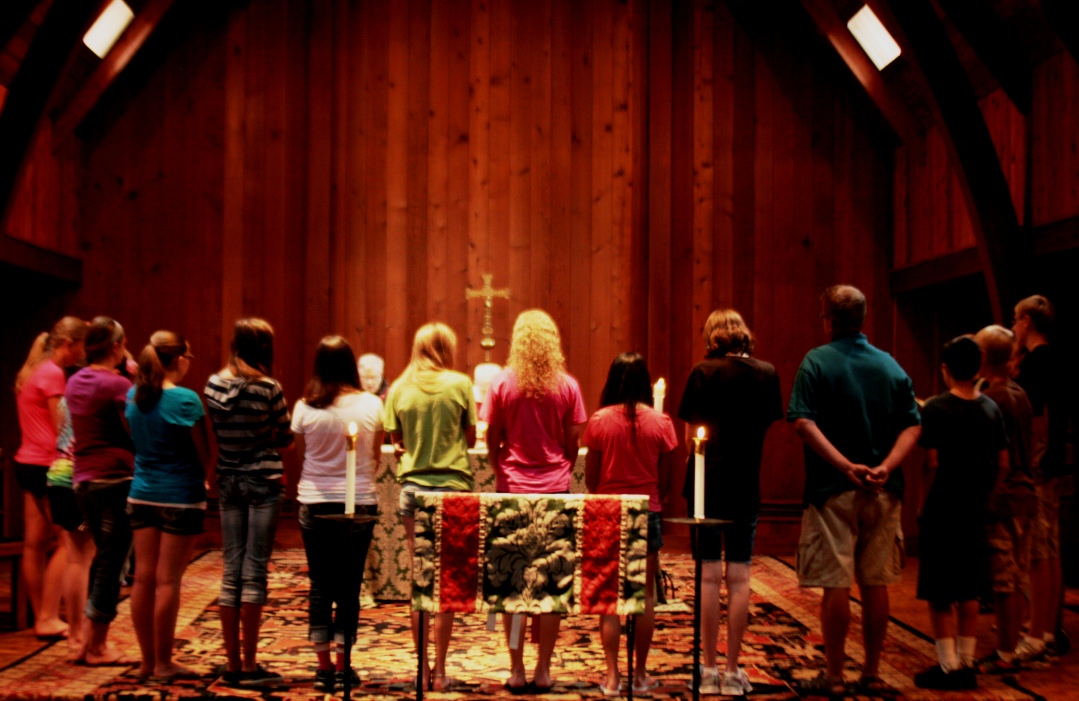
eucharist1Peter was surprised when he had a vision of a sheet carrying all the animals listed in the Law as unclean accompanied by a voice telling him that God had made them clean. Peter was even more surprised when he was told to go to the house of an unclean Gentile named Cornelius and preach the Gospel to him. That is, God had made all humans clean.

We all have a hard time living without the comfort of knowing that some people, some things, are unclean. This fear that sustains us is the fear of what is Other. All we have to do is get to know “unclean” strangers and we will be happy and no longer afraid.

René Girard, however, would give us pause. Girard is often invoked when there is need to scold people for creating “out” groups to make them feel good about their “in” groups. Actually, Girard alerts us to our problems within our “in” groups. Prior to our fear of the Other is our fear of what is the same. Rivalry and the violence rivalry lead to does not originate in battles with strangers but with those closest to us. In Genesis, almost all of the strife is between brothers.

Girard suggests that this fratricidal strife tends either to the death of a brother or a reconciliation through killing somebody else. At the dawn of humanity, a tribe first struggled with rivalry within its own ranks and either imploded through its violence or came together through killing one of its members, who then was designated at Other, the monster who caused the commotion. Then the tribe held itself together on an ongoing basis by warring on other tribes who were designated as Other. In this regard we are not one wit wiser than the most “primitive” of people. A fundamental practice of statecraft today is to deal with rivalry and tensions within a nation by designating an enemy that the whole nation must fight.

Anthropologists such as Mary Douglas have demonstrated the human tendency to divide foods between those deemed clean and those considered unclean. Eating is the central activity of a community. We eat with those who are closest to us. However, as noted above, we also fight most with these same people who are closest to us. By dividing the food we eat between clean and unclean, we create a barrier between us and other people, between us as the “in” group and those in the “out” group. That is, we relieve our communal tensions by banding against those who eat “unclean” foods.

Here we come to the importance of Jesus’ admonition to his disciples, while at table, that they (we) love one another. Some scripture scholars have poured cold water on idealistic readers by saying that John was concerned only with love within the community. But Jesus’ saying that others will know we are Jesus’ disciples by our love makes it clear that this loves does extend beyond the immediate community. These reflections on “clean” and “unclean” further suggest that fostering non-rivalrous love within the community allows the community to reach out to others. This love will make everything and everybody clean and bring us all to one great table in the Heavenly Banquet.


Knowing the Wild Things Between Us

buddingTree1Just about all of us talk about the subconscious as if it were familiar territory. By definition, the subconscious, assuming there really is such a thing, is precisely what we are not familiar with, what we don’t know about ourselves.

Pop psychologists, and real psychologists for that matter, along with those of us committed to the spiritual journey, think that it is better to know more about ourselves rather than less. Exploring the unknown may be an exciting challenge at times but it is also threatening. Much talk about the subconscious that has floated around since Freud took up his pen gives the impression that the subconscious is full of horrible monsters and some of them are us. In the simple story Where the Wild Things Are Maurice Sendak shows us what great friends the inner monsters can be if we get to know them.

René Girard has given us a whole new dimension to explore in the subconscious by suggesting that it is primarily mimetic desire that we find there. (See Human See, Human Want) Mimetic desire, the desire of others that has infiltrated us since birth, gets under our skin and deep into our hearts. Hence the importance of the desires we surround small children with to absorb. What keeps mimetic desire in our subconscious is our defiant pig-headed conviction that our desires belong to each of us alone and to nobody else. The stronger this sort of conviction, the more likely the desire is entangled in serious rivalry with somebody else; maybe a lot of somebodies. Somehow, we feel threatened at the idea that our desires are intertwined with the desires of everybody else and we push them away, only to have them manipulate us at very deep levels.

The “wild things” within may not be so much are own personal monsters but the monsters that grow out of the mimetic desires between us. The monster isn’t me, it’s us. These wild things can also be the source of great opportunities for personal and spiritual growth if we get to know them. The web of mimetic desire is not, in the hands of God, elaborate chains to imprison us but links to connect us. That is, mimetic desire is the gravitational field among persons pulls us into relationship with each other. The more we are aware of this field, the more freedom we have to live in it with friendship and sharing instead of hate and rivalry.

Self-examination is a time-honored practice for spiritual growth in all religious traditions. Unfortunately, when this practice is centered on the self, it inevitably creates some distortion because it keeps mimetic desire in the subconscious. It isn’t so much our selves that need examination as it is our relationships. The individual self can look just fine right when relationships are destroying the web of our interrelated desires.

Girard tends to examine mimetic desire in the present tense, and there is always much going on with our interrelated desires in every moment. However, as Per Grande pointed out in his fine book Mimesis and Desire, we go through life interacting with the desires of others in our past just as much, if not more, than those in the present. So it is that we have to increase our conscious awareness of our past as well as the present.

So much attention has been paid to monstrous wild things in the human subconscious that we don’t realize that deeper in the subconscious that any wild desires flaring up between us and other people both in rivalry and ecstatic love and friendship is God’s desire. No matter how entangled our mimetic desires with other people, God holds all of the links in unconditional love, all the while calling each of us to open our outer and inner eyes to see how wild divine love is.

How Are We Saved?

yellowTulips1The New Testament and two thousand years of Christian preaching has consistently proclaimed that the death and resurrection of Jesus Christ has opened the way of salvation for all humanity. Precisely how this mysterious, earthshaking event has done that   has raised more questions than answers. It is understandable that the focus would tend to be on the death of Jesus since the event is so dramatic and creates intense emotional effects in Jesus’ followers. However, understandings of the atonement of Jesus through this route have raised long-standing problems that cry out for a fresh approach. The growing realization that the killing of Jesus was just plain wrong on the part of many Christians, and not just those influenced by the thought of René Girard,  opens a way for a re-thinking of atonement theology that can support a deep spirituality grounded in God’s unconditional love for all people. As article I wrote for the Abbey Letter Saved By the Life of Jesus contributes to this re-thinking that actually reclaims the Gospel for us. It is included in the collection of articles in Come Let Us Adore. You can read it here.

Rising to the Life of Christ

crosswButterfliesWhen St. Paul says in Romans that we are baptized into Jesus’ death, what kind of death are we baptized into? An aged person drifting off while asleep? A ritual death with no consequences? No, we are baptized into the death of Jesus. This particular death, the one we are baptized into, is a judicial death resulting from collective violence. This is the shameful death of an alleged insurrectionist at the hands of an Empire. This death was caused by the meltdown of rivalry in the society of first century Jerusalem, exacerbated by the betrayal and cowardice of Jesus’ closest followers.

Once we know what death we are baptized into, we know what life we are raised to. In his risen life, Jesus showed no resentment or vengeance to those who had gathered to put him to death or had dispersed out of cowardice.  Moreover, Jesus was not entangled in any of the rivalrous feuds that are a way of life for most humans. Imagine living without all the entanglements and resentments swirling around and inside of us. Hard to do, isn’t it? That is how radically different the risen life is from the life we live now.

If our “old self” is crucified with Jesus, then we have, like Jesus, died in the place of the victim. That means we have died to our tendency to fuel resentments and resolve these resentments through gathering against the victim, as Paul himself repented of having held the clothes of the men who stoned Stephen and openly approving of what they did.

None of this means that repenting of personal sins and faults doesn’t matter and that becoming free of them is part of the resurrected life. However, Christian teaching has a strong tendency to stress personal renewal to such an extent that horrifyingly sick participation in collective persecution goes unnoticed. That hundreds of thousands of Christians could lynch thousands of black people shows us now, now that the lynching era is over, how easily this sort of group contagion can take over in what is often called an “enlightened” and “civilized” era.

Rather than congratulating ourselves on giving up lynching after roughly a hundred years of the sport, I suggest we take careful note of the growing polarization in our country over social and religious issues. Honest disagreement is not a problem; it’s a good thing, something that keeps us honest. But polarization tends to be conflict for the sake of conflict so that conflict feeds itself and it feeds each one of us. Never mind that polarized conflict is as nourishing to humans as sawdust and glue. What is really dangerous about this polarization is that it easily collapses into collective violence as a way of resolving the tensions.

If we wish to be serious about living the risen life with Christ, we must be baptized by the love and forgiveness of the risen Christ and allow him to gently but firmly remove all the resentments we feed on so as to feed on body and blood of the Lamb of God who reaches out to everybody with vulnerable love.

Can you imagine such a thing? Can you be overwhelmed by such a thing in baptism?

Selling Postcards of the Cross

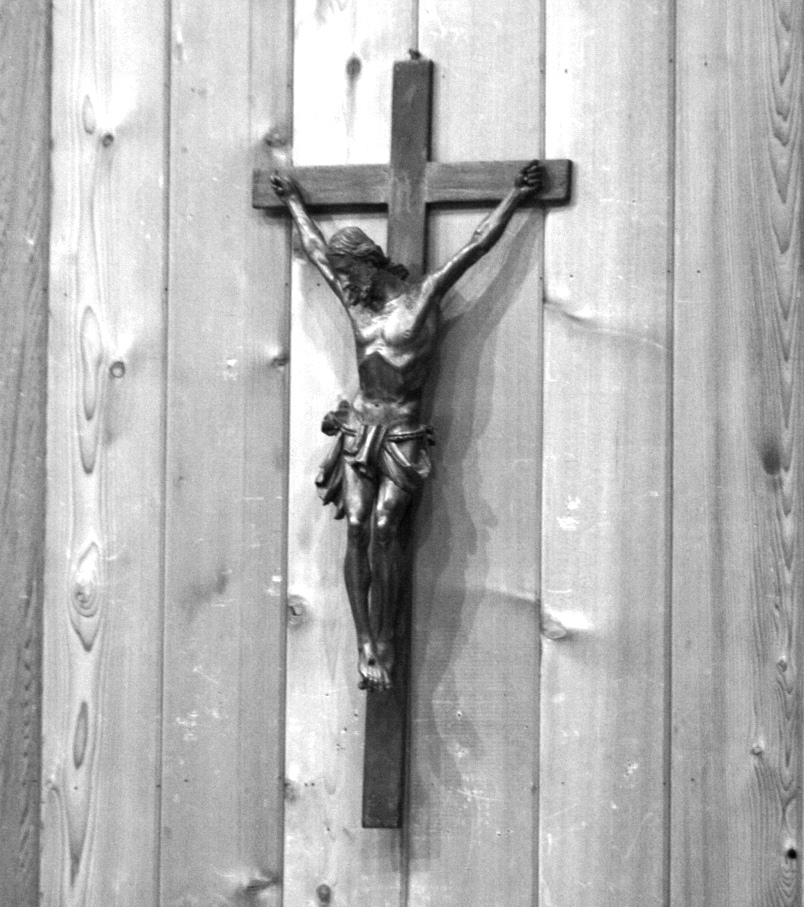
crucifix1“They’re selling postcards of the hanging
They’re painting the passports brown.”

White boys like me mostly didn’t know what Bob Dylan was singing about when “Desolation Row” first came out on “Highway 61 Revisited.” James Cone’s book The Cross and the Lynching Tree tells us it was about lynching. Lynching was a public spectacle where people took pictures and made postcards out of them.

Cone goes on to argue that the lynching tree was a series of grisly re-enactments of the crucifixion of Jesus. He also demonstrates on how very difficult it has been and still is for Americans to see this truth. Reinhold Niebuhr, arguably the greatest American theologian was, in spite of his social concerns, blind to this reality. Even black people have had trouble seeing this connection, though Cone shows how some black women, especially Ida B. Wells articulated it powerfully. He contrasts Niebuhr and all white liberals with Martin Luther King, Jr. who put his life on the line.

The dynamics of lynching as analyzed by Cone provide powerful confirmation of the theory of collective violence of René Girard. (See my article Violence and the Kingdom of God.) Girard argues that perpetrators instinctively fail to see what they are going. Cone shows us this truth in a powerful manner.

Dylan goes on to sing that “the circus is in town” and then catalogs Western Civilization turned topsy-turvy, suggesting that lynching does this, thanks to the “blind commissioner.”

Cone is right about whites’ blindness to this truth, but Dylan did write “The Ballad of Emmett Tell” in 1963, telling the story in stark terms, though without any Christian reference except to complains that the human race has fallen “down so god-awful low.” Then there is Mark Twain who wrote “The United States of Lyncherdom,” calling lynching for what it was and clearly discussing the human mimesis just as Girard was to do half a century later.

Cone’s book is written calmly, even gently. There is no mincing of words, yet the words are somehow full of forgiveness. The forgiveness in Cone’s words, the forgiveness proclaimed by Jesus, should be enough to undermine our trust in ourselves and our ability to see what we are doing. We must repent not only of lynching, but of our collective hatred of enemies today.

The First Supper

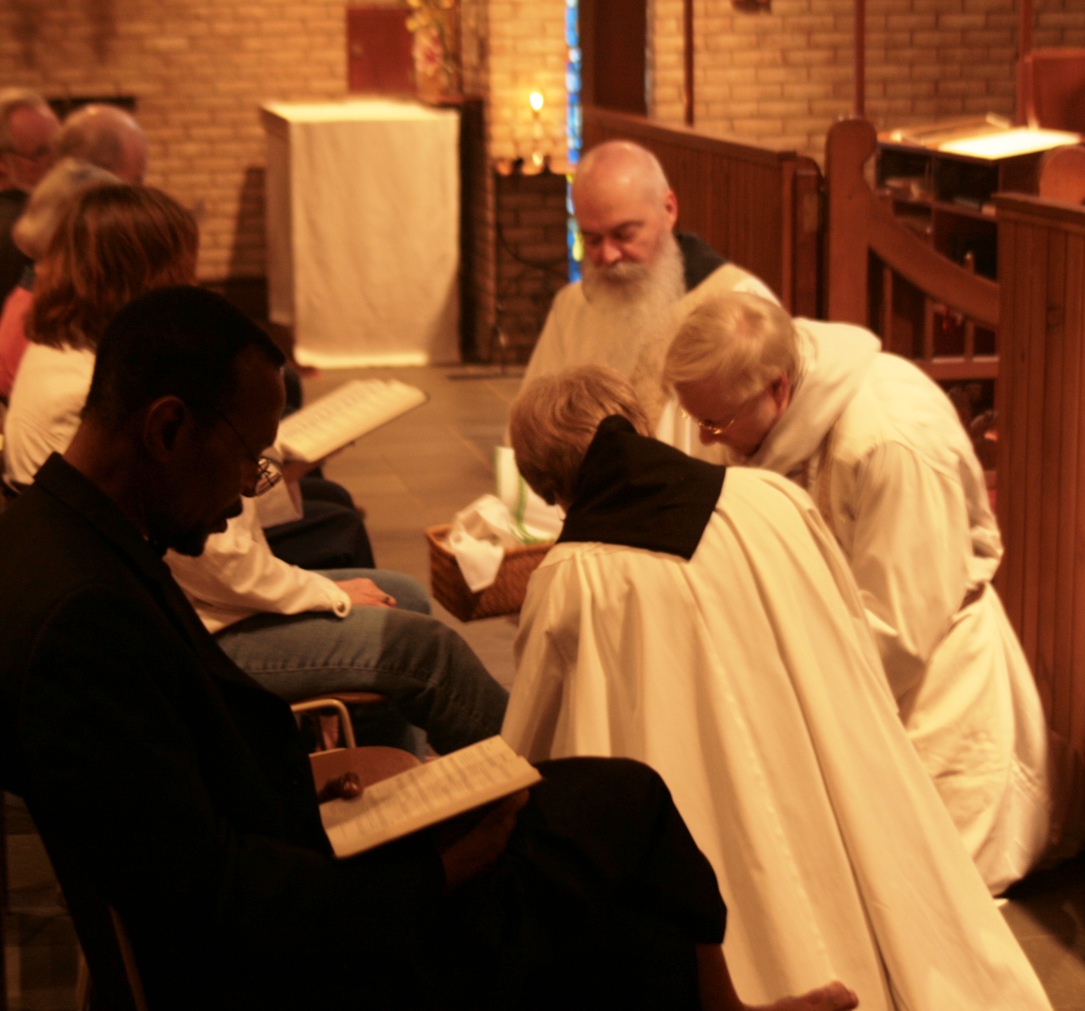
AndrewWashingFeet - CopyBy the time Jesus gathered with his disciples for what is called “the last supper,” not only had the social tensions in Jerusalem reached a point where all parties agreed that Jesus must be put to death, but the tensions among Jesus’ disciples had formed against him as well. The disciples’ fighting over who was the greatest, their incomprehension of his predictions that he would be put to death and their collective disapproval of the woman who anointed Jesus with oil all led to this point. In their current collective frame of mind and heart, there was a real possibility that all of them would either join the crowd in crying for crucifixion, or would band together after his death as a tightknit rebellious group united by resentment over the death of their leader, thus thwarting the Kingdom of God that Jesus came to proclaim. Jesus had one last chance to do something that would keep his life and intentions alive for his disciples. He did two things.

The first thing Jesus did was wash the feet of his disciples. The act was so simple that anybody could do it, even a child. If the disciples follow this simple command, they will not have time to harbor resentment over their master’s death and plot vengeance for the deed. Instead, this simple act that embodies love and concern for others will cause that love and concern to grow within their hearts and drive out resentment and a desire for revenge. If more and more people imitate each other in imitating Jesus in this action, then the entire social order of the day will crumble around the communal life that emerges through this simple action.

The second thing Jesus did was tell them to eat bread that was his body and drink wine that was his blood in remembrance of him. Jesus was not just telling the disciples that he was about to die for them. That would be comprehensible, if unsettling. Rather, Jesus was telling them that his very life was being given to them. Jesus was not giving himself as a corpse in the hope that the world might become a better place if enough people felt bad about killing him. Jesus was giving himself as a living being. Only when Jesus disciples broke bread and passed the cup of wine in memory of Jesus would they begin to realize the extent to which the living Jesus was giving them his life, life that he possessed in abundance in spite of the fact that he had been nailed to a cross and left to hang there until dead.

This is why Jesus was hosting the first supper of a new beginning for us all.

For comments on Passover see Eucharist (1) 

Crying out with Palm Branches in our Hands

AndrewPalmSunday1Jesus entered Jerusalem to the acclaim of crowds strewing branches before him and proclaiming him the king. A few days later, the same crowd gathered before Pilate to cry out for Jesus’ crucifixion. What happened?

Before answering this question, it is helpful to recall another crowd that went out into the desert to see John the Baptist. “What did you come out to see?” John asked them. “A reed blowing in the wind?” John suspects that people have come out in droves because people were coming out in droves. That is, it was the “in” thing to do. Fast forward a few months and we have a crowd at Herod’s palace supporting Salome’s request for John’s head on a dish. What did they come to see?

The post Ignominious Glory—Glorious Ignominy: a Doxology goes a long way in explaining this phenomenon. One can’t help but suspect that people are crying out because everybody else is crying out, no matter what the outcry is about. Advertising usually does not advertise the product but its alleged popularity. Political campaigns do the same thing. What would happen if people stopped to listen to what people were actually saying instead of crying out what they think everybody else is crying out?

It so happens that the Gospels do precisely this. The suggestion that the Gospels are Passion narratives with long introductions gives short shrift to what the Gospels are about. What these “long introductions” do is tell us at great length what Jesus actually said and what he taught. They also tell us what Jesus did before he was nailed to the cross, i.e. he healed people and cast out demons and he unilaterally forgave sins. These “long introductions” also tell us why the power brokers in Judea and Jerusalem wanted Jesus dead. By reading these “long introductions” to the Passion narrative, we are drawn away from crying out what everybody else is crying out and waving signs that only proclaim what the current fashion is believed to be. Instead, we are drawn into a very different social mimetic process, a process that builds up mutual respect between people, seeing people as they really are and as they really can become when they receive the unilateral forgiveness that Jesus gives them, a social process of not retaliating for wrongs done, a socially mimetic process of forgiving debts, of sharing what we can, of offering healing to others.

It is instructive that the Palm Sunday liturgy begins with everybody playing the part of the crowd welcoming Jesus with palms and then, a bit later, we hold these palms while acting the part of the crowd in crying out for Jesus’ death during the reading or chanting of the Passion. What we need to do afterward is return to the “long introductions” to see what the fuss was about and hopefully, hear the cock crow as did Peter.

I develop these ideas in my book Tools for Peace.

A City Consumed with Buying and Selling

guesthouse1“If there was just one person who could show everyone there is another way. . . . If someone stood up in the middle of the city, with everyone watching, and did something that brought them nothing in return, and happiness to others . . . it might start something that couldn’t be stopped.”

These words are spoken by a 13-year-old girl in The Midnight Charter, the first volume of the Agora Trilogy by David Whitley. These words are a powerful statement of a positive use of mimetic desire (see Human See, Human Want). Lilly says these words in a city called Agora (Greek for market), a city where everything and everybody is bought and sold and all receipts are stored in the city bureaucracy. Even emotions can be bought and sold thanks to a strange technology developed for the purpose. A sort of capitalism gone mad. This shows how deep competitive mimetic desire can be, as René Girard demonstrates. (See Violence and the Kingdom of God.)

While Lilly starts to put her idea into practice by starting an almshouse, something unprecedented in the city, her friend Mark is consumed by a mimetic process that puts him at the pinnacle of the society while too young (thirteen) to realize how delusionary it was until it was too late. (See Ignominious Glory, Glorious Ignominy.)

The fortunes of these two protagonists and the powerful social forces that surround them are explored with ever-increasing depth in the second and third books of the trilogy. In Children of the Lost, Lilly and Mark, suddenly thrust out of Agora, enter a wilderness where the subconscious (the “Nightmare”) engulfs the villagers who live there. Well, the emotions bought and sold in Agora have to go somewhere. The nightmare shows itself most strongly in an act of collective violence, the end result of the denial of mimetic desire. In the midst of all this, Mark begins to really learn how to be a caring human being.

The final volume Canticle of Whispers brings the trilogy to a stunning conclusion. Here, we meet another society, this one living underground, that turns out to be a collective puppet for the fragmented desires of those who live above them until they are freed by Lilly and Mark. The mimetic process started by Lilly in Agora continues in her absence because other people have imitated her desire to help others. One of the greatest strengths of the series is that many characters who seem fairly insignificant emerge in unexpected ways to have great significance, sometimes for ill, sometimes for good.

This trilogy shows us that here are Y/A novels out there that can instruct young readers and older seasoned readers as well, into the depths of mimetic desire. I strongly urge anyone working with youth to take notice.

A Scandalous Woman as Extravagant as Jesus

churchDistanceBlossoms - CopyThe synoptic Gospels interlace Jesus’ disciples’ infighting as to who is the greatest with Jesus’ predictions that he will be handed over to the authorities to be crucified. The disciples consistently fail to understand or accept what Jesus is saying to them. Interestingly, the disciples suddenly come to an agreement when a woman enters the house of Simon the Leper in Bethany and pours an enormous amount of costly oil over Jesus. It is telling that it is a corporate condemnation of a marginal person that has united the disciples. To their chagrin, Jesus defends the woman, saying that she has prepared him for burial, precisely the destiny Jesus is facing and the disciples are denying. It is quite possible, however, that for Judas Iscariot, Jesus’ defense of the woman was the last straw. In both Gospels, Judas’ fateful interview with the chief priests follows immediately.

Curiously, Luke has a version of the same story that is detached from the passion narrative. That this woman had a bad name in the town suggests uneasiness with this woman and her extravagant actions. That she shamelessly washes Jesus’ feet with her tears doesn’t help matters. If the disciples were there, one wonders if they agreed with Simon in thinking that Jesus should have known that the woman was a sinner and therefore unworthy of offering such an extravagant gift.

John has a similar, but different account of the anointing of Jesus. The woman is Mary of Bethany and, far from being an intruder into somebody else’s house, she is herself the hostess along with her sister Martha. As in the Lucan story, Mary wipes Jesus’ feet with her hair. This time the gesture is all the more suggestive of things to come as John places the incident just before the Last Supper when Jesus of washes the feet of his disciples. This time, Judas alone objects to the waste. John goes on to say that Judas was upset, not because he cared for the poor, but because he wanted more money in the common treasury for him to steal. The question is: if the disciples unanimously censured the woman as they unanimously opposed Jesus’ predictions of his death, was Judas really the only betrayer? Chances are, Judas was saying out loud what the other disciples were thinking.

The parable of the Prodigal Father tells of the extravagant love of our heavenly father. Isaiah 43 proclaims God’s extravagant gesture of bringing God’s people through a desert overflowing with water. In Philippians, Paul insists that the cross and resurrection are so extravagant that all of his human qualifications are reduced to rubbish. Mary of Bethany shows the same extravagance, an extravagance that makes us uncomfortable to this day. This is the extravagance that embraces the cross and Jesus’ resurrected life and leads to truly caring about the poor and raising them up into a life of generosity for everyone.

The Prodigal Father and His Sons

???????????????????????????????????????????

The famous parable traditionally known as the Parable of the Prodigal Son (Lk. 15:11–32) is the quintessential illustration of pre-emptory forgiveness, one that closes the case on Jesus’ teaching on vengeance and forgiveness. This parable is better called “The Parable of the Prodigal Father and His Two Sons.” The opening of the parable draws a triangle: “There was a man who had two sons.” We expect tension out of a triangle, and we get it right off the bat when the younger son asks for his share of the property. The father accedes to his son’s request (demand?) and the younger son goes off with the proceeds. The elder son stays at home with his share of the property, at least geographically. What kind of father would be so foolish? Why would a young man leave a father who would give him whatever he wanted? Was it to get away from his brother? The stories about paired brothers in Genesis predispose us to suspect that the two brothers are mirror images of each other.

The parable goes on to say that the younger son “squandered his property.” Literally, he “scattered his substance.” That is, the younger son, while trying to forge an individual selfhood separate from his father and brother, completely loses himself in dissolute living. Geographical distance has not freed him from continuing to be a mirror image of his older brother. Then comes a famine and the social crisis that comes with it. Chances are that the scarcity was magnified by created scarcity. In such a social crisis, there must be a victim. A foreigner is particularly vulnerable to being a victim in such a crisis. The younger son fit the bill perfectly. He was deserted by everybody, in spite of all the money he spent on his women and carousing friends. Nobody was willing to take him in. He ended up as a servant who feeds the pigs (an unclean animal for Jews) and “no one gave him anything.” In this desperate situation, the younger son recalled how well-fed his father’s servants were, and he “came to himself.” Perhaps it was embarrassment that made him want to return as a servant, but perhaps he also didn’t want to re-enter the triangle with his father and brother.

The father’s ecstatic reception of the lost son and subsequent celebration blows apart the family triangle, leaving no room for mimetic strife. In contrast to the mimetic process that organizes society around a dispensable victim, the indispensable victim who is no longer lost has been found. The elder son, however, wanted to preserve the old triangle. His sour attitude suggests that he still needs to have his younger brother live irresponsibly. The elder brother’s universe would collapse if his younger brother began to play a responsible role in family affairs. No wonder the younger son ran away from a brother like that!

When the older brother keeps his distance, the father runs out to him with the same solicitude he showed the returning younger son. The elder son’s disingenuous accusation of not being allowed to celebrate is shown up for what it is. Apparently, the elder son never thought to celebrate with his friends until his father threw a party for that son of his. What the elder son has done is put himself into competition with his younger brother, when there is no need for competition. This sort of mimetic rivalry creates a stumbling block in the way of forgiveness. It remains to be seen whether or not the younger brother will forgive the elder for his unforgiving attitude.

We are likely to judge the younger brother for his callous irresponsibility and the elder brother for his amazing insensitivity. But if we do that, we find ourselves ensnared in the mimetic struggle between the two brothers, comparing them and taking sides until our own capacity for love is obscured and our capacity for celebration fizzles. The Prodigal Father does neither. He does not upbraid the younger son for leaving; neither does he upbraid his elder son for being such an insufferable prig. He only invites both of them to the party. Most of us have a hard time even wanting to be a father like that!

The parable ends with this challenge of forgiveness and unconditional love: Do we rise to the challenge of the Prodigal Father and renounce our irresponsibility and self-righteousness?