Imitating Saint Andrew Following Jesus

AndrewRefectory1Mimetic desire, especially when it is good mimesis, is easily overlooked. Usually it’s jousts and fisticuffs that get our attention. Mimetic rivalry drives the plots of novels. Mimetic sharing only drives the plots of lives lived well. (See Human See, Human Want)

When it was time for me to be clothed a novice, I chose Andrew as my religious name because of the example Andrew set by promptly answering Jesus’ call. I hoped, and still hope, that my patron would and will inspire me to listen for Jesus’ call every day, every hour, and follow that call. As a bonus, Andrew was the patron saint of Scotland and my Marr ancestors came from there.

As I listened to the Gospel at Mass this morning, I was struck by the communal aspect of the following. It wasn’t just Andrew who heard the call and followed Jesus; Andrew heard the call and brought his brother Peter with him. That is, Andrew entered the mimetic process of following Jesus and drew Peter into that same mimetic process. The next day, James and John were drawn into the same good mimesis of following Jesus, a rerun of yesterday’s story. That’s what good mimesis does. Like mimesis of any kind, it is contagious and it replicates itself.

Curiously, Andrew drops out of the Gospel accounts after his dramatic call except for noticing the boy with the loaves and fishes in the wilderness that touched off the greatest bonanza of good mimesis in world history. It is the other three, Peter, James and John who form the inner group of disciples who witnessed the raising of Jairus’ daughter, were present at the Transfiguration, and then fell asleep at Gethsemane. It is tempting to feel that my patron was slighted, but that would be bad mimesis.

It is more encouraging to notice that Andrew was also curiously absent in the fights among the disciples as to who was the greatest. This in-fighting helps make the Gospels “interesting” as it drives the plot until the mimetic issues in Jerusalem take over. Maybe Andrew just wasn’t “interesting” enough to mention. Maybe Andrew wasn’t pushy enough.

The point to being a follower of Jesus is not to be part of the inner circle of the inner circle. The point is to hear the call of Jesus and to listen to the way Jesus is calling others. This way, everybody and nobody is the greatest in the greatest story ever told.

How I wrote “The Ghost of Swiss Castle”

Sometimes the first inspiration of a story comes from an unplanned, surprising source.Here is one of the more unlikely and unexpected inspirations.

While visiting a family in the Chicago area that I am very good friends with, the boys wanted to go to the neighborhood park, so their father and I took them. Among the play equipment there was a  cylinder-shaped piece shaped like a castle’s turret with large holes in it to facilitate climbing all up and around it. The boys told me they call it Swiss Castle because the holes made it look like Swiss Cheese.

I instantly realized that Swiss Castle had to be haunted. From there, I got the image of a hideous mansion on Lake Shore with huge round windows making the facade look like a hunk of Swiss cheese so the mansion was called “Swiss Castle” by its detractors. Why windows like that? Well, the first floor was abnormally high. Why? Because there was a pipe organ in the living room?

Like the Cheese Castle in the playground, this house had to be haunted. Would nice people live in a house like that? The woman who played the organ was a loving person but she had been dead for years and the couple who lived there were about as affectionate as a couple of posts. A couple like that needs to have a pair of children they don’t want come to visit them for a year because their parents don’t want them tagging along with them to Copenhagen.

Two hurt and angry children plus one hurt and angry ghost leads to some interesting situations with a hope of redemption. (See blog post Chills and Salvation) When it came to publishing the story in my collection From Beyond to Here, I decided to change the title to “The Ghost of Swiss Castle” because I thought calling it Cheese Castle was—well—too cheesy. If a fantasy story with a ghost might possibly interest you or somebody, young or old, whom you know, please give The Ghost of Swiss Castle a try.

God Knows All About Unicorns

Early in my monastic life, when I wanted to know everything, I read the Summa Theologiae of St. Thomas Aquinas (1225-1274), a thinker who knew everything, or seemed to. Many of Thomas’ insights and speculations continue to nourish me. The insight that I dwell upon and dwell in more than any other comes in Question 14, article 9.

Thomas has been enumerating what God knows, which, not surprisingly turns out to be everything. In article 9, however, Thomas poses the question of whether God knows everything that has never existed, does not presently exist, and never will exist. One might think that this, at least would stump God, but Thomas blithely insists that God knows these things as well. Huh?

Basically, Thomas says that God knows everything that could exist. That includes everything which God does bring into being as well as everything which God does not bring into being. This is an important point. We take our own existence and the existence of the things in the world for granted. God takes nothing for granted. God chooses some things to exist out of an infinitude of possibilities.

So what about unicorns and all else that allegedly do not exist? What does God have against them that God did not bring them into being? The answer is God has nothing against anything. The deeper answer is that God leaves many things to our imaginations. We can’t imagine horses; they are already here. But we can imagine unicorns and dragons and creatures from other planets that may or may not exist. What I find so awesome about Thomas’ insight is that God invites us to enter into God’s imagination to glimpse a few of the infinite number of beings that will never exist. God encourages us to welcome into this life many creatures we otherwise would never see and get to know. Not only do we get to pet the cats who live at our monastery, but we get to ride dragons through the air!

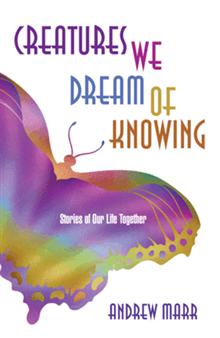
It is because God has invited me into small visions of the divine  imagination that I can introduce you to Korniel, Pandara, Merendael, and many others. If you wish to meet them for yourself, you can read Creatures We Dream of Knowing and From Beyond to Here. Knowing them has enriched my life. I hope it will enrich yours as well.

A Bit About Me

A Benedictine monk in the Episcopal Church who writes fantasy fiction? How did that happen? The short answer is: God knows. As for myself, all I can say that the fantastical has always fascinated me and matters of faith have always been a consuming interest. The first two books to have my name written in them were that tales of Hans Christian Andersen and Grimm’s fairy tales. I started writing fantasy stories as a child and I haven’t stopped since. My religious journey took many twists and turns during my youth, including detours in Hinduism and Buddhism, although I consistently believed that religion dealt with the most important things in life. This journey led me back to the Episcopal Church in which I was raised and then to St. Gregory’s Abbey in Three Rivers, Michigan.

Another interest that caught me and has never let me go is music. Singing in a high quality church choir as a boy introduced me to great choral masterpieces and music has been woven with my religious interests ever since. These days, I sing plainsong in the monastic church and listen to music of all kinds in my spare time. Along with my religious convictions, music is a major strand in many of my stories.

Another swirl running through all of these major interests is a concern for peace and for alternatives to violence. In my stories and other writings, seeking peace within oneself and, more important, within social relationships, has become one of the major themes I deal with. Tools for Peace engages in a dialogue between the Rule of St. Benedict and the thought inspired by René Girard, a thinker preoccupied with the social dimensions of violence while my stories take the reader through enchanted but sometimes troubling pathways in search of visions of peace.

I suppose I could sum up my outlook in life as: Saint Benedict in Fairyland. In their various ways, St. Benedict and fairy tales combine an earnest moral and spiritual drive with a delight in God’s goodness. For me, monastic discipline and the freedom of the fantastical imagination reinforce each other. Both my religious writings and my stories witness to my conviction that, contrary to the violence humans perpetrate, God has created a friendly universe grounded in God’s love for all of us.